

How to Build a Mediterranean Mezze Spread: The Complete Guide
The moment mezze clicked for me, I was staring at three bowls of tzatziki in my fridge. One had 12 ml of cloudy liquid sitting on top. One had 3 ml. One had just 1 ml. Same yogurt, same cucumber, and the only difference was what I had done to the cucumber first. That was when I realized a mezze spread isn’t a pile of recipes. It’s a series of small decisions, and each one shows up on the table.
That is how much of the Mediterranean eats, and it is no fringe habit. In January 2025, Scripps Health reported that U.S. News & World Report had named the Mediterranean diet the best overall diet for the eighth year in a row. Yet most of us were never taught the part that makes it easy: a table of small, mostly plant-based dishes that can be made ahead and shared.
My own learning curve was paid for in batches, not dollars. I fried four batches of falafel before the centers came out light. I strained three portions of the same yogurt for 12, 24 and 48 hours to find the right labneh. I grated and weighed cucumber for tzatziki three different ways, and I ran two jars of pickled turnips side by side to get the pink right. Every one of those tests changed how I build a spread.
If you have been treating mezze as a pile of store-bought tubs around a bag of chips, you are skipping the part that makes it feel like a feast. If you are new to this way of eating, start with my Mediterranean diet guide for beginners and come back here.
Here is the core idea: a great mezze spread is not about how many dishes you make. It is about balance. Something creamy, something crisp, something sour, something warm and plenty of bread. In this guide, I’ll show you how to plan that balance, which dishes to make ahead, how to arrange the table and how to fix the problems I hit along the way.
What Mezze Really Is
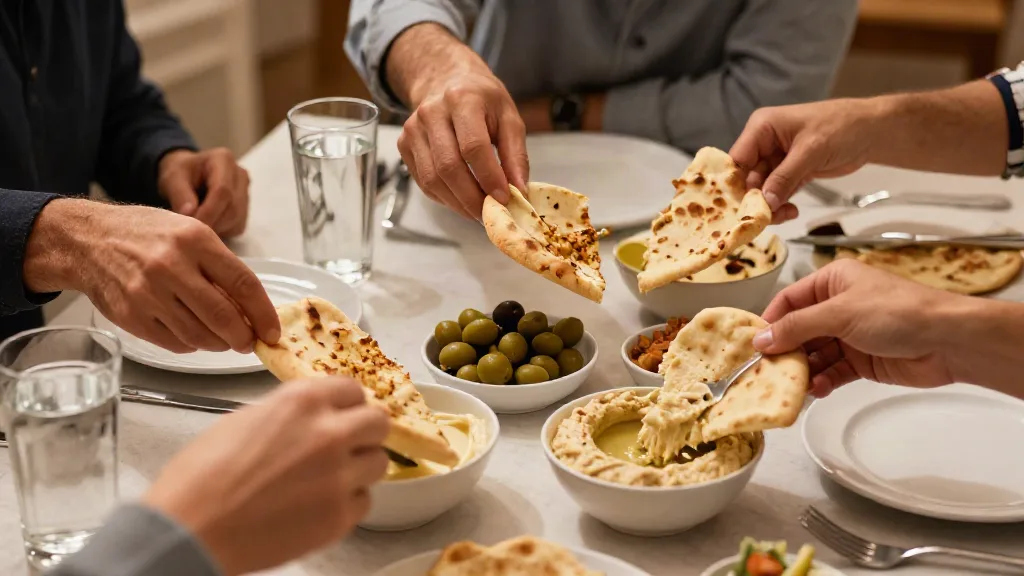
Before you buy a single chickpea, it helps to know what you are actually building.
Small Plates, Shared on Purpose
Mezze (spelled meze in Greece and Turkey) is a spread of small dishes served together, meant to be shared. You will find versions across the eastern Mediterranean, from Lebanon and Syria to Turkey, Cyprus and Greece. It can be a starter before grilled food, a long evening with drinks or, as it often is in my house, the whole meal.
What makes it work is the sharing. Nobody gets a plate built by the cook. Everyone tears bread, reaches across and builds their own bite. That turns a meal into a conversation. When UNESCO inscribed the Mediterranean diet on its list of intangible cultural heritage in 2013, with Greece among the countries named, it said that eating together is the foundation of the cultural identity of these communities. Mezze may be the clearest example of that idea on a plate.
MEDITERRANEAN SECRET: A mezze table is never finished in one go. Bring out the dips first, add warm bread a few minutes later and fry the falafel last. The table should keep changing while people eat.
Why a Mezze Spread Fits the Mediterranean Diet
A traditional spread lines up with the way the diet is usually described. According to the Harvard T.H. Chan School of Public Health, the Mediterranean diet is mainly plant-based, uses olive oil as the main added fat, includes cheese and yogurt in smaller portions and values the social side of sharing meals.
Look at a classic mezze table and you see exactly that. Chickpeas in hummus and falafel. Eggplant in baba ganoush. Peppers and walnuts in muhammara. Herbs by the handful in tabbouleh. Olive oil on almost everything. Yogurt appears, but as labneh and tzatziki in small bowls, not as the center of the meal.
Legumes deserve special mention. The Harvard Nutrition Source notes that pulses are an inexpensive source of protein and fiber. That is one reason mezze can feed a crowd without costing much. A bag of dried chickpeas can become hummus, falafel and a bowl of whole chickpeas for garnish.
The Five Families of a Balanced Spread
After testing and hosting with these dishes, I think of every spread as five families. You don’t need all of them every time, but the best tables cover at least four.
- Creamy dips: hummus, baba ganoush, muhammara, Santorini fava
- Cool yogurt dishes: labneh, tzatziki
- Fresh salads: tabbouleh, fattoush, horiatiki
- Something warm and crisp: falafel, spanakopita, warm bread
- Sour and salty bites: olives, pickled turnips, preserved lemon, feta
When a spread feels heavy, it is usually all creamy dips and no sour or fresh dishes. When it feels thin, there is nothing warm. Balance the families and the table takes care of itself.
The Core Dishes
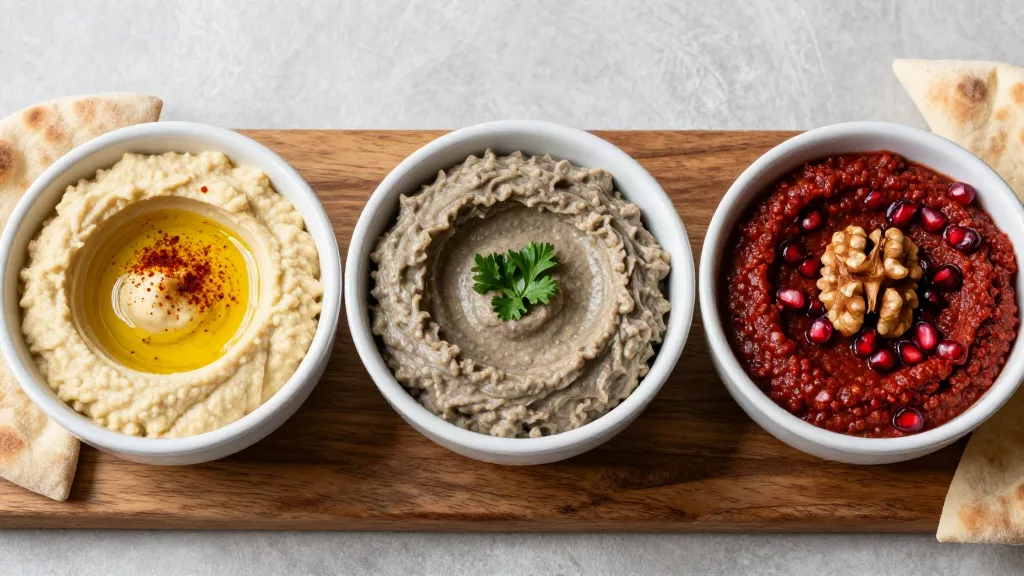
Every family has a few dishes that carry the table. These are the ones I have tested and now make on repeat.
The Dip Trio: Hummus, Baba Ganoush and Muhammara
If you only make three things, make these. They give you three colors, three textures and three flavors: nutty, smoky and sweet-hot.
Hummus is the anchor. My hummus from dried chickpeas took two rounds of testing. The first round was too thick, grainy and bitter, and the chickpeas still had firm centers. Cooking them longer with a little more baking soda fixed the texture, and adding ice water slowly while blending made it smooth and light. If you are new to dried beans, my guide on how to cook dried chickpeas covers soaking and doneness.
Baba ganoush brings smoke. In my testing, the batch I didn’t drain turned loose and weepy, so I now drain the roasted eggplant flesh for 20 minutes before mixing. The full method is in my smoky baba ganoush recipe, and my guide on how to cook eggplant explains why eggplant holds so much water.
Muhammara is the bright red bowl that makes the table look finished. It’s made from roasted red peppers, walnuts and pomegranate molasses. My muhammara with roasted red peppers and walnuts uses peppers roasted at home, and my guide on how to roast peppers shows how to blister and peel them.
COMMON MISTAKE: Serving all three dips straight from the fridge. Cold mutes flavor. Take them out about 30 minutes before guests arrive, and keep the total time out of the fridge within the safe window covered later in this guide.
Yogurt Dishes: Labneh and Tzatziki
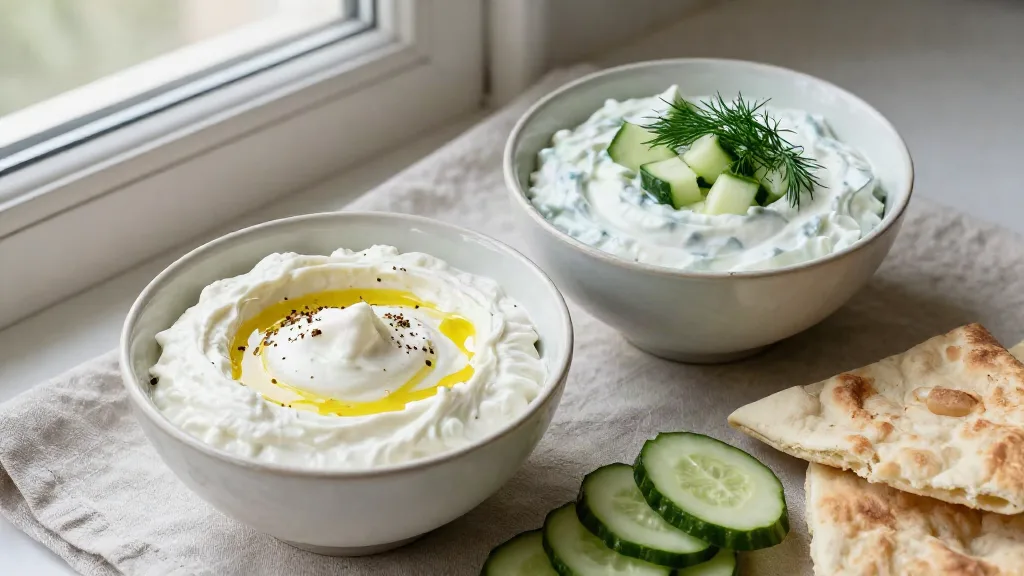
Yogurt dishes cool the table down after spice and smoke. Both of mine start with the same idea: remove water.
Greek yogurt is already strained to remove whey, as the Harvard Nutrition Source explains. Labneh takes that further. For my homemade labneh, I split one batch of salted yogurt into three 506 g portions and strained them side by side. After 12 hours, I had 330 g of soft, spreadable labneh. After 24 hours, 265 g, thick enough to hold ridges from a spoon. After 48 hours, 215 g. For a mezze table, 24 hours is my pick: thick enough to swirl with olive oil, soft enough to scoop with bread.
Tzatziki fights the opposite problem: cucumber adds water. Cucumbers are about 95% water, according to UMass Amherst, and that water ends up pooling on your dip. In my Greek tzatziki recipe testing, I started with three 146 g portions of grated cucumber. Squeezing alone took it to 112 g. Salting for 10 minutes and then squeezing took it to 101 g. After one hour in the fridge, the unsqueezed batch had 12 ml of liquid on top, the squeezed batch 3 ml and the salted and squeezed batch just 1 ml.
MEDITERRANEAN SECRET: If you serve labneh and tzatziki side by side, make the labneh plain with olive oil and za’atar, and let the tzatziki carry the garlic and herbs. Two different jobs, two different bowls.
Fresh Salads: Tabbouleh, Fattoush and Horiatiki
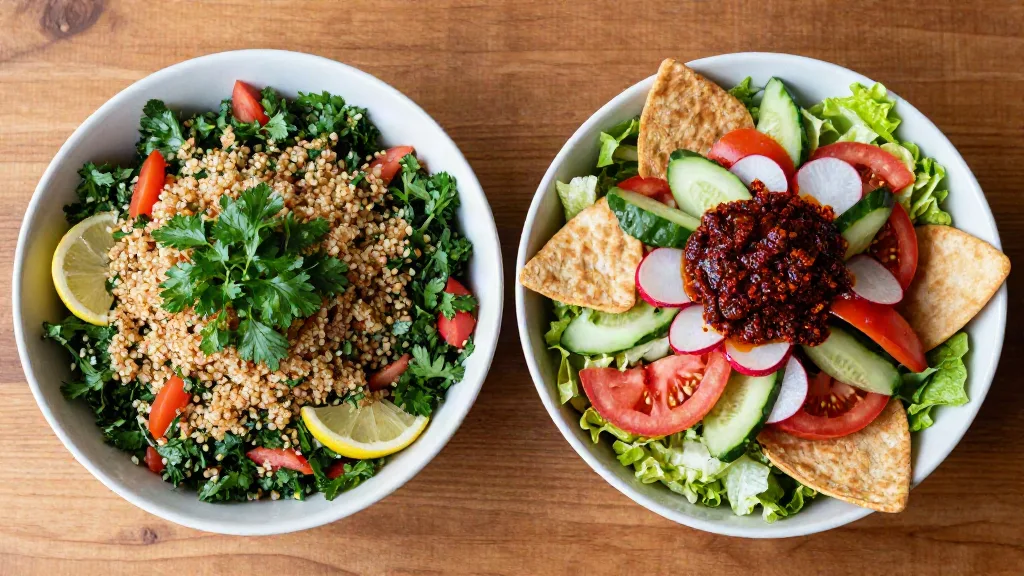
Salads are the crunch and the freshness. Without them, a spread gets heavy fast.
Tabbouleh is a parsley salad with a little bulgur, not the other way around. My parsley-forward tabbouleh leans hard on herbs, tomato and lemon. Because bulgur is a whole grain, it keeps all three parts of the kernel, the bran, germ and endosperm, as the Harvard Nutrition Source describes.
Fattoush brings the crunch with toasted pita and a sour, deep red dressing. My fattoush with sumac dressing is the salad I add when the table needs something bold.
Horiatiki is the Greek option. For my horiatiki Greek village salad, I compared tomatoes salted 12 minutes ahead with tomatoes salted at assembly. After 15 minutes, the salted-ahead bowl had about 28 ml of juice, the other about 12 ml. That juice mixed with the oil into a dressing, and the salad needed no vinegar at all.
COMMON MISTAKE: Dressing a salad long before guests arrive. Fattoush pita goes soft and tabbouleh turns watery. Prep the parts ahead, but dress them at the last minute.
Warm and Crisp: Falafel and Spanakopita
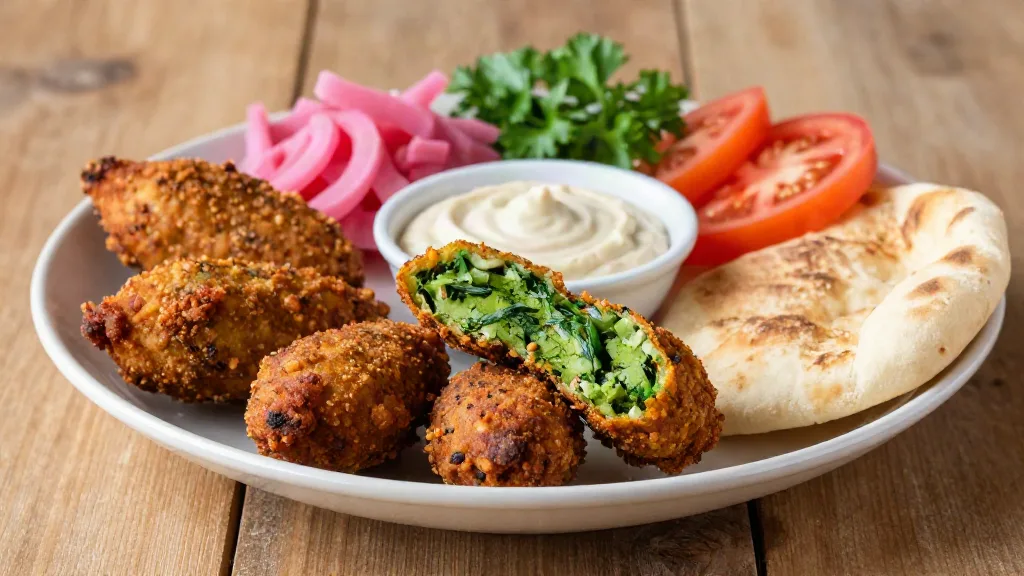
A table of cold dips needs at least one hot thing. Warmth makes people gather.
Falafel is the classic choice. Four batches of my falafel from dried chickpeas taught me one rule above all: use dried chickpeas that are soaked but never cooked. In my side-by-side test, raw soaked chickpeas beat cooked and canned chickpeas by a wide margin. Squeezing about 25 g of liquid out of the onion also made the mixture much easier to shape.
Spanakopita works when you want something baked instead of fried. My spanakopita recipe can be cut into small squares or triangles for a meze table, and it holds well at room temperature for the length of a meal.
MEDITERRANEAN SECRET: Fry falafel last, after guests have already started on the dips. It is the one dish that loses quality quickly, and arriving hot to the table makes it the highlight.
Sour and Salty Bites: Olives, Pickles and Feta
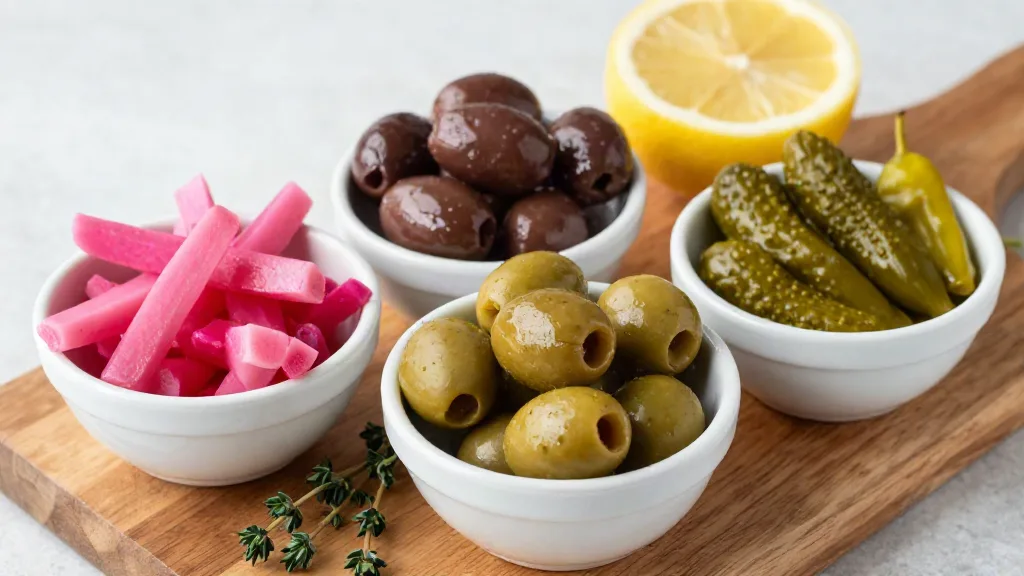
These are the small bowls that keep people coming back. A sour bite resets your palate between rich dips.
Pickled turnips add color and crunch. For my Lebanese pink pickled turnips, I ran two jars side by side: 5 g of raw beet versus 30 g per 250 g of turnips. The 5 g jar stayed a pale blush with light centers even after a week. The 30 g jar turned deep pink by day 7 and still tasted mostly sour and salty, not earthy. They were ready to eat on day 5 and at their best by day 7, so make them a week before your party.
Preserved lemons are an optional extra. A little chopped rind over hummus or olives adds a bright, salty edge. My guide on how to make preserved lemons shows the method.
Feta belongs in a Greek-leaning spread. Under the EU’s protected designation for Feta, the cheese is made from sheep’s milk or a mix with up to 30% goat’s milk and stored in brine. Buy it in a block in brine, not crumbled, and keep it in its liquid until you plate it. The EU’s quality schemes explained page describes how these protected names work.
Bread, Oil and Garnishes
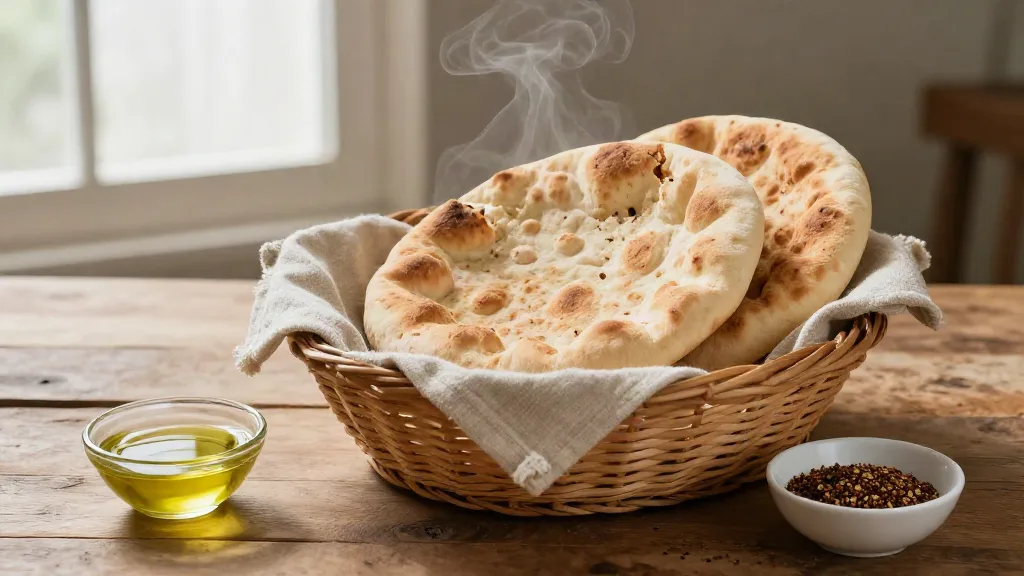
The dips get the attention, but bread, oil and garnish decide whether the table feels finished.
Warm Bread Is Non-Negotiable
Bread is the utensil at a mezze table. Plan more than you think you need, and serve it warm. I wrap pita or flatbread in a clean kitchen towel and keep it in a basket so it stays soft. If your bread is store-bought, warm it briefly in the oven or in a dry skillet just before serving, then wrap it.
Cut some bread into wedges and leave some whole. Wedges are easy for guests to grab; whole rounds look generous and can be torn. Toasted pita chips are useful too, especially for thicker dips like muhammara and labneh.
COMMON MISTAKE: Putting out all the bread at once. It dries out on the table. Keep a second batch wrapped and warm, and bring it out halfway through.
Olive Oil: The Finishing Fat
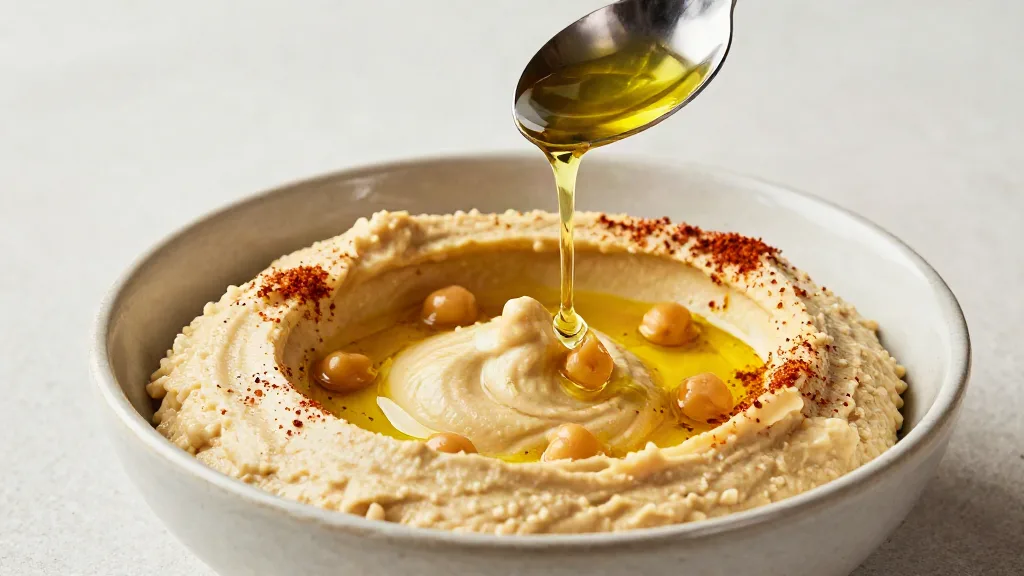
A good drizzle of extra virgin olive oil turns a plain bowl of hummus into something that looks cared for. It also carries flavor and makes dips taste richer.
Olive oil is mainly monounsaturated fat; the Harvard Nutrition Source lists it at about 72% monounsaturated. For finishing, use an oil you would happily taste on its own. Extra virgin olive oil must have a free acidity of no more than 0.8 g per 100 g, according to the International Olive Council. UC Davis advises checking the harvest date and using oil within 15 to 18 months of harvest. My guide on how to read an olive oil label walks through every line on the bottle.
MEDITERRANEAN SECRET: Make a shallow well in each dip with the back of a spoon before you add oil. The oil pools in the swirl instead of running off the edge, and it looks the way hummus does in a good restaurant.
COMMON MISTAKE: Making garlic- or herb-infused oil ahead and leaving it on the counter. The University of Maine Cooperative Extension warns that fresh garlic and herbs in oil can carry Clostridium botulinum spores. Infuse just before serving, or keep any infused oil refrigerated and follow their guidance.
Garnishes That Make a Spread Look Generous
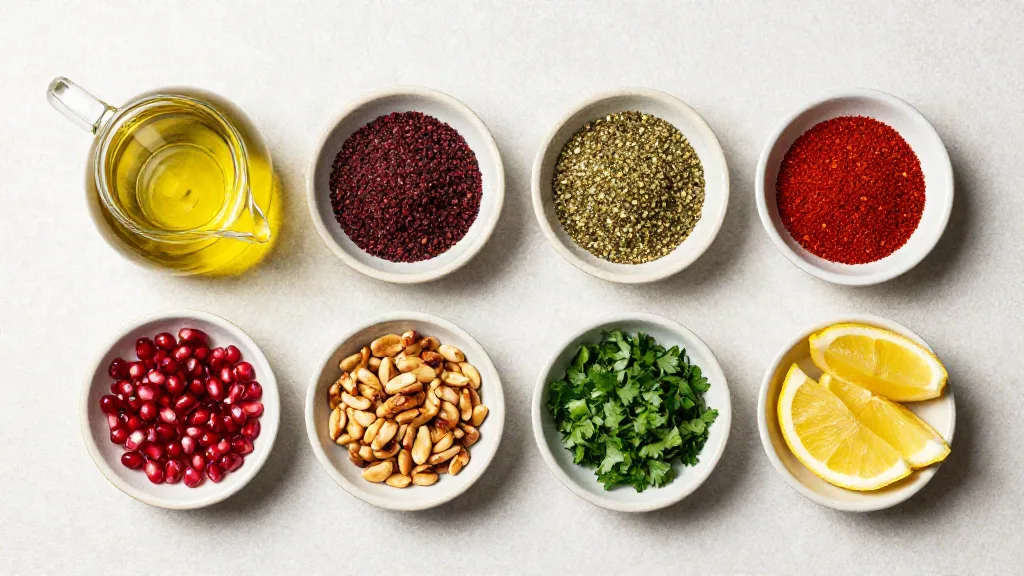
Garnishes are where a home spread starts to look like a restaurant one. Keep a small tray of them ready:
- Sumac: a sour, deep red spice for labneh, fattoush and onions
- Za’atar: my homemade za’atar goes on labneh, bread and olive oil
- Paprika or Aleppo-style pepper: a red dusting on hummus
- Pomegranate seeds: color and a juicy burst on muhammara and baba ganoush
- Toasted pine nuts or walnuts: crunch on hummus and muhammara
- Chopped parsley: green on every bowl that needs brightness
- Lemon wedges: for squeezing over falafel and salads
- Whole chickpeas: a few on top of hummus show what it’s made of
My Mediterranean herbs and spices guide goes deeper into each one.
Planning and Make-Ahead Strategy
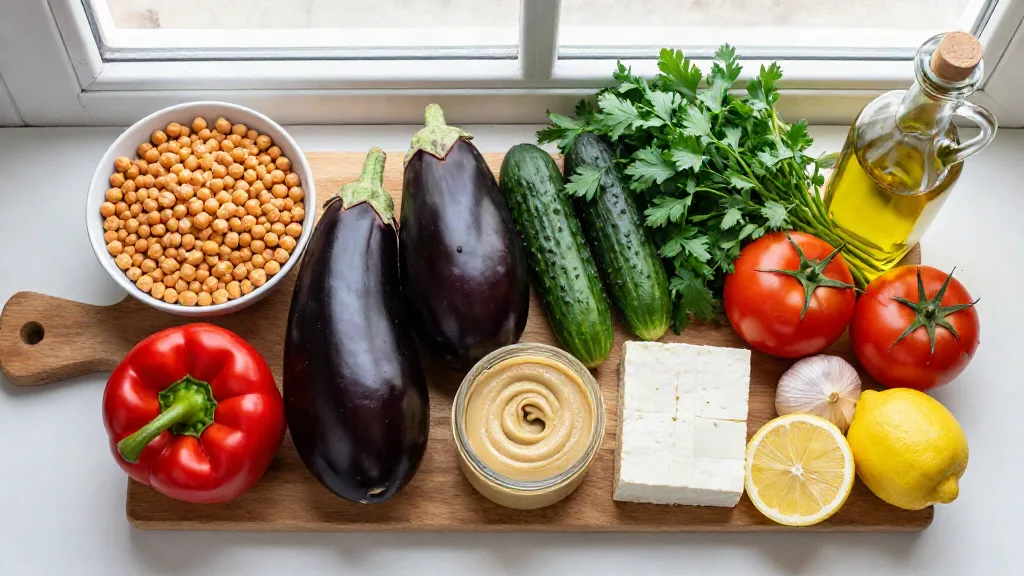
A mezze spread looks like a lot of work. The secret is that most of it can be done before the day.
How Much to Make
There is no single right amount, and I haven’t measured portions per guest. What I do is count dishes, not grams. For two or three people, three or four dishes plus bread is plenty. For six to eight, I make six to eight dishes and double the bread. For a bigger party, I make more of the same dishes rather than adding new ones, because big batches of a few dishes are easier than small batches of many.
A few starting points I use:
- Make extra hummus; it’s the dip I see most people reach for first
- One warm dish per four or five guests keeps everyone happy
- At least one salad and one sour bowl on every table
- Bread for everyone, plus a backup batch
If you’re shopping from scratch, my Mediterranean diet shopping list covers the pantry staples behind most of these dishes.
The Make-Ahead Timeline
Here is how I spread the work out. Everything below is based on the methods in my tested recipes.
- Seven days before: start pickled turnips (they need about 5 days, best at 7)
- Two days before: soak chickpeas for falafel and hummus; start straining labneh for 24 hours
- One day before: cook chickpeas and make hummus; roast eggplant for baba ganoush; roast peppers and make muhammara; mix the falafel mixture and refrigerate it
- Morning of: make tzatziki; prep salad vegetables and herbs, kept separate and undressed; toast pita for fattoush
- One hour before: salt tomatoes for horiatiki (12 minutes); take dips out of the fridge about 30 minutes before guests arrive
- As guests arrive: dress salads, warm bread, fry falafel
MEDITERRANEAN SECRET: The day before is the big cooking day. If you do the chickpeas, eggplant and peppers that day, the day of the party is mostly assembly.
Storing Make-Ahead Dishes Safely
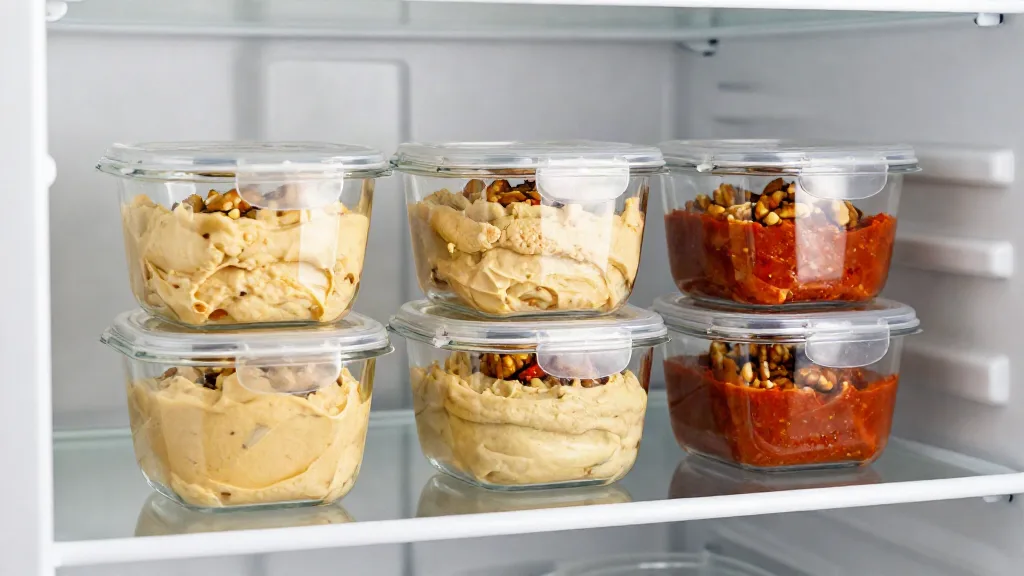
Most mezze dishes keep well in the fridge for a day or two, but they still need care. The USDA Food Safety and Inspection Service says to refrigerate cooked food within 2 hours, or within 1 hour if the temperature is above 90°F, to keep your fridge at 40°F or below and to eat leftovers within 3 to 4 days.
Store each dish in its own covered container. Keep dips and yogurt dishes in the coldest part of the fridge. Pickles are different: quick refrigerator pickles should stay in the fridge, and NC State Extension recommends using them within about two weeks.
Building the Spread
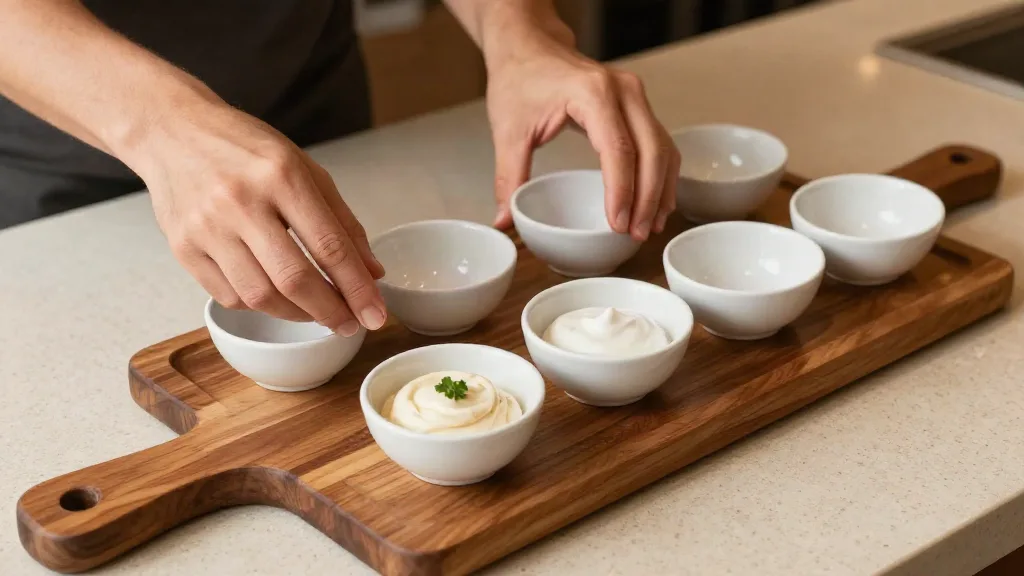
This is the fun part, and it goes faster than you’d think once the bowls are ready.
Choosing Your Board and Bowls
You don’t need special equipment. A large wooden board, a baking sheet lined with parchment or simply the table itself works. What matters more is having enough small bowls. Shallow bowls show off the swirl of oil on a dip; deeper ones hold salads and olives.
Use a mix of sizes. Big bowls for hummus and the main salad, medium bowls for other dips and small bowls for olives, pickles and garnishes. Mismatched ceramic is fine and, honestly, looks more inviting than a matching set.
Arranging the Table
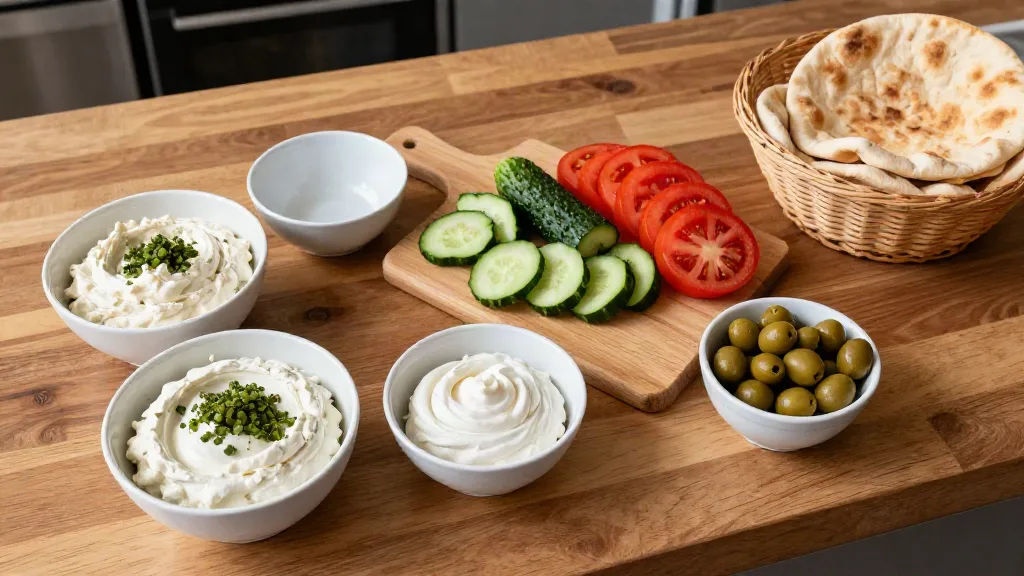
I build every spread in the same order:
- Place the anchors. Put the largest bowls, usually hummus and one salad, first. Space them apart so they balance the board.
- Fill in with dips. Add the medium bowls of baba ganoush, muhammara, labneh and tzatziki between the anchors. Alternate colors so two pale dips don’t sit side by side.
- Add sour bites. Tuck small bowls of olives and pickled turnips into the gaps. Pink turnips next to green olives catch the eye.
- Add fresh vegetables. Cucumber, tomato, radish and pepper strips fill empty spaces and give guests a lighter option.
- Garnish everything. Oil, spice, herbs and seeds go on last, just before serving.
- Bring out warm food. Bread first, falafel or spanakopita last.
COMMON MISTAKE: Crowding every bowl together in the center. Guests need room to reach. Leave small gaps and put bread at both ends of the table.
Serving and Flow
Put small plates and napkins at the edge of the table so guests can build a plate if they want one. Place serving spoons in every dip; people will double-dip otherwise. Keep a jug of water and lemon nearby. If the table is long, make two smaller copies of the core dishes instead of one huge platter at one end.
Spreads for Different Occasions
Not every mezze is a party. Here is how I scale it.
Mezze for Two
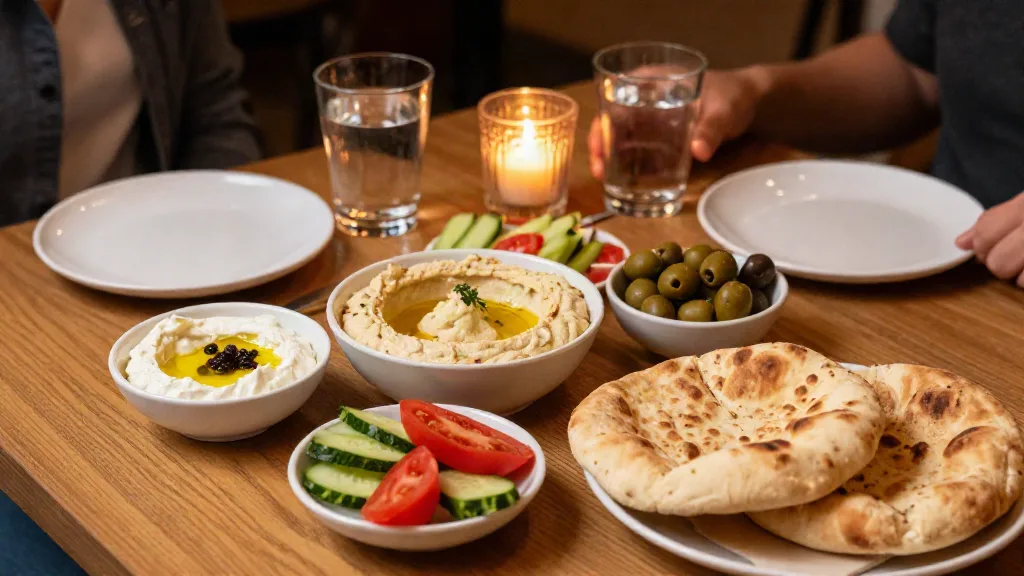
For a quiet dinner, keep it small and focused. One dip, one yogurt dish, one bowl of olives, some cut vegetables and warm bread. Hummus and labneh are my usual pair, because both can be made ahead and both keep for the next day. Add a candle and it feels like an occasion without a full day of cooking.
A Party Spread for a Crowd
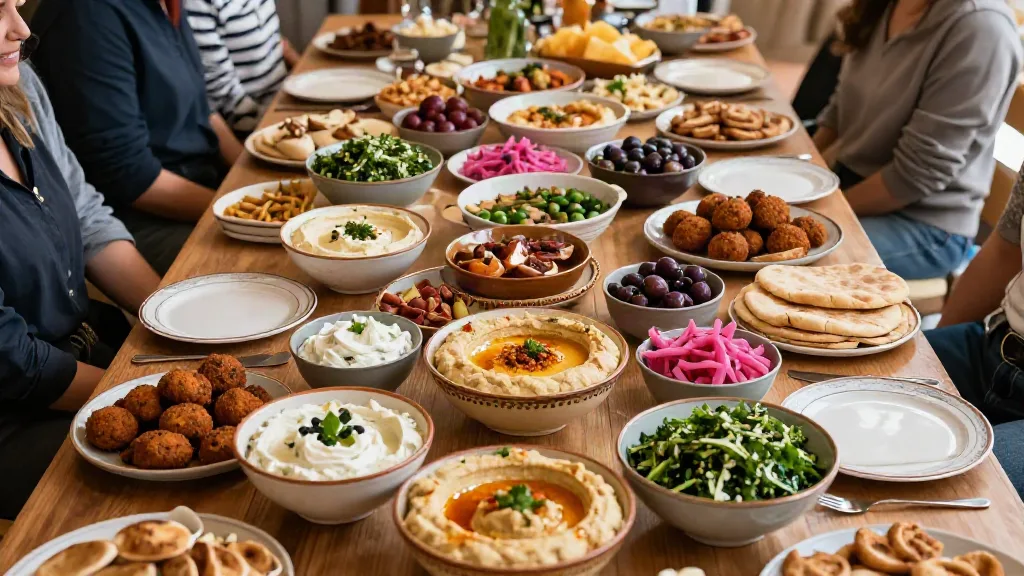
For eight or more guests, the five families become your plan. I’d make hummus, baba ganoush, tzatziki, tabbouleh, falafel, pickled turnips and olives, plus plenty of bread. Consider double batches of hummus and falafel, the two dishes most guests reach for. Put out two sets of the core dishes if the table is long.
For a crowd, think about allergens too. Sesame is now the ninth major food allergen in the United States under the FASTER Act, and it hides in tahini, za’atar and many breads. Walnuts in muhammara, wheat in bulgur and pita, and milk in labneh, tzatziki and feta are also common. The FDA’s food allergy page lists the major allergens. A small card by each dish naming its main ingredients helps guests choose safely.
A Plant-Based Mezze Board
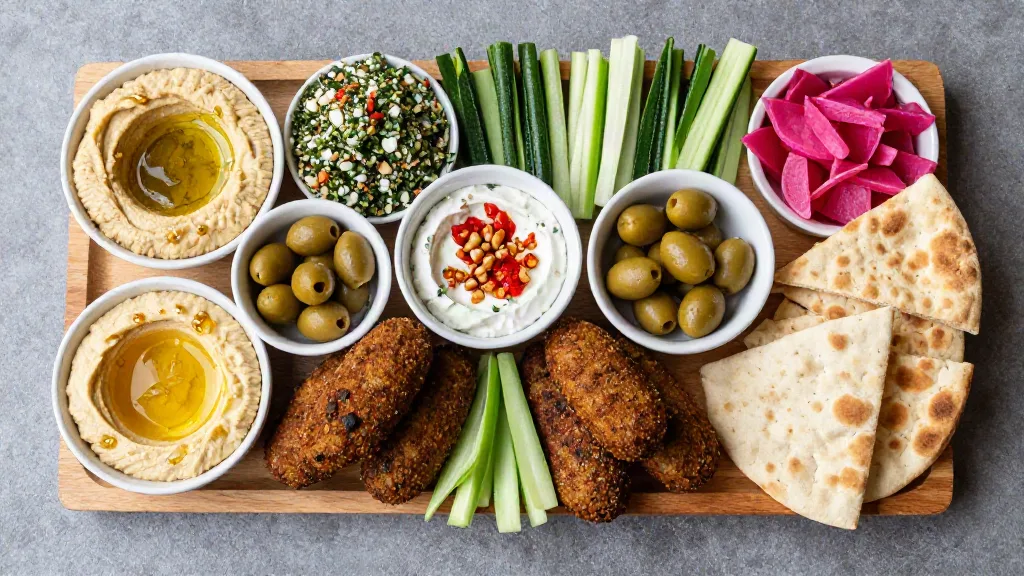
Mezze is one of the easiest ways to feed vegan guests, because so many classic dishes are plant-based already. Hummus, baba ganoush, muhammara, falafel, tabbouleh, fattoush, olives and pickled turnips contain no dairy or eggs in my recipes. Leave out labneh, tzatziki and feta, and check that your bread contains no milk or butter. Add extra raw vegetables and an extra legume dish so the board stays filling.
A Greek Meze Table
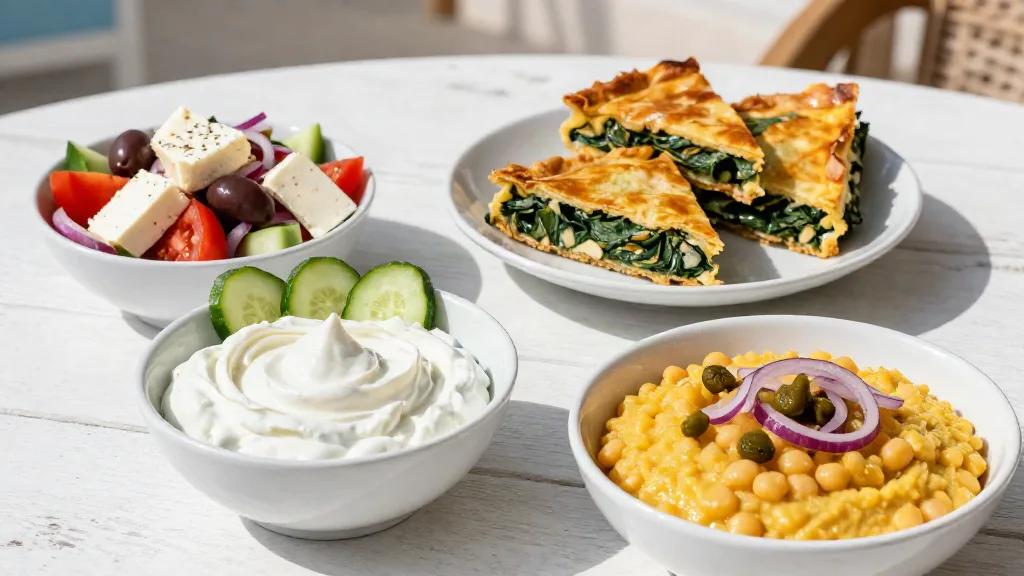
For a Greek-leaning table, swap the Levantine dips for Greek ones. Tzatziki, horiatiki and spanakopita are the core. Add Santorini fava, a silky yellow split pea purée topped with capers and red onion. Add olives and a block of feta in brine, plus crusty bread. It’s a lighter, brighter table that works especially well in summer.
Outdoor Summer Mezze
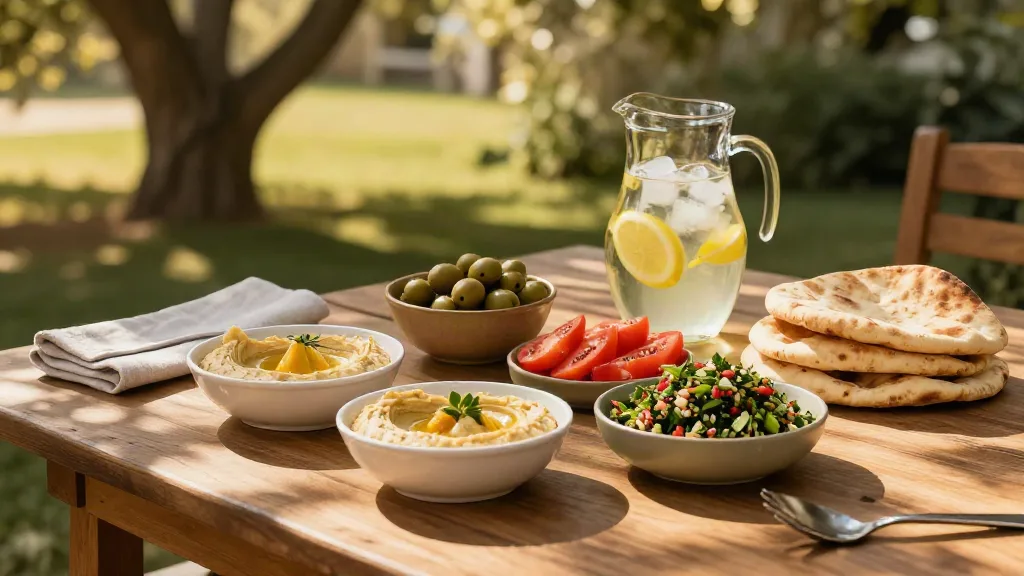
Mezze is ideal for eating outside, but heat changes the rules. Keep the time-and-temperature limits in mind: above 90°F, the USDA one-hour limit applies. I set out smaller bowls and refill them from the fridge rather than leaving big bowls in the sun. Put yogurt dishes in a shaded spot, or nest their bowls in a larger bowl of ice. Salads and pickles handle heat better than dairy dips.
MEDITERRANEAN SECRET: In summer, I serve chilled cucumber, tomato and herb salads more heavily and cut back on rich dips. The table feels lighter, and less of it needs to come back inside.
Troubleshooting Your Mezze Spread
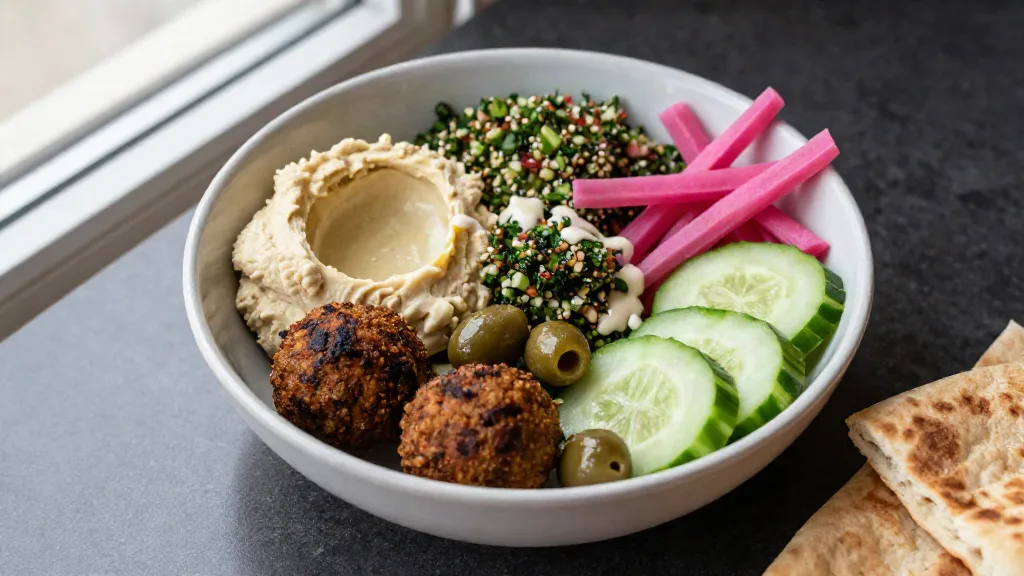
Most of the problems I’ve had with mezze came down to water, temperature or balance. Here is how to fix them.
Watery Dips
Water is the most common problem. Cucumber in tzatziki and eggplant in baba ganoush both release liquid. For tzatziki, salt the grated cucumber for 10 minutes and squeeze it hard in a cloth; in my test, that left just 1 ml of liquid on top after an hour. For baba ganoush, drain the roasted flesh for 20 minutes. If a dip is already loose, stir it well, drain off any pooled liquid and, for labneh-based dips, strain a little longer.
Solution protocol:
- Remove water before mixing, not after
- Keep dips covered and cold until serving
- Stir before plating and pour off any liquid on top
Bland or Flat Flavor
If a dip tastes flat, it usually needs salt or acid, not more garlic. Taste at room temperature, since cold dulls flavor. Add lemon juice a teaspoon at a time and salt a pinch at a time. In my hummus testing, the first round tasted bitter and heavy; more lemon and a little less garlic fixed it. A finishing drizzle of good olive oil and a pinch of sumac or za’atar can also bring a flat dip back to life.
A Spread That Feels Heavy
When guests slow down after ten minutes, the table is too rich. Check your families: you probably have too many creamy dips and not enough fresh or sour food. Add a bowl of pickled turnips, a plate of cucumber and tomato with lemon or a quick herb salad. A sour bite between dips makes people keep eating.
Pickles That Look or Smell Wrong
Pickled turnips should be firm, bright and smell sour and clean. Use 5% vinegar and don’t change the proportions of vinegar, food and water in a tested recipe, as the National Center for Home Food Preservation advises. They also note that salt with anti-caking agents can cloud the brine. If you see signs of spoilage, NC State Extension’s pickle troubleshooting guide is clear: do not eat it. My Mediterranean preserving and brining guide covers more.
TROUBLESHOOTING FLOWCHART:
- Liquid on top of tzatziki or baba ganoush → water not removed → salt and squeeze cucumber, drain eggplant
- Dip tastes flat → cold or under-seasoned → bring to room temperature, add lemon and salt
- Guests stop eating early → too many rich dips → add pickles, fresh vegetables or a salad
- Pita in fattoush is soggy → dressed too early → toast pita and dress at the last minute
- Falafel falls apart in oil → mixture too wet or cooked chickpeas used → use raw soaked chickpeas and squeeze the onion
What to Do With Leftovers
Leftover mezze makes the best next-day lunch. A scoop of hummus, a spoonful of tabbouleh, a couple of falafel, cucumber, olives and pickled turnips in a bowl is one of my favorite meals of the week. Refrigerate leftovers within 2 hours of serving and eat them within 3 to 4 days, following the USDA guidance above. Reheat falafel in a hot oven or air fryer to bring back some crunch; don’t microwave it. Leftover dips also make a good base for a grain bowl.
Your Journey to Mezze Mastery
The Mezze Advantage Summary
- Balance beats quantity. Cover creamy, cool, fresh, warm and sour, and the table works.
- Water is the enemy. Salt and squeeze cucumber, drain eggplant and strain yogurt.
- Most of it is make-ahead. Do the cooking the day before and assemble on the day.
- Warm food brings people together. Fresh bread and falafel make the table feel alive.
- Olive oil and garnish finish everything. A swirl of oil and a pinch of spice turn a bowl into a dish.
Your 30-Day Mezze Journey
Week 1: The foundation. Cook a pot of dried chickpeas and make hummus. Serve it with warm bread, olives and cut vegetables for a simple mezze for two. Notice how the hummus tastes cold versus at room temperature.
Week 2: Add contrast. Make labneh and tzatziki. Strain the labneh for 24 hours and salt and squeeze the cucumber for tzatziki. Serve both with your hummus, and see how the yogurt dishes cool the table.
Week 3: Add fresh and sour. Start a jar of pickled turnips at the beginning of the week. Make tabbouleh or horiatiki midweek. By the weekend, build a five-dish spread with something from each family.
Week 4: Add warmth and host. Make falafel or spanakopita, roast eggplant for baba ganoush and peppers for muhammara. Invite friends, follow the make-ahead timeline and build a full spread.
Frequently Asked Questions
What is the difference between mezze and meze?
They are the same idea with different spellings. “Mezze” is common in Lebanese and Arabic-language usage, while “meze” is the usual spelling in Greece and Turkey. Both describe a spread of small dishes served together and shared. The dishes change by region: a Lebanese spread might lean on hummus, tabbouleh and pickled turnips, while a Greek meze might feature tzatziki, horiatiki, fava and spanakopita. In English-language recipes, you’ll see both spellings, sometimes on the same menu. The way of eating is what matters: many small dishes, plenty of bread and time to share them. Pick the spelling that matches the dishes on your table and don’t worry about it.
Can I make a mezze spread entirely ahead of time?
Most of it, yes. Dips like hummus, baba ganoush and muhammara can be made a day ahead and kept covered in the fridge. Labneh strains overnight and pickled turnips need about a week. What you shouldn’t make far ahead are the dressed salads, fried falafel and warm bread. Tabbouleh and fattoush turn watery or soggy once dressed, and falafel loses its crunch quickly. Prep the vegetables, herbs and falafel mixture ahead, then dress, fry and warm at the last minute. Keep everything in the fridge until shortly before serving, and refrigerate leftovers within 2 hours of setting them out.
How many dishes should a mezze spread have?
For two or three people, three or four dishes plus bread is plenty. For six to eight guests, aim for six to eight dishes. For bigger parties, make more of the same dishes instead of adding new ones, because a few large batches are easier to manage than many small ones. More important than the count is balance. Try to cover at least four of the five families: creamy dips, cool yogurt dishes, fresh salads, something warm and crisp, and sour and salty bites. A table of five well-balanced dishes feels more generous than ten creamy dips. These are starting points from hosting, not measured portions, so adjust for your guests’ appetites.
Is a mezze spread healthy?
A traditional mezze spread fits the way the Mediterranean diet is usually described: mostly plant-based, with olive oil as the main fat and yogurt or cheese in smaller amounts. Chickpeas, eggplant, peppers, herbs and whole grains like bulgur make up much of the table. Legumes are an inexpensive source of protein and fiber. That said, how healthy your spread is depends on what you put out and how much you eat. Fried falafel, lots of bread and heavy pours of oil add up. Fill more of the table with salads, vegetables and legume dishes, and treat fried food as one part of the spread, not the whole thing.
What bread goes best with mezze?
Pita and other flatbreads are the classic choices, because they’re easy to tear and scoop. Serve some warm and soft, wrapped in a clean towel, and some toasted into chips for thicker dips. A crusty country loaf works well for a Greek meze table, especially with horiatiki juices and tzatziki. Whatever you choose, plan more bread than you think you need, since it’s the utensil for the whole meal. Keep a second batch warm and bring it out halfway through. Check labels if you have guests with allergies, since many breads contain sesame, milk or eggs.
How do I keep dips from getting watery?
Remove water before you mix, not after. For tzatziki, salt the grated cucumber for 10 minutes and squeeze it hard in a cloth. In my test, that took 146 g of cucumber down to 101 g and left only 1 ml of liquid on top after an hour, compared with 12 ml when the cucumber went in unsqueezed. For baba ganoush, drain the roasted eggplant flesh for about 20 minutes. Strained yogurt and labneh are naturally thicker. Keep dips covered and cold until shortly before serving. If liquid does pool, stir it back in or pour it off before plating.
Can I use canned chickpeas for a mezze spread?
For hummus, canned chickpeas are a common shortcut, but I haven’t tested them in my recipe, so I can’t promise the same texture. My tested hummus uses dried chickpeas cooked until very soft. For falafel, the answer is clearer: in my side-by-side test, raw soaked dried chickpeas beat both cooked and canned chickpeas by a wide margin. Cooked chickpeas make falafel that is too wet and soft to hold together in the oil. If you’re short on time, buy good hummus and save your effort for the dishes that matter more, like fresh salads and warm bread.
Why do my falafel fall apart when I fry them?
Usually because the mixture is too wet or the chickpeas were cooked. Falafel needs raw, soaked dried chickpeas, which bind as they fry. In my first batch, made with unsqueezed onion and no baking soda, several pieces lost bits in the oil and one broke in two. Squeezing about 25 g of liquid out of the onion, grinding coarsely and resting the mixture fixed it. Oil temperature matters too. In my final batch, frying at 178°C (about 352°F) gave a crisp crust and a light, coarse center. If the first one breaks, refrigerate the mixture for a bit longer and check the oil temperature.
How long can a mezze spread sit out?
Follow the USDA’s guidance: refrigerate perishable food within 2 hours, or within 1 hour if the air temperature is above 90°F. That applies to dips, yogurt dishes, salads and cooked food. For a long gathering, set out smaller bowls and refill them from the fridge instead of leaving everything out all evening. Keep yogurt dishes like labneh and tzatziki in the shade or nested in ice on hot days. Pickles and olives hold up better, but they should still go back in the fridge afterward. When in doubt, throw it out.
What’s the best way to serve mezze for a vegan guest?
Many classic mezze dishes are already plant-based. In my recipes, hummus, baba ganoush, muhammara, falafel, tabbouleh, fattoush, olives and pickled turnips contain no dairy or eggs. Leave out labneh, tzatziki and feta, or put them on a separate part of the table so they don’t mix with the vegan dishes. Check that your bread contains no milk, butter or eggs, since some flatbreads do. Add extra vegetables and an extra legume dish so the board is filling. Label each dish with its main ingredients so every guest can choose easily.
Professional Tips for Advanced Success
OVERNIGHT TECHNIQUE: Strain labneh overnight in the fridge while you sleep. In my test, 24 hours turned a 506 g portion of salted yogurt into 265 g of thick, creamy labneh that holds ridges from a spoon. Set it up two nights before your party and it’s ready the morning before.
SCIENCE TIP: Salt pulls water out of vegetables. That’s why salting cucumber before squeezing removes more liquid than squeezing alone, and why salting tomatoes 12 minutes before a salad gives you more juice for the dressing. Use it wherever water is the problem.
ADVANCED TECHNIQUE: Build color contrast deliberately. Pale hummus next to red muhammara, white labneh next to pink pickled turnips, green tabbouleh next to golden falafel. Alternating colors makes a spread look abundant even with only five or six dishes.
RATIO TIP: For pickled turnips, 30 g of raw beet per 250 g of turnips gave a deep pink without an earthy taste in my side-by-side jars. With only 5 g, the turnips stayed pale with light centers even after a week.
TIMING TIP: Work backward from the moment guests sit down. Falafel fries last, bread warms second to last and salads get dressed just before that. Everything else should already be on the table.
Take Action: Start Your Mezze Journey Today
Pick the path that fits where you are right now.
Beginner: Start with one dip and great bread. Make my hummus, warm some pita and set out a bowl of olives. That’s a real mezze for two.
Intermediate: Add contrast with a yogurt dish and a fresh salad. Make tzatziki or labneh and a bowl of tabbouleh, and you have three families covered.
Advanced: Host the full spread. Start pickled turnips a week ahead, fry falafel on the day and follow the make-ahead timeline above.
Track Your Progress
- Write down which dishes ran out first and which came back half-full
- Note the straining time you prefer for labneh
- Record how long each make-ahead dish held its texture in your fridge
- Take a photo of each spread so you can compare your layouts
Continue Learning
- How to cook with olive oil guide for finishing, frying and roasting with olive oil
- Mediterranean grain bowls guide for turning leftover dips, salads and falafel into weekday lunches
- Roasted Mediterranean vegetables guide for warm vegetable sides that sit well next to mezze
Those three bowls of tzatziki taught me more than any single recipe. Small choices, like salting a cucumber or straining yogurt a few hours longer, add up to a table that feels generous instead of soggy. The best Mediterranean meals aren’t built around one big dish. They are built around a table full of small ones, made ahead with care and shared slowly. Start with one bowl of hummus and warm bread, and add a dish each time you host. Then tell me in the comments what went on your first spread and what disappeared first. I’d love to see what your table looks like.


