

Extra-Smooth Hummus from Dried Chickpeas
Why This Recipe Works
Good hummus should be silky enough to swirl with the back of a spoon and light enough to feel almost fluffy. Mine wasn’t, at first. My first batch was thick, slightly grainy and a little bitter, and I assumed the answer was peeling every chickpea by hand.
It wasn’t. The two changes that made the biggest difference were cooking the chickpeas until they were far softer than you’d want for a salad, and pouring ice water into the blender slowly while it runs. Peeling turned out to matter much less.
Starting from dried chickpeas is worth it, too. Harvard’s Nutrition Source describes legumes as an inexpensive source of protein, vitamins, complex carbohydrates and fiber, and a bag of dried chickpeas makes several batches. If you’re new to cooking them, my guide to how to cook dried chickpeas covers soaking and simmering in detail.
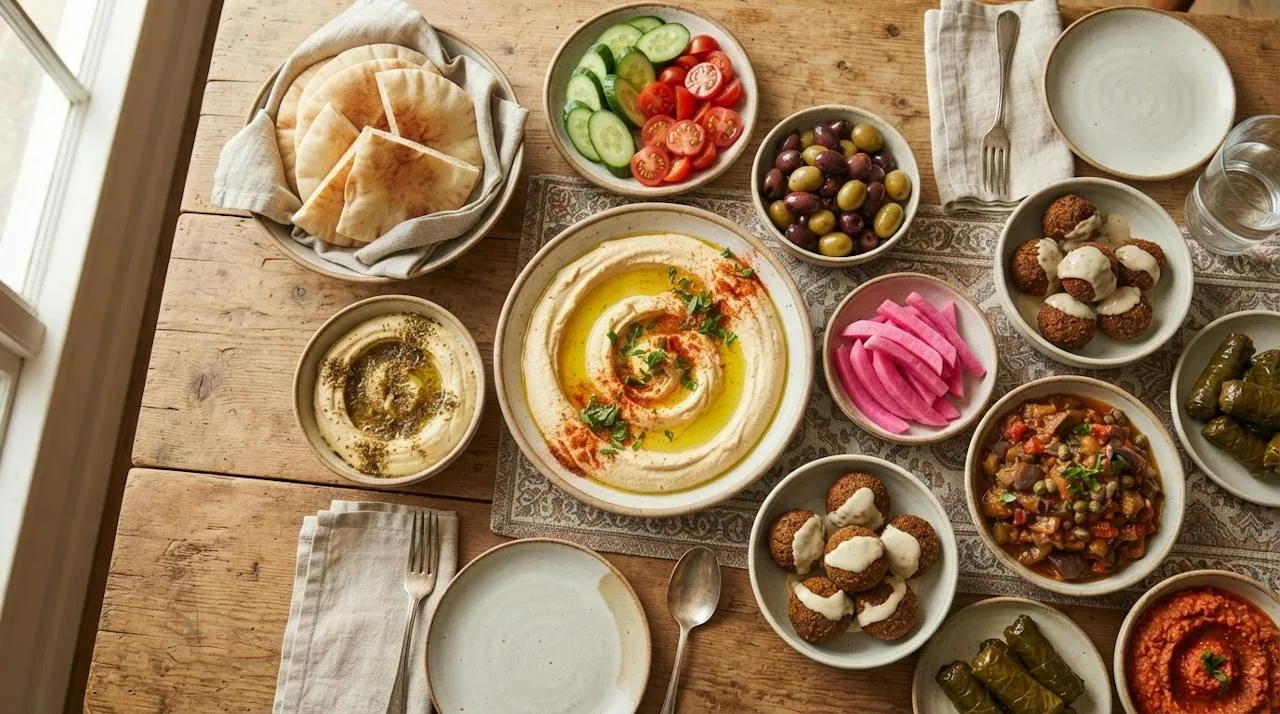
Follow this recipe and you’ll get hummus that’s very smooth, light and creamy, with a deep swirl that holds its shape.
What I Learned From Testing This Recipe
Recipe Testing Note Tested in 2 rounds. Last updated: October 2026. Equipment: 3-liter heavy-bottom stainless-steel pot, 1.5-liter high-speed countertop blender. Key variables tested: chickpea cooking time and baking soda, tahini and lemon amounts, garlic, ice water quantity and when to add it, blending time, peeling vs. not peeling.
In round 1, I soaked 250 g of dried chickpeas for about 12 hours with 1 teaspoon of baking soda, then cooked them with ½ teaspoon of baking soda for about 60 to 70 minutes. They were soft enough to eat, but some still had a slightly firm center. I spent 8 to 10 minutes rubbing them between my hands to remove loose skins, which gave only a small improvement. I blended the chickpeas, added 110 g tahini, 55 g lemon juice, a 4 g garlic clove, salt and cumin, then added 70 g of ice water a tablespoon at a time at the end. By then, the mixture was already too thick to take in enough water. The hummus was heavy, slightly grainy, a little bitter from the tahini, too garlicky, and hard to swirl.
For round 2, I cooked the chickpeas about 15 minutes longer with a little more baking soda, until I could crush one completely between my fingers. I skipped peeling, blended the warm chickpeas alone first, used a little more tahini and lemon, halved the garlic, and nearly doubled the ice water, pouring it in slowly while the blender ran. It came out light, fluffy and very smooth.
What I changed after testing: Cooking time went from about 60–70 to 75–85 minutes, baking soda in the cooking water from ½ to ¾ teaspoon, tahini from 110 g to 120 g, lemon juice from 55 g to 65 g, garlic from 4 g to 2 g and ice water from 70 g to 125 g, added slowly while blending instead of at the end. The round 1 chickpeas still had firm centers, and the hummus was too thick, grainy and bitter.
Ingredients
Makes about 650 to 700 g, enough for 6 generous servings as a dip, or 8 smaller servings alongside other dishes. Soaking: 12–14 hours | Cooking: 75–85 minutes | Blending and seasoning: about 10 minutes | Active time: about 25–30 minutes
For the chickpeas
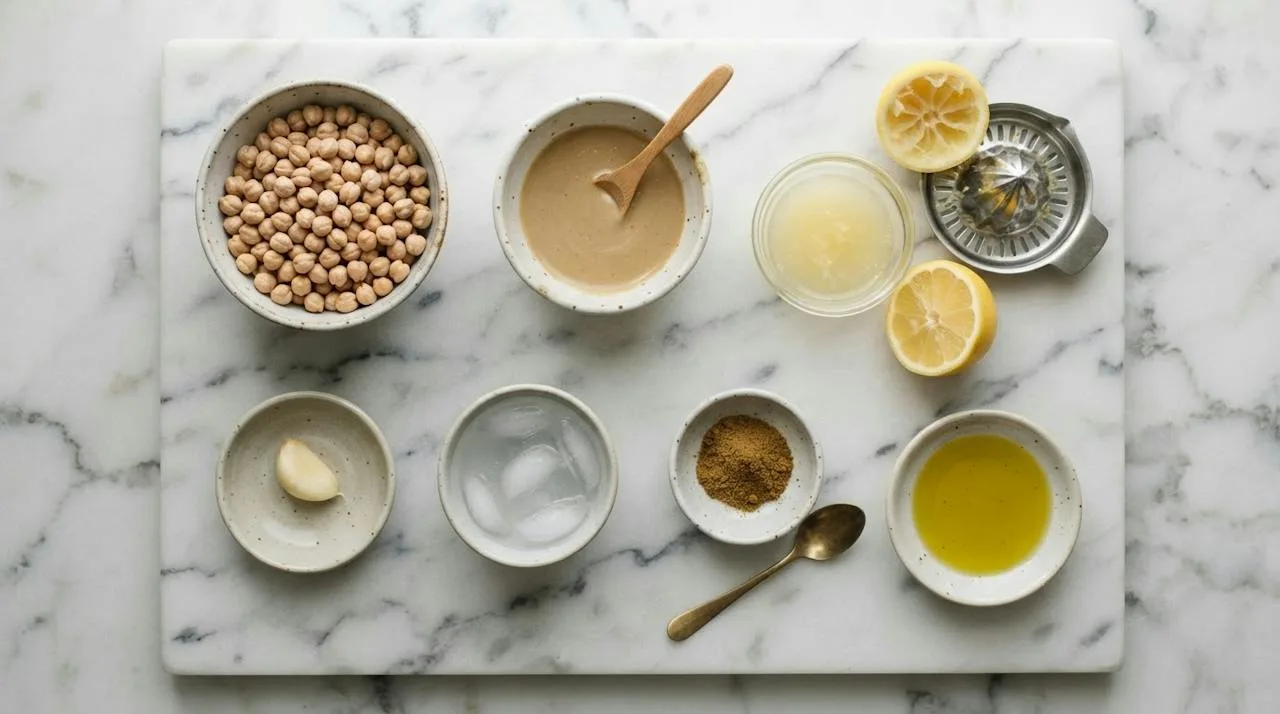
- 250 g dried chickpeas
- 1 teaspoon baking soda, for soaking
- ¾ teaspoon baking soda, for the cooking water
- Water
For the hummus
- 120 g tahini (I used a natural sesame tahini that was quite thick rather than pourable; stir it well before measuring)
- 65 g fresh lemon juice
- ½ small garlic clove, about 2 g
- 125 g ice water
- 5 g fine salt
- 1 g ground cumin
- 5 g olive oil
To serve
- Extra virgin olive oil, for drizzling
- A light sprinkle of paprika
- A few whole cooked chickpeas
- Chopped fresh parsley
Before You Start: What to Watch For
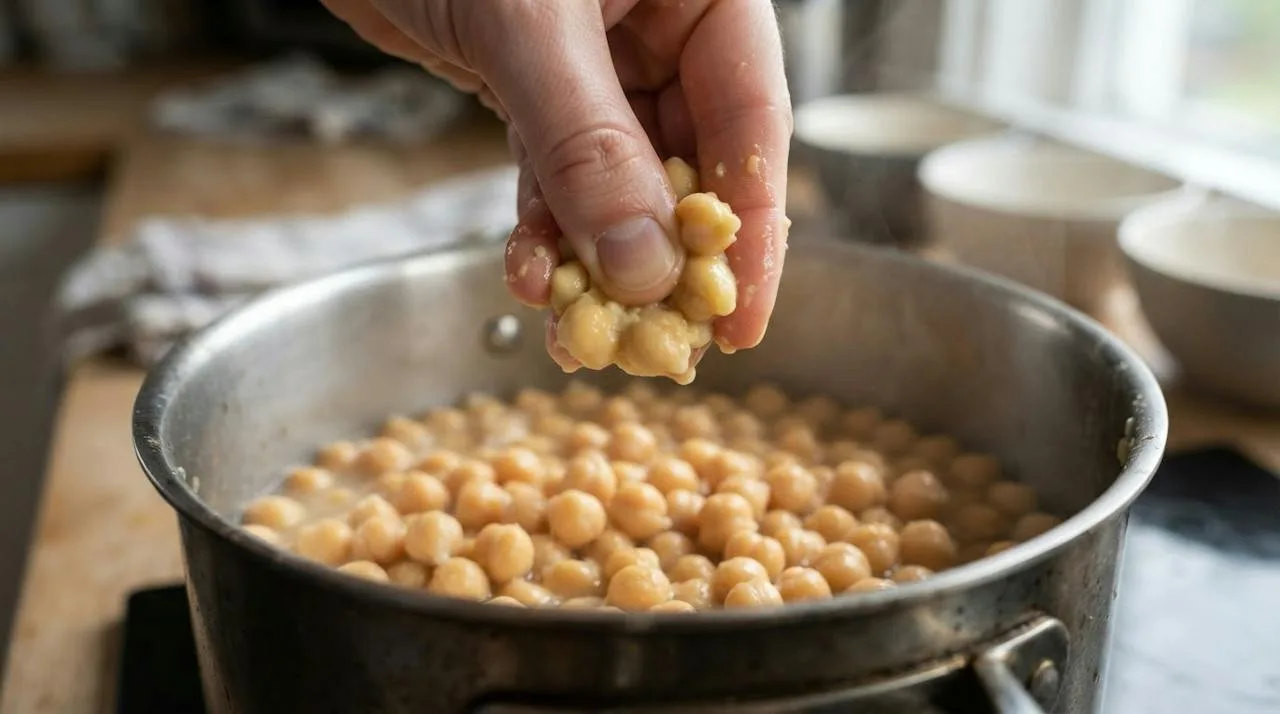
- Cook the chickpeas until they’re very soft. They should crush completely between your thumb and finger with no resistance. Slightly firm centers were the biggest cause of grainy hummus in my first round.
- Don’t bother peeling every chickpea. Rubbing off loose skins took 8 to 10 minutes for a small improvement. Very soft chickpeas and thorough blending made a much bigger difference.
- Blend the chickpeas while they’re warm. Warm chickpeas blended smoother and looser than cooled ones.
- Use ice water, and add it while the blender runs. Ice water gave a slightly lighter, fluffier texture than room-temperature water, and adding it gradually during blending stopped the mixture from seizing into a thick paste.
- Stir your tahini first. Natural tahini separates, and the solids at the bottom are thick. Mix it well before weighing. My Mediterranean grain bowls guide explains more about how tahini behaves with lemon and water.
- Use a blender if you have one. A high-speed blender gave smoother results than a small food processor, though you’ll need to stop and scrape the sides a few times.
Method
- Soak the chickpeas. Put the dried chickpeas in a large bowl, cover with plenty of cold water and stir in 1 teaspoon of baking soda. Soak for 12 to 14 hours.
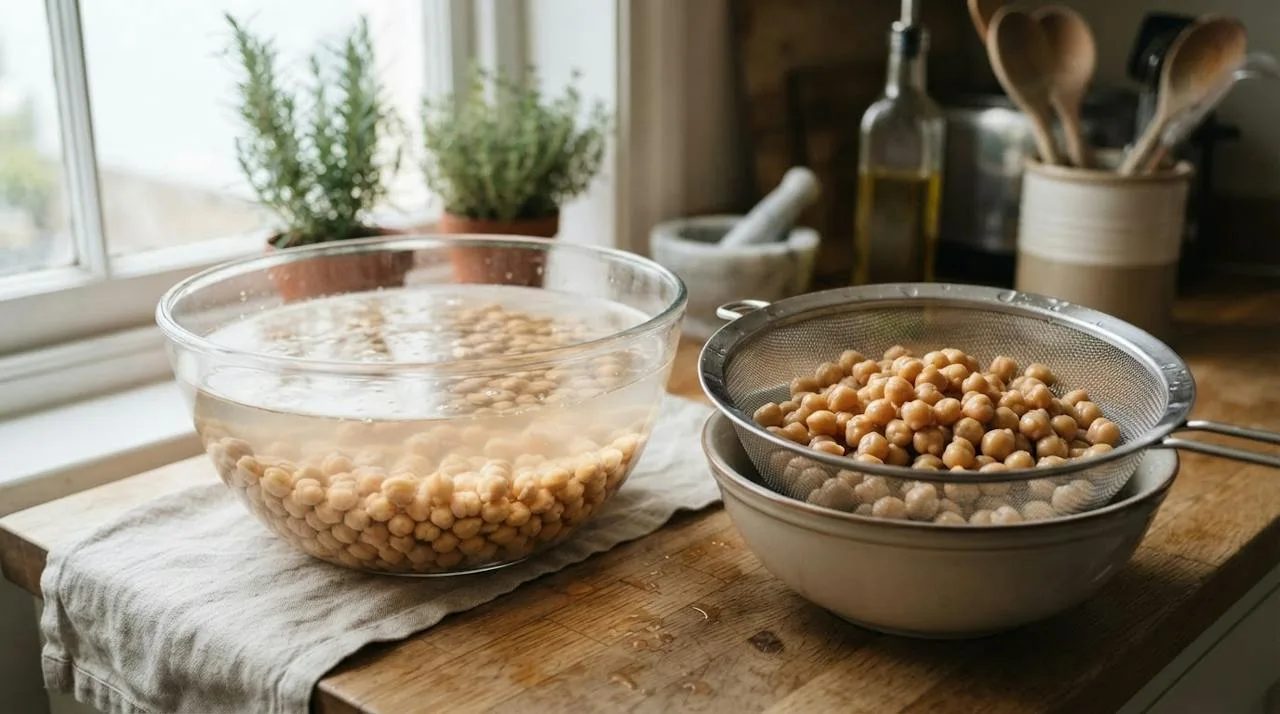
- Rinse well. Drain the chickpeas and rinse them thoroughly under cold water to wash away the baking soda. This takes about 5 minutes.
- Cook until very soft. Put the chickpeas in a heavy pot, cover generously with fresh water, add ¾ teaspoon of baking soda and bring to a boil. Lower the heat and simmer gently for about 75 to 85 minutes.
- Check with the crush test. Take a chickpea from the pot and squeeze it between your thumb and finger. It should crush completely with no resistance and no firm center. If it doesn’t, keep simmering and test again every 10 minutes. This is the step I cut short in round 1, and it’s the one that matters most.
- Drain and cool slightly. Drain the chickpeas and let them sit for 5 to 10 minutes, so they’re warm but not steaming. Set aside a few whole chickpeas for serving.
- Blend the chickpeas alone. Put the warm chickpeas in the blender and blend for about 1 minute, until they form a thick, rough paste. Scrape down the sides.
- Add the tahini and flavorings. Add the tahini, lemon juice, garlic, salt, cumin and olive oil. Blend for about 2½ to 3 minutes, stopping to scrape the sides as needed.
- Stream in the ice water. With the blender running, slowly pour in the 125 g of ice water. Don’t wait until the end, as I did in round 1, when the mixture had already become too thick. You’ll see the hummus turn paler and lighter as the water goes in.
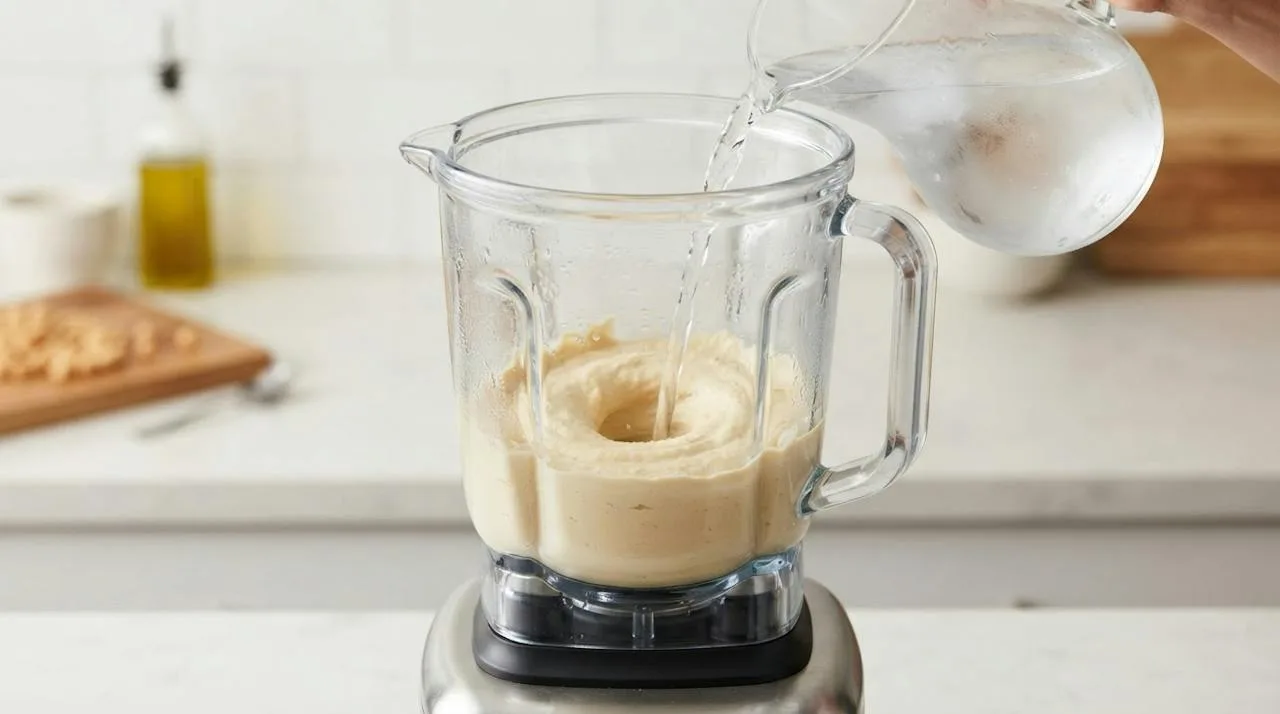
- Check the texture. The hummus is ready when it’s very smooth, creamy and fluffy rather than dense, with almost no visible chickpea pieces. Drag the back of a spoon through it: it should hold the groove without filling back in. Total blending time is about 4 to 5 minutes.
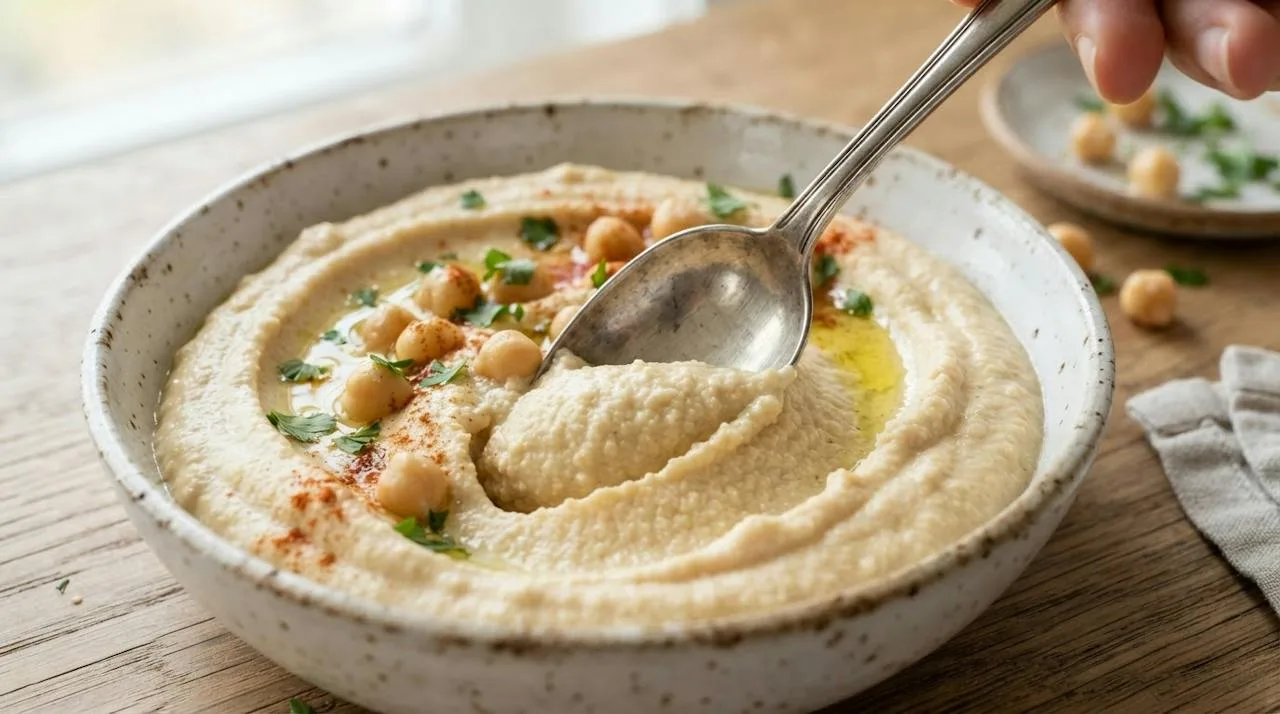
- Taste and season. Taste and adjust the salt and lemon. This takes just 2 to 3 minutes. In round 1, a bitter edge from the tahini came from too little lemon and water to balance it.
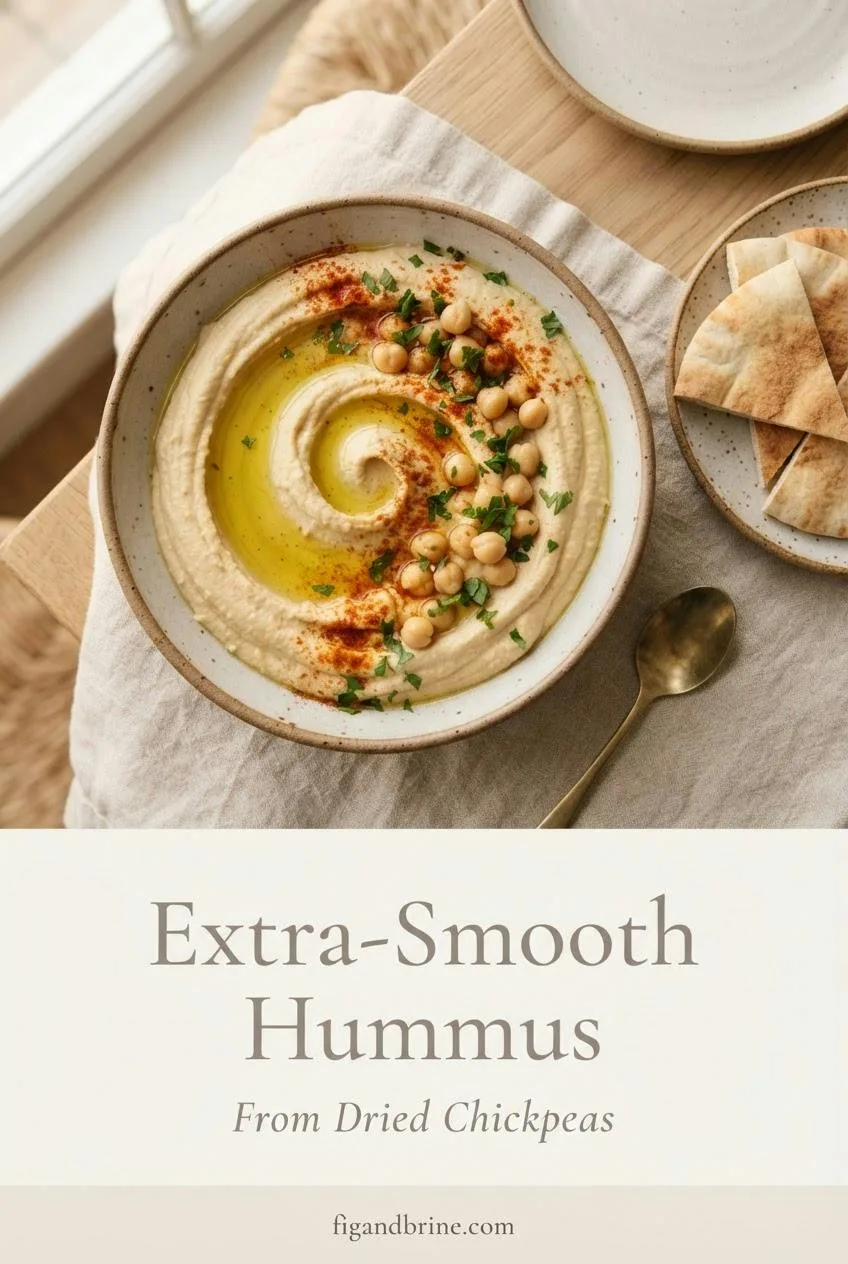
- Serve. Spread the hummus in a shallow bowl, push the center down slightly with a spoon to make a well, and fill it with a drizzle of extra virgin olive oil. Finish with a light sprinkle of paprika, the reserved whole chickpeas and chopped parsley.
Tested Substitutions
| Original ingredient or method | Tested alternative | Result |
|---|---|---|
| Warm chickpeas | Cooled chickpeas | Warm chickpeas blended into a smoother, looser hummus. |
| Ice water | Room-temperature water | Ice water gave a slightly lighter, fluffier texture. |
| 4 g garlic | 2 g garlic | Less garlic let the tahini and lemon come through more clearly. |
| Unpeeled chickpeas | Partly peeled (8–10 minutes of rubbing off loose skins) | Only a small improvement for the effort. Very soft chickpeas mattered more. |
| Dried chickpeas | Canned chickpeas (untested) | I haven’t tried this yet. Let me know in the comments. |
| Garlic | No garlic or roasted garlic (untested) | I haven’t tried this yet. Let me know in the comments. |
| Ice water | Aquafaba (untested) | I haven’t tried this yet. Let me know in the comments. |
| Chickpeas | White beans (untested) | I haven’t tried this yet. Let me know in the comments. |
| My tahini | A different tahini brand (untested) | Tahini varies a lot in thickness and bitterness. Let me know how yours compares. |
Why This Recipe Can Fail (And How to Fix It)
Common Problems
- Grainy hummus: The chickpeas weren’t cooked soft enough. Mine still had slightly firm centers after 60 to 70 minutes in round 1. Cook them for 75 to 85 minutes with ¾ teaspoon of baking soda, until one crushes completely between your fingers, and blend for the full 4 to 5 minutes.
- Too thick and heavy: Not enough water, or it went in too late. Seventy grams of ice water added a spoonful at a time at the end wasn’t enough. Use 125 g and stream it in while the blender is running.
- Bitter tahini flavor: Not enough lemon and water to balance the tahini. Increasing lemon juice from 55 g to 65 g and water from 70 g to 125 g softened the bitterness. Taste and add a little more lemon if needed.
- Too garlicky: A 4 g clove was more noticeable than I wanted. About 2 g, half a small clove, let the tahini and lemon shine.
- Won’t hold a clean swirl: In round 1, the hummus was so heavy that the swirl looked rough and dragged. More ice water, added during blending, and a longer blend gave a texture that held a deep, clean groove.
- Visible chickpea skins: Skins showed up in round 1. Cooking the chickpeas very soft and blending longer solved this better than spending time peeling.
Serving Suggestions
My favorite way to serve it is the simplest: a pool of extra virgin olive oil, a little paprika, a few whole chickpeas and parsley, with warm pita. Since the oil is a finishing flavor here, use a good bottle; my comparison of extra virgin vs. light olive oil explains why extra virgin is the one to drizzle.
I also tried a portion topped with a little homemade za’atar. It was good, but I preferred the simpler version, where the hummus itself is the focus.
For a full mezze spread, add warm pita, cucumbers, olives and a bowl of Sicilian caponata.
Storage, Reheating and Make-Ahead
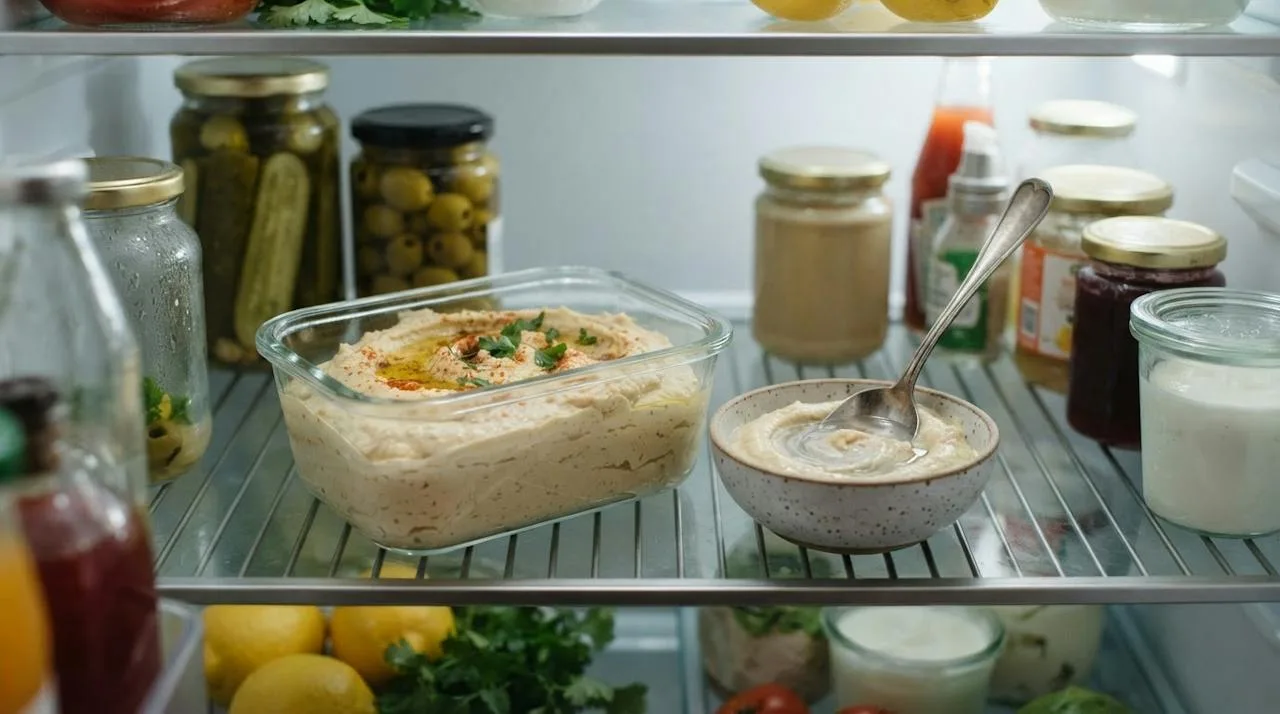
Refrigerator: Store the hummus in an airtight container, which reduced surface drying in my testing. Here’s how mine changed:
- Day 1: Very smooth and fluffy, and easiest to swirl.
- Day 2: Slightly thicker but still creamy.
- Day 3: Noticeably thicker; the top started to look slightly dry where it was exposed.
- Day 4: Smooth underneath, but a thin skin had formed on the exposed surface.
I’d eat it within 3 to 4 days. That matches the USDA’s leftovers and food safety guidance, which recommends eating refrigerated leftovers within 3 to 4 days.
Serving after chilling: Straight from the fridge, the hummus was noticeably thicker and less fluffy. Let it sit at room temperature for 15 to 20 minutes and it loosens again. If a portion is still too thick, stir in 1 to 2 teaspoons of cold water.
Make-ahead: The soaking is the only step that needs planning, so start it the night before. In my testing, warm chickpeas blended smoother than cooled ones, so I blend them soon after cooking. (I haven’t tested cooking them a day ahead and rewarming them.)
Mediterranean Secret: Beans and legumes sit at the base of the Mediterranean diet pyramid from Oldways, alongside vegetables, whole grains and olive oil. A batch of homemade hummus is one of the easiest ways to eat them every day.
With a warm bowl of hummus and a stack of pita, Nevaeh Hall
Print
Creamy Hummus
- Total Time: 115 minutes
- Yield: 6 servings
- Diet: Vegan
Description
A smooth and fluffy homemade hummus made from dried chickpeas, tahini, and lemon juice, served with olive oil and spices.
Ingredients
- 250 g dried chickpeas
- 1 teaspoon baking soda (for soaking)
- ¾ teaspoon baking soda (for cooking water)
- Water
- 120 g tahini
- 65 g fresh lemon juice
- ½ small garlic clove (about 2 g)
- 125 g ice water
- 5 g fine salt
- 1 g ground cumin
- 5 g olive oil
- Extra virgin olive oil (for drizzling)
- A light sprinkle of paprika
- A few whole cooked chickpeas
- Chopped fresh parsley
Instructions
- Soak the chickpeas: Put the dried chickpeas in a large bowl, cover with plenty of cold water, and stir in 1 teaspoon of baking soda. Soak for 12 to 14 hours.
- Rinse well: Drain the chickpeas and rinse them thoroughly under cold water.
- Cook until very soft: Put the chickpeas in a heavy pot, cover generously with fresh water, add ¾ teaspoon of baking soda and bring to a boil. Lower the heat and simmer gently for about 75 to 85 minutes.
- Check with the crush test: Take a chickpea from the pot and squeeze it between your thumb and finger. It should crush completely with no resistance.
- Drain and cool slightly: Drain the chickpeas and let them sit for 5 to 10 minutes.
- Blend the chickpeas alone: Put the warm chickpeas in the blender and blend for about 1 minute, until forming a thick paste.
- Add the tahini and flavorings: Add the tahini, lemon juice, garlic, salt, cumin, and olive oil. Blend for about 2½ to 3 minutes.
- Stream in the ice water: With the blender running, slowly pour in the 125 g of ice water.
- Check the texture: The hummus is ready when it’s very smooth, creamy, and fluffy.
- Taste and season: Adjust the salt and lemon to taste.
- Serve: Spread the hummus in a shallow bowl, drizzle with olive oil, sprinkle with paprika, and top with the reserved whole chickpeas and chopped parsley.
Notes
Use a high-speed blender for the best texture. Store in an airtight container for up to 3-4 days.
- Prep Time: 30 minutes
- Cook Time: 85 minutes
- Category: Dip
- Method: Blending
- Cuisine: Mediterranean


