
Homemade Labneh (Strained Yogurt Cheese): 12, 24 or 48 Hours, Tested Side by Side
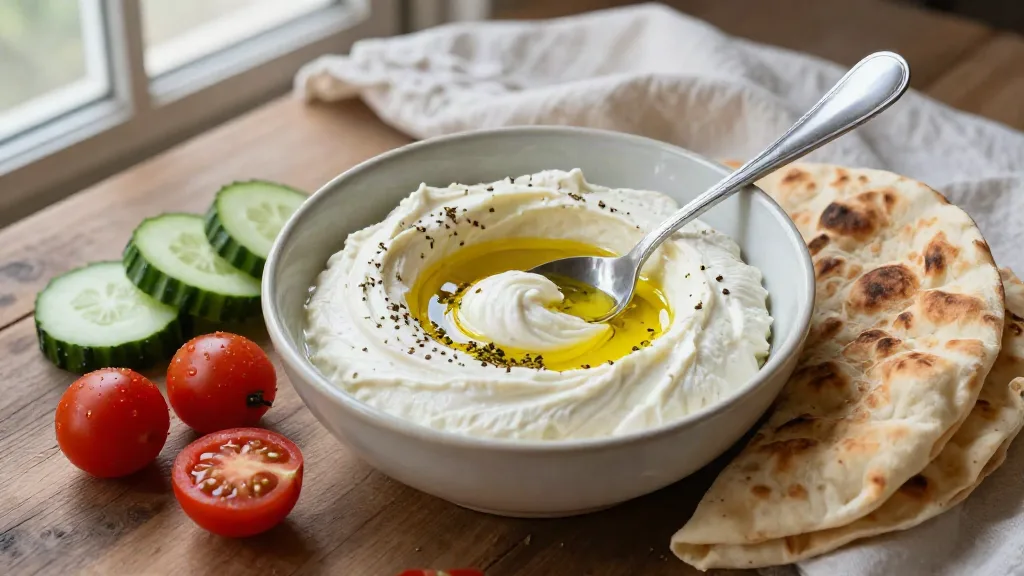
Labneh is the quiet star of a Levantine table: yogurt left to drip through cloth until it turns thick, tangy and spoonable, then finished with a pool of green olive oil and a scatter of za’atar. It takes two ingredients and almost no work. What it takes is time, and that time is the whole recipe.
Three batches taught me one thing: straining time, not a thickener, controls the texture. From the same salted yogurt, 12 hours gave a soft spread, 24 hours a thick and creamy labneh, and 48 hours a cheese firm enough to roll into balls. I weighed the labneh and the whey at each stage, so you can stop at exactly the texture you want.
The Harvard T.H. Chan School of Public Health describes strained yogurt as yogurt with the whey removed, giving it a thicker consistency, and labneh simply takes that further. Finish it with my homemade za’atar and you’ll have a creamy, tangy labneh for bread, bowls and mezze, at whichever texture suits you.
What I Learned From Testing This Recipe
Recipe Testing Note Tested in 3 batches: September 14, September 25 and October 3, 2026. The final version is the 24-hour labneh from batch 3. Equipment: fine-mesh stainless-steel sieve, cheesecloth folded into two layers, deep bowls to catch the whey, a kitchen scale accurate to 1 g. Strained in the refrigerator at 4°C or below, unpressed. Key variables tested: low-fat yogurt with stabilizers vs. full-fat without; straining for 12, 24 and 48 hours side by side. Measured: the weight of labneh and whey after every test. Each 506 g portion split exactly into labneh and whey.
Batch 1 used 1,000 g of low-fat (2%) cow’s milk yogurt with stabilizers on the label, salted with 12 g and strained for 24 hours. It barely thickened: 790 g of labneh stayed in the cloth and only 222 g of whey dripped out. The result was softer than I wanted for a thick spread.
For batch 2 I switched to plain full-fat (3.8%) yogurt with no stabilizers, keeping the same salt and the same 24 hours. This time 482 g of whey drained away and I was left with 530 g of much thicker, smoother labneh. Stabilizers such as starch, gelatin, pectin and gums hold water in yogurt, so they’re the most likely cause, but the fat level changed too, so this test can’t say how much each one mattered.
Batch 3 was the signature test: 1,500 g of that full-fat yogurt, salted, split into three 506 g portions and strained side by side for 12, 24 and 48 hours.
What I changed after testing: Low-fat yogurt with stabilizers (2% fat) to plain full-fat yogurt with none listed (3.8% fat). At the same 24 hours, labneh dropped from 790 g to 530 g and whey rose from 222 g to 482 g, giving a far thicker, smoother result.
Side-by-Side Results
Each portion started at 506 g (500 g yogurt and 6 g salt) and drained in the fridge without pressing.
| Straining time | Labneh | Whey | Yield | Texture | Best for |
|---|---|---|---|---|---|
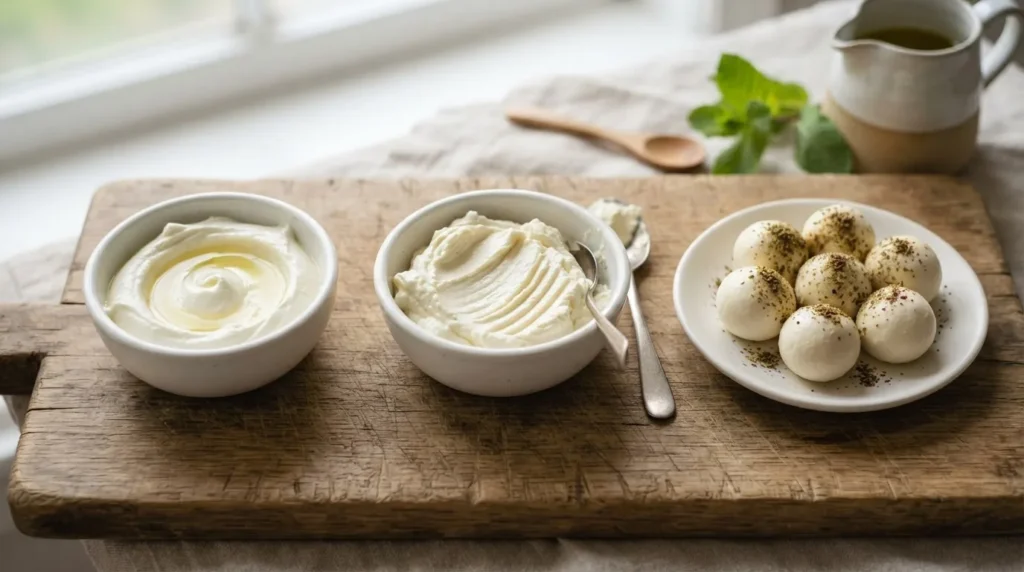
| 12 hours | 330 g | 176 g | 65% | Soft and spreadable, slightly loose at the edges, mildly tangy | Dips, sauces, spreading on bread |
| 24 hours | 265 g | 241 g | 52% | Thick and creamy, holds ridges from a spoon, more concentrated tang | Bread, bowls and spreads (my pick) |
| 48 hours | 215 g | 291 g | 42% | Thick and compact, strongest tang, still smooth | Rolling into labneh balls |
How this recipe evolved
Tap each batch to see what changed and what I measured.
Batch 1 (September 14): low-fat yogurt
1,000 g low-fat (2%) yogurt with stabilizers, 12 g salt, 24 hours.
790 g labneh, only 222 g whey: softer than wanted.
Batch 2 (September 25): full-fat yogurt
1,000 g plain full-fat (3.8%) yogurt, no stabilizers, same salt and time.
530 g labneh, 482 g whey: much thicker and smoother.
Batch 3 (October 3): 12, 24 and 48 hours
1,500 g salted yogurt split into three 506 g portions.
12 hours: 330 g, soft and spreadable. 24 hours: 265 g, thick and creamy. 48 hours: 215 g, firm and rollable.
Final recipe: 24 hours.
The 24-hour portion landed at the same 52% yield as batch 2’s 24-hour labneh, which made me confident in the result.
Taster Notes
Three family members tasted the batch 3 portions. One preferred the 24-hour labneh because it was thick without being hard to spread. One liked the 12-hour version best as a dip with olive oil and za’atar. One preferred the mildest, softest version on bread. I chose 24 hours for the main recipe because it does the most jobs well.
Ingredients
Makes about 530 g labneh (24-hour version)
- 1,000 g plain full-fat yogurt (I used 3.8% cow’s milk yogurt), unsweetened, with no gelatin, starch, pectin or gums on the label
- 12 g fine salt (1.2% of the yogurt weight, about 2 teaspoons)
To serve: extra-virgin olive oil, za’atar or dried mint, warm flatbread, cucumber and tomato.
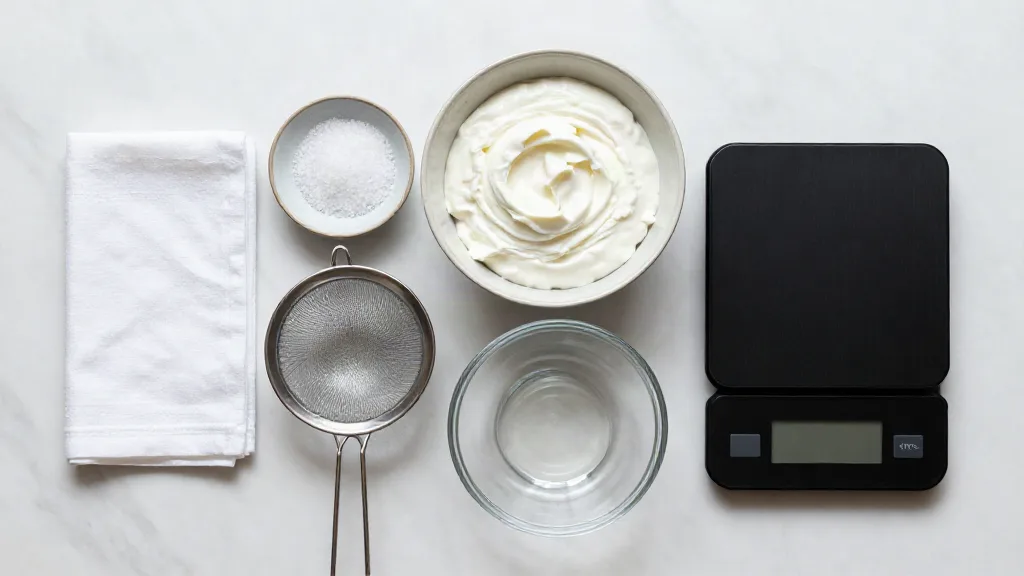
You’ll also need: a fine-mesh sieve, cheesecloth folded into two layers, a deep bowl that holds the sieve above the whey, and a kitchen scale if you want to track the yield.
Shopping list
Send the list to yourself via WhatsApp or email.
- 1,000 g plain full-fat yogurt, no gelatin, starch, pectin or gums
- Fine salt (12 g)
- Cheesecloth
- To serve: extra-virgin olive oil, za'atar or dried mint, flatbread, cucumber, tomato
By the Numbers
- Low-fat yogurt with stabilizers, 24 hours: 1,000 g yogurt to 790 g labneh (78%), 222 g whey
- Full-fat yogurt, 24 hours: 1,000 g yogurt to 530 g labneh (52%), 482 g whey
- Salt: 12 g per 1,000 g of yogurt (1.2%), mixed in before straining
- Straining temperature: 4°C or below, in the fridge
- Labneh balls: about 215 g of 48-hour labneh made 10 to 11 balls of 20 g
Before You Start: What to Watch For
- Read the yogurt label. Plain full-fat yogurt with no added gelatin, starch, pectin or gums drained easily. The low-fat yogurt with stabilizers held on to its whey and stayed soft.
- Salt before straining. Mixing the salt in first gave an evenly seasoned labneh, with no need to work salt into the finished cheese.
- Strain in the fridge. All my tests drained covered, at 4°C or below. The USDA gives 40°F (4°C) or below as the safe refrigerator temperature.
- Don’t squeeze or press. I let the whey drain on its own. The 48-hour labneh still came out smooth, not chalky.
- Weigh rather than guess. If you check at 12 hours and weigh both the labneh and the whey, you’ll know exactly where you are instead of judging by eye.
- Stop when it suits the job. You don’t need 48 hours for good labneh. Pull it when the texture fits how you’ll use it.
Doneness Cues at a Glance
| Stage | Look | Feel | Taste |
|---|---|---|---|
| 12 hours | Holds a shallow swirl, slightly loose at the edges | Very easy to spread, won’t hold a ball | Mildly tangy |
| 24 hours | Holds clean ridges from a spoon | Dense but still easy to spread | More concentrated tang |
| 48 hours | Compact, with clean spoon marks | Firm enough to roll with oiled hands | Strongest tang |
Method
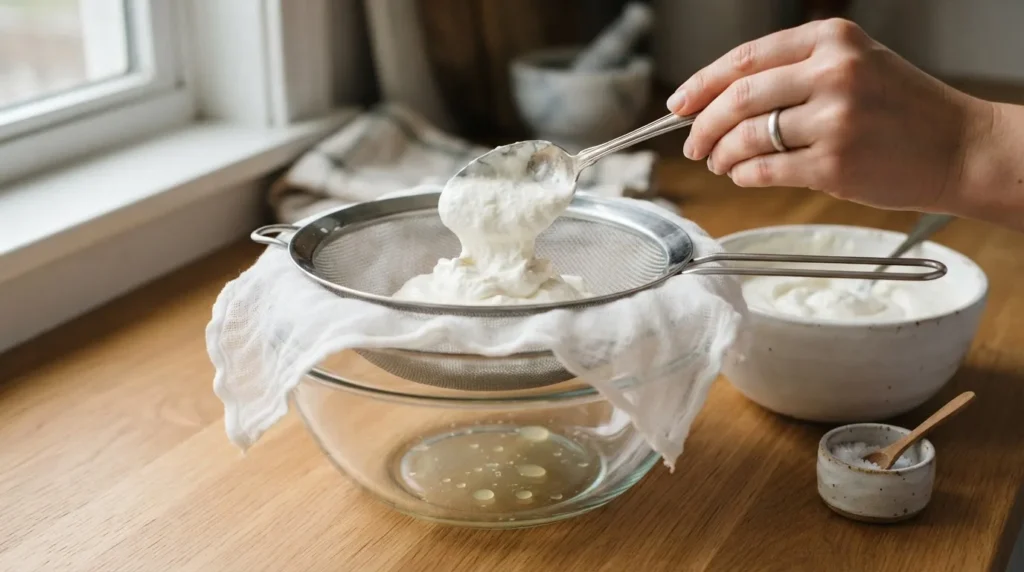
- Stir the yogurt. Stir 1,000 g plain full-fat yogurt gently until smooth.
- Salt it. Mix in 12 g fine salt until evenly combined. Your mixture will weigh about 1,012 g.
- Set up the strainer. Line a fine-mesh sieve with cheesecloth folded into two layers and set it over a deep bowl, leaving space underneath for the whey to collect.
- Fill the cloth. Spoon the salted yogurt into the cloth. Don’t twist or squeeze it.
- Cover and refrigerate. Cover the sieve and keep it in the fridge at 4°C or below, away from uncovered foods.
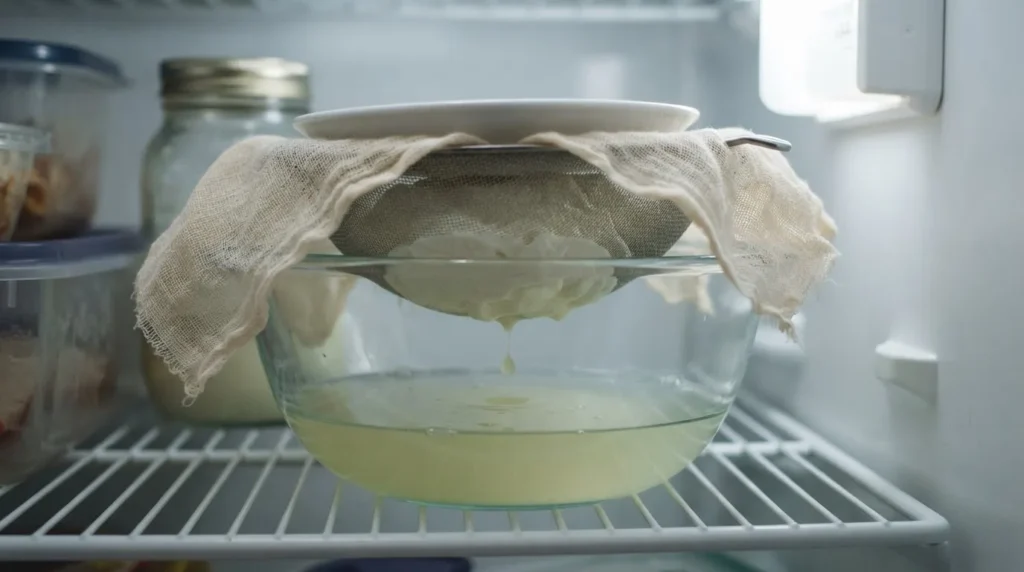
- Check at 12 hours. For a soft, spreadable labneh, stop here: it should hold a shallow swirl from a spoon but not a ball shape. In my test, each 506 g portion gave about 330 g of labneh at this point.
- Stop at 24 hours for the main recipe. The labneh is ready when it’s dense but still easy to spread and holds ridges from a spoon. From 1,000 g of full-fat yogurt, I got 530 g of labneh and 482 g of whey.
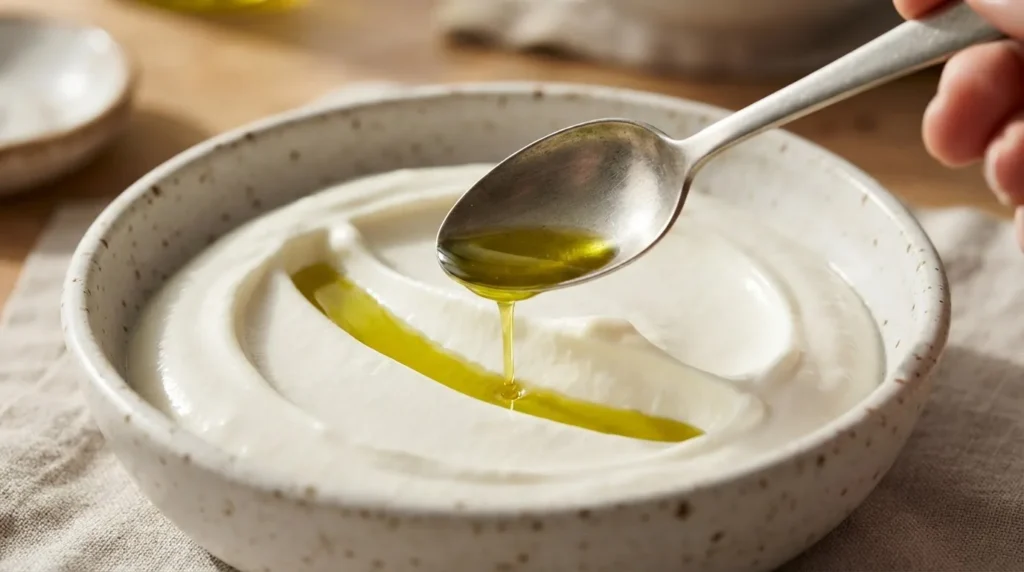
- Or go to 48 hours for balls. At 48 hours the labneh is compact and firm enough to roll, with the strongest tang. In my test, each 506 g portion gave 215 g of labneh.
- Transfer and chill. Scrape the labneh from the cloth into a clean, covered container and keep it in the fridge.
- Serve. Spread the labneh into a shallow bowl, make a swirl with the back of a spoon and fill it with extra-virgin olive oil. Finish with za’atar or dried mint and serve with warm flatbread.
Labneh Balls
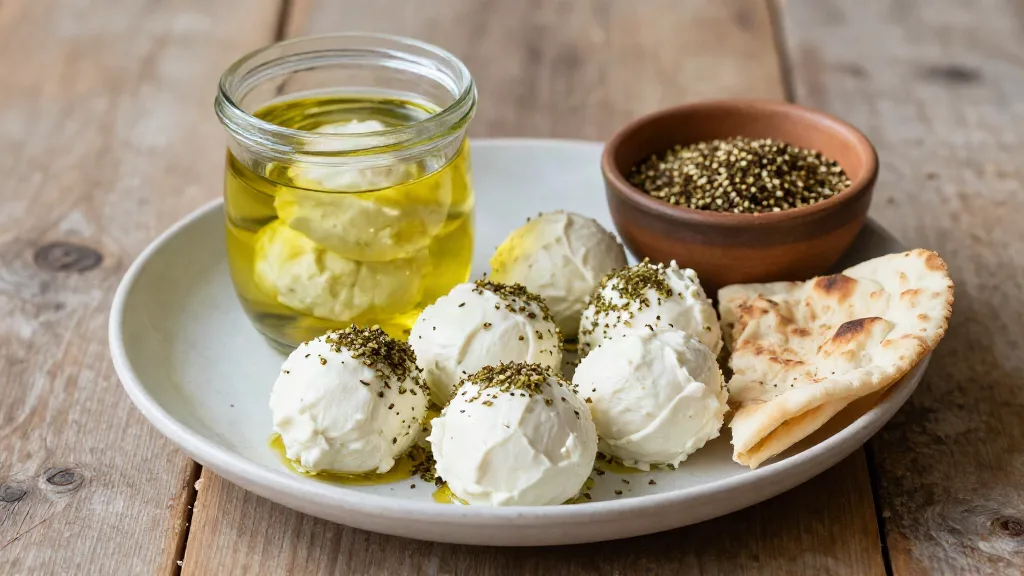
Shape the 48-hour labneh into 20 g balls with lightly oiled hands. About 215 g made 10 to 11 balls. Chill them for 1 hour to firm up the surface, then roll them in za’atar just before serving.
To serve them in oil, use a clean jar of about 450 ml and pour in 150 to 200 ml of olive oil, enough to cover the balls completely. Keep the jar in the fridge with the balls fully submerged, and use clean utensils. I didn’t test how long the balls keep in oil, so treat this as a serving method, not a preserving method. Don’t add fresh garlic or fresh herbs to the oil: the University of Maine Cooperative Extension warns that fresh produce in oil can carry botulism spores. My Mediterranean preserving and brining guide covers safe preserving in more depth.
Tested Substitutions
| Original ingredient | Tested substitute | Result |
|---|---|---|
| Full-fat yogurt without stabilizers (3.8%) | Low-fat yogurt with stabilizers (2%) (tested) | Stayed soft after 24 hours: 790 g labneh and only 222 g whey from 1,000 g. |
| 24-hour straining | 12 hours (tested) | Soft and spreadable, mildly tangy. Best as a dip. |
| 24-hour straining | 48 hours (tested) | Firm, compact and the tangiest. Best for rolling into balls. |
| Cow’s milk yogurt | Sheep or goat yogurt (untested) | I haven’t tried this yet. Let me know in the comments. |
| Cheesecloth | Muslin or a nut-milk bag (untested) | I haven’t tried this yet. |
| Using the whey | Bread dough, smoothies or marinades (untested) | I haven’t tested any whey uses yet. |
Why This Recipe Can Fail (And How to Fix It)
Common Problems
- Won’t thicken: Low-fat yogurt with stabilizers held on to its whey; after 24 hours, only 222 g drained from 1,000 g. Use plain full-fat yogurt with no gelatin, starch, pectin or gums on the label.
- Too firm or dense for a dip: The labneh strained longer than the job needs. Stop at 12 hours for a dip and 24 hours for a spread; save 48 hours for balls.
- Too tangy: The tang concentrates as more whey drains. For a milder labneh, strain for 12 hours.
- Won’t roll into balls: 12-hour and 24-hour labneh are too soft to hold a ball shape. Strain for 48 hours, shape with lightly oiled hands and chill the balls for 1 hour.
- Unevenly salty: Salt worked in after straining is harder to spread evenly. Mix 12 g salt per 1,000 g of yogurt in before straining.
- Whey on the surface in storage: A little whey gathered on the surface by day 3 in my container. Keep it covered and stir before serving; by day 5, stirring restored some spreadability.
What went wrong?
Tap your problem to see the cause and the fix.
Won't thicken
Cause: Low-fat yogurt with stabilizers held on to its whey; only 222 g drained from 1,000 g in 24 hours.
Fix: Use plain full-fat yogurt with no gelatin, starch, pectin or gums on the label.
Too firm or dense for a dip
Cause: It strained longer than the job needs.
Fix: Stop at 12 hours for a dip and 24 hours for a spread; save 48 hours for balls.
Too tangy
Cause: The tang concentrates as more whey drains.
Fix: Strain for 12 hours for a milder labneh.
Won't roll into balls
Cause: 12-hour and 24-hour labneh are too soft to hold a ball shape.
Fix: Strain for 48 hours, shape with lightly oiled hands and chill the balls for 1 hour.
Unevenly salty
Cause: Salt worked in after straining is harder to spread evenly.
Fix: Mix 12 g salt per 1,000 g of yogurt in before straining.
Whey on the surface in storage
Cause: A little whey gathered on the surface by day 3.
Fix: Keep it covered and stir before serving; stirring restored some spreadability.
Serving Suggestions
Spread the 24-hour labneh into a shallow bowl with olive oil and dried mint or za’atar, and serve it with warm flatbread, cucumber and tomato. It belongs on a mezze table next to creamy hummus from dried chickpeas, and smoky baba ganoush, with a bowl of herby salad on the side. The 12-hour version makes a looser dip for olive oil and za’atar, while the 48-hour balls are best rolled in za’atar just before they reach the table.

Storage, Reheating & Make-Ahead
I kept the 24-hour labneh in a clean, covered container in the fridge at 4°C or below and checked its texture over a week. These are texture notes, not a shelf-life guarantee.
| Day | What I noticed |
|---|---|
| 1 | Thick and smooth, little visible whey, tangy but creamy |
| 3 | Slightly firmer, a small amount of whey on the surface, flavor more concentrated |
| 5 | Firmer around the edges, slightly more tangy; stirring restored some spreadability |
| 7 | Denser texture and more pronounced tang |
Shelf life depends on how the labneh is made and stored, so use clean utensils every time, keep it covered and trust your senses. There’s nothing to reheat, and I haven’t tested freezing. For make-ahead, start the strain the day before you need it: 24 hours in the fridge gets you there.
For the oil you serve it with, my guide on how to store olive oil explains how to keep it fresh.
What I’d Test Next
- Two full-fat yogurts with different labels, strained for exactly 24 hours with the same salt, weighing both the labneh and the whey, to see how much the yogurt formula changes the yield.
- Sheep or goat yogurt against cow’s milk yogurt.
- Uses for the whey, such as bread dough or a marinade.
Continue Cooking
- Crispy falafel from dried chickpeas
- Muhammara, roasted red pepper and walnut dip
- Mujadara, lentils and rice with crispy onions


Homemade Labneh
- Total Time: 24 hours
- Yield: 530 g labneh (approximately 4 servings)
- Diet: Vegetarian
Description
A simple and tangy Levantine yogurt spread that can be adjusted in thickness to suit your taste, perfect for mezze boards or as a dip.
Ingredients
- 1,000 g plain full-fat yogurt (3.8% cow’s milk yogurt)
- 12 g fine salt (about 2 teaspoons)
- Extra-virgin olive oil, for serving
- Za’atar or dried mint, for serving
- Warm flatbread, for serving
- Cucumber and tomato, for serving
Instructions
- Stir the yogurt gently until smooth.
- Mix in the salt until evenly combined.
- Line a fine-mesh sieve with cheesecloth and set it over a deep bowl.
- Spoon the salted yogurt into the cloth without squeezing.
- Cover and refrigerate for 12-48 hours, depending on desired thickness.
- Check at 12 hours for soft spread, at 24 hours for creamy labneh, and at 48 hours for firm balls.
- Transfer the labneh to a clean container and serve with olive oil and za’atar.
Notes
For best results, use plain full-fat yogurt with no additives. Adjust straining times for desired texture.
- Prep Time: 10 minutes
- Cook Time: 0 minutes
- Category: Appetizer
- Method: Straining
- Cuisine: Mediterranean


