

Tabbouleh (Parsley-Forward Lebanese Salad)
Tabbouleh is one of those salads I make when I want something fresh but I do not want to cook a whole “thing.” You know the vibe: it is hot out, you have random produce in the fridge, and you need a lunch that actually feels energizing. This parsley-forward Lebanese salad checks every box because it is bright, lemony, and it somehow tastes even better after it hangs out for a bit. I started making it years ago after tasting a version that was basically a green cloud of herbs with little pops of tomato, and I have been hooked ever since. If you have ever felt bored by sad salads, this is your reset button.
Etymology
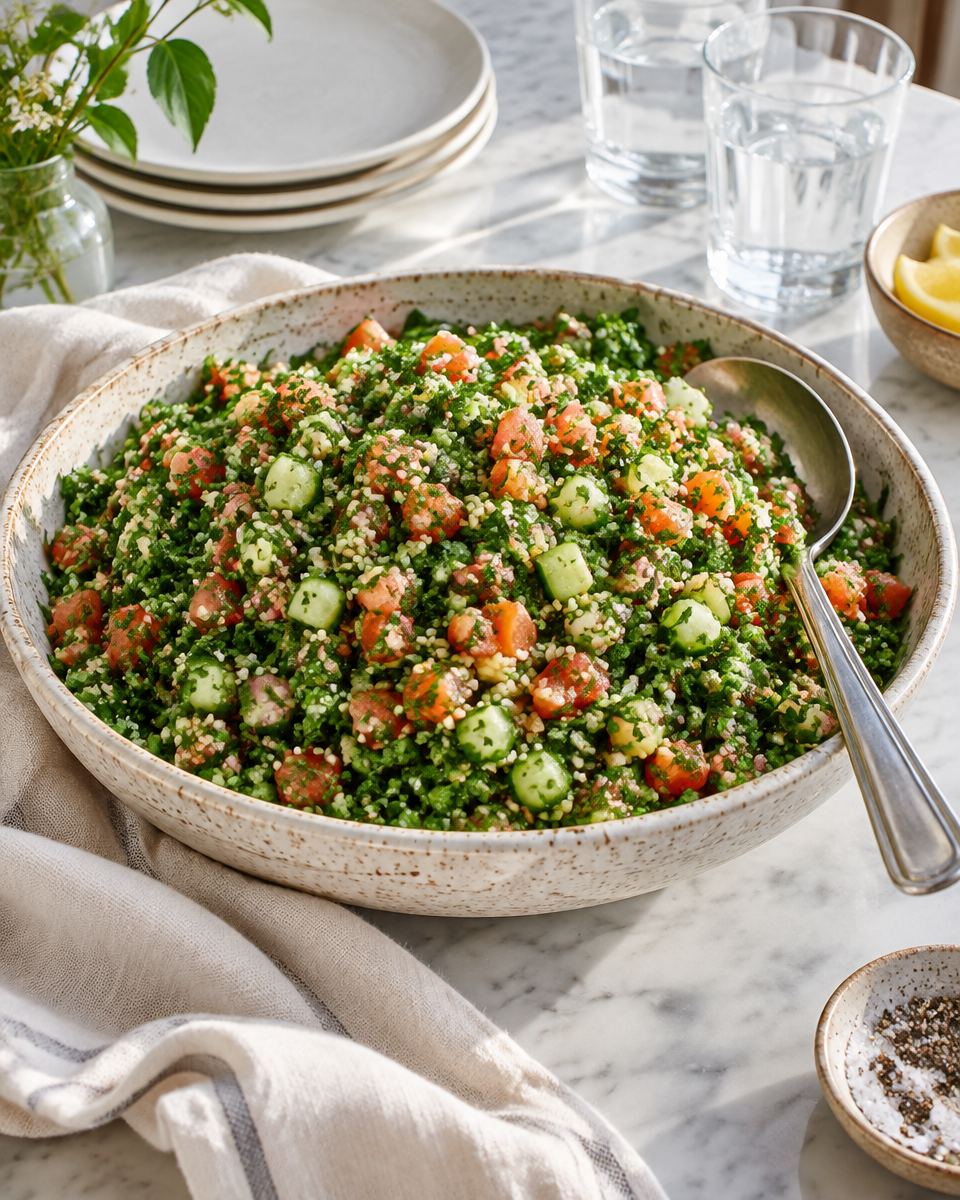
The name “tabbouleh” (also spelled tabouli or tabbouli) comes from Arabic. You will often see it connected to a root that carries the idea of “seasoning” or “spicing,” which honestly makes sense when you taste it. Good tabbouleh is not bland. It is seasoned from the inside out with lemon juice, salt, and good olive oil, plus that peppery, green bite from parsley.
I like knowing little language details like this because it tells you what the dish is trying to be. It is not meant to be a bowl of grains with a few herbs sprinkled on top. It is meant to be lively and well seasoned, and the herbs are the main character.
If you are leaning into this style of eating more often, I also keep a beginner friendly guide bookmarked for friends who ask where to start. This one is genuinely helpful: Mediterranean diet guide for beginners.
History
Tabbouleh is closely tied to the Levant, especially Lebanon and Syria, where parsley and other fresh herbs are everyday staples. It is traditionally part of mezze, that beautiful spread of little dishes meant for sharing, nibbling, and talking for way longer than you planned. I love that it is not a “special occasion only” recipe, but it still feels special when you make it at home.
Over time, tabbouleh traveled and changed a bit depending on where people landed. Some versions are heavier on bulgur, and others are almost all herbs. My personal preference is the parsley-forward Lebanese salad style, because that is the one that makes me feel like I am eating something truly fresh, not just filling.
One small practical note from my own kitchen: tabbouleh is one of those dishes where storage matters. If you plan to make it ahead, keep the chopped tomatoes separate until closer to serving so it does not get watery. I learned that the hard way after packing a lunch that turned into parsley soup by noon.
And since fresh flavors often go hand in hand with smart prepping, I also like having preserving tricks up my sleeve, especially when I buy too many herbs. This guide has good ideas: Mediterranean preserving and brining guide.
Key Ingredients in Tabbouleh
Let us talk about what actually makes tabbouleh taste like tabbouleh. This is not a long ingredient list, but each ingredient really matters. When people tell me their tabbouleh tasted flat, it is usually because the parsley was tired, the lemon was weak, or the ratios were off.
My non negotiables for great flavor
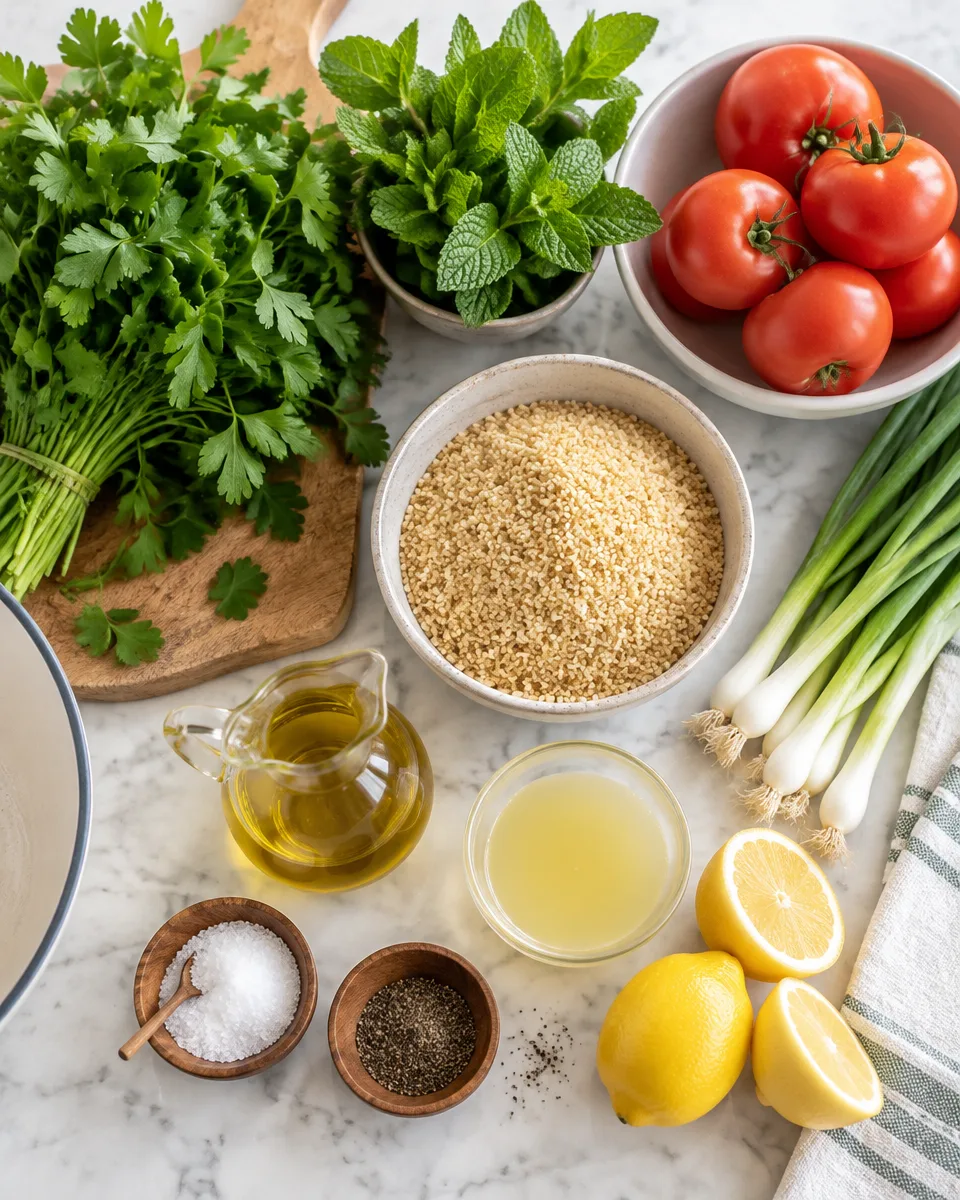
- Parsley: Flat leaf parsley is the classic. Curly can work in a pinch, but flat leaf tastes cleaner and is easier to chop evenly.
- Mint: Fresh mint adds that cool lift. You do not need a ton, but do not skip it if you can help it.
- Tomatoes: Use ripe tomatoes, and remove some of the watery seeds if they are extra juicy.
- Green onions: They give bite without taking over.
- Bulgur: Fine bulgur is traditional. It soaks quickly and blends into the salad instead of turning it into a grain bowl.
- Lemon juice: Fresh squeezed, always. This is where the sparkle comes from.
- Olive oil: Use one you actually like the taste of. It is not hidden in this recipe.
- Salt and pepper: Simple, but essential for waking everything up.
About olive oil for a second: tabbouleh is one of the easiest places to taste the difference between a decent bottle and a really good one. If you want a quick refresher on choosing and using it, this is worth a read: how to cook with olive oil guide.
And yes, tabbouleh is often gluten friendly adjacent, but not gluten free if you use bulgur, since bulgur is wheat. If you need a swap, you can use quinoa, or even riced cauliflower, but it will move away from the classic Lebanese texture. I still like it, just calling it what it is: a tabbouleh inspired salad.
How to Make Tabbouleh
This is the part where I want you to slow down just a tiny bit. Tabbouleh is simple, but it rewards you for paying attention to a few details. The biggest secret is chopping. The herbs should be finely chopped so the salad feels fluffy, not chunky. Put on a podcast, take your time, and it becomes kind of relaxing.
Step by step, the way I actually do it
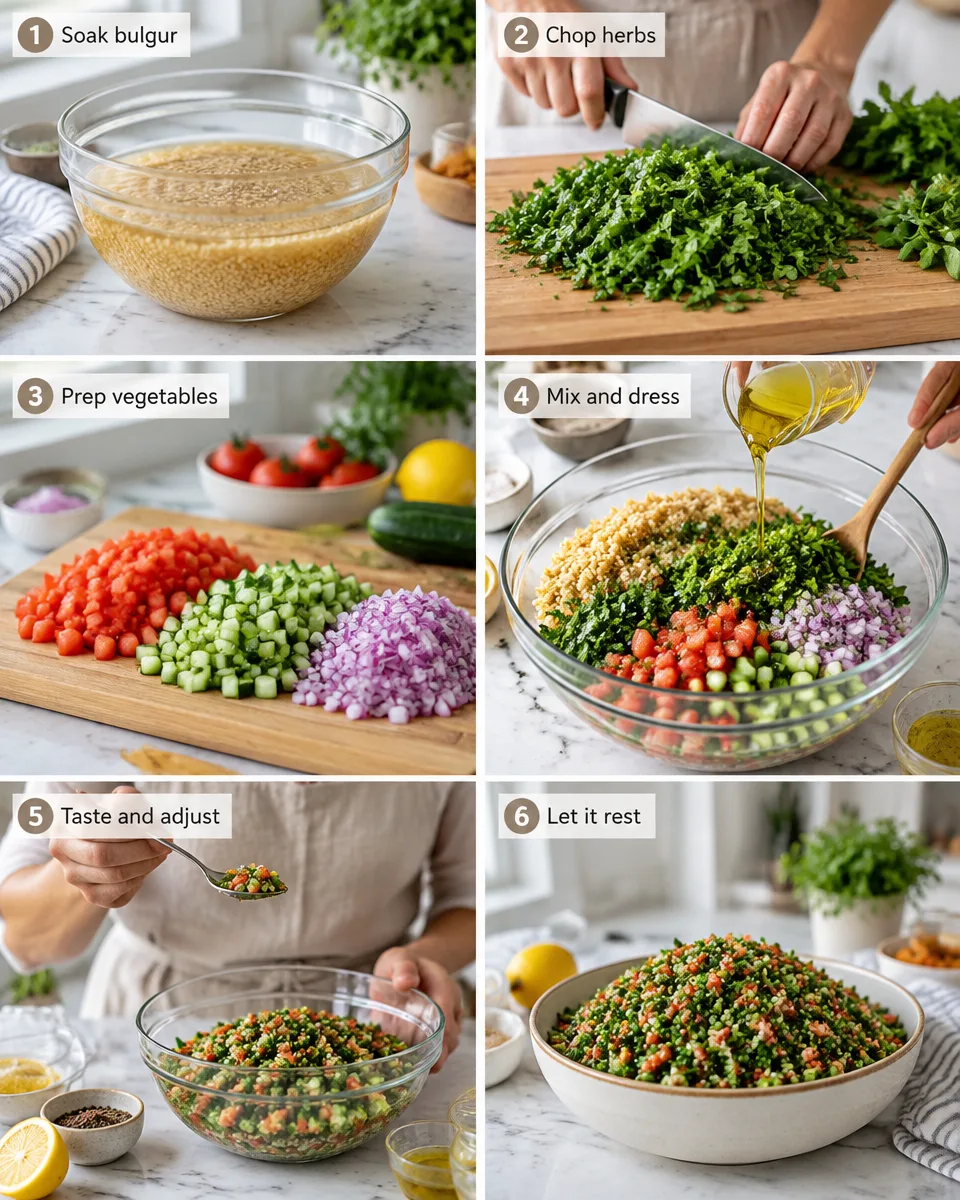
1) Soak the bulgur. Put fine bulgur in a bowl and cover it with water. Let it sit about 10 to 15 minutes until it softens. Drain well and squeeze out extra water if needed. You want it tender, not soggy.
2) Chop the parsley and mint. Wash and dry the herbs really well. Wet herbs make watery tabbouleh, and nobody wants that. Chop parsley finely, then do the same with mint. If the stems are thick, trim them. If they are thin and tender, they are fine.
3) Prep the vegetables. Dice tomatoes small. Slice green onions thin. If your tomatoes are super juicy, scoop out some seeds first.
4) Mix, then dress. In a big bowl, combine parsley, mint, tomatoes, green onions, and bulgur. Add lemon juice, olive oil, salt, and pepper. Mix well.
5) Taste and adjust. This is where tabbouleh becomes your tabbouleh. More lemon for brightness, more salt for balance, more olive oil for richness. I usually add one more pinch of salt than I think I need, then it suddenly tastes right.
6) Let it rest. If you have 15 to 30 minutes, let it sit in the fridge. The flavors settle in and it tastes more “together.”
Practical tip from many lunches later: if you are packing tabbouleh for later, keep a lemon wedge on the side. A quick squeeze right before eating brings everything back to life.
If you are into meal prep, tabbouleh fits nicely into a bigger Mediterranean style week. I like pairing it with simple roasted veggies, and this guide has a lot of good combos: roasted Mediterranean vegetables guide.
What to Serve With Tabbouleh
Tabbouleh works in so many situations. It can be a side dish, a light lunch, or the fresh thing that balances out richer foods. It is also one of my favorite “bring to a gathering” recipes because it looks pretty, it travels well, and it gives everyone a break from heavy dips.
Easy serving ideas I actually use
With grilled foods: Chicken, shrimp, kofta, or even grilled halloumi. The lemony herbs love anything smoky.
As part of a mezze plate: Hummus, labneh, olives, sliced cucumbers, and warm pita. If you want to keep it casual, store bought hummus is totally fine.
In wraps: Stuff it into pita with falafel or leftover chicken, plus a little yogurt sauce.
As a bowl base: Add chickpeas, cucumbers, and a soft boiled egg, and suddenly it is a full meal. If you like that kind of build your own situation, you might enjoy this: Mediterranean grain bowls guide.
Next to something cozy: I love tabbouleh next to roasted chicken thighs or a warm lentil soup. It gives that fresh, crunchy contrast that makes the whole plate feel more exciting.
One more thing: tabbouleh is usually best the day you make it, but I happily eat leftovers the next day. If it looks a little tired, add a handful of fresh parsley and a squeeze of lemon. It perks right up.
A fresh salad you will keep coming back to
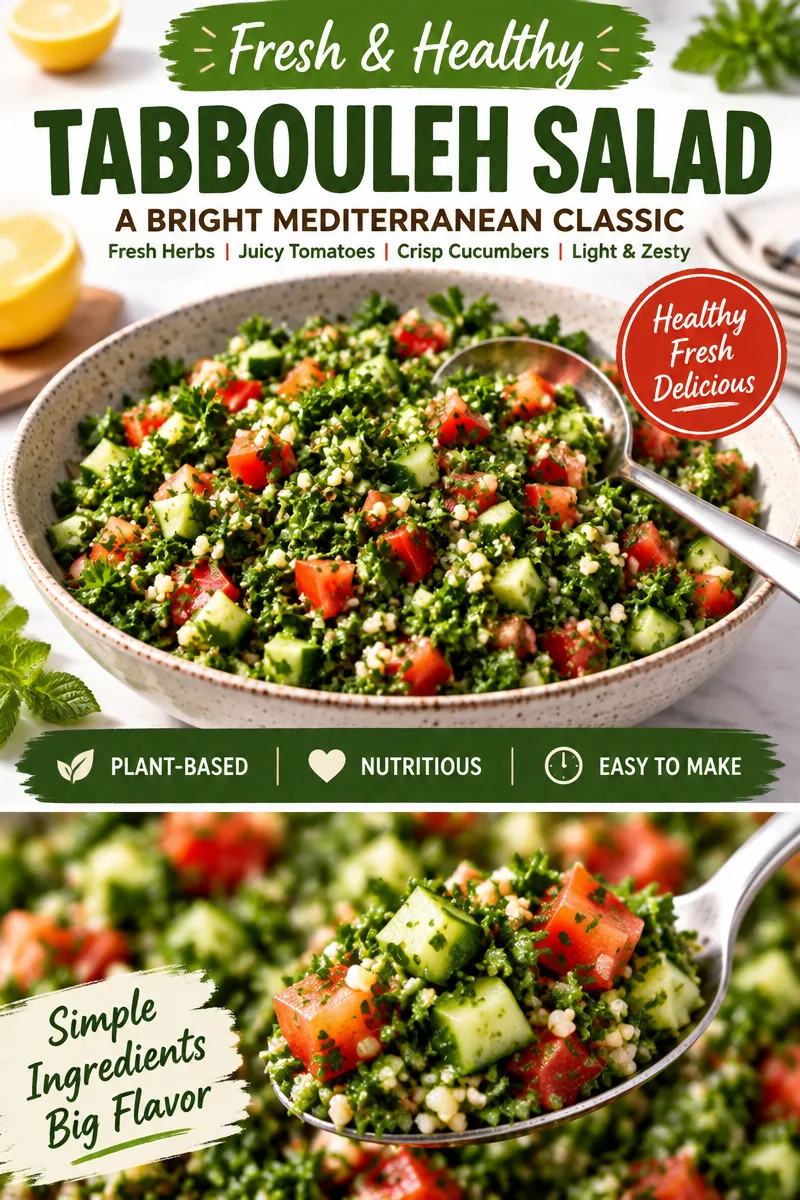
If you take anything from this, let it be this: tabbouleh is all about fresh herbs, bold lemon, and a good chop. Once you make it a couple times, you will stop measuring so much and just follow your taste buds, and that is when it becomes a true staple. If you want to read more background and variations, the Tabbouleh – Wikipedia page is a quick rabbit hole in a good way. Make a bowl this week, eat it outside if you can, and tell me you do not feel at least a little bit happier after the first bite.
Print
Tabbouleh
- Total Time: 45 minutes
- Yield: 4 servings
- Diet: Vegetarian
Description
A bright, lemony Lebanese salad packed with fresh parsley, mint, and tomatoes, perfect for warm weather.
Ingredients
- 1 cup fine bulgur
- 1 bunch flat leaf parsley, finely chopped
- 1/4 cup fresh mint, finely chopped
- 2 ripe tomatoes, diced
- 3 green onions, sliced
- 1/4 cup fresh lemon juice
- 1/4 cup olive oil
- 1 tsp salt
- 1/2 tsp black pepper
Instructions
- Soak the bulgur. Put fine bulgur in a bowl and cover it with water. Let it sit about 10 to 15 minutes until it softens. Drain well and squeeze out extra water if needed.
- Chop the parsley and mint. Wash and dry the herbs really well. Chop parsley finely, then do the same with mint.
- Prep the vegetables. Dice tomatoes small and slice green onions thin.
- Mix all ingredients in a big bowl: parsley, mint, tomatoes, green onions, and bulgur. Add lemon juice, olive oil, salt, and pepper. Mix well.
- Taste and adjust seasoning according to your preference.
- Let it rest in the fridge for 15 to 30 minutes before serving to allow flavors to meld.
Notes
Serve with grilled meats or as part of a mezze plate. Store chopped tomatoes separately until serving to avoid a watery salad.
- Prep Time: 15 minutes
- Cook Time: 0 minutes
- Category: Salad
- Method: No cooking required
- Cuisine: Lebanese


