

Roasting Vegetables the Mediterranean Way: The Complete Guide
The night I finally pulled a perfect tray of roasted eggplant out of my oven, golden at the edges, creamy in the middle, glossy with olive oil, I stood at the counter and ate half of it with my fingers before anyone else got a bite. For years, my roasted vegetables had come out pale, soggy, and sad. That night, they tasted like a summer evening on a Greek island.
Most of us need that kind of breakthrough. USDA MyPlate recommends that most adults eat 2 to 3 cups of vegetables a day. Yet the CDC reports that only about 9% of American adults actually eat enough vegetables.
I was part of that statistic for longer than I like to admit. One summer, I counted: I threw away around 15 trays of roasted vegetables that were steamed instead of browned, burnt on the outside and raw in the middle, or swimming in their own juices. That was roughly $120 of beautiful farmers market produce, and most of it went straight into the compost.
If you’ve been piling vegetables onto one small pan, roasting at a timid temperature, and wondering why they never taste like a restaurant’s, you’re not alone, and it isn’t your fault. Nobody ever taught most of us the rules. If you’re new to cooking this way, my Mediterranean diet guide explains why vegetables fill half of every plate.
Here’s what I learned after all those sad trays: great roasted vegetables come down to just a few things you can control. Heat, space, oil, cut size, and timing. Get those right, and even the humblest carrot turns sweet, caramelized, and irresistible. In this guide, I’ll show you exactly how Mediterranean cooks roast every kind of vegetable, from eggplant and peppers to potatoes and cauliflower, plus a timing chart, regional recipes, and fixes for every common problem.
The Science of Roasting: Why Vegetables Turn Sweet and Golden
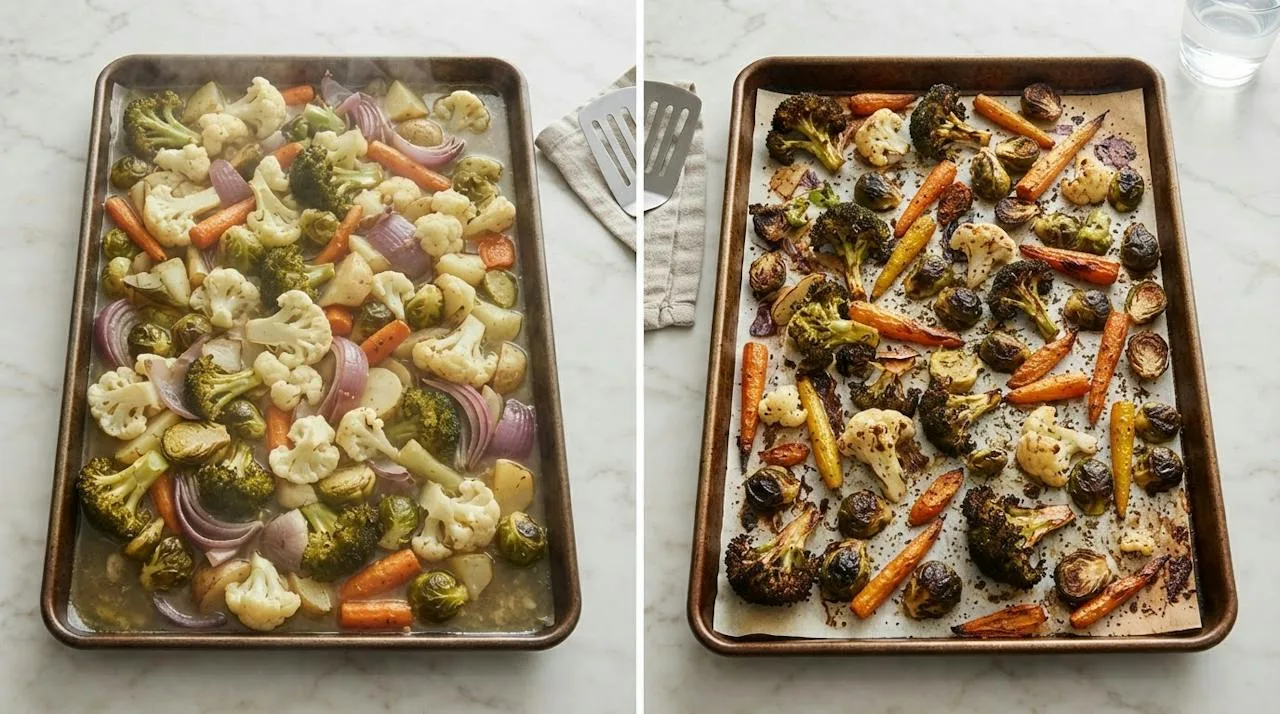
Every tray of roasted vegetables is a small chemistry experiment, and once you understand it, you’ll never crowd a pan again.
What Actually Happens in the Oven
Roasting is a dry-heat method. Hot air surrounds the vegetables, drives off surface moisture, and then browns them. University of Kentucky Cooperative Extension describes roasting as cooking with “dry, indirect heat” and recommends roasting vegetables at 375°F or higher.
That browning is where the magic happens. University of Illinois Extension explains that the Maillard reaction is a complex set of chemical reactions that happen when proteins and sugars in food are heated, creating browning and distinctive flavors. It depends on three things: heat, moisture, and time. That’s why a roasted potato tastes so different from a boiled one. Boiling keeps the surface wet and below browning temperatures; roasting dries the surface so browning can begin.
Vegetables also contain natural sugars that caramelize under high heat. Carrots, onions, beets, sweet potatoes, peppers, and squash are especially rich in them, which is why they turn so sweet in the oven.
Mediterranean Secret: Moisture is the enemy of browning. Dry your vegetables thoroughly after washing. Even a little water on the surface means the oven has to steam it off before the browning can start.
Why Crowding Ruins Everything
When vegetables are packed tightly, the moisture they release has nowhere to go. It pools on the pan and turns into steam, and steamed vegetables don’t brown. They go soft, pale, and watery. Spread them out with space between each piece, and that moisture evaporates quickly, letting the dry heat do its work.
My rule: if you can’t see the pan between the pieces, use a second pan.
Common Mistake: Roasting a whole head of cauliflower, three peppers, and an eggplant on one small pan “to save dishes.” You’ll end up with steamed vegetables and a soggy mess. Two pans of golden vegetables beat one pan of mush every time.
Roasting and Nutrition
Cooking changes vegetables, sometimes for the better. When researchers at Cornell University heated tomatoes, they found that vitamin C decreased, but the amount of absorbable lycopene, a red antioxidant pigment, increased, and so did total antioxidant activity. Heat can make some nutrients easier for the body to use, even as it reduces others.
Olive oil plays a role too. A 2019 study in the journal Antioxidants found that when Mediterranean vegetables like eggplant, tomato, and pumpkin were cooked in extra virgin olive oil, phenolic compounds transferred from the vegetables into the oil. The oil and vegetables exchange flavor and natural compounds as they cook together.
The broader point matters most. The Harvard T.H. Chan School of Public Health notes that eating plenty of vegetables and fruits can help lower blood pressure and reduce the risk of heart disease and stroke, and that variety matters because no single vegetable provides every nutrient you need. If roasting makes you eat more vegetables, more often, it’s doing its job.
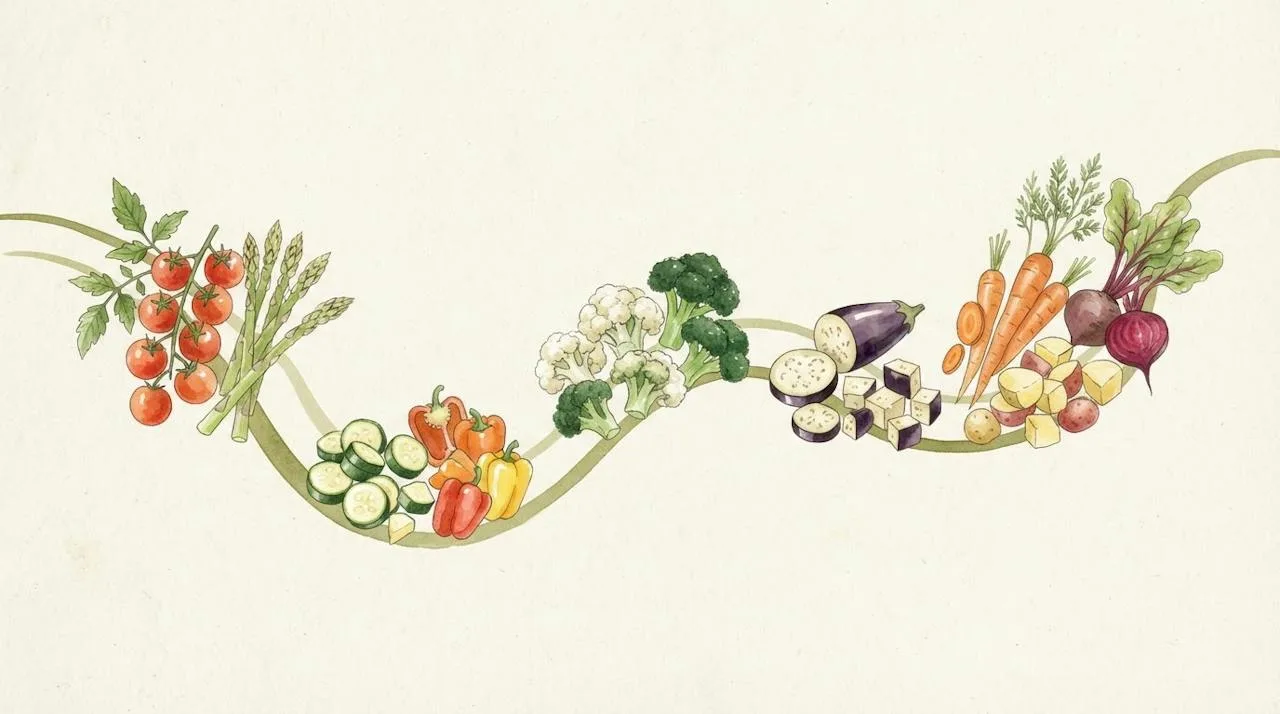
Why Vegetables Sit at the Heart of the Mediterranean Plate
Roasting isn’t just a cooking technique in the Mediterranean; it’s one of the reasons people there eat so many vegetables in the first place.
A Tradition Built on Plants
When UNESCO recognized the Mediterranean diet as part of the Intangible Cultural Heritage of Humanity, it described a way of life built around seasonal, local foods, shared meals, and traditional cooking skills. Vegetables are at the center of it. The Oldways Mediterranean Diet Pyramid, developed with the Harvard School of Public Health and the World Health Organization, places vegetables, fruits, whole grains, beans, herbs, and olive oil at its base, to be eaten at every meal.
In a Greek or Lebanese home, vegetables aren’t a side dish pushed to the edge of the plate. A tray of briam, a bowl of roasted peppers, or a platter of roasted eggplant can be the meal itself, with bread, cheese, or beans alongside.
What the Research Says
The Mediterranean eating pattern is one of the most studied diets in the world. The PREDIMED trial, published in the New England Journal of Medicine, found that adults at high cardiovascular risk who followed a Mediterranean diet supplemented with extra virgin olive oil or nuts had fewer major cardiovascular events than those advised to follow a reduced-fat diet.
That’s why the American Heart Association and the Mayo Clinic both describe the Mediterranean pattern, rich in vegetables and olive oil, as a heart-healthy way to eat. The Dietary Guidelines for Americans even include a Healthy Mediterranean-Style Dietary Pattern among their example eating patterns. And the Harvard T.H. Chan School of Public Health’s review of the Mediterranean diet emphasizes that its benefits come from the overall pattern, not any single food.
Why Roasting Makes It Easier
Here’s the practical truth: people eat more of what tastes good. Raw broccoli and boiled carrots rarely inspire anyone. Roasted broccoli with crispy edges and caramelized carrots with cumin and honey disappear from the table. Roasting turns vegetables from an obligation into a craving, and that’s what makes a vegetable-centered way of eating sustainable for years, not weeks.
Note: This guide is for general cooking education, not medical advice. If you have a health condition or follow a prescribed diet, talk with your doctor or a registered dietitian.
Choosing and Preparing Vegetables for Roasting
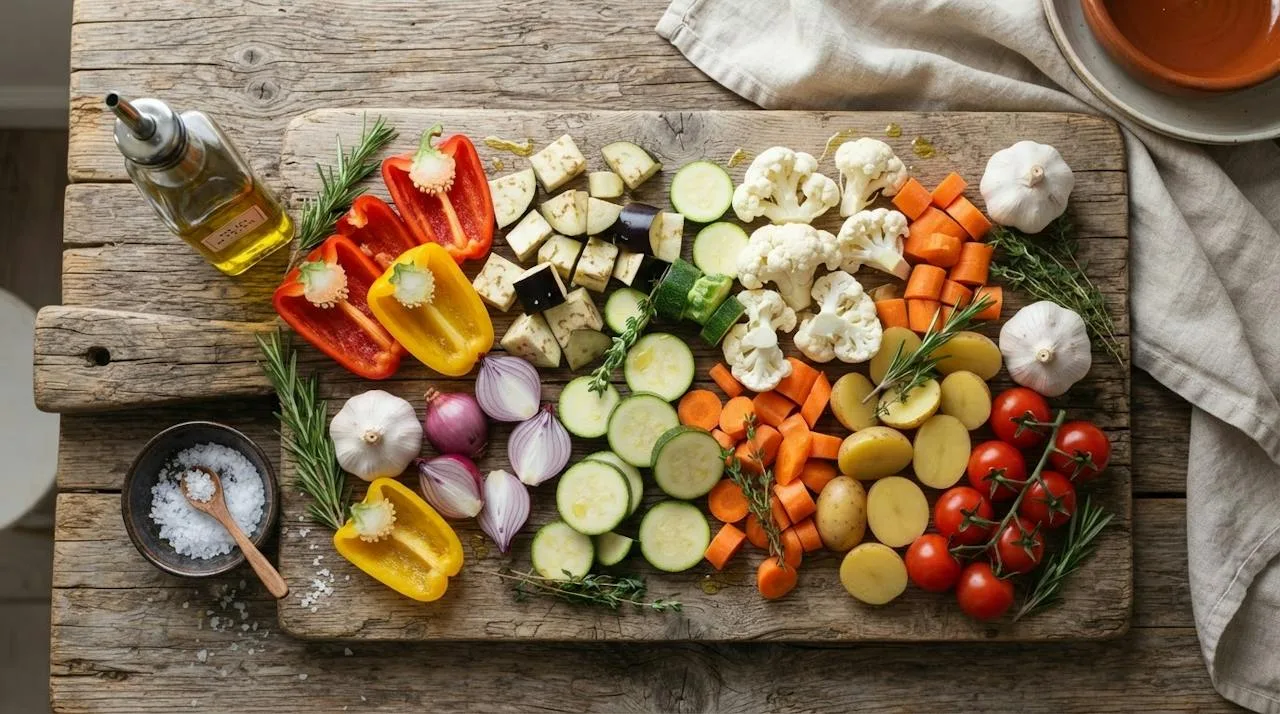
Great roasted vegetables start long before the oven. They start at the market and on the cutting board.
Shop by Season
Mediterranean cooks roast what’s in season, and you should too. Seasonal produce is cheaper, tastes better, and naturally varies your meals throughout the year. The USDA’s SNAP-Ed Seasonal Produce Guide is a helpful way to see what’s at its best right now.
Here’s how I roast through the year:
- Summer: eggplant, zucchini, bell peppers, cherry tomatoes, green beans, corn
- Fall: cauliflower, broccoli, winter squash, Brussels sprouts, fennel, red onions
- Winter: carrots, beets, parsnips, potatoes, sweet potatoes, cabbage
- Spring: asparagus, artichokes, spring onions, baby potatoes, radishes
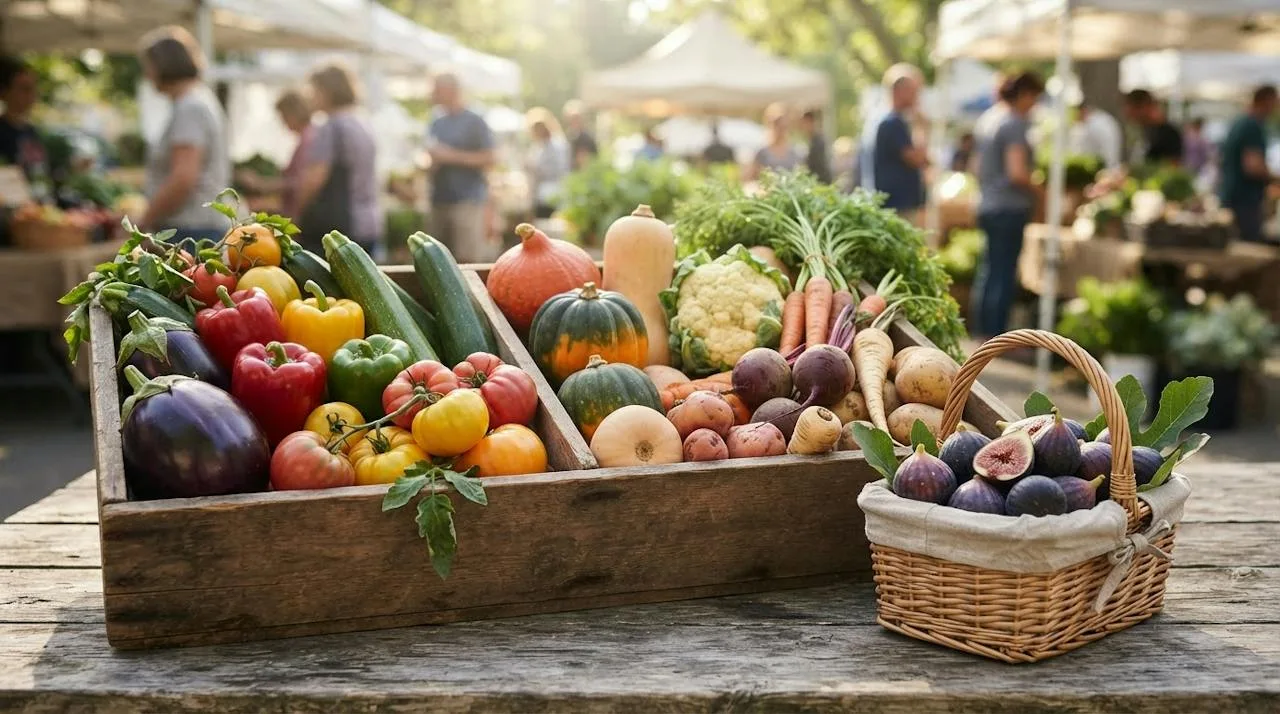
Mediterranean Secret: Buy one vegetable you’ve never roasted every time you go to the market. Fennel, radishes, and cabbage wedges are three of my favorite surprises. They turn sweet and mellow in the oven.
Cut for Even Cooking
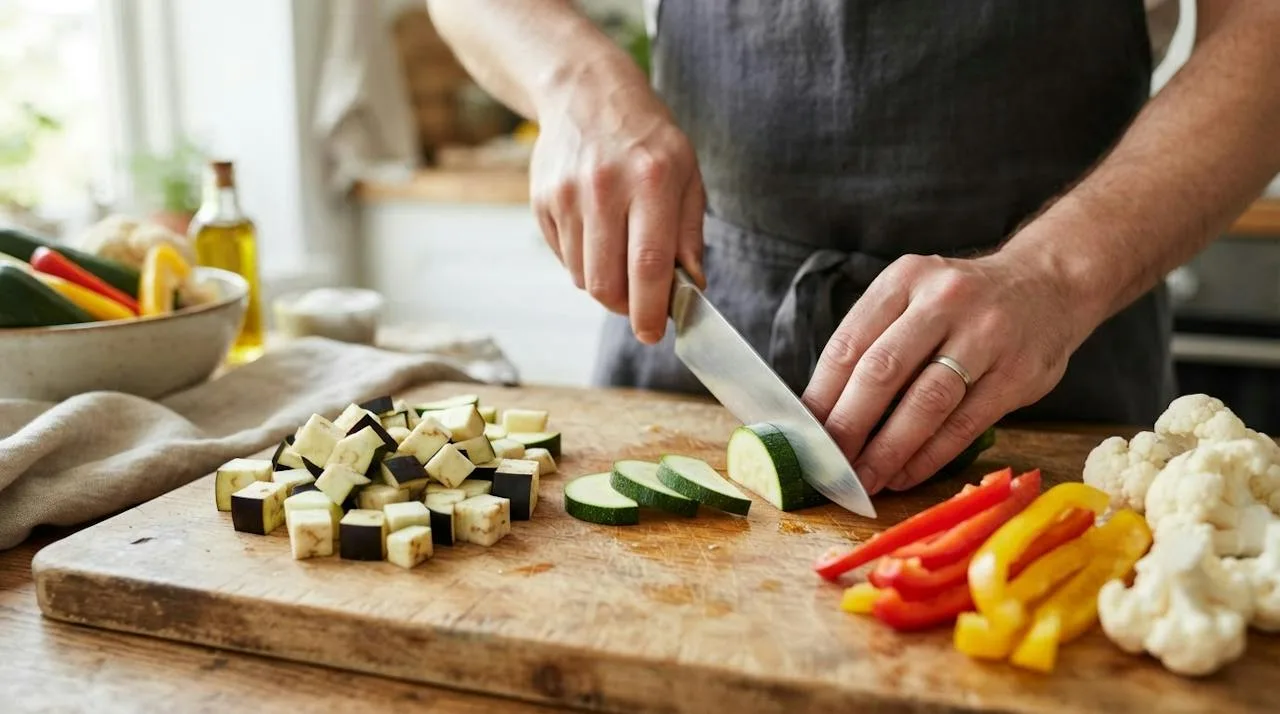
The single biggest cause of uneven roasting is uneven cutting. A tray with tiny pieces and huge chunks will always have some burnt and some raw.
- Cut each vegetable into pieces of the same size, roughly 1 to 1½ inches for most vegetables.
- Cut dense vegetables smaller (carrots, potatoes, beets) and watery vegetables larger (zucchini, tomatoes, eggplant), so they finish closer together.
- Create flat surfaces. Flat sides touch the hot pan and brown deeply. Halve Brussels sprouts, cut carrots on a bias, and slice cauliflower into steaks or flat-sided florets.
- Keep skins on potatoes, eggplant, and squash when you can. They add texture and help pieces hold their shape.
Prepare Eggplant the Right Way
Eggplant is the heart of so many Mediterranean dishes and the vegetable people struggle with most. According to University of Illinois Extension, you should choose eggplants that are firm and heavy with bright, glossy skin, because older eggplants tend to be more bitter. Store them unwashed in the refrigerator for up to a week.
Salting is optional with today’s eggplants, but it helps. Illinois Extension notes that sprinkling salt on cut eggplant removes some water, making the flesh firmer and more “meaty.” Salt the pieces, let them sit 20 to 30 minutes, then pat them very dry before oiling.
Potatoes: A Note on Browning
Potatoes are one vegetable where you want golden, not dark brown. The FDA advises cooking cut potatoes to a golden yellow color rather than a brown color to reduce acrylamide, a compound that forms when starchy foods are cooked at high temperatures. The FDA also suggests soaking raw potato slices in water for 15 to 30 minutes before roasting (then drying them well) and storing potatoes in a cool, dark place outside the refrigerator.
Oil, Salt, and Seasoning: The Mediterranean Foundation
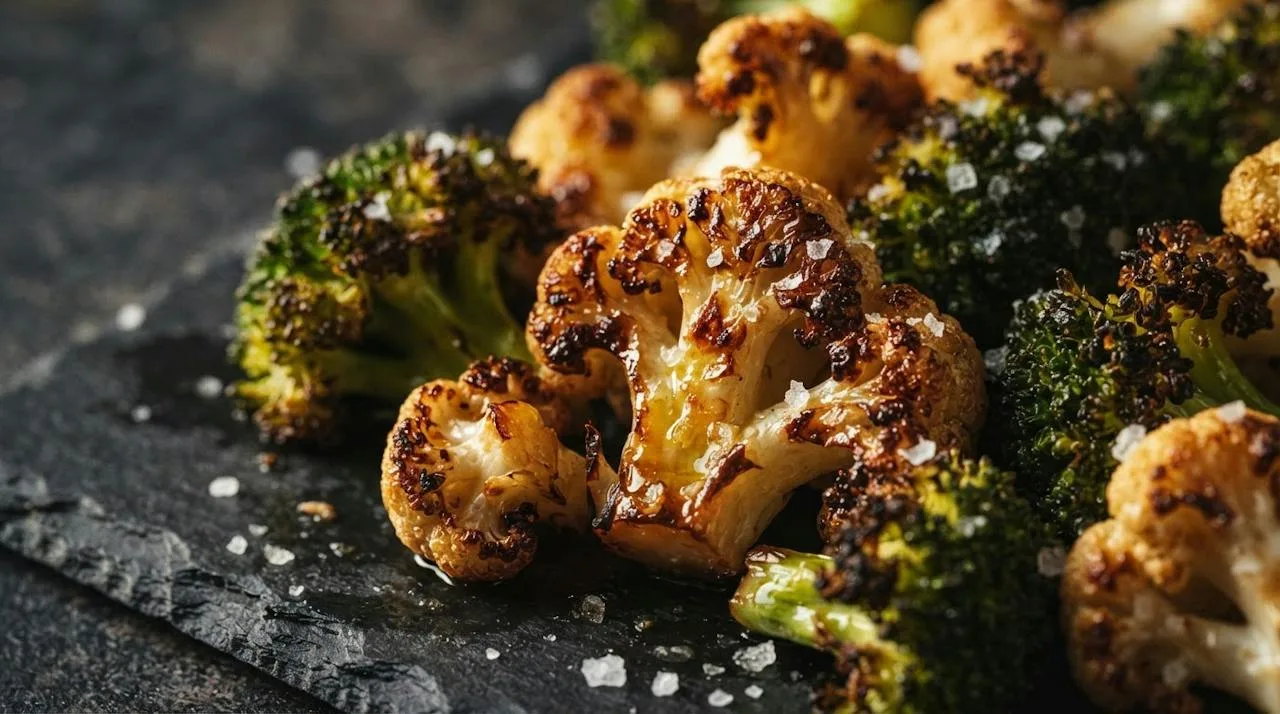
If heat is the engine of roasting, olive oil is the fuel, and Mediterranean cooks are not shy with it.
How Much Olive Oil to Use
Oil does three jobs on a sheet pan: it conducts heat into the surface of each vegetable, helps the browning reactions along, and carries flavor. Too little, and vegetables scorch and dry out. Too much, and they turn greasy.
My guideline is about 1 to 2 tablespoons of extra virgin olive oil per standard sheet pan, enough that every piece looks glossy but not wet. Denser, drier vegetables like potatoes and cauliflower need a little more; watery ones like zucchini and tomatoes need a little less.
Choosing the right bottle matters too. My guide to the best olive oil for roasting explains why extra virgin olive oil handles oven heat better than its reputation suggests, and how to keep a separate, peppery bottle for finishing.
Olive oil is also a healthy swap. The Harvard T.H. Chan School of Public Health counts monounsaturated fats like those in olive oil among the healthy fats when they replace saturated fats such as butter.
Common Mistake: Drizzling oil over vegetables already spread on the pan. The oil pools in spots and misses others. Toss the vegetables with oil and salt in a bowl or directly on the pan with your hands until every surface is coated, then spread them out.
Salt Early, Season in Layers
Salt the vegetables before they go into the oven. Salt draws out a little moisture and seasons from the inside. Then season again at the end with flaky salt, which adds crunch and a final hit of flavor.
Mediterranean Seasonings
Here’s how I season by mood:
- Greek: dried oregano, garlic, lemon zest; finish with lemon juice and feta
- Italian: rosemary, thyme, garlic, red pepper flakes; finish with Parmigiano and basil
- Levantine: za’atar, sumac, cumin; finish with tahini and parsley
- Moroccan: cumin, coriander, paprika, cinnamon, a touch of harissa; finish with yogurt and mint
- Spanish: smoked paprika, garlic; finish with sherry vinegar and almonds
Add dried spices before roasting, but save fresh, delicate herbs like parsley, mint, basil, and dill for the end. They burn quickly in a hot oven.
Roasted Garlic
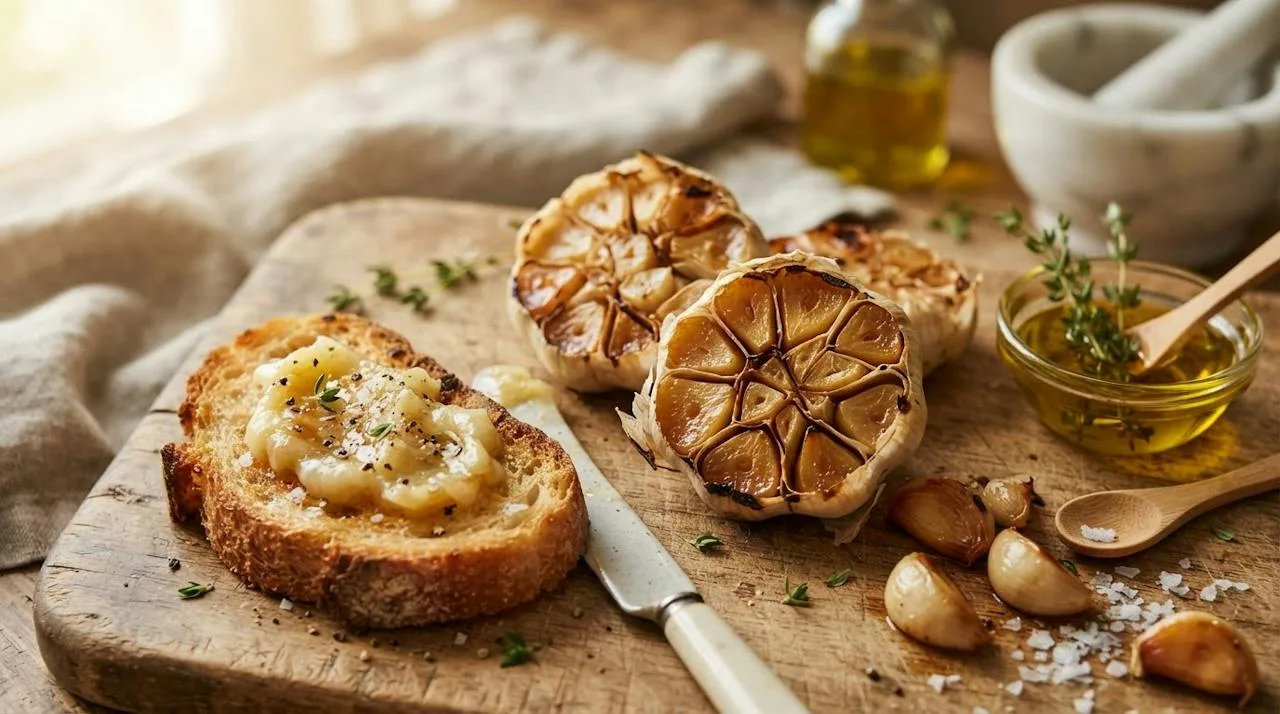
A whole head of garlic, top sliced off, drizzled with olive oil and wrapped in foil, becomes sweet, spreadable, and mellow after about 40 to 50 minutes at 400°F (200°C), when the cloves are soft and golden. Squeeze it onto bread, mash it into dressings, or stir it into hummus.
Common Mistake: Storing roasted garlic in olive oil on the counter. The CDC advises refrigerating homemade oils made with garlic or herbs and throwing them away after 4 days, because those mixtures can allow botulism bacteria to grow. Keep roasted garlic in the refrigerator and use it within a few days.
Mastering Heat, Pans, and Timing
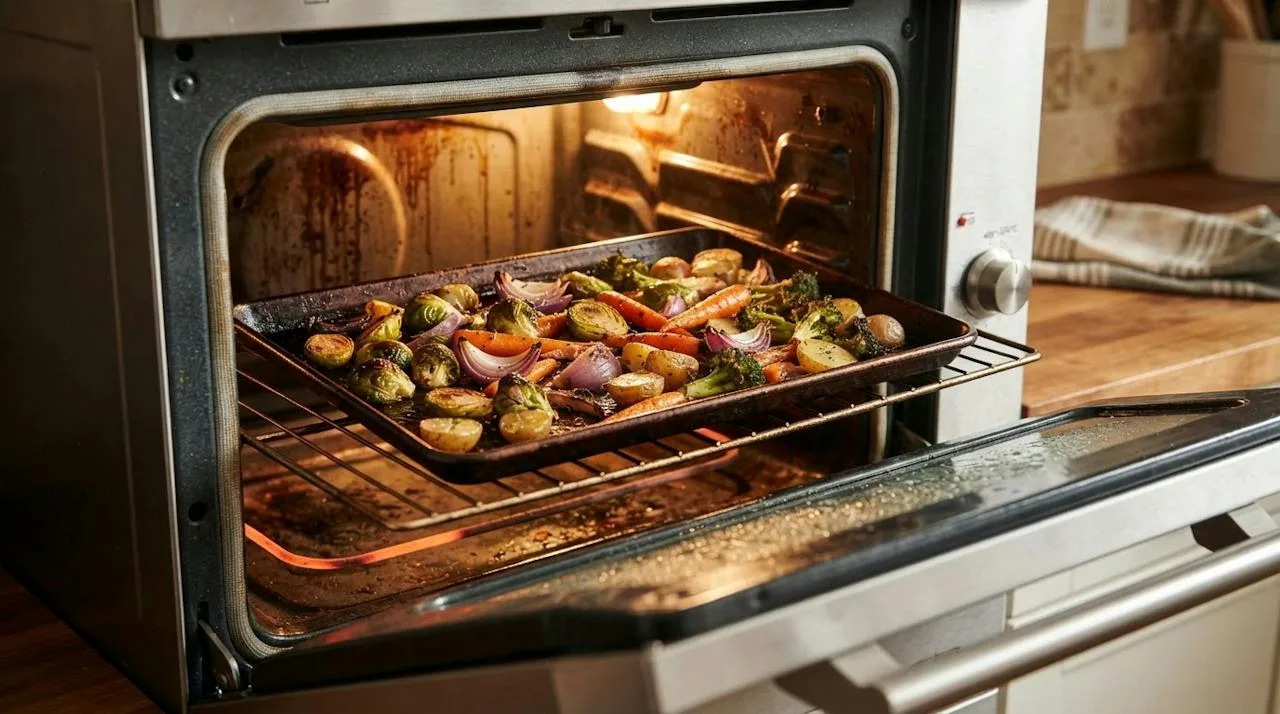
You can do everything else right and still fail here. Temperature, pan choice, and timing decide whether vegetables brown or steam.
The Right Oven Temperature
For most vegetables, I roast at 425°F (220°C). It’s hot enough to brown the outside quickly while the inside turns tender. Some notes:
- 400°F (200°C): good for larger pieces, whole heads of garlic, and dishes like briam that bake in sauce.
- 425°F (220°C): my everyday temperature for nearly everything.
- 450°F (230°C): for quick, crispy results with thin or small pieces like broccoli or chickpeas, watching closely.
Roast on the middle rack for the most even heat. If you’re roasting two pans, place them on the upper and lower thirds and swap them halfway through.
Choose the Right Pan
- Rimmed metal sheet pans are the best all-around choice. They conduct heat well and the low sides let moisture escape.
- Dark pans brown faster than light ones, so watch the bottoms.
- Glass and ceramic baking dishes have higher sides that trap steam; they’re better for gratins and dishes like briam than for crispy roasting.
- Parchment paper makes cleanup easy but slightly reduces browning on the bottom. For maximum caramelization, oil the vegetables directly on a bare metal pan.
Mediterranean Secret: Preheat the empty sheet pan in the oven for 10 minutes before adding the oiled vegetables. They’ll start sizzling the moment they hit the metal, and the bottoms will brown beautifully.
Roasting Time Guide
Roasting times depend on your oven, the size of the pieces, and how full the pan is, so use these as starting points at 425°F (220°C) for roughly 1-inch pieces:
- 10 to 15 minutes: cherry tomatoes, asparagus, thin green beans, sliced mushrooms
- 20 to 25 minutes: zucchini, bell peppers, broccoli florets, red onion wedges
- 25 to 35 minutes: cauliflower florets, eggplant cubes, Brussels sprouts, fennel wedges
- 35 to 45 minutes: carrots, potatoes, sweet potatoes, butternut squash, parsnips
- 45 to 60 minutes: whole beets wrapped in foil, whole heads of garlic, large halved squash
Flip or stir once, halfway through, so the vegetables brown on more than one side.
How to Know When They’re Done
Forget the timer; trust your eyes and a knife:
- Edges are deeply golden or lightly charred in spots
- A knife slides easily into the thickest piece with no resistance
- Surfaces look dry and slightly shriveled, not wet
- The pan smells sweet and nutty, not raw or burnt
If the outside is browning too fast but the inside is still firm, lower the oven to 375°F (190°C) and give it more time.
Roasting Mixed Vegetables Together
The trick to a mixed pan is staggering. Start the slowest vegetables first, then add faster ones partway through so everything finishes together. For example, roast potatoes and carrots for 15 minutes, then add peppers and onions, then add cherry tomatoes for the last 10 minutes. Or cut slow vegetables smaller and fast ones larger so they can go in together.
Reader Story: Jasmine from Atlanta, Georgia, wrote that staggering changed her weeknight dinners. “I used to throw everything in at once and pick out the burnt tomatoes,” she said. “Now I add them in rounds. My kids actually fight over the carrots.”
Roasting Mediterranean Favorites, Vegetable by Vegetable
Some vegetables need special attention. Here’s how I roast the ones I cook most.
Eggplant
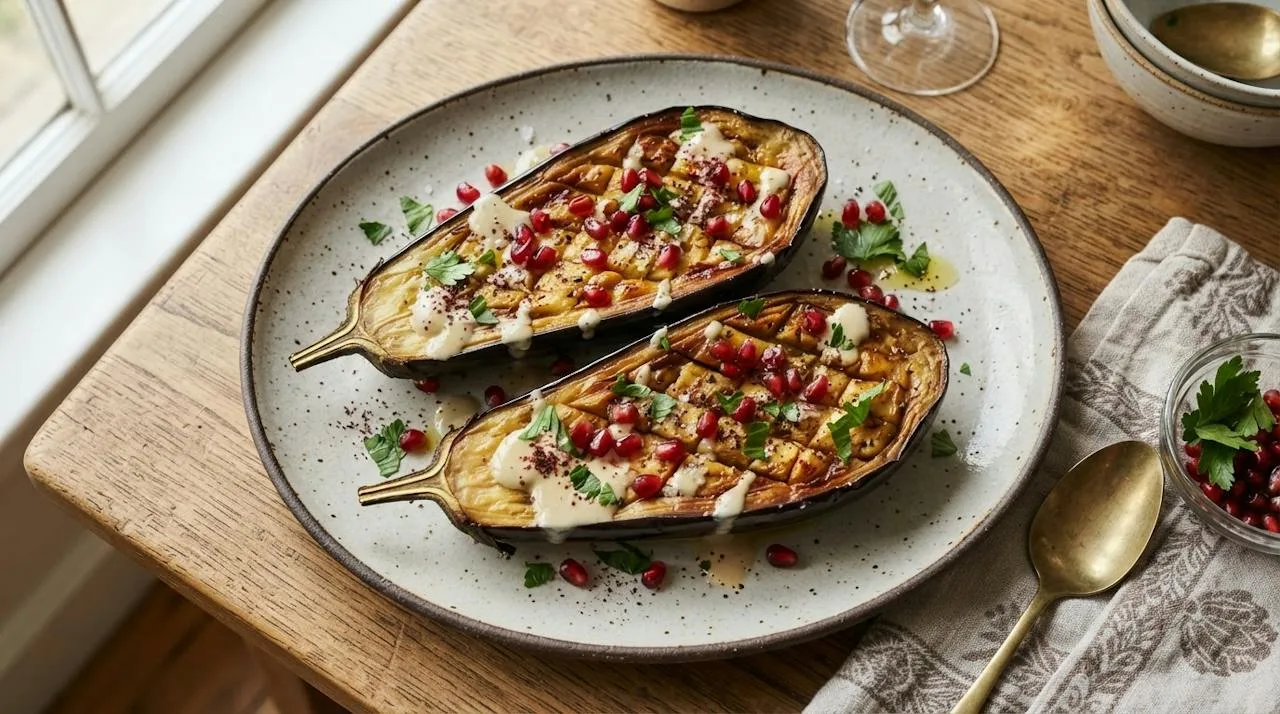
Eggplant is a sponge, which is both its gift and its challenge. It soaks up oil eagerly, then releases it as it collapses into silky, custardy flesh.
- Halves: Score the cut side in a crosshatch, brush generously with olive oil, season, and roast cut-side down at 425°F for about 25 to 35 minutes, until the flesh is completely soft and the skin wrinkles. Flip and finish with tahini, yogurt, or pomegranate.
- Cubes: Salt, rest, pat dry, toss with oil, and roast in a single layer, turning once, until golden on several sides and creamy inside.
Underdone eggplant is spongy and unpleasant. Roast it until it’s truly soft, not just browned.
Bell Peppers
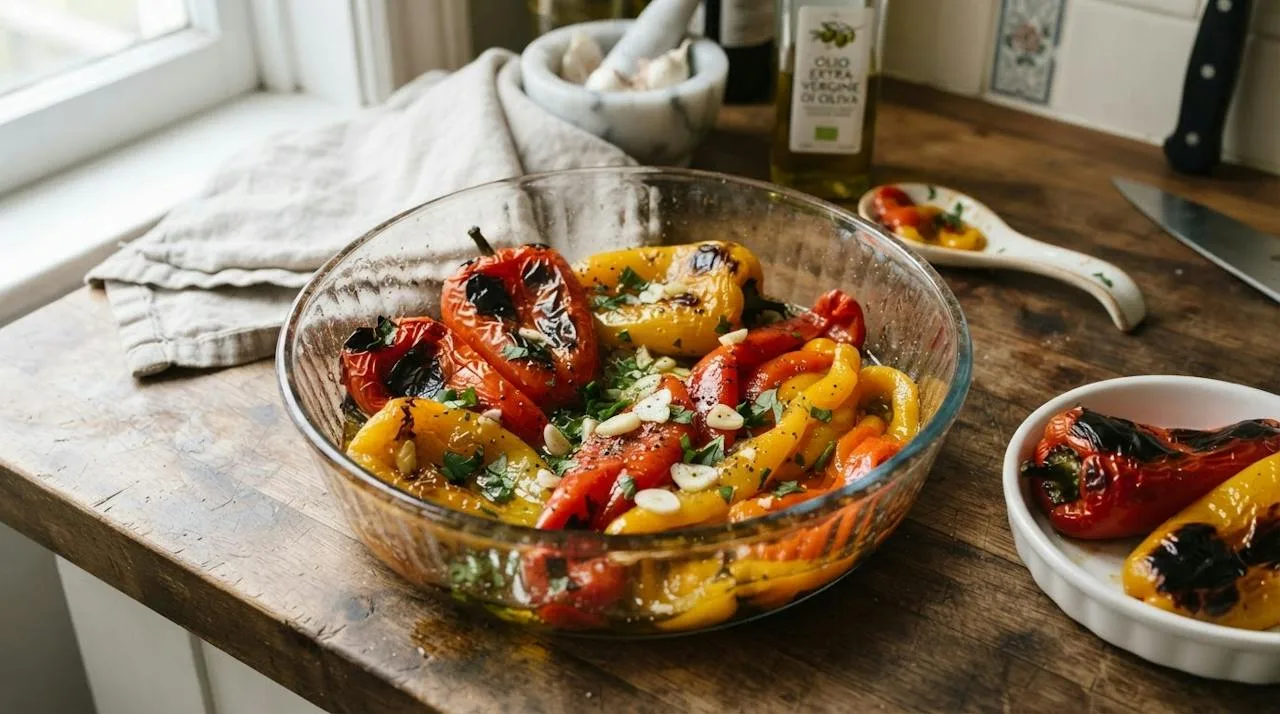
Roast peppers two ways:
- In pieces for sheet pans, about 20 to 25 minutes, until the edges char lightly.
- Whole, for silky roasted peppers to keep in the fridge. Roast at 450°F, turning every 10 minutes, until blistered and blackened in spots all over, about 30 to 40 minutes. Place them in a covered bowl for 10 to 15 minutes to steam, then peel off the skins and remove the seeds.
Dress peeled peppers with olive oil, a splash of vinegar, and salt, and keep them refrigerated. Add fresh garlic just before serving rather than storing it in the oil.
Greek Lemon Potatoes
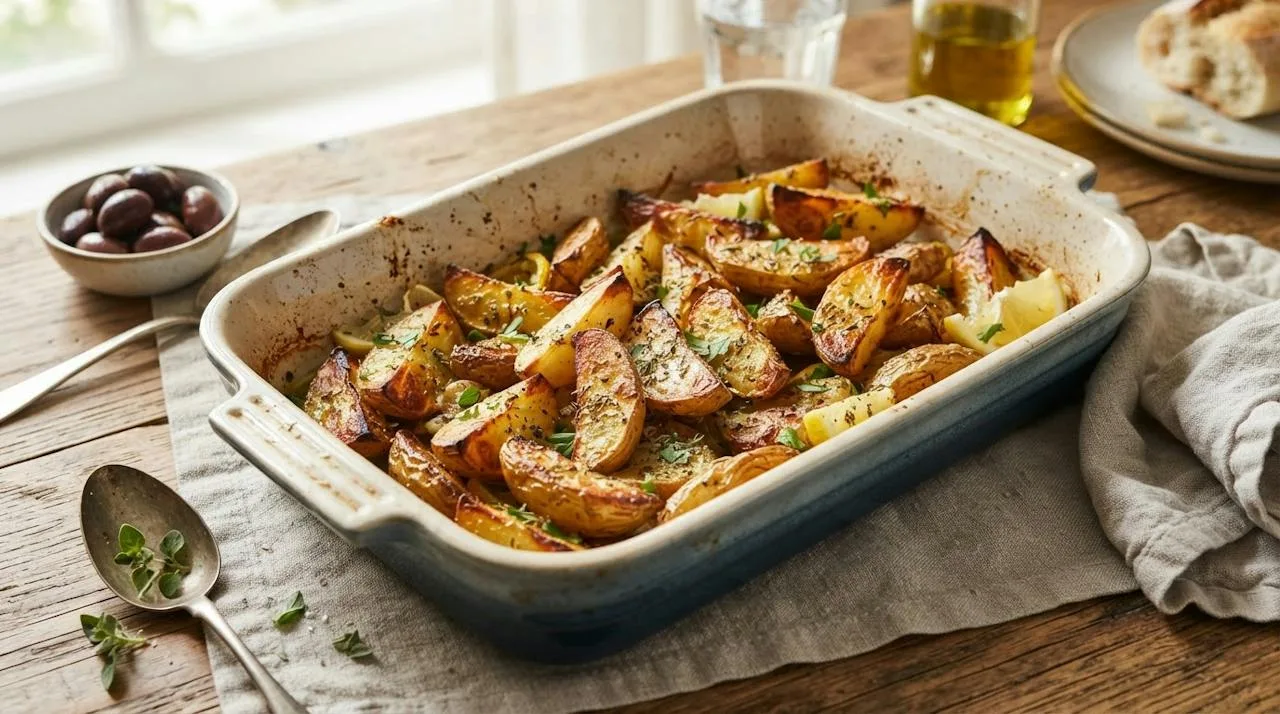
These are the potatoes every Greek taverna serves: crisp at the edges, tender inside, soaked with lemon and oregano.
- Cut potatoes into wedges and soak them in water for 15 to 30 minutes, then dry well.
- Toss with olive oil, lemon juice, garlic, dried oregano, and salt.
- Arrange in a baking dish with a small splash of water or broth.
- Roast at 425°F for about 45 to 60 minutes, turning once, until the liquid is absorbed and the potatoes are golden yellow at the edges and tender inside.
- Finish with more lemon juice and fresh oregano or parsley.
Cauliflower and Broccoli
Cruciferous vegetables are made for high heat. Cut them into flat-sided florets, toss well with oil, and roast at 425°F to 450°F until the edges are dark golden and crispy, about 20 to 30 minutes. Finish with lemon, tahini, or a spoonful of pesto.
Cherry Tomatoes
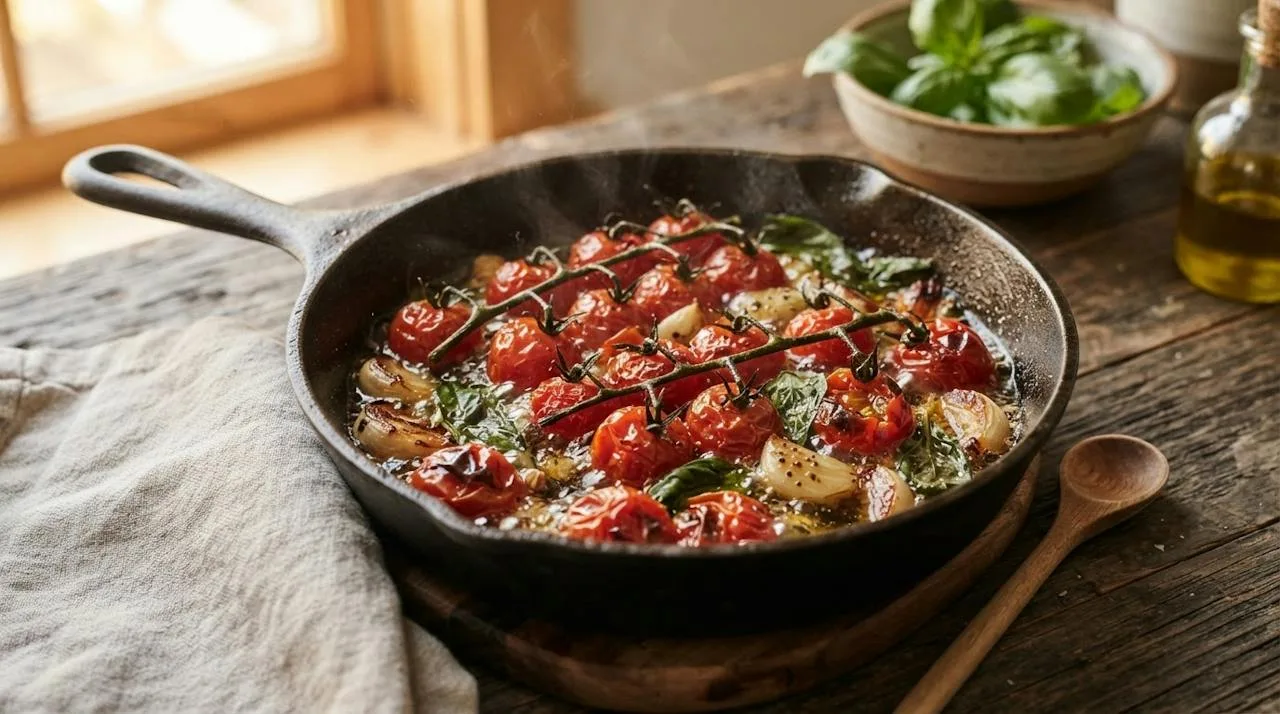
Roast cherry tomatoes at 425°F for 10 to 15 minutes, just until they blister and burst. They become jammy and sweet, perfect over pasta, fish, beans, or toast. Remember Cornell’s finding: heat increases absorbable lycopene, so roasted tomatoes aren’t just delicious, they’re nutritious too.
Regional Mediterranean Roasted Vegetable Dishes
Once you’ve got the basics, the whole Mediterranean opens up. Every region has its own way to turn vegetables into a meal.
Greek Briam
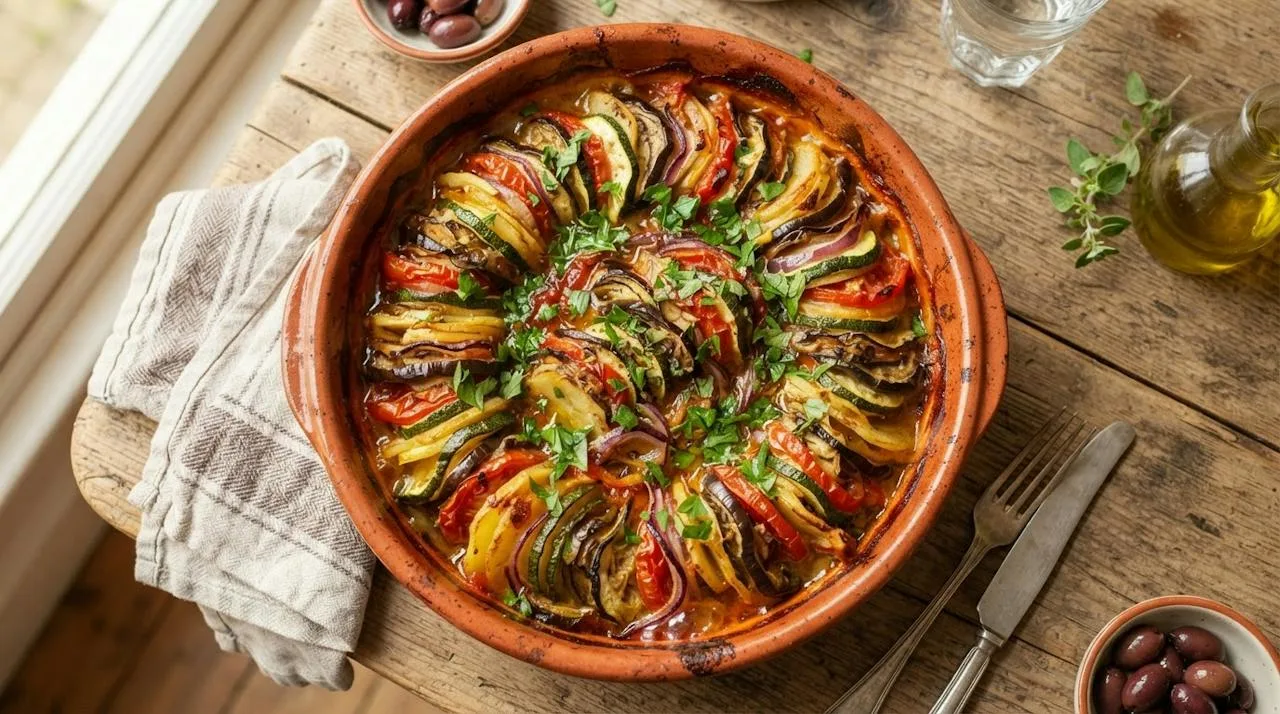
Briam is the Greek answer to ratatouille: potatoes, zucchini, eggplant, tomatoes, and onions sliced, layered or tossed with olive oil, garlic, and herbs, then slowly baked until meltingly tender and golden on top. It’s typically baked at a slightly lower temperature, around 400°F (200°C), for an hour or more, covered at first and uncovered at the end to brown.
Briam is generous with olive oil, and it tastes even better the next day at room temperature with crusty bread and feta.
Moroccan Spiced Carrots
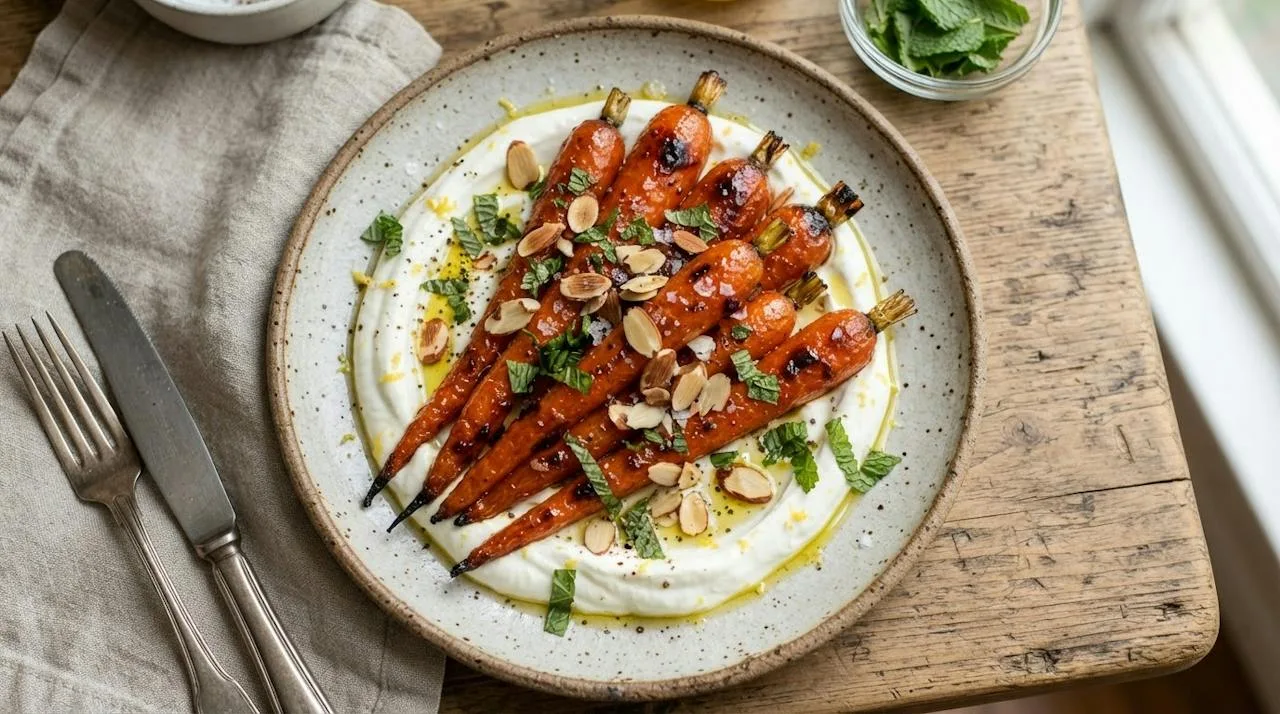
Toss carrots with olive oil, cumin, coriander, paprika, a little honey, and a spoonful of harissa. Roast at 425°F until tender and caramelized, about 30 to 40 minutes. Serve over thick yogurt with mint and toasted almonds. It’s sweet, smoky, warm, and bright all at once.
Levantine Roasted Vegetable Mezze and Pickles
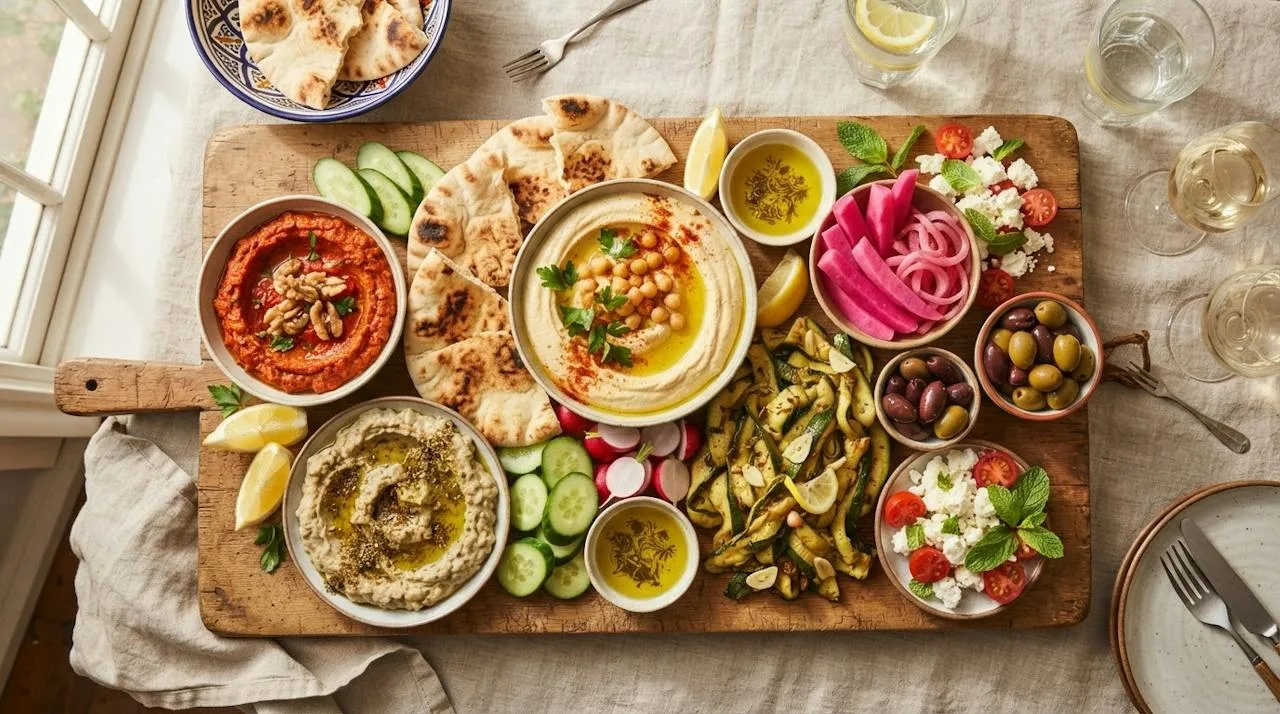
In Lebanon and Syria, roasted vegetables become dips, salads, and mezze. Roasted eggplant becomes baba ghanoush. Roasted peppers turn into muhammara with walnuts and pomegranate molasses. On a mezze table, these rich, smoky roasted vegetables sit beside bright, crunchy Mediterranean pickled vegetables like pink turnips and quick-pickled onions. The contrast of soft and crisp, rich and tangy, is what makes a mezze spread so addictive.
Italian Roasted Vegetables with Sofrito Flavors
Italian cooks often roast vegetables with garlic, rosemary, and a splash of balsamic, or use roasted tomatoes and onions as the base for sauces. Slowly cooked tomato and onion in olive oil has its own health story: researchers at the University of Barcelona found that longer-cooked tomato sofrito with onion contained more of the easily absorbed forms of lycopene.
The Roasted Vegetable Grain Bowl
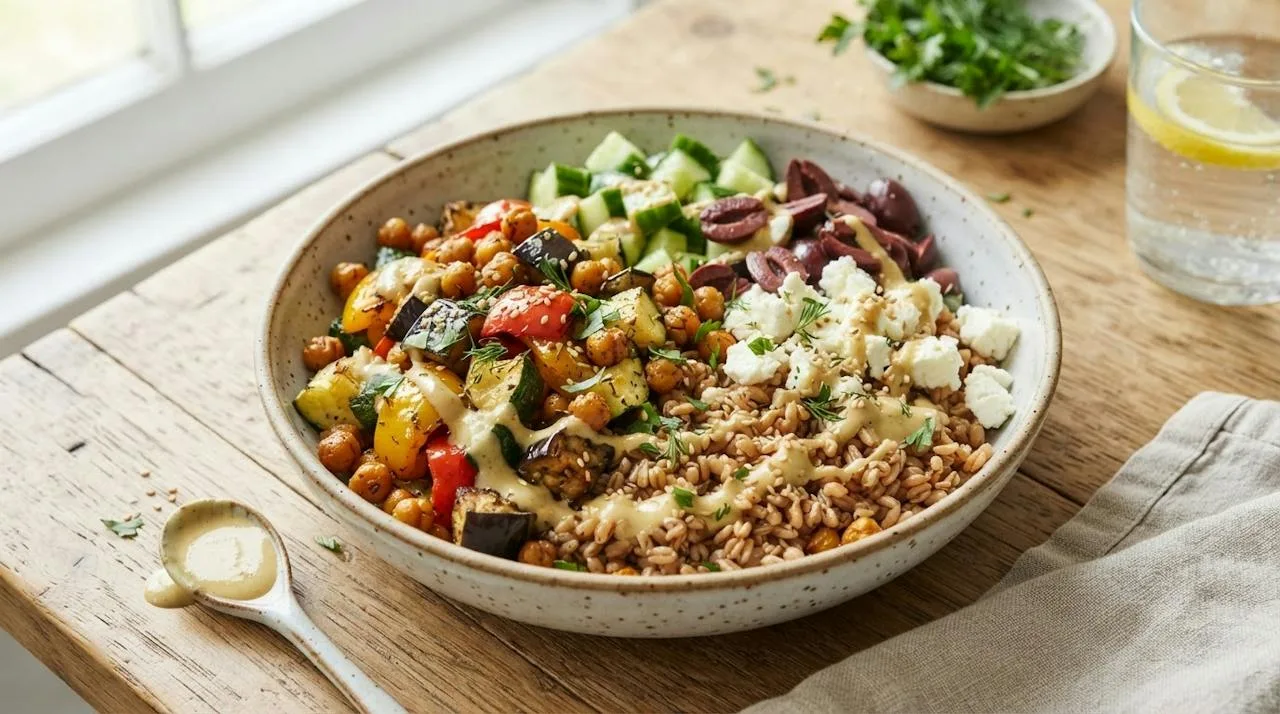
My favorite weekday lunch: a bed of farro or bulgur, a generous scoop of roasted vegetables, a handful of chickpeas roasted on the same pan, something raw and crunchy like cucumber, a few olives, crumbled feta, and a drizzle of lemon tahini. It’s the half-vegetable Mediterranean plate in a bowl.
Reader Story: Daniel from San Diego, California, told me he started roasting two sheet pans every Sunday. “By Wednesday I’m still eating like I’m on vacation in Greece,” he wrote. “Grain bowls, omelets, pasta, all from the same two trays.”
Meal Prep and Storage
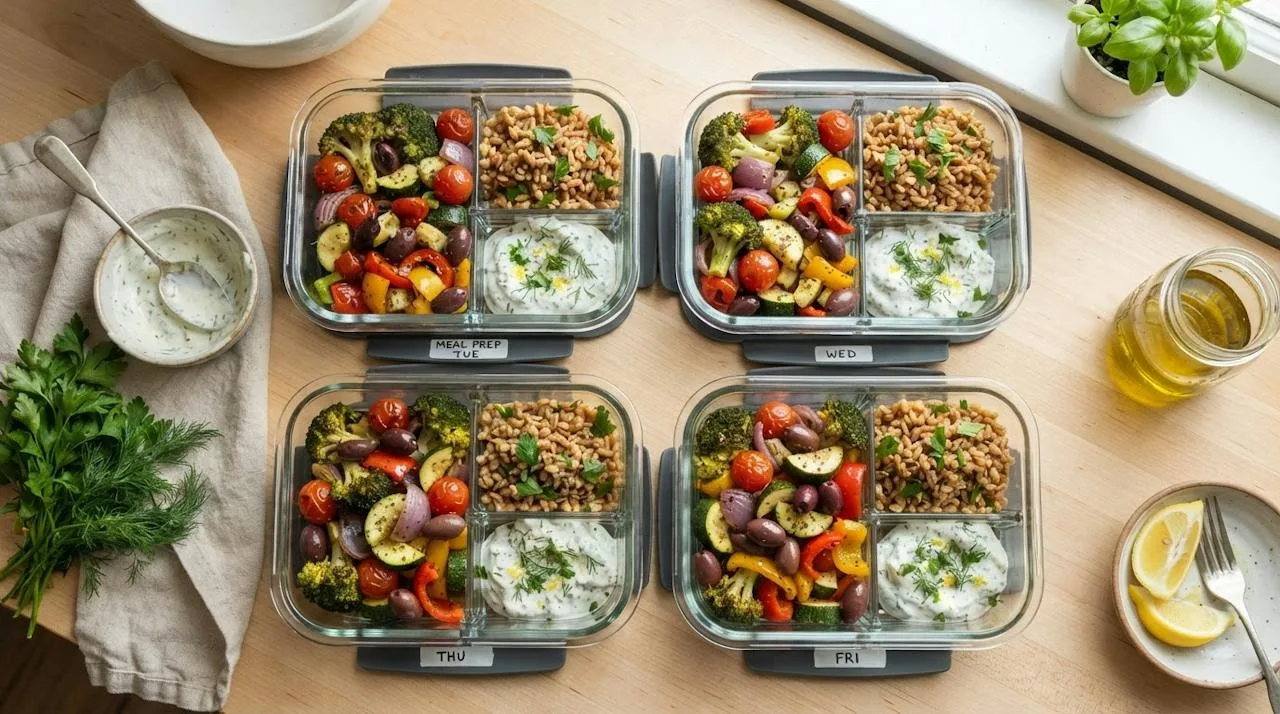
Roasted vegetables are the ultimate make-ahead food, as long as you store them properly.
Batch Roasting
Roast two or three sheet pans at once on Sunday. Choose vegetables that reheat well, like carrots, peppers, eggplant, cauliflower, squash, and onions. Undercook them very slightly so they don’t turn mushy when reheated.
Storing Safely
Let roasted vegetables cool, then refrigerate them in shallow, airtight containers. The USDA’s leftovers and food safety guidance recommends refrigerating leftovers within 2 hours and eating them within 3 to 4 days.
Reheating Without Sogginess
- Oven or air fryer: 400°F for 5 to 10 minutes restores crisp edges.
- Skillet: a little olive oil over medium-high heat for a few minutes.
- Microwave: fine for grain bowls, but the texture softens.
- Room temperature: many roasted vegetables, like peppers, eggplant, and briam, taste wonderful served at room temperature with a fresh drizzle of olive oil and lemon.
Troubleshooting Common Roasting Problems
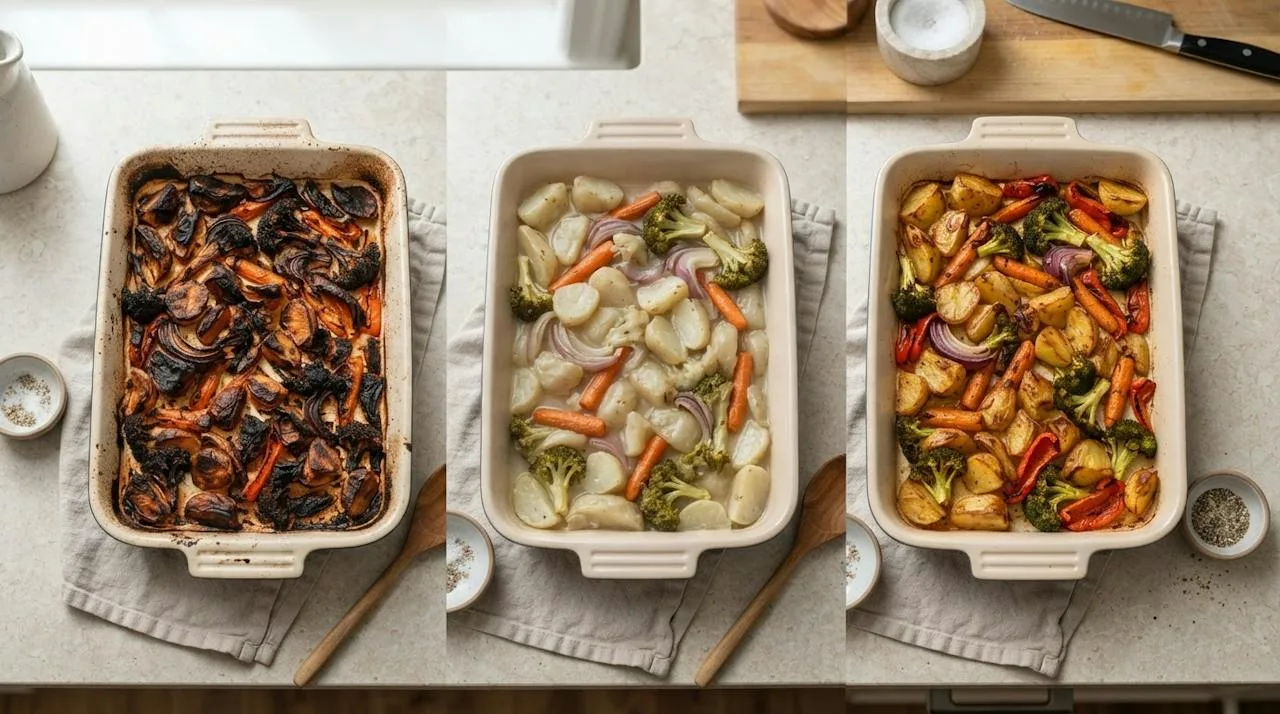
Even after all these years, I still get a disappointing tray now and then. Here’s how to diagnose what went wrong.
Soggy, Pale Vegetables
This is the most common problem, and it almost always comes from steam. The causes:
- Overcrowded pan
- Vegetables not dried after washing
- Oven temperature too low
- Too much oil pooling on the pan
- Using a glass dish with high sides instead of a sheet pan
The fix: use two pans, dry vegetables thoroughly, roast at 425°F, toss with just enough oil to coat, and use a rimmed metal sheet pan.
Burnt Outside, Raw Inside
Usually the oven is too hot for the size of the pieces, or the pieces are uneven.
The fix: cut pieces more evenly, cut dense vegetables smaller, and drop the temperature to 375°F to 400°F for big chunks. If the edges are browning too fast, cover loosely with foil and keep roasting until tender.
Some Pieces Burnt, Others Underdone
Mixed vegetables with different cooking times or uneven pieces.
The fix: stagger the vegetables, adding faster ones later, or roast each type on its own section of the pan and pull them out as they finish.
Bitter Eggplant
Older eggplant can be bitter, and underdone eggplant tastes harsh.
The fix: choose firm, heavy, glossy eggplants, salt and drain them before roasting, and roast until completely soft and creamy inside.
Dry, Shriveled Vegetables
Not enough oil, or roasted too long.
The fix: toss with a bit more oil, check doneness earlier, and finish with a drizzle of olive oil and a squeeze of lemon to bring them back to life.
Troubleshooting Flowchart:
- Pale and soggy → Steam from crowding or low heat → Use two pans at 425°F and dry vegetables well
- Burnt outside, raw inside → Oven too hot for piece size → Cut evenly and lower to 375°F to 400°F
- Uneven doneness → Mixed vegetables with different times → Stagger additions or cut to matching sizes
- Bitter eggplant → Old or underdone eggplant → Buy fresh, salt it, and roast until creamy
- Dry and shriveled → Too little oil or too long → Use more oil, check earlier, finish with oil and lemon
Your Journey to Roasting Mastery
The Mediterranean Roasting Advantage: 5 Key Takeaways
- Heat and space are everything. Roast at around 425°F with vegetables in a single layer and room between pieces.
- Dry, oil, and salt every surface before roasting, and finish with fresh herbs, lemon, and a drizzle of good olive oil.
- Cut evenly, and stagger vegetables with different cooking times.
- Judge doneness by color and tenderness, not just the timer.
- Roast in batches and keep vegetables ready for grain bowls, mezze, and quick dinners all week.
Your 30-Day Roasting Journey
Week 1: Foundation. Roast one vegetable at a time, with no mixing. Try cauliflower, carrots, and peppers. Focus on spacing, oil, and judging doneness by color.
Week 2: Seasoning. Roast the same vegetables with a different regional seasoning each night: Greek, Italian, Levantine, and Moroccan. Master the finishing touch of herbs, lemon, and oil.
Week 3: Mixed Pans and Batch Cooking. Practice staggering a mixed pan. Roast two sheet pans on Sunday and use them in grain bowls, omelets, and pasta through the week.
Week 4: Regional Dishes. Make Greek lemon potatoes, a tray of briam, Moroccan spiced carrots, and a roasted vegetable mezze platter for friends.
Frequently Asked Questions
Why are my roasted vegetables soggy instead of crispy?
Soggy roasted vegetables are almost always steamed rather than roasted. When the pan is crowded, the moisture released by the vegetables can’t evaporate, so it pools and turns to steam. Wet vegetables, a low oven temperature, too much oil, and high-sided glass dishes make the problem worse. To fix it, dry your vegetables thoroughly after washing, toss them with just enough olive oil to coat, spread them in a single layer with space between the pieces on a rimmed metal sheet pan, and roast at about 425°F. If everything won’t fit with space to spare, use two pans. Flip once halfway through so more sides brown.
Can I roast different vegetables together on one pan?
Yes, but plan for their different cooking times. Dense vegetables like potatoes, carrots, and squash take much longer than tomatoes, zucchini, or asparagus. You have two good options. First, stagger them: start the slowest vegetables, then add medium ones after 15 minutes and quick ones for the final 10 to 15 minutes. Second, cut dense vegetables into smaller pieces and quick-cooking vegetables into larger ones so they finish at roughly the same time. You can also roast each vegetable on its own section of the pan and remove pieces as they finish. Either way, keep everything in a single layer with room to breathe.
How long should I roast vegetables at 425°F?
It depends on the vegetable and the size of the pieces. As a starting point for roughly 1-inch pieces: cherry tomatoes and asparagus take about 10 to 15 minutes; zucchini, peppers, and broccoli about 20 to 25 minutes; cauliflower, eggplant, and Brussels sprouts about 25 to 35 minutes; and carrots, potatoes, and squash about 35 to 45 minutes. Whole beets and heads of garlic can take 45 to 60 minutes. Every oven is different, so judge doneness by appearance and texture: deeply golden edges, dry-looking surfaces, and a knife that slides easily into the thickest piece. Flip once halfway through.
What’s the minimum amount of olive oil for roasting vegetables?
For a standard rimmed sheet pan, about 1 tablespoon of olive oil is a practical minimum, and 1 to 2 tablespoons works for most vegetables. The goal is for every piece to look lightly glossy, not dry and not dripping. Dense, dry vegetables like potatoes and cauliflower usually need closer to 2 tablespoons; watery vegetables like zucchini and tomatoes need less. Toss the vegetables with the oil in a bowl or directly on the pan with your hands so every surface is coated. If they come out of the oven looking dry, finish them with a fresh drizzle of extra virgin olive oil and a squeeze of lemon.
Is it possible to roast vegetables without oil?
You can, but the results are different. Without oil, vegetables tend to dry out, brown less evenly, and stick to the pan, and the flavor is flatter because oil helps carry seasonings and encourages browning. If you’re avoiding oil, use parchment paper to prevent sticking, toss the vegetables with a little broth, lemon juice, or a spoonful of yogurt so seasonings cling, and roast at a slightly lower temperature, checking often. That said, in Mediterranean cooking olive oil is a core ingredient, not an extra. Used in place of butter and other saturated fats, it’s one of the healthy fats the Mediterranean diet is built on.
How do I stop eggplant from tasting bitter or spongy?
Start at the store: choose eggplants that are firm, heavy for their size, and glossy, since older eggplants tend to be more bitter. Store them unwashed in the refrigerator and use them within a week. Before roasting, salt the cut pieces and let them sit for 20 to 30 minutes; this draws out some water and makes the flesh firmer. Pat them very dry, toss generously with olive oil, and roast at about 425°F until they’re completely soft and creamy inside, not just browned outside. Spongy eggplant is almost always underdone, so give it more time. Finish it with tahini, yogurt, or lemon.
Can I substitute frozen vegetables for fresh when roasting?
Yes. Frozen broccoli, cauliflower, Brussels sprouts, green beans, and butternut squash can all be roasted successfully. Don’t thaw them first, because thawing makes them watery. Instead, spread the frozen vegetables in a single layer on a preheated sheet pan, toss with olive oil and seasonings, and roast at a high temperature, around 425°F to 450°F, so the excess moisture evaporates quickly. They may take a few minutes longer than fresh and won’t get quite as crispy, but they still brown nicely. Give them extra space on the pan, since frozen vegetables release more water. Season again after roasting.
Why do my roasted vegetables burn on the outside but stay raw inside?
That usually means the outside is cooking much faster than heat can reach the center. The most common causes are pieces that are too large for the oven temperature, uneven cuts, a very dark pan, or vegetables placed too close to the top heating element. Cut pieces evenly, around 1 inch, and cut dense vegetables like potatoes and carrots a little smaller. Roast on the middle rack. For large chunks, lower the temperature to 375°F to 400°F and roast longer. If the edges are already dark but the center is firm, cover the pan loosely with foil and keep cooking until tender.
How do I know when roasted vegetables are done?
Use your eyes and a knife rather than relying only on the timer. Roasted vegetables are done when their edges are deeply golden or lightly charred in spots, their surfaces look dry and slightly shriveled rather than wet, and a knife slides into the thickest piece with no resistance. Eggplant should be completely soft and creamy inside; carrots and potatoes should be tender throughout; tomatoes should be blistered and bursting. Potatoes are the one exception to “darker is better,” since the FDA suggests cooking cut potatoes to a golden yellow rather than a deep brown. Taste a piece before pulling the pan.
What’s the best way to start roasting vegetables like a Mediterranean cook?
Start simple. Pick one vegetable, like cauliflower or carrots, cut it into even pieces, dry it well, toss it with olive oil and salt, and roast it in a single layer at 425°F, flipping once, until deeply golden. Finish with lemon juice, fresh herbs, and a drizzle of good olive oil. Once that feels easy, add regional seasonings like oregano and lemon, za’atar and tahini, or cumin and harissa. Then move on to mixed pans, Greek lemon potatoes, and briam. Roast a couple of pans every week, and use them in grain bowls, pasta, and mezze. Within a month, it’ll feel natural, and your plate will be half vegetables without trying.
Professional Tips for Advanced Success
Overnight Technique: Salt cubed eggplant or zucchini and refrigerate it uncovered on a rack overnight. The surface dries out and the flesh firms up, giving you deeply browned, meaty pieces the next day. Pat dry before oiling.
Science Tip: Moisture must evaporate before browning can start, which is why a dry surface matters so much. Preheating your sheet pan gives the vegetables an instant head start on searing.
Advanced Technique: Finish roasted vegetables with a “dressing on contact.” Toss them with lemon juice, vinegar, or pomegranate molasses the moment they come out of the oven. Hot vegetables absorb acid and flavor far better than cold ones.
Ratio Tip: Use 1 to 2 tablespoons of olive oil and about ½ to ¾ teaspoon of kosher salt per sheet pan of vegetables (about 1½ to 2 pounds). Adjust for dense versus watery vegetables, then season again at the end.
Mediterranean Secret: Roast a handful of drained chickpeas on the same pan as your vegetables. They turn crisp and nutty and turn a side dish into a full meal.
Take Action: Start Roasting Today
Choose the path that fits your kitchen right now:
- Beginner: Tonight, roast one vegetable in a single layer at 425°F with olive oil and salt. Finish with lemon and herbs. If you’re new to this way of eating, my Mediterranean diet guide shows how roasted vegetables fill half your plate.
- Intermediate: This week, roast a mixed pan using the staggering method, and try two regional seasonings. Use the olive oil guide to choose a good everyday bottle and a peppery finishing oil.
- Advanced: This month, cook briam, Greek lemon potatoes, Moroccan carrots, and a roasted vegetable mezze platter with homemade pickles from the preserving guide.
Track Your Progress
- Note the temperature, pan, and time for each vegetable you roast
- Write down which seasonings your family loved most
- Count how many cups of vegetables you’re eating each day
- Keep a simple list of your best regional combinations
Continue Learning Roasted vegetables connect every part of Fig & Brine. My Mediterranean diet guide for beginners shows where they fit on your plate, the olive oil guide helps you choose and use the right oil, and the preserving guide teaches you to make the pickles that make a roasted vegetable mezze sing. Guides on fresh herbs and Mediterranean grains are on the way.
Those 15 sad trays of soggy vegetables taught me more than any cookbook. Not because I learned a secret recipe, but because I finally learned to give vegetables what they need: space, heat, good olive oil, and a little patience.
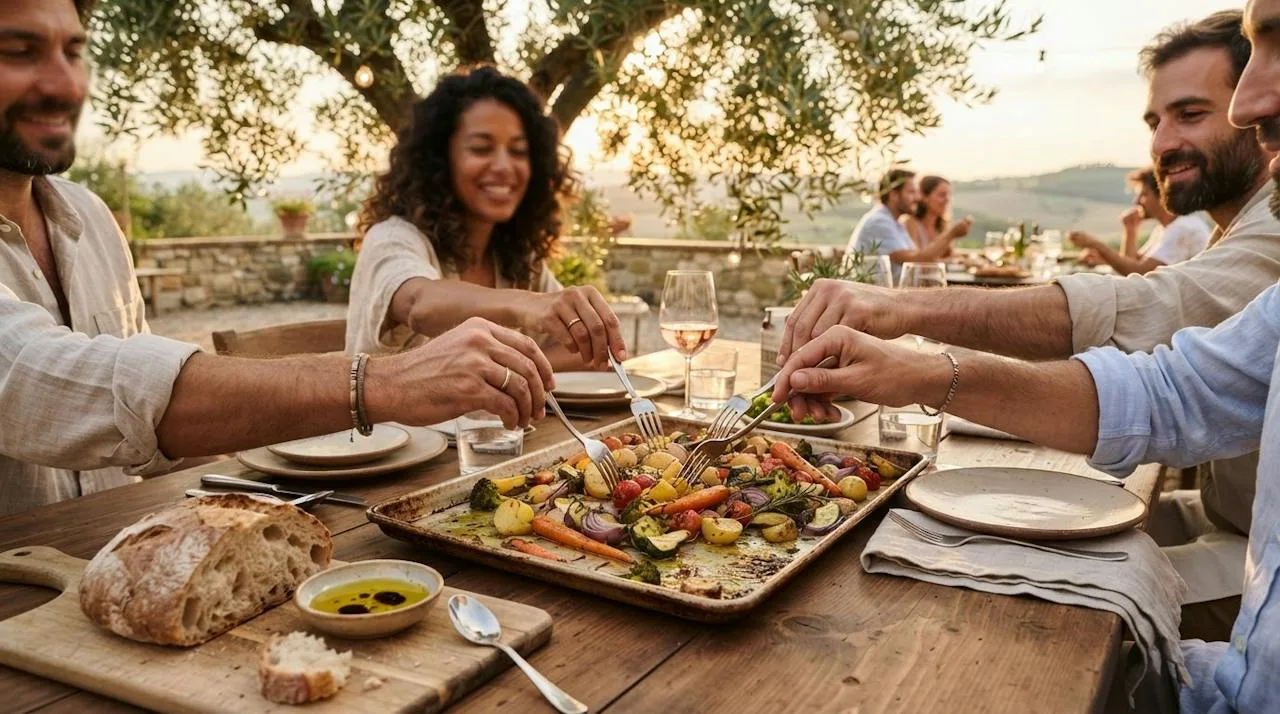
Now, on a summer evening, my kitchen smells of caramelizing eggplant and garlic, and a sheet pan in the middle of the table disappears before I’ve even sat down. Start with one pan tonight. Give it room. Let it brown. And when you pull out your first truly golden tray, come tell me about it. I’ll be cheering from my kitchen.
With roasted garlic on my fingers and figs on the counter, Nevaeh Hall


