
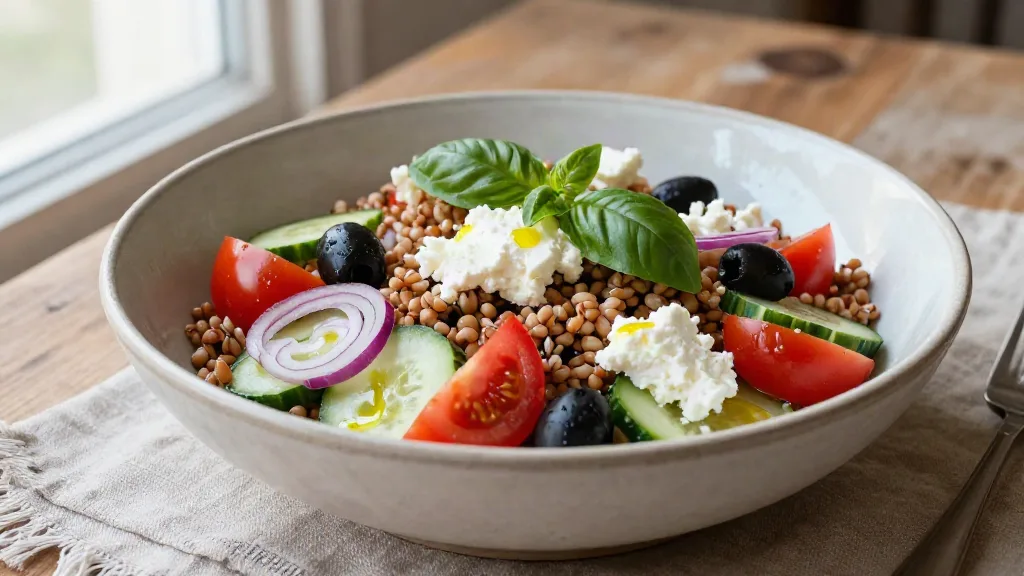
Mediterranean Italian Farro Salad With Tomatoes, Olives and Ricotta Salata
Why This Recipe Works
A good farro salad is all about the grain: plump, nutty and chewy, each one separate, carrying just enough olive oil and vinegar to make the tomatoes and basil taste brighter. A bad one is a sticky clump drowning in sharp dressing. Over four batches I made both.
The lesson that mattered most: cook the farro like pasta, in plenty of salted water, then drain it. In my side-by-side test, the pasta method gave distinct, chewy grains that stayed loose after dressing and after a night in the fridge. The absorption method made a softer, stickier farro that soaked up the dressing and looked dry within 15 minutes. The second lesson was less dressing than I started with.
I used semi-pearled farro. K-State Research and Extension describes it as a compromise between whole and pearled farro, with part of the bran left on and a shorter cooking time than whole farro. If you’re building a week of grain bowls, my Mediterranean grain bowls guide shows how a salad like this fits in. Follow this recipe, and you’ll get a farro salad with chewy, separate grains and a dressing that tastes of tomato and basil, not vinegar.
What I Learned From Testing This Recipe
Recipe Testing Note Tested in 4 batches: September 16, September 23, October 1 and October 10, 2026. The final version is batch 4. Key variables tested: dressing amounts, cheese amount, pasta method vs. absorption method (side by side), dressing hot vs. warm farro, with and without ricotta salata. Measured: 300 g dry semi-pearled farro to about 735 g cooked and drained; 150 g dry to about 365 g (pasta method) and about 355 g (absorption method); finished salad about 1,643 g.
Batch 1 had good farro and a bad dressing. I boiled 300 g of semi-pearled farro pasta-style, which gave a pleasantly chewy grain, then dressed it with 75 g olive oil and 45 g red wine vinegar and finished it with 100 g ricotta salata. The vinegar was too sharp next to the red onion and olives, the oil left a visible layer at the bottom of the bowl, and with the olives and the salted cooking water, 100 g of cheese made the whole salad saltier than I wanted. I’d also dressed the farro while it was still very hot and left it in the bowl to cool, so some grains clumped and the dressing pooled in pockets.
For batch 2 I cut the oil to 60 g, the vinegar to 35 g and the cheese to 80 g, and spread the farro on a tray to cool before dressing it. The tomato and basil finally came through. Batch 3 compared two cooking methods side by side, and batch 4 put everything together.
What I changed after testing: Olive oil from 75 g to 60 g, red wine vinegar from 45 g to 35 g, ricotta salata from 100 g to 80 g, and the farro cooled on a tray before dressing instead of dressed piping hot in the bowl. Batch 1 tasted sharp, felt oily at the bottom and clumped.
Side-by-Side Results
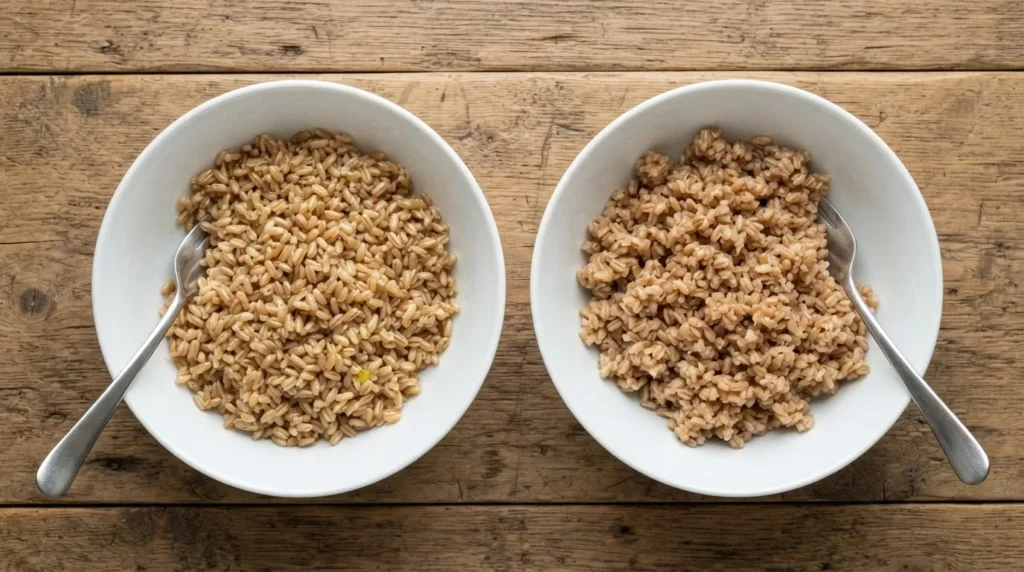
In batch 3, I cooked two 150 g portions from the same package of semi-pearled farro and dressed them with the same half-batch of oil and vinegar.
| What I compared | Pasta method (boiled in 1.25 liters, drained) | Absorption method (300 ml water, covered) |
|---|---|---|
| Cooking time | 26 to 28 minutes | About 25 minutes covered, then 5 minutes off the heat |
| Cooked weight from 150 g dry | About 365 g | About 355 g |
| Right after cooking | Distinct, chewy, easy to separate with a fork | Slightly softer and more cohesive |
| After 10 minutes of cooling | Loose and separate | A little stickier, some clumping |
| After dressing | Coated evenly; a little dressing at the bottom | Absorbed it quickly |
| After 15 minutes | Still lightly glossy | Looked drier and needed extra dressing |
| My pick | For a cold salad | Better suited to warm grain bowls |
How this recipe evolved
Tap each batch to see what went wrong and what changed.
Batch 1 (September 16): sharp and oily
300 g semi-pearled farro, pasta method; 75 g oil, 45 g vinegar, 100 g ricotta salata.
Too sharp, oily at the bottom, too salty; dressed very hot, so grains clumped.
Batch 2 (September 23): lighter dressing
Oil 75 to 60 g, vinegar 45 to 35 g, cheese 100 to 80 g, farro cooled on a tray.
More balanced; tomato and basil came through.
Batch 3 (October 1): pasta vs. absorption
150 g each: pasta method about 365 g, absorption about 355 g.
Pasta method stayed distinct and glossy; absorption was stickier and looked dry after 15 minutes.
Batch 4 (October 10): the final recipe
300 g farro boiled in 2.5 liters for about 27 minutes, about 735 g cooked.
Cooled on a tray, two-thirds of the dressing while warm; about 1,643 g, 6 servings.
I also compared the finished salad with and without the ricotta salata. Without it, the tomato and basil were brighter and the olives became the main salty note. With it, the salad was more savory and rounded, which is what I wanted for this Italian-style version.
Taster Notes
Three family members tasted the batches. One preferred the pasta-method farro because the grains stayed distinct and chewy. One preferred the final, lighter dressing because it let the tomatoes and basil stand out. One preferred the version with ricotta salata, because the cheese balanced the olives.
Ingredients
Makes 6 side servings (about 270 g each) or 4 lunch portions
For the farro
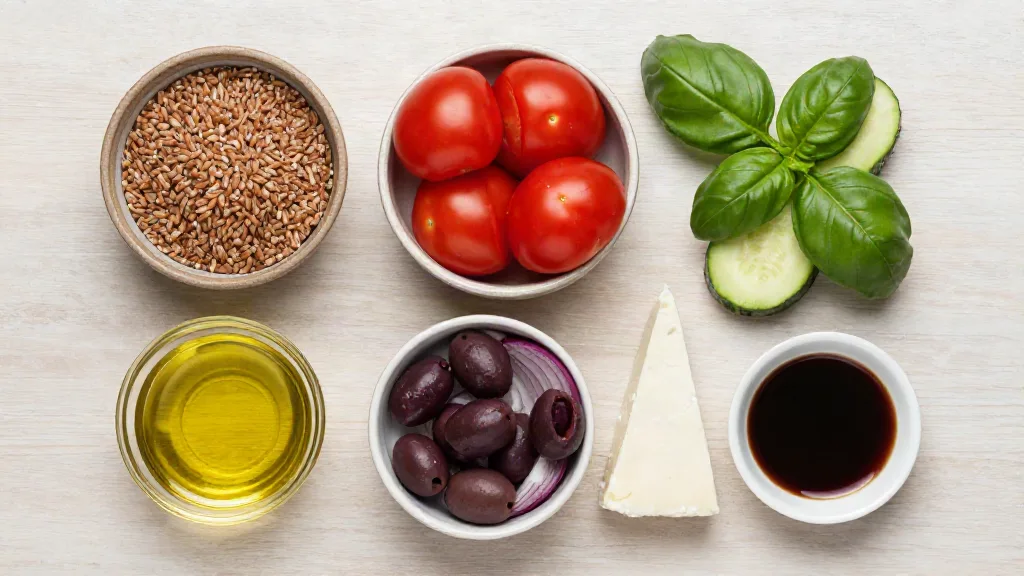
- 300 g semi-pearled farro
- 2.5 liters water
- 18 g fine salt for the cooking water
For the dressing
- 60 g extra-virgin olive oil (about 4½ tablespoons)
- 35 g red wine vinegar (about 2⅓ tablespoons)
- 2 g fine salt (about ⅓ teaspoon)
- 1 g black pepper
For the salad
- 300 g ripe but firm tomatoes, cut into 1.5 cm pieces
- 250 g cucumber, unpeeled, cut into 1 cm half-moons (seeds left in)
- 60 g red onion, thinly sliced (about 2 mm)
- 100 g pitted Kalamata olives (drained weight)
- 20 g fresh basil leaves, torn just before using
- 80 g ricotta salata, crumbled
Shopping list
Send the list to yourself via WhatsApp or email.
- 300 g semi-pearled farro
- 300 g ripe but firm tomatoes
- 250 g cucumber
- 60 g red onion
- 100 g pitted Kalamata olives (drained)
- 20 g fresh basil
- 80 g ricotta salata
- Extra-virgin olive oil (60 g)
- Red wine vinegar (35 g)
- Fine salt (18 g for the water, 2 g for the dressing)
- Black pepper (1 g)
By the Numbers
- Farro yield: 300 g dry semi-pearled farro to about 735 g cooked and drained, in about 27 minutes
- Dressing: 98 g in total, down from 120 g of oil and vinegar in batch 1
- Cheese: 80 g, down from 100 g
- Cooling: spread 1 to 2 cm deep on a large metal tray for 10 to 12 minutes, stirred once
- Finished salad: about 1,643 g, or 6 servings of about 270 g
Before You Start: What to Watch For
- Read your farro package. Semi-pearled farro took about 27 minutes in my tests. Pearled and whole farro cook differently, and I haven’t tested either, so start checking early and go by texture.
- Use plenty of water. 2.5 liters for 300 g lets the grains move freely and cook evenly, and you drain away the starchy water that makes farro sticky.
- Taste a grain to know it’s done. It should be tender but still chewy, with no hard, chalky center, and the grains should stay whole rather than splitting open.
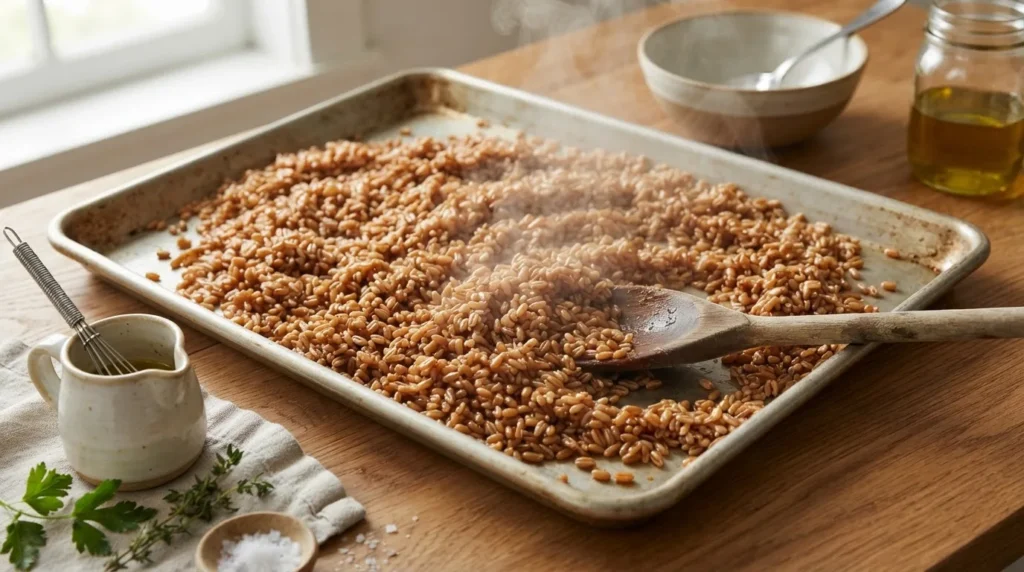
- Spread it out to cool. Dressing very hot farro in a deep bowl made it clump in batch 1. A thin layer on a tray releases steam fast.
- Pick ripe but firm tomatoes. Very soft tomatoes released more liquid in storage. My Mediterranean seasonal vegetable calendar shows when tomatoes and cucumbers are at their best.
- Go easy on salt. The olives, the cheese and the salted cooking water all add salt. Taste before adding any more.
Doneness Cues at a Glance
| Stage | Look | Feel | Taste |
|---|---|---|---|
| Farro at 22 minutes | Grains intact | May still have a firm center | Check again in a few minutes |
| Farro done (about 27 minutes) | Plump, whole grains, not split | Tender but chewy, no chalky center | Nutty and seasoned |
| Cooled farro | Loose, separate, steam gone | Warm, not hot | |
| Dressed salad | Glossy grains, fresh-looking vegetables | Cucumber still crunchy | Balanced, not sharp |
Method
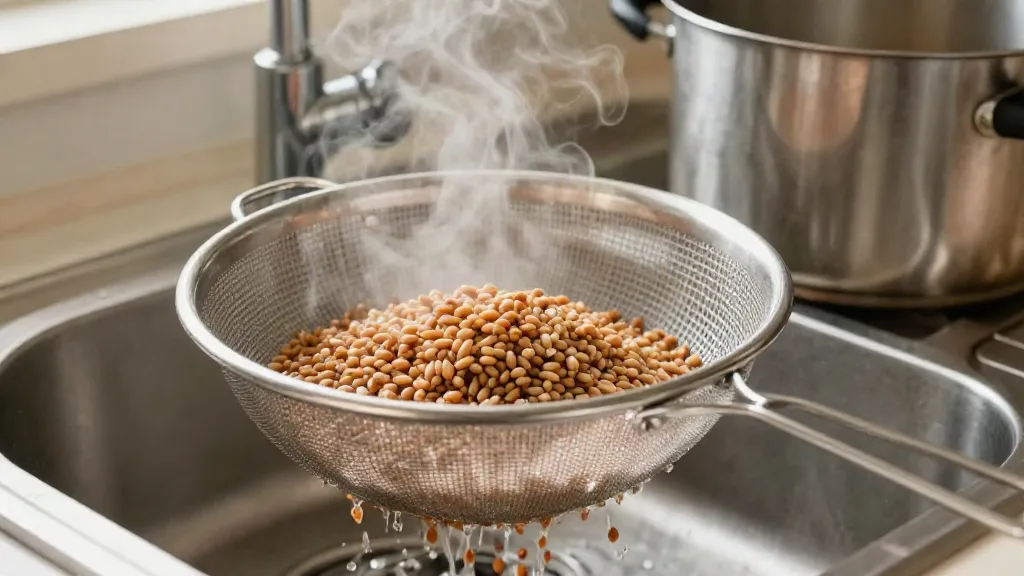
- Rinse the farro. Rinse 300 g semi-pearled farro under cold water for about 20 seconds. No soaking needed.
- Boil it like pasta. Bring 2.5 liters of water to a boil, add 18 g salt and the farro, and keep it at a gentle simmer.
- Start checking at 22 minutes. Taste a few grains. Mine took about 27 minutes to become tender but chewy, with no hard center and grains still intact.
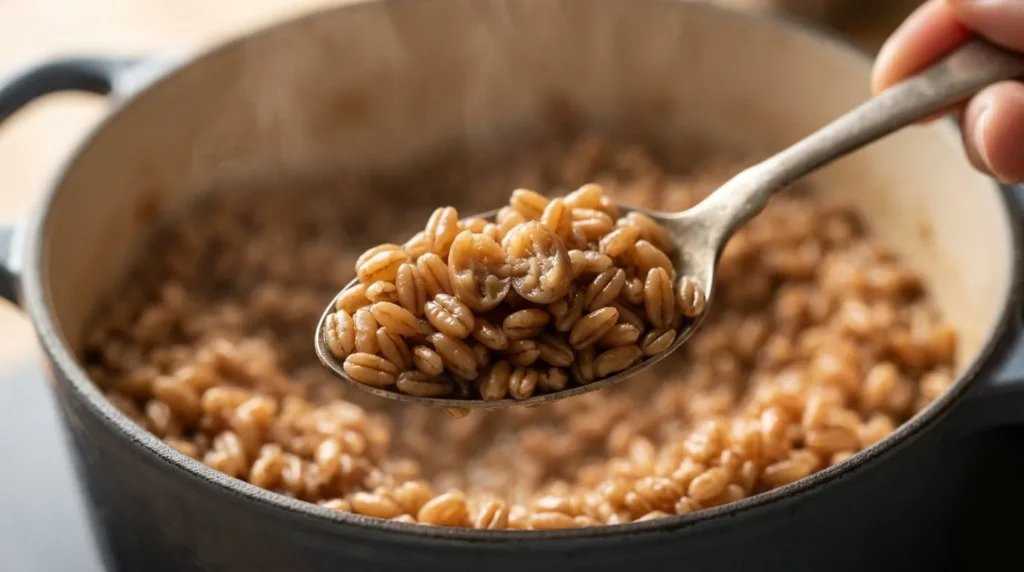
- Drain well. Drain the farro thoroughly in a fine-mesh colander. Don’t rinse it after cooking. You should have about 735 g.
- Cool on a tray. Spread the farro 1 to 2 cm deep on a large metal tray and stir once to release steam. After 10 to 12 minutes, it should feel warm rather than hot.
- Make the dressing. While the farro cooks or cools, whisk 60 g olive oil, 35 g red wine vinegar, 2 g salt and 1 g black pepper briefly until combined. With no lemon and a lighter vinegar hand, a good extra virgin olive oil makes a real difference here.
- Dress the warm farro. Toss about two-thirds of the dressing with the warm farro. Warm grains take up some of the flavor without being hot enough to wilt the vegetables later.
- Prep the vegetables. Cut the tomatoes into 1.5 cm pieces, the cucumber into 1 cm half-moons and the onion into 2 mm slices. Thicker cucumber stayed crunchy longer than thin slices in my tests.
- Add the vegetables once the farro has cooled a little more. Fold in the tomatoes, cucumber, onion and 100 g olives. Adding them to cooler farro keeps them tasting fresh.
- Finish the dressing. Add the remaining dressing a little at a time, tasting as you go. You may not need all of it.
- Add basil and cheese last. Tear in 20 g basil leaves and scatter 80 g crumbled ricotta salata over the top. Adding the basil at the end keeps it from bruising and darkening.
- Taste and serve. Check the seasoning, remembering that the olives and cheese are already salty. Serve at room temperature or lightly chilled.
Tested Substitutions
| Original ingredient | Tested substitute | Result |
|---|---|---|
| Pasta-method farro | Absorption method (300 ml water for 150 g, covered) (tested) | Softer and stickier; absorbed dressing fast and looked dry after 15 minutes. Better for warm bowls than this salad. |
| 80 g ricotta salata | No cheese (tested) | Fresher and lighter, with brighter tomato and basil, but less savory. The olives become the main salty note. |
| Semi-pearled farro | Pearled or whole farro (untested) | I haven’t tried these yet. Cooking times will differ, so go by texture. |
| Farro | Pearl barley or wheat berries (untested) | I haven’t tried these yet. |
| Ricotta salata | Feta (untested) | I haven’t tried this yet. Let me know in the comments. |
| Red wine vinegar | Lemon juice (untested) | I haven’t tried this yet. |
| Basil | Parsley (untested) | I haven’t tried this yet. |
| Kalamata olives | Green olives (untested) | I haven’t tried this yet. |
Why This Recipe Can Fail (And How to Fix It)
Common Problems
- Sharp dressing: 45 g of red wine vinegar was too prominent next to the onion and olives. Use 35 g with 60 g oil, and add the last third of the dressing gradually.
- Oily bottom: 75 g of olive oil left a visible layer under the farro after resting. 60 g was enough to coat 300 g of farro.
- Too salty: Olives, salted cooking water and 100 g of ricotta salata added up. Use 80 g of cheese and taste before adding any extra salt.
- Clumped grains and patchy dressing: Dressing very hot farro in a deep bowl made grains stick together and the dressing pool. Spread the farro on a tray for 10 to 12 minutes first.
- Sticky, dry-looking farro: The absorption method made softer grains that drank the dressing within 15 minutes. Boil the farro in plenty of water and drain it for a cold salad.
- Watery leftovers: Very soft tomatoes release more juice in storage. Use ripe but firm tomatoes, and keep the basil and cheese aside if you’re making it ahead.
What went wrong?
Tap your problem to see the cause and the fix.
Sharp dressing
Cause: 45 g of red wine vinegar was too prominent next to the onion and olives.
Fix: Use 35 g with 60 g oil, and add the last third of the dressing gradually.
Oily bottom
Cause: 75 g of olive oil left a visible layer under the farro.
Fix: Use 60 g; it's enough to coat 300 g of farro.
Too salty
Cause: Olives, salted cooking water and 100 g of ricotta salata added up.
Fix: Use 80 g of cheese and taste before adding any extra salt.
Clumped grains, patchy dressing
Cause: Very hot farro was dressed in a deep bowl.
Fix: Spread the farro on a tray for 10 to 12 minutes first.
Sticky, dry-looking farro
Cause: The absorption method made softer grains that drank the dressing within 15 minutes.
Fix: Boil the farro in plenty of water and drain it for a cold salad.
Watery leftovers
Cause: Very soft tomatoes release more juice in storage.
Fix: Use ripe but firm tomatoes, and keep basil and cheese aside if making it ahead.
Serving Suggestions
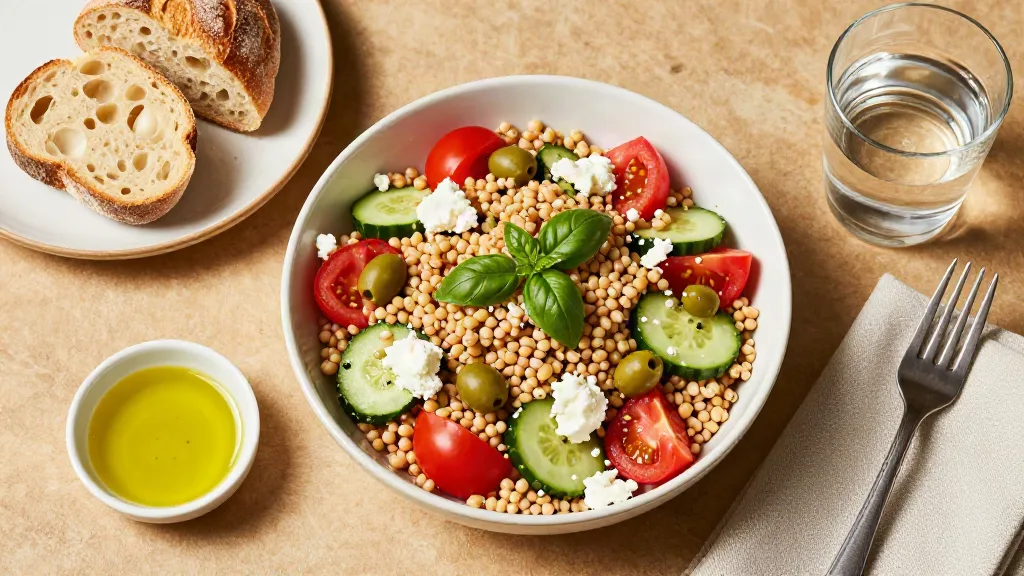
Serve the farro salad as a side for grilled fish or vegetables, or as lunch on its own with crusty bread. It sits happily next to other no-lettuce salads like a Greek village salad with a whole slab of feta on a summer table.
Storage, Reheating & Make-Ahead
I kept the finished salad in a covered glass container in the fridge at about 4°C and checked it over three days. These are notes on how the texture changed, not a shelf-life test.
| Day | What I noticed |
|---|---|
| 1 | Farro chewy and distinct, dressing even, tomatoes structured, cucumber crunchy, basil bright green; a little tomato juice at the bottom but not watery |
| 2 | Farro had absorbed more dressing and the salad was slightly drier; tomatoes released more juice, cucumber slightly softer, basil darkening at torn edges |
| 3 | Farro firmer in places and less glossy, tomatoes softer and more watery, cucumber noticeably less crunchy, basil darker, cheese slightly softer |
On day 2, I stirred the salad and freshened it with about 5 to 10 g olive oil and 5 g red wine vinegar, tasting before adding all of either. By day 3, it was still recognizable but clearly past its best.
To make it ahead, keep the basil and the cheese separate and hold back part of the dressing until just before serving. Refrigerate the salad promptly: the USDA advises refrigerating leftovers within 2 hours and using them within 3 to 4 days. There’s no reheating; serve it cold or at room temperature. Freezing wasn’t tested.
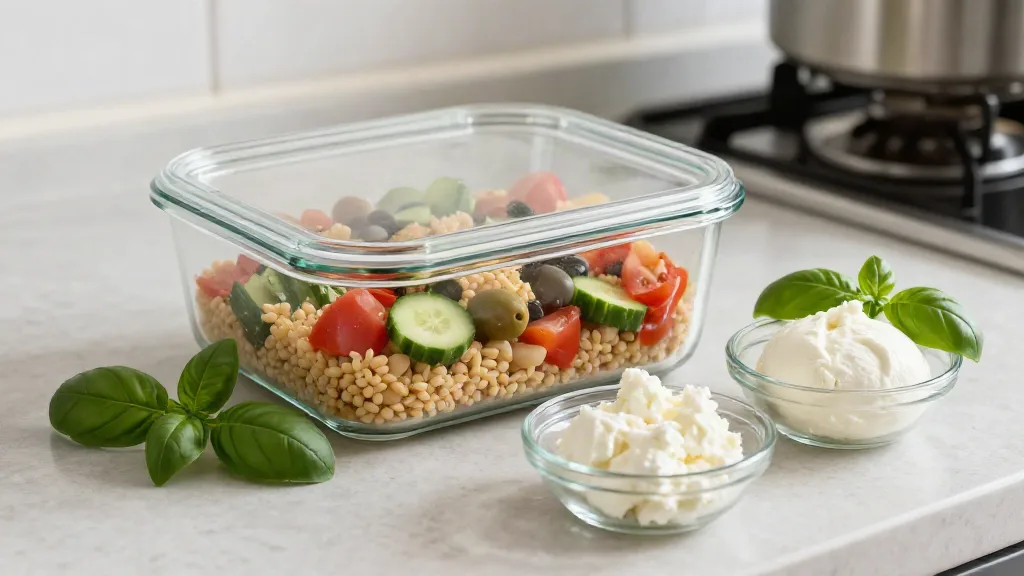
A note on the grain itself: the Harvard T.H. Chan School of Public Health explains that a whole grain keeps its bran, germ and endosperm, while refining strips the bran and germ. Semi-pearled farro sits in between, with part of the bran removed.
What I’d Test Next
- Semi-pearled vs. pearled farro, both cooked with the pasta method, comparing cooked weight, time to tender-but-chewy, dressing absorption and how the grains hold after 24 hours in the fridge.
- Feta instead of ricotta salata, for readers who can’t find ricotta salata.
- Lemon juice instead of red wine vinegar for a brighter dressing.
Continue Cooking
- Pasta e ceci, creamy Italian pasta and chickpeas
- Sicilian caponata, sweet and sour eggplant
- A 7-day Mediterranean diet meal plan
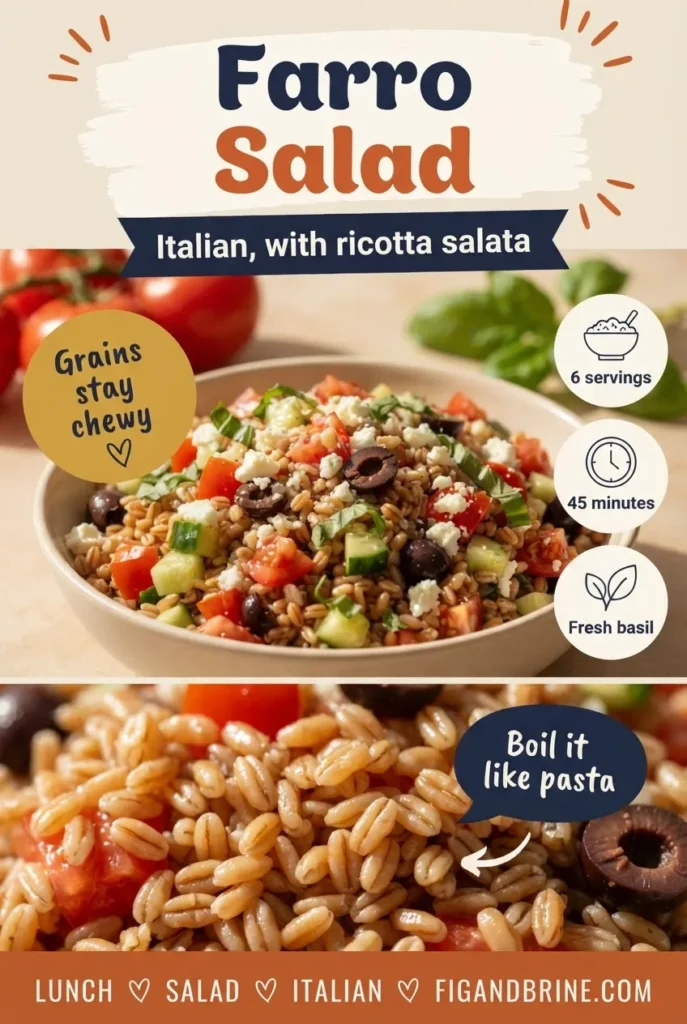

Mediterranean Farro Salad
- Total Time: 45 minutes
- Yield: 6 servings
- Diet: Vegetarian
Description
A hearty Mediterranean Italian salad featuring chewy farro, fresh vegetables, and a light dressing that enhances the natural flavors of the ingredients.
Ingredients
- 300 g semi-pearled farro
- 2.5 liters water
- 18 g fine salt (for cooking water)
- 60 g extra-virgin olive oil (about 4½ tablespoons)
- 35 g red wine vinegar (about 2⅓ tablespoons)
- 2 g fine salt (for dressing)
- 1 g black pepper
- 300 g ripe but firm tomatoes, cut into 1.5 cm pieces
- 250 g cucumber, unpeeled, cut into 1 cm half-moons
- 60 g red onion, thinly sliced
- 100 g pitted Kalamata olives (drained weight)
- 20 g fresh basil leaves, torn just before using
- 80 g ricotta salata, crumbled
Instructions
- Rinse the farro under cold water for about 20 seconds.
- Boil 2.5 liters of water, add the 18 g salt and the farro, and keep it at a gentle simmer.
- Start checking the farro at 22 minutes. It should be tender but still chewy.
- Drain the farro thoroughly in a fine-mesh colander.
- Cool the farro on a tray by spreading it 1 to 2 cm deep and stirring once to release steam.
- Make the dressing by whisking together the olive oil, red wine vinegar, salt, and black pepper.
- Dress the warm farro with about two-thirds of the dressing.
- Prep the vegetables: cut tomatoes, cucumber, and onion as specified.
- Add the prepared vegetables and olives to the cooled farro.
- Finish with the remaining dressing, basil leaves, and crumbled ricotta salata.
- Taste and season as necessary before serving.
Notes
Serving suggestions include pairing this salad with grilled fish or serve it as a lunch option with crusty bread. Store in the refrigerator for up to 3-4 days.
- Prep Time: 15 minutes
- Cook Time: 30 minutes
- Category: Salad
- Method: Boiling
- Cuisine: Mediterranean, Italian


