

Extra Virgin vs. Light vs. Pure Olive Oil: What’s the Difference?
Stand in front of the olive oil shelf at any American supermarket and you’ll see a wall of confusing words: extra virgin, virgin, pure, light, classic, extra light, pomace. Some bottles cost three times as much as others. Some are green, some are almost colorless. And the labels rarely explain what any of it means.
Here’s the short answer. Extra virgin olive oil is unrefined, pressed olive juice with real flavor and natural antioxidants. “Pure” and “light” olive oils are mostly refined olive oil, blended with a small amount of virgin oil, with a mild flavor and a pale color. “Light” refers to flavor and color, not calories.
In this guide, I’ll walk you through each type, what the official grades actually say, which oil to use for which job, and how to spot a good bottle. If you want the bigger picture on cooking techniques, my complete guide to how to cook with olive oil like a Mediterranean goes deeper into heat, storage, and finishing.
The Quick Comparison
| Extra virgin olive oil | “Pure” or “classic” olive oil | “Light” or “extra light” olive oil | |
|---|---|---|---|
| How it’s made | Mechanically pressed, unrefined | Mostly refined olive oil blended with some virgin oil | Mostly refined olive oil, with very little virgin oil |
| Flavor | Fruity, grassy, bitter, peppery | Mild, faintly olive | Very mild, almost neutral |
| Color | Green-gold to deep gold | Golden | Pale yellow |
| Natural antioxidants | Highest | Lower | Lowest |
| Official U.S. grade? | Yes: U.S. Extra Virgin | Usually sold under the U.S. “Olive Oil” grade | Not a grade; a marketing term |
| Calories | Same as other olive oils | Same | Same |
| Best for | Dressings, finishing, everyday cooking | Everyday cooking, larger-volume frying | Baking, frying, dishes where you want no olive flavor |
How Olive Oil Is Made
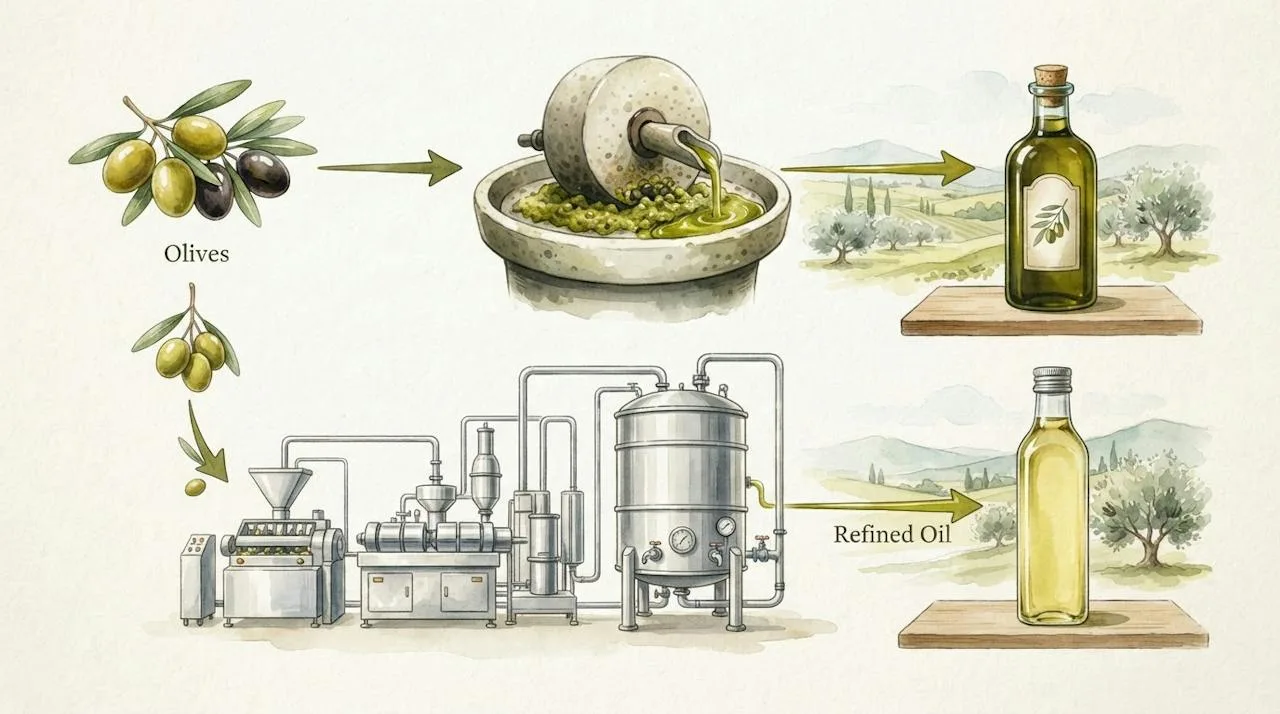
All olive oil starts the same way: olives are harvested, crushed into a paste, and the oil is separated out. What happens next is what separates the grades.
Virgin oils, including extra virgin, are made by mechanical means only. There’s no chemical refining and no high-heat treatment. The oil keeps its color, aroma, flavor, and natural compounds such as polyphenols, the antioxidants responsible for olive oil’s bitterness and peppery bite.
Refined olive oil is made from virgin oils that have flaws in flavor or acidity. They go through refining, a process that removes off-flavors, color, and aroma. Unfortunately, it also strips away most of the polyphenols and the taste that makes olive oil special. Refined oil on its own is nearly flavorless, so producers blend in a little virgin oil to give it some character. That blend is what usually ends up in bottles labeled “pure,” “classic,” or “light.”
Olive-pomace oil is extracted from the paste left over after pressing, usually with solvents, and then refined. It’s the lowest grade sold for eating.
What the Official Grades Say
The United States has voluntary grade standards for olive oil. According to the USDA’s olive oil and olive-pomace oil standards, the main grades include:
- U.S. Extra Virgin Olive Oil: Free acidity of no more than 0.8 grams per 100 grams, with excellent flavor and aroma.
- U.S. Virgin Olive Oil: Free acidity of no more than 2.0 grams per 100 grams, with reasonably good flavor.
- U.S. Olive Oil: A blend of refined olive oil and virgin olive oil, with free acidity of no more than 1.0 gram per 100 grams.
- U.S. Refined Olive Oil: Free acidity of no more than 0.3 grams per 100 grams, after refining.
- U.S. Olive-Pomace Oil and U.S. Refined Olive-Pomace Oil: Oils extracted from the leftover olive paste.
Two things stand out. First, “pure” and “light” don’t appear anywhere in the USDA grades. They’re marketing terms, most often used on oils that fall under the “U.S. Olive Oil” grade. Second, these standards are voluntary, so a label alone doesn’t guarantee quality.
Mediterranean Secret: Low acidity is just one requirement for extra virgin. Fresh flavor matters just as much. That’s why your nose and tongue are often the best quality test you have.
Extra Virgin Olive Oil
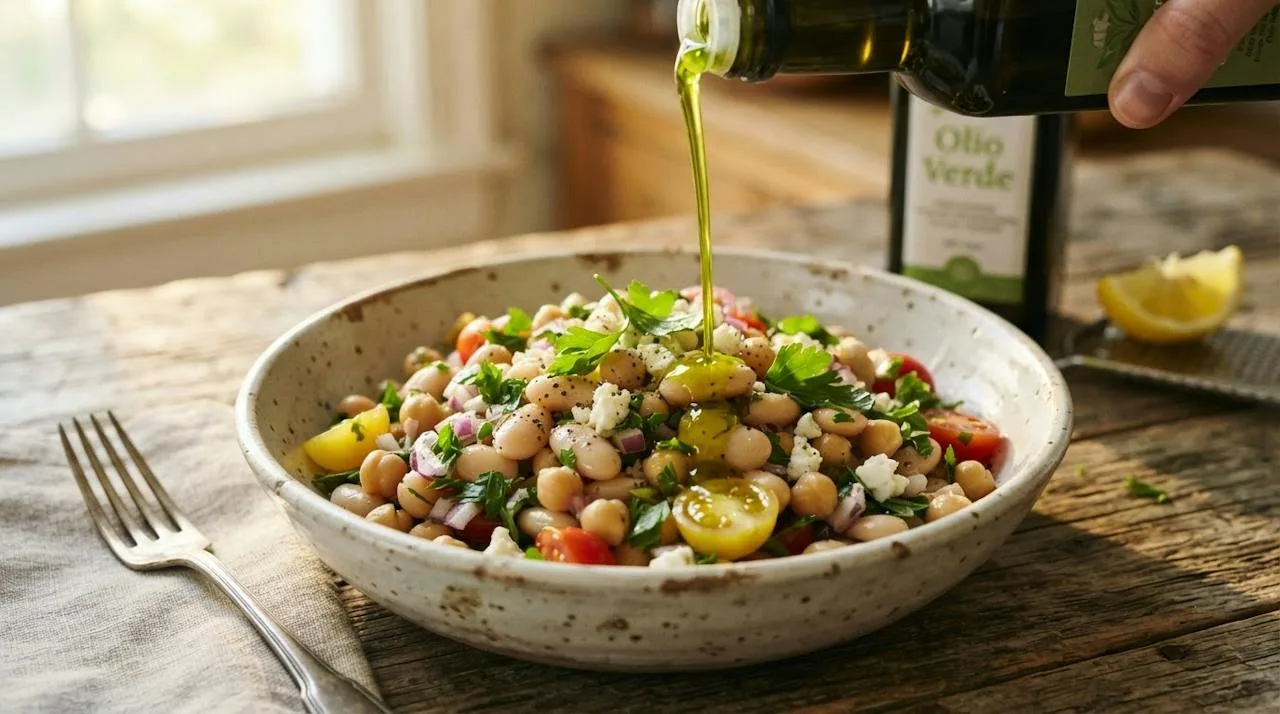
Extra virgin olive oil is the highest grade and the heart of Mediterranean cooking. It’s the only type that tastes like what it is: the fresh juice of olives.
What it tastes like: Fresh extra virgin olive oil can taste grassy, fruity, buttery, or green, with a bitter edge and a peppery sting at the back of the throat. That bitterness and pepperiness come from polyphenols and are signs of freshness, not flaws.
Health: Olive oil is rich in monounsaturated fat, which the Harvard T.H. Chan School of Public Health counts among the healthy fats when it replaces saturated and trans fats. The FDA allows a qualified health claim that oils high in oleic acid, the main fat in olive oil, may reduce the risk of coronary heart disease when used in place of saturated fat. And in the landmark PREDIMED trial, it was specifically extra virgin olive oil that was used in the Mediterranean diet group. My Mediterranean diet guide for beginners explains how olive oil fits into the whole pattern.
Best uses:
- Dressings and drizzles: It’s the backbone of every vinaigrette and tahini sauce in my Mediterranean grain bowls guide.
- Finishing: A raw drizzle over soups, hummus, beans, grilled fish, and roasted vegetables.
- Everyday cooking: Sautéing, roasting, and braising.
- Simple salads: Toss it with home-cooked chickpeas, parsley, cucumber, and lemon. My guide to how to cook dried chickpeas shows you how to make them creamy and well-seasoned.
The catch: Extra virgin olive oil is fresh produce. Its flavor fades with time, heat, light, and air, and not every bottle labeled extra virgin lives up to the name. When the UC Davis Olive Center tested supermarket oils in 2010, 69% of the imported samples labeled extra virgin failed to meet the standard, often because they were oxidized, made from poor-quality olives, or diluted with cheaper refined oils.
“Pure” or “Classic” Olive Oil
“Pure olive oil” sounds like the most natural option on the shelf, but it’s actually a step below extra virgin. It’s typically a blend of refined olive oil with a portion of virgin or extra virgin oil, sold under the official “U.S. Olive Oil” grade. You may also see it labeled simply “olive oil” or “classic.”
What it tastes like: Mild, smooth, and faintly olive. It has a little character from the added virgin oil but none of the grassy, peppery notes of extra virgin.
Best uses:
- Everyday sautéing when you don’t need olive flavor
- Shallow-frying and larger-volume frying, where using extra virgin would get expensive
- Recipes where a strong olive taste would compete with other flavors
The trade-off: Because most of the oil is refined, it has far fewer polyphenols than extra virgin. It’s still a monounsaturated-rich oil and a reasonable swap for butter, but it doesn’t offer the flavor or antioxidants that make extra virgin special.
“Light” or “Extra Light” Olive Oil
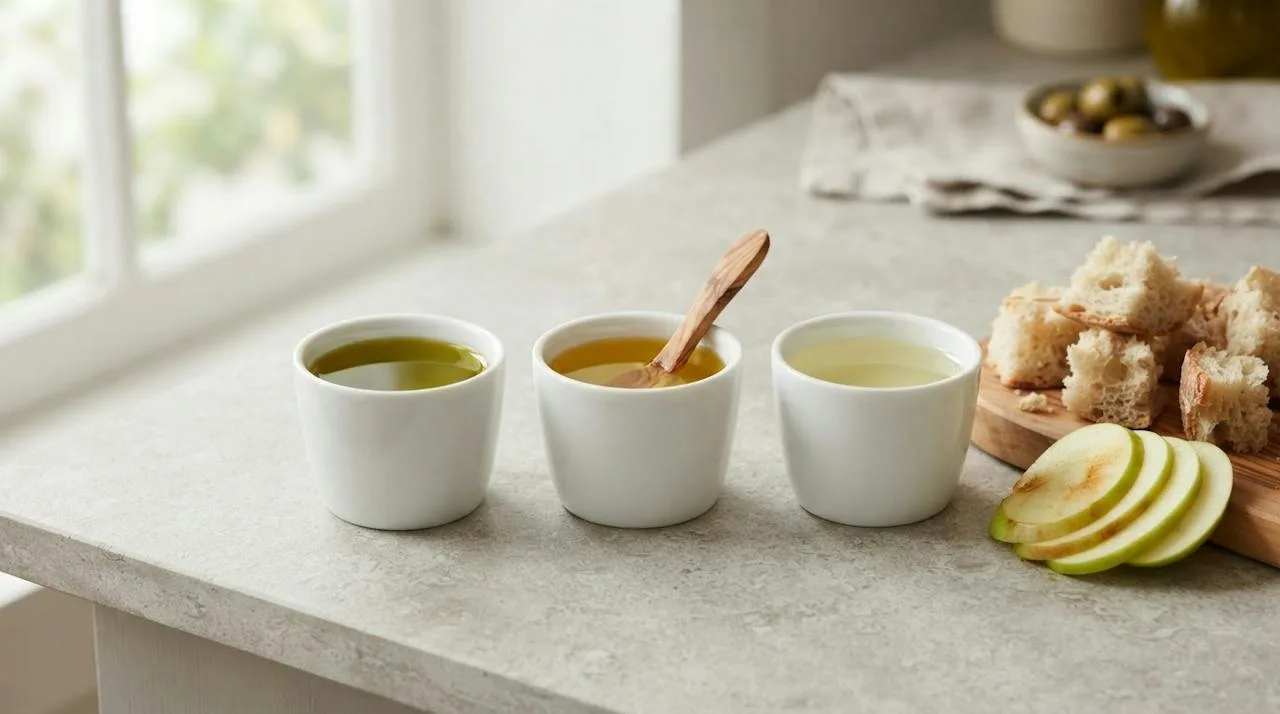
This is the most misunderstood bottle on the shelf. “Light” refers to color and flavor, not calories or fat. Light olive oil has essentially the same calories as any other olive oil, because all oils are pure fat.
Light or extra light olive oil is usually mostly refined olive oil with only a very small amount of virgin oil, which gives it a pale color and an almost neutral flavor.
Best uses:
- Baking: Cakes, muffins, and brownies where you want moisture without an olive taste.
- Frying: Its neutral flavor works well for fried foods.
- Mayonnaise and neutral sauces: Where strong extra virgin olive oil can taste bitter.
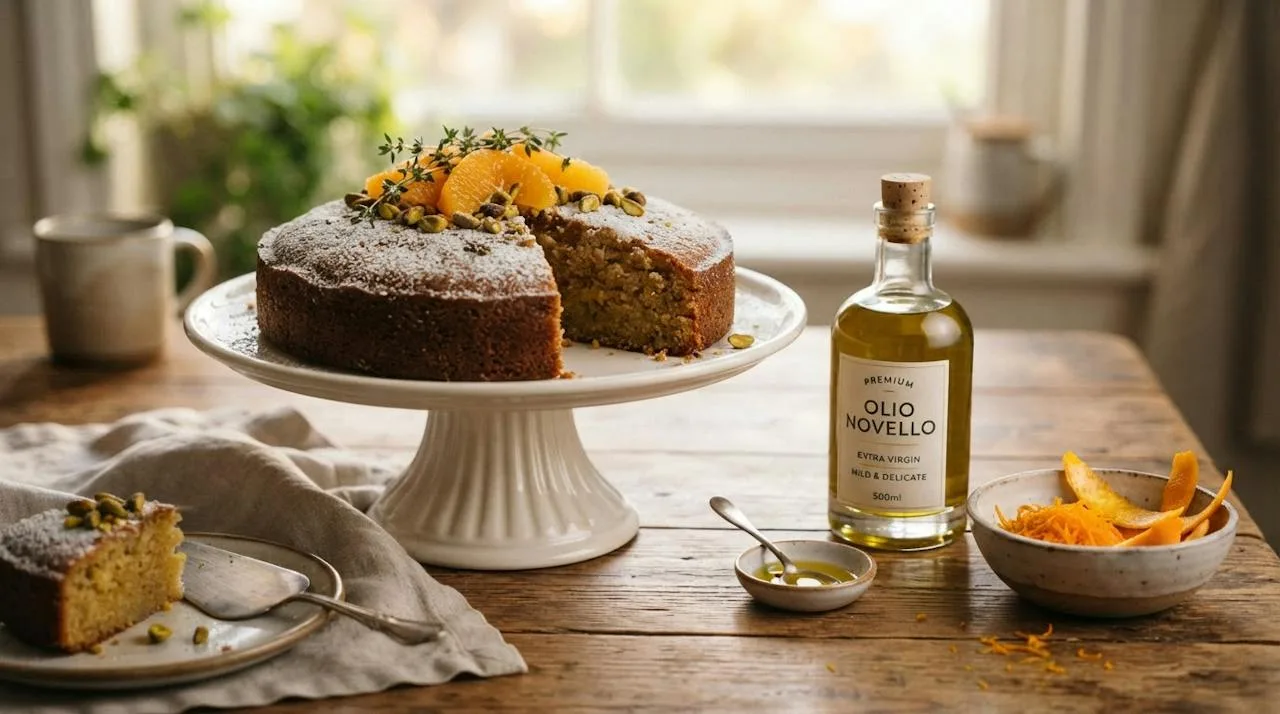
Mediterranean Secret: For olive oil cakes, many bakers choose a mild extra virgin oil rather than light olive oil, because a gentle fruitiness is part of the charm. Save light olive oil for bakes where you want no olive flavor at all.
Which Olive Oil Is Best for Cooking?
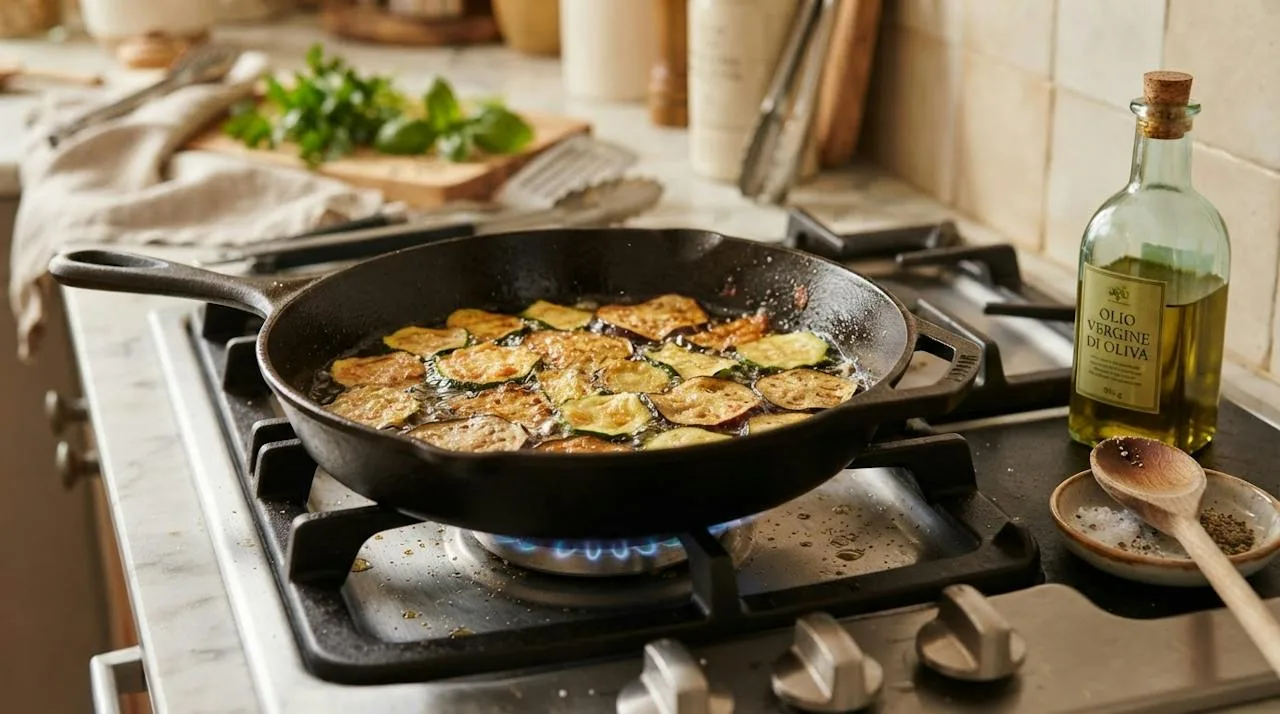
This is where the biggest myth lives: that extra virgin olive oil can’t handle heat. In fact, it’s more stable than its reputation suggests.
In a 2018 study published in Acta Scientific Nutritional Health, researchers heated extra virgin olive oil and other common cooking oils, holding them at 180°C (356°F) for 6 hours. They found that smoke point did not predict how oils performed under heat; oxidative stability and polyunsaturated fat content were better indicators. Extra virgin olive oil produced the lowest levels of harmful polar compounds of the oils tested. (The researchers worked at an Australian olive oil testing laboratory, so it’s worth reading alongside other research, but the findings match how Mediterranean cooks have used it for generations.)
Here’s how I choose:
- Sautéing, roasting, braising: Extra virgin. My guide to roasted Mediterranean vegetables uses it for every tray.
- Shallow-frying: Extra virgin or regular olive oil, depending on budget.
- Deep-frying large batches: Regular (“pure”) or light olive oil, mostly for cost reasons.
- Baking with no olive flavor: Light olive oil.
- Dressings, dips, and finishing: Always extra virgin, ideally your freshest bottle.
Whatever you use, never let the oil smoke. If it does, take the pan off the heat, let it cool, and start again at a lower temperature.
How to Choose a Good Bottle
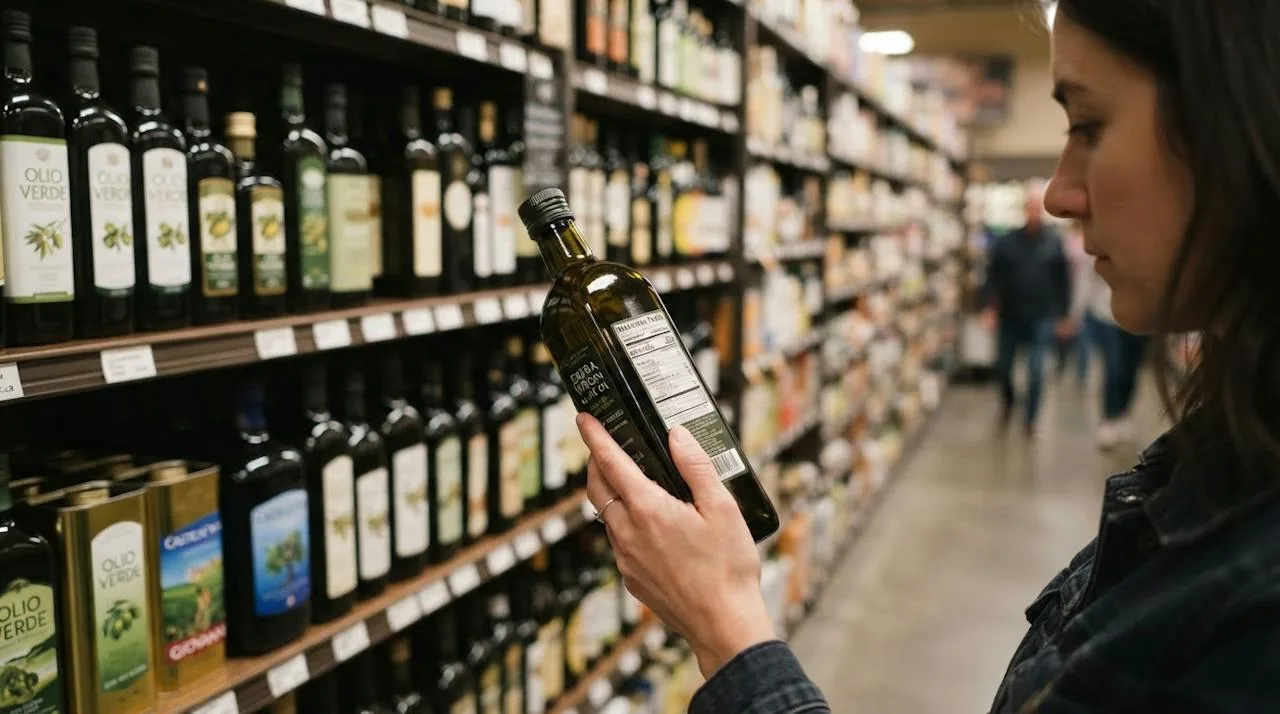
Because labels can be misleading, a few habits make a big difference. These come straight from the UC Davis Olive Center’s buying advice:
- Look for a harvest date, not just a “best by” date, and choose the most recent harvest.
- Check where the oil was made, not just where it was bottled.
- Look for quality seals such as the California Olive Oil Council, whose standards are stricter than international standards.
- Choose dark glass or tin, which protect the oil from light.
- Buy a size you’ll finish. UC Davis recommends using olive oil within 15 to 18 months of harvest and within a couple of months of opening.
- Taste it. Fresh extra virgin should taste fruity, bitter, and peppery. Crayon, stale nut, or musty flavors mean it’s past its prime.
And store it well: in a cool, dark cupboard, away from the stove, with the cap tightly closed.
Common Questions
Is light olive oil lower in calories?
No. “Light” describes the oil’s color and flavor, not its calorie or fat content. All olive oils, from extra virgin to light, have essentially the same number of calories per tablespoon.
Is “pure” olive oil better than extra virgin?
No. “Pure” sounds premium, but it’s usually a blend of refined olive oil with some virgin oil. Extra virgin is the higher grade, with more flavor and more natural antioxidants.
Can I substitute one type for another?
In cooking, yes. Any olive oil can replace another in sautéing, roasting, or frying. In dressings, dips, and finishing, extra virgin is the one that matters, since you’ll taste it directly. In baking, light olive oil gives a neutral result, while extra virgin adds a fruity note.
Is it safe to make garlic or herb-infused olive oil at home?
Yes, with care. The CDC advises refrigerating homemade oils made with garlic or herbs and throwing them away after 4 days, because these mixtures can allow botulism bacteria to grow. Make small batches and keep them cold.
Which olive oil should I use for marinating olives?
Extra virgin. Its fruity, peppery flavor is the whole point. If you cure your own, my guide to brine-cured olives and preserved lemons covers the full process. Dress only what you’ll eat within a few days and keep any garlic-and-herb mixture refrigerated.
What’s the best olive oil for a preserved lemon dressing?
A good extra virgin. Whisk finely chopped rind from a jar of homemade preserved lemons into extra virgin olive oil with a little garlic for a bright, salty dressing, and keep it in the refrigerator.
The Bottom Line
If you only buy one bottle, make it a fresh extra virgin olive oil with a recent harvest date. Use it for dressings, finishing, and most everyday cooking. Add a bottle of regular or light olive oil only if you deep-fry often or bake things where you want no olive flavor at all.
The words on the label matter less than freshness, storage, and taste. Learn what good extra virgin olive oil tastes like, and you’ll never be fooled by a pretty bottle again.
Continue Learning
- How to cook with olive oil like a Mediterranean
- Mediterranean grain bowls: grains, legumes and dressings
- Roasting vegetables the Mediterranean way
With a peppery bottle on the counter and figs in the bowl, Nevaeh Hall


