

Mediterranean Seasonal Vegetable Calendar: What to Cook Every Month
My whole approach to cooking started at a farmers market stall, and the market taught me something before any cookbook did: the best Mediterranean meals begin with what’s at its peak. A tomato in August and a tomato in February are two different ingredients. So are July zucchini and the ones shipped in for the holidays.
Mediterranean home cooks have always cooked this way. Spring brings peas and greens to the pot, summer fills the pan with eggplant and peppers, and winter turns to cabbage, leeks, potatoes and citrus. This calendar shows what’s typically at its best each month across much of the United States, how the seasons shift by region, and how I’d cook each group the Mediterranean way.
If you’re new to oven-roasting vegetables, start with my guide to roasting vegetables the Mediterranean way, then come back here to plan what goes on the tray.
The Quick Answer
The Short Version: Across much of the US, spring (March to May) is for asparagus, peas, spinach, chard, radishes and lettuces. Summer (June to August) is for tomatoes, eggplant, peppers, zucchini, green beans and cucumbers. Fall (September to November) brings winter squash, Brussels sprouts, cauliflower, potatoes and the last peppers. Winter (December to February) leans on cabbage, kale, leeks, root vegetables, storage onions and garlic, and citrus. Your exact dates depend on where you live, so treat this as a starting point and let your local market have the final word.
Why Cook by the Season?
When the Mediterranean diet was added to UNESCO’s list of the Intangible Cultural Heritage of Humanity, the recognition covered more than a list of foods. It described a whole way of growing, sharing and cooking food that follows the land and the calendar. Seasonal cooking isn’t an extra layer on top of the Mediterranean diet; it’s part of the foundation.
There are practical reasons too:
- Flavor. Vegetables picked close to peak ripeness and sold nearby usually taste more like themselves. That’s especially true of tomatoes, peppers and sweet corn.
- Variety without effort. If you cook by the season, your meals change on their own. You don’t need a plan to stop eating the same three vegetables.
- Better value at the peak. When a crop is abundant locally, there’s often more of it at the market and more choice in what you buy.
- Simpler cooking. A peak-season tomato needs olive oil and salt. An out-of-season one needs help.
How to Read This Calendar
Seasonal availability depends on where you live. The USDA’s SNAP-Ed Seasonal Produce Guide groups produce into four seasons for the whole country, and it states plainly that seasonal produce in your area will vary with growing conditions and weather. Regional charts show just how big that variation can be, so I’ve built the calendar below as a middle-of-the-country baseline, with adjustments for colder and warmer regions further down.
Two more things to keep in mind:
- Fresh-picked vs. storage crops. Potatoes, onions, garlic and winter squash are harvested in summer and fall but store well for months. They’re “in season” in winter because they keep, not because they’re being picked.
- Overlap is normal. Seasons don’t switch off on the first of the month. September markets often have summer tomatoes and the first winter squash on the same table.
The Month-by-Month Calendar
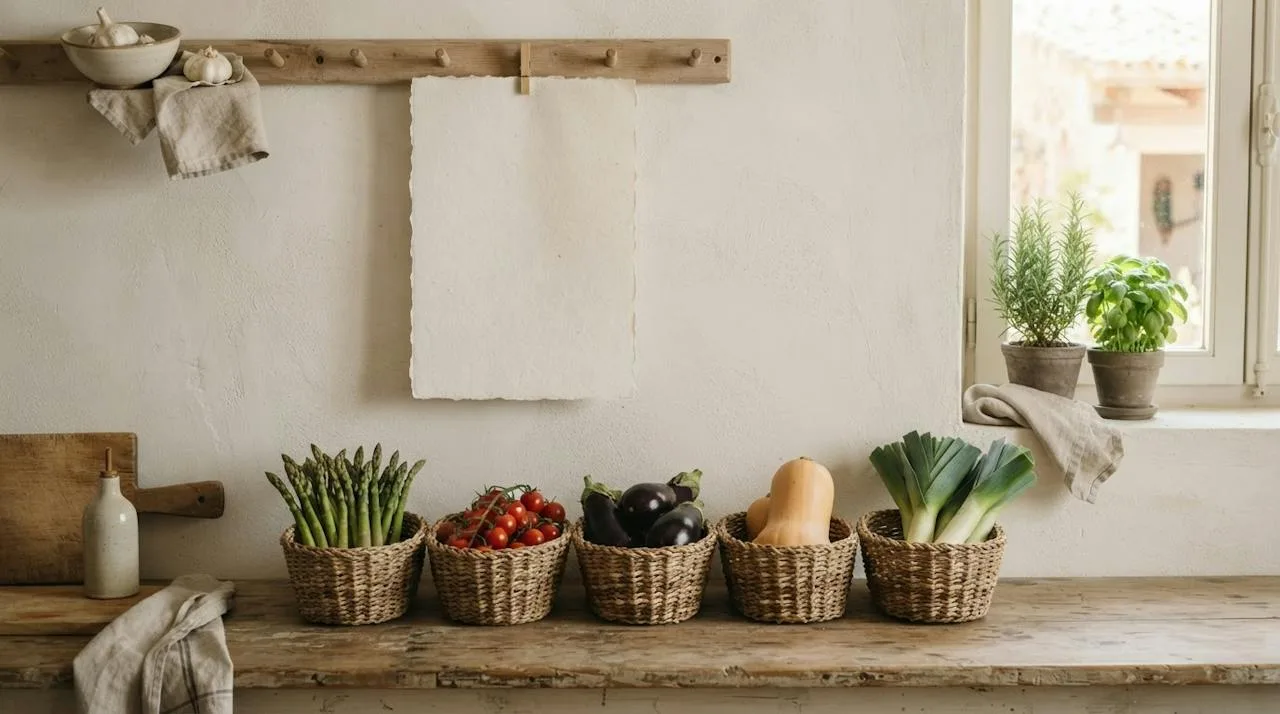
| Month | At its best (typical) | How I’d cook it |
|---|---|---|
| January | Cabbage, kale, leeks, carrots, beets, storage potatoes, onions and garlic, winter squash, citrus | Roasted root trays, braised greens, citrus salads |
| February | Same winter crops, plus the first spinach in milder areas | Lemon potatoes, slow-cooked greens with olive oil |
| March | Spinach, chard, radishes, early lettuces, green garlic in warm regions | Spinach rice, raw radishes with good olive oil |
| April | Asparagus, peas, spinach, radishes, artichokes in California | Roasted asparagus, peas braised with dill |
| May | Asparagus, peas, fava beans, lettuces, chard, the first carrots | Spring greens with lemon, fava beans with olive oil |
| June | Zucchini, cucumbers, early green beans, beets, the last peas | Grilled zucchini, cucumber salads, braised beans |
| July | Tomatoes, eggplant, peppers, zucchini, green beans, sweet corn | Briam, roasted peppers, tomato salads |
| August | Peak tomatoes, eggplant, peppers, okra, cucumbers | Sauces for the freezer, caponata, stuffed vegetables |
| September | Late tomatoes and peppers, the first winter squash, broccoli, cauliflower | Roasted peppers, mixed summer-to-fall trays |
| October | Winter squash, Brussels sprouts, cauliflower, broccoli, potatoes, beets | Roasted squash and sprouts, root vegetable trays |
| November | Brussels sprouts, cabbage, kale, parsnips, sweet potatoes, winter squash | Long-roasted roots, cabbage wedges |
| December | Cabbage, kale, leeks, root vegetables, storage crops, citrus | Oranges with fennel and olives, roasted leeks |
Spring (March to May): Greens, Peas and Asparagus
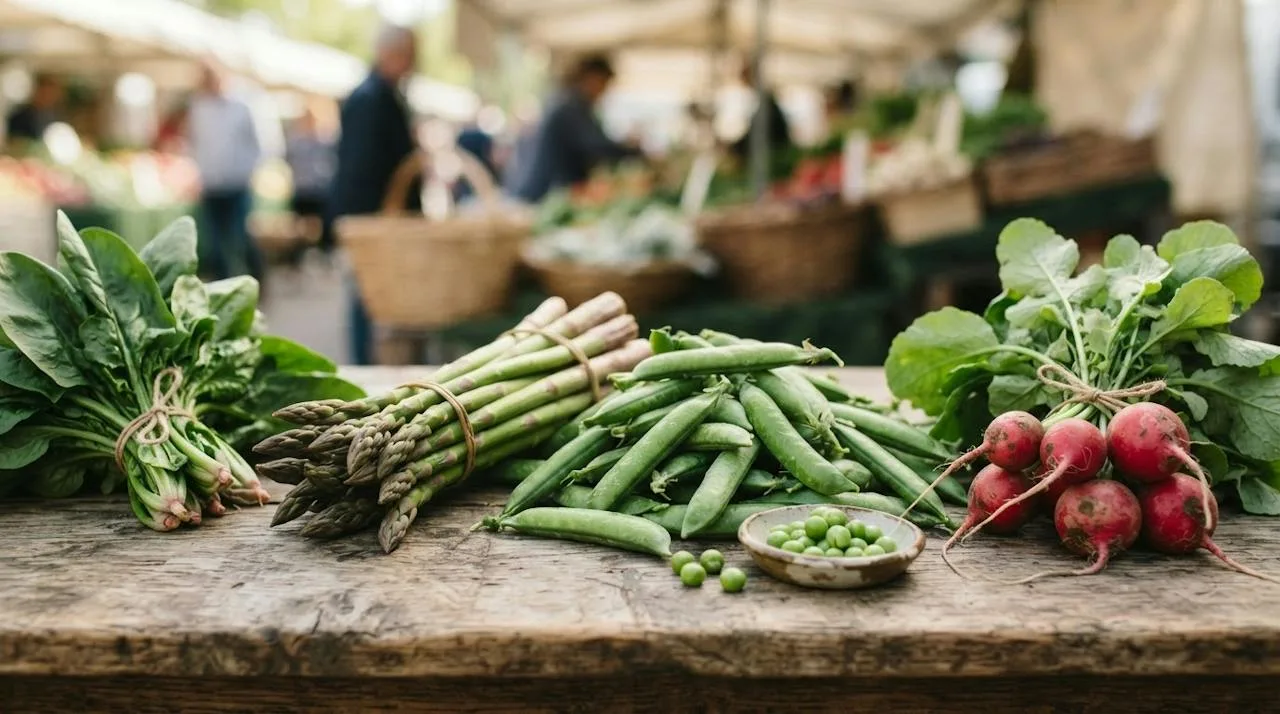
Spring is the green season. According to the USDA guide, spring brings asparagus, peas, spinach, Swiss chard, radishes, lettuce and kale, along with herbs, garlic and onions. In California’s Mediterranean climate, the Foodwise seasonality chart for Bay Area farmers markets also puts artichokes, arugula, fava beans and green garlic at their spring peak.
How to cook spring vegetables: Gently. Spring vegetables are tender and mild, and they don’t need long roasting. Wilt spinach and chard into rice, blanch peas and fava beans and finish them with olive oil and lemon, and roast asparagus quickly at high heat so the tips crisp before the stalks go limp.
Spring dish to make: Greek spinach rice (spanakorizo), which turns a big bunch of spinach into a one-pot meal with dill, lemon and olive oil.
Summer (June to August): The Mediterranean Peak
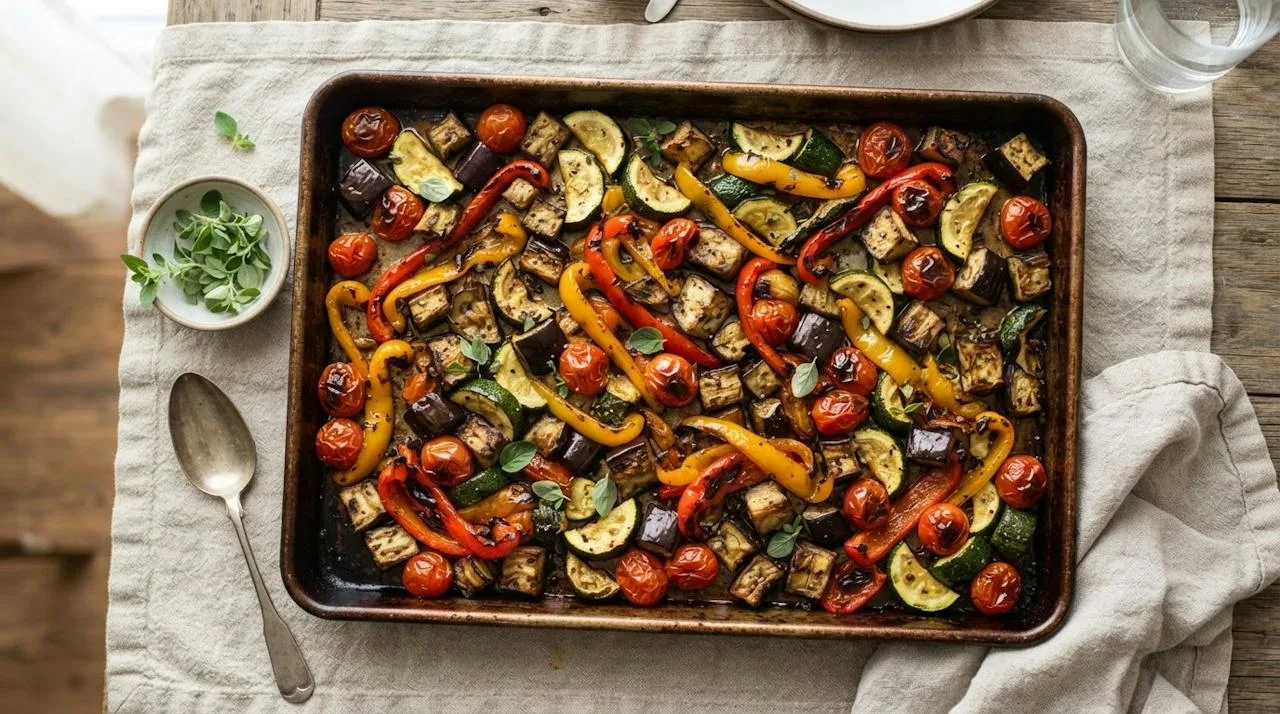
This is the season the Mediterranean is famous for. The USDA guide adds eggplant, bell peppers, tomatoes, zucchini and summer squash, green beans, cucumbers, corn and okra to the list in summer. These are the vegetables behind ratatouille, caponata, briam and every great tomato salad.
How to cook summer vegetables: Two ways, depending on the day. Raw or barely cooked when tomatoes and cucumbers are at their best, with olive oil, salt, oregano and maybe some feta. Or roasted hard on a hot sheet pan, where eggplant, peppers and zucchini caramelize and concentrate. In my roasting tests, zucchini half-moons were done in about 22 minutes at 220°C fan, and bell pepper strips in about 25.
Summer dishes to make:
- Greek briam, a big tray of roasted summer vegetables and potatoes baked in tomato and olive oil.
- Greek fasolakia, green beans braised slowly in tomato and olive oil until silky.
- Whole roasted peppers, peeled and dressed in olive oil, using the method in my guide to how to roast and peel peppers.
Pro Tip: Late summer is the time to cook ahead. Roasted peppers, slow-cooked tomato sauce and roasted eggplant all freeze or keep well in the fridge for a few days, so you can stretch the peak season a little further.
Fall (September to November): Summer Meets Squash
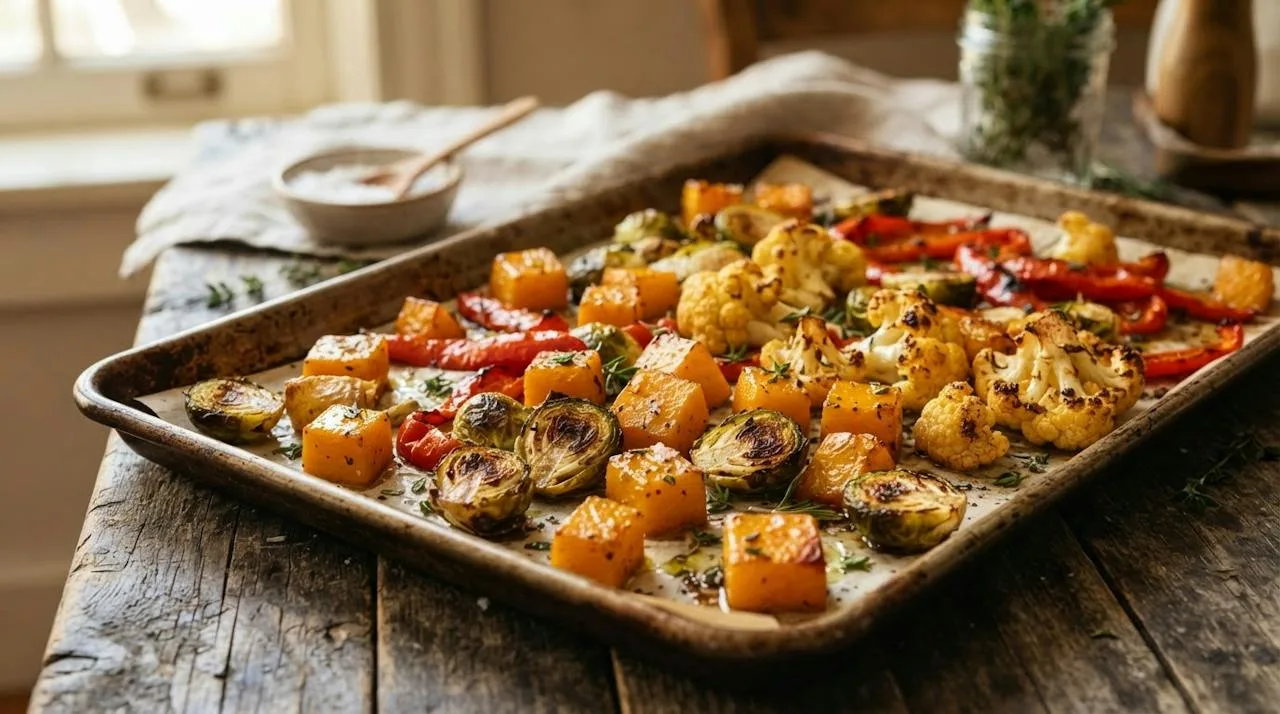
Fall is the most generous season at the market, because summer and winter crops overlap. The USDA guide adds Brussels sprouts, cauliflower, parsnips, potatoes, pumpkins, winter squash and pomegranates in fall. Foodwise lists peppers, tomatoes, okra and winter squash as fall peak crops in Northern California, and in the Bay Area, even fresh olives.
How to cook fall vegetables: This is when the oven comes back into heavy use. Dense vegetables need more time, so give them the full roasting window. From my roasting chart tests at 220°C fan, Brussels sprout halves took about 30 minutes, 3 cm butternut squash cubes about 35, and 3 cm potato cubes about 38, turned twice.
Fall dishes to make:
- Greek lemon potatoes, roasted in lemon, olive oil, garlic and oregano until the edges crisp.
- A mixed tray of the last peppers with the first squash, staggered so each goes in for the right amount of time.
Winter (December to February): Roots, Brassicas and Citrus
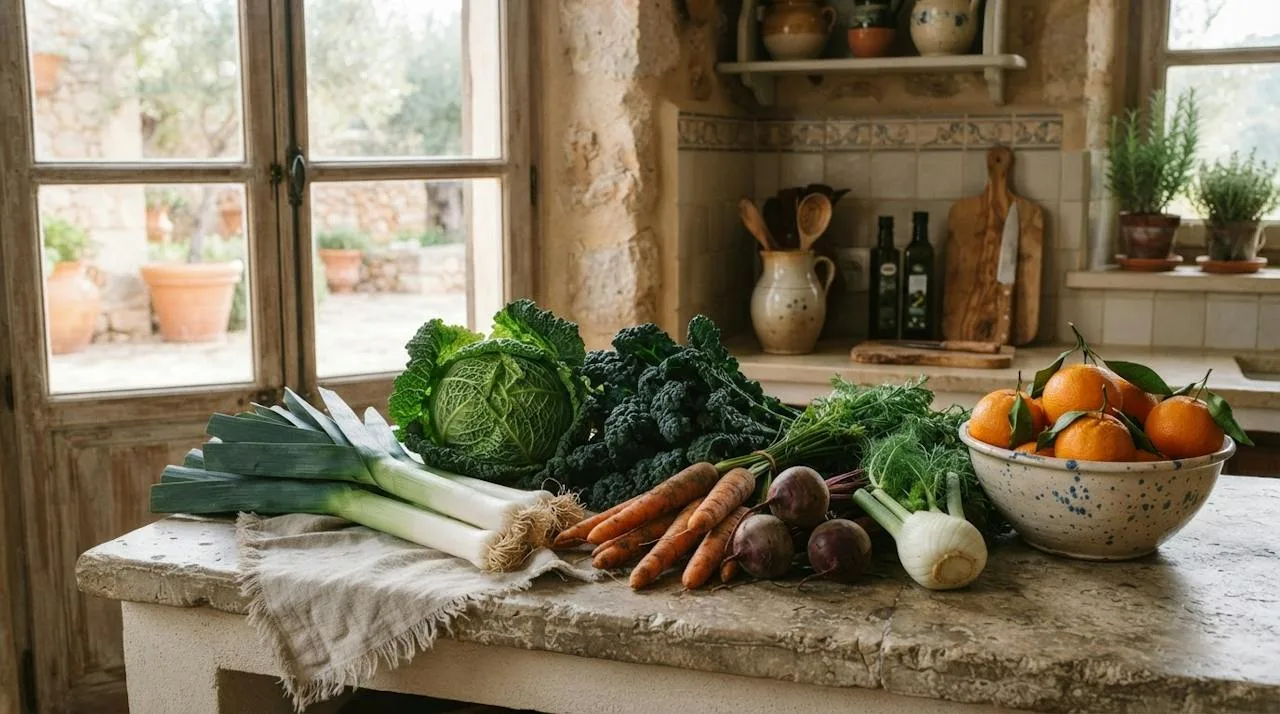
Winter is quieter, but it’s far from empty. The USDA guide adds leeks, grapefruit and oranges in winter, alongside the cold-hardy greens and root vegetables. In California, Foodwise’s winter peak list is long: beets, cabbage, carrots, chard, kale, leeks, lettuces, parsnips, radicchio, radishes, spinach and turnips are all at their best between November and February.
How to cook winter vegetables: Low and slow, or hot and long. Braise greens and leeks in olive oil until meltingly soft, roast root vegetables until caramelized, and use raw citrus and fennel to bring brightness to heavier meals. Winter is also when storage crops carry the kitchen: potatoes, onions, garlic and winter squash.
Winter dish to make: A Sicilian orange and fennel salad with olives. Fennel is a cool-season vegetable and oranges peak in winter, so this salad is at its best when the rest of the market is at its most limited.
Roasting Times for Each Season
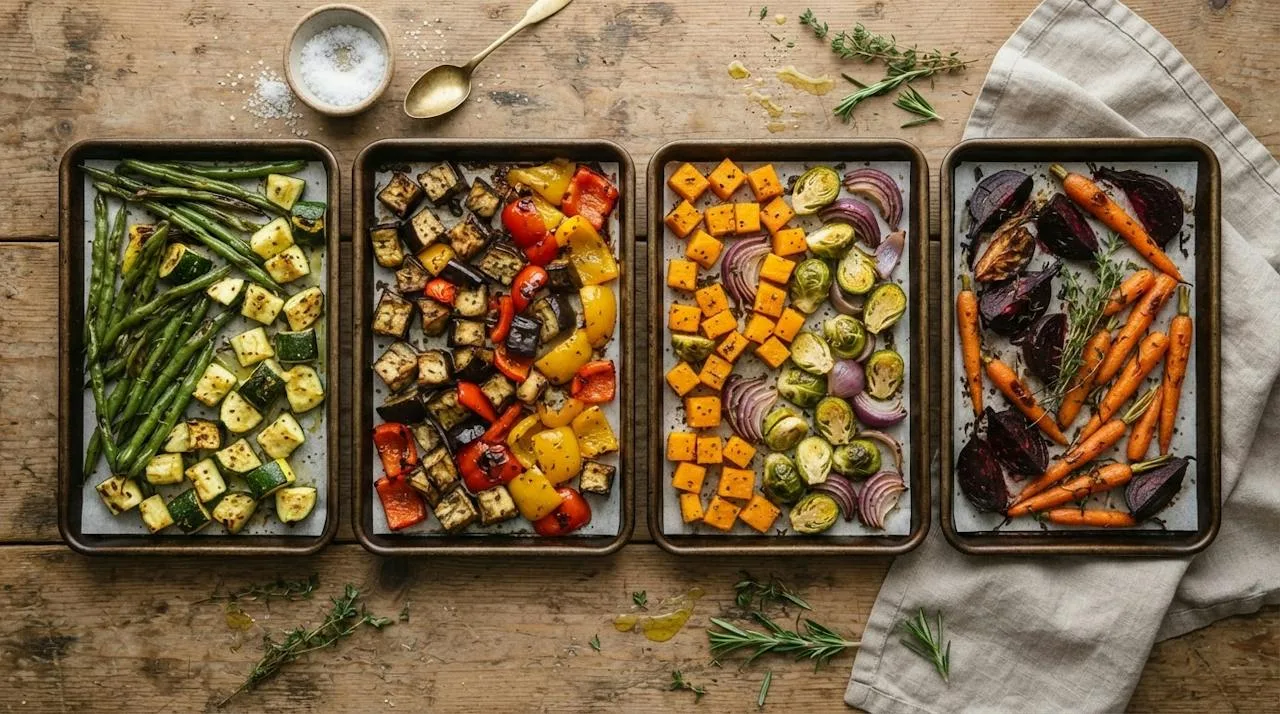
Because roasting is the backbone of so much Mediterranean vegetable cooking, here’s how the seasons line up with the times from my vegetable roasting times and temperatures chart. All were roasted at 220°C fan (about 425°F) on a single, uncrowded tray.
| Season | Vegetable and cut | Tested time |
|---|---|---|
| Summer | Whole green beans | About 18 minutes |
| Summer | Zucchini half-moons, about 2 cm | About 22 minutes |
| Summer | Bell pepper strips | About 25 minutes |
| Summer | Eggplant, 3 cm cubes | About 30 minutes |
| Fall | Broccoli florets, about 3 cm | About 20 minutes |
| Fall | Cauliflower florets, 3 to 4 cm | About 28 minutes |
| Fall | Brussels sprout halves | About 30 minutes |
| Fall | Butternut squash, 3 cm cubes | About 35 minutes |
| Fall and winter | Carrot sticks, about 1.5 × 6 cm | About 28 minutes |
| Fall and winter | Potatoes, 3 cm cubes | About 38 minutes |
| Fall and winter | Beets, 2 cm cubes | About 40 minutes |
The general pattern is useful: summer vegetables are watery and quick, while fall and winter vegetables are dense and slow. When you mix seasons on one tray, start the dense vegetables first and add the quick ones later.
Adjusting the Calendar for Your Region
The calendar above is a baseline. Here’s how much it can shift, using charts from three very different climates.
Colder northern states: The University of Wisconsin-Madison Extension’s seasonal availability chart for Wisconsin vegetables lists tomatoes, peppers, sweet corn and zucchini from July to September only, asparagus from April to June, and winter squash and Brussels sprouts from August to October. The summer window is shorter, so plan to cook ahead and preserve during August.
Warmer southern states: Mississippi State University Extension’s guide to buying fresh fruits and vegetables in season shows a much longer summer, with beans, eggplant, okra, peppers, squash and tomatoes running from May to October. Spring crops such as peas, lettuce, spinach and broccoli start as early as March.
Mediterranean-climate California: The Foodwise chart shows the biggest difference. Cool-season greens and roots peak through winter, artichokes and fava beans arrive in spring, and summer crops such as peppers and tomatoes carry on into October. This is the closest American match to the climate of Greece, southern Italy and the Levant, and it’s why California markets look so “Mediterranean” year-round.
The simplest test: ask the grower. Farmers at the market know exactly what was picked that week and what came out of storage.
Storage Crops: Your Winter Pantry
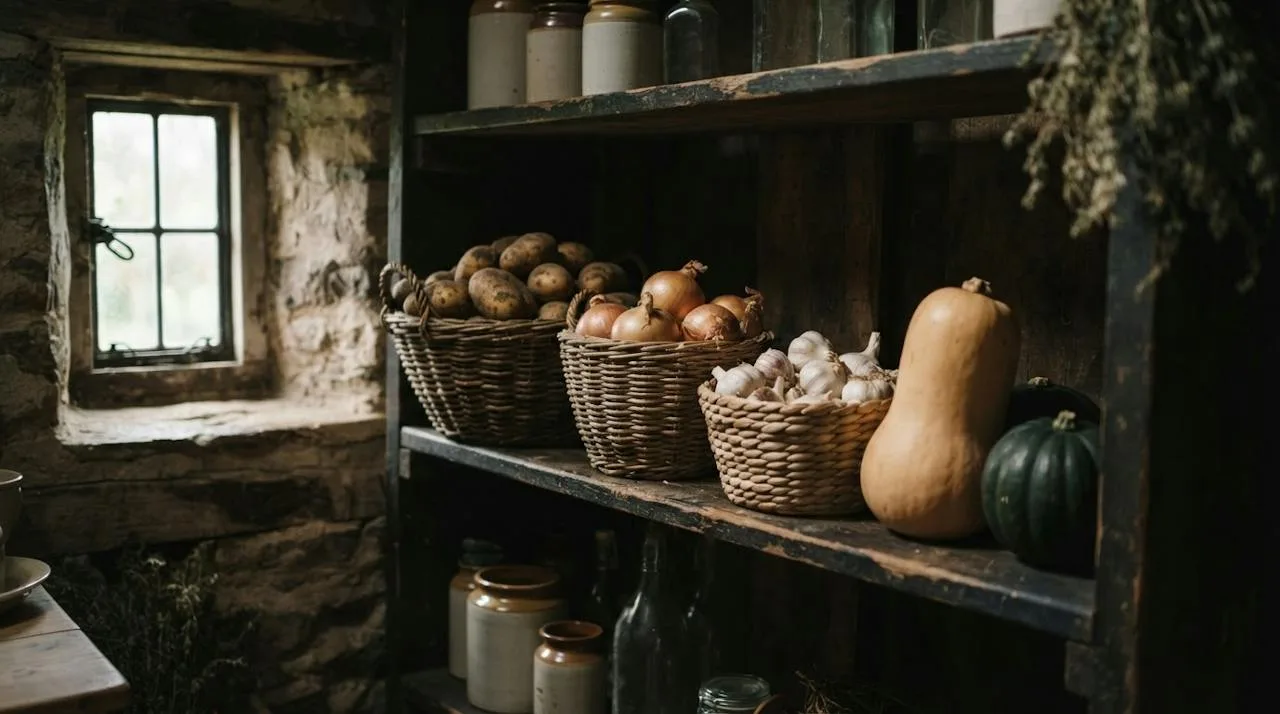
Some of the most useful Mediterranean vegetables are the ones that keep. Potatoes, onions, garlic and winter squash are harvested in late summer and fall, then carry kitchens through the winter. They’re the reason a cold-weather Mediterranean kitchen never runs out of things to roast.
- Potatoes, onions and garlic: Store them somewhere cool, dark and dry, and keep potatoes away from onions.
- Winter squash: Whole squash keeps for weeks at cool room temperature. Once cut, wrap it and refrigerate it.
- Roots like carrots and beets: Remove the leafy tops and refrigerate the roots.
Shopping the Market by Season
A few habits make seasonal cooking easier:
- Shop first, plan second. Decide what to cook after you see what’s at its best.
- Buy one new vegetable each trip. Fennel, kohlrabi or a new squash variety keeps the rotation fresh.
- Buy extra at the peak. Late-summer tomatoes and peppers are the time to roast, braise and freeze.
- Keep the pantry steady. Olive oil, lemons, garlic, dried herbs, beans and grains turn any seasonal vegetable into a meal.
Mediterranean Secret: Let the market write the menu. When you cook what’s at its peak, a pan of olive oil, salt and heat does most of the work for you.
Continue Learning
- Roasting vegetables the Mediterranean way: the complete guide
- Vegetable roasting times and temperatures chart (tested tray by tray)
- How to roast and peel peppers (oven, broiler and gas flame)
With a basket of whatever’s best this week, Nevaeh Hall


