

Greek Lemon Potatoes (Patates Lemonates)
Greek lemon potatoes look simple on paper: potatoes, lemon, olive oil, garlic and oregano, roasted until golden. But the liquid-to-potato ratio matters more than I expected. My first batch tasted like lemon potatoes, but it was closer to potatoes braised in lemon juice than the roasted version I wanted. The pan still held too much liquid, and the edges never developed that deep golden color.
The second round taught me to pay attention to three things: the pan, the potato size and when the liquid should disappear. A metal roasting pan, slightly less water and a hotter finish gave browned edges while keeping the centers soft and almost creamy. Browning needs the liquid to reduce first; as University of Illinois Extension explains, the Maillard reaction that creates roasted flavor depends on heat, moisture and time.
For the bigger picture on oven-roasting, see my guide to roasting vegetables the Mediterranean way. Follow this recipe and you’ll get lemon potatoes with caramelized edges, soft centers and just enough lemon-garlic oil left in the pan to spoon over the top.
What I Learned From Testing This Recipe
Recipe Testing Note Tested in 2 rounds. Last updated: October 2026. Equipment: fan (convection) oven, middle rack; 33 × 23 cm ceramic baking dish (round 1), 33 × 23 cm metal roasting pan (round 2). Key variables tested: ceramic vs. metal pan, lemon juice and water quantities, olive oil, potato size, a hotter final stage and how often to turn the potatoes.
In round 1, I roasted 1.2 kg of peeled floury potatoes, cut into thick wedges 4 to 5 cm long, in a ceramic dish at 200°C fan. Everything went in at the start: 80 ml lemon juice, 300 ml water, 80 ml olive oil, garlic, oregano, Dijon mustard, salt and pepper. I turned the potatoes once after 35 minutes and roasted them for about 70 minutes in total, raising the heat to 220°C for the last 10 minutes. They tasted good, but too much liquid stayed in the dish, the bottoms were more steamed than roasted, the edges weren’t crisp or deeply browned, the lemon was slightly too sharp and the sauce was thin. The ceramic dish didn’t brown the edges quickly enough, even at the higher temperature.
For round 2, I switched to a metal roasting pan, cut the wedges slightly smaller, reduced the lemon juice and water, added a little more olive oil and oregano, whisked the liquid separately first, turned the potatoes twice and finished with a longer stage at 220°C. The metal pan made the biggest difference.
What I changed after testing: Lemon juice went from 80 ml to 70 ml, water from 300 ml to 250 ml, olive oil from 80 ml to 90 ml and dried Greek oregano from 2 to 2½ teaspoons. I switched from a ceramic dish to a metal roasting pan, turned the potatoes twice instead of once and added a 15–20 minute final stage at 220°C fan. Round 1 was too wet for the size of the pan, with pale, steamed bottoms and a slightly sharp lemon flavor.
Ingredients
Serves 4 generously, or 6 as a side dish. Prep: 20–25 minutes | Roasting: 70–75 minutes | Resting: 5–10 minutes | Total: about 1 hour 35 minutes to 1 hour 50 minutes
For the potatoes
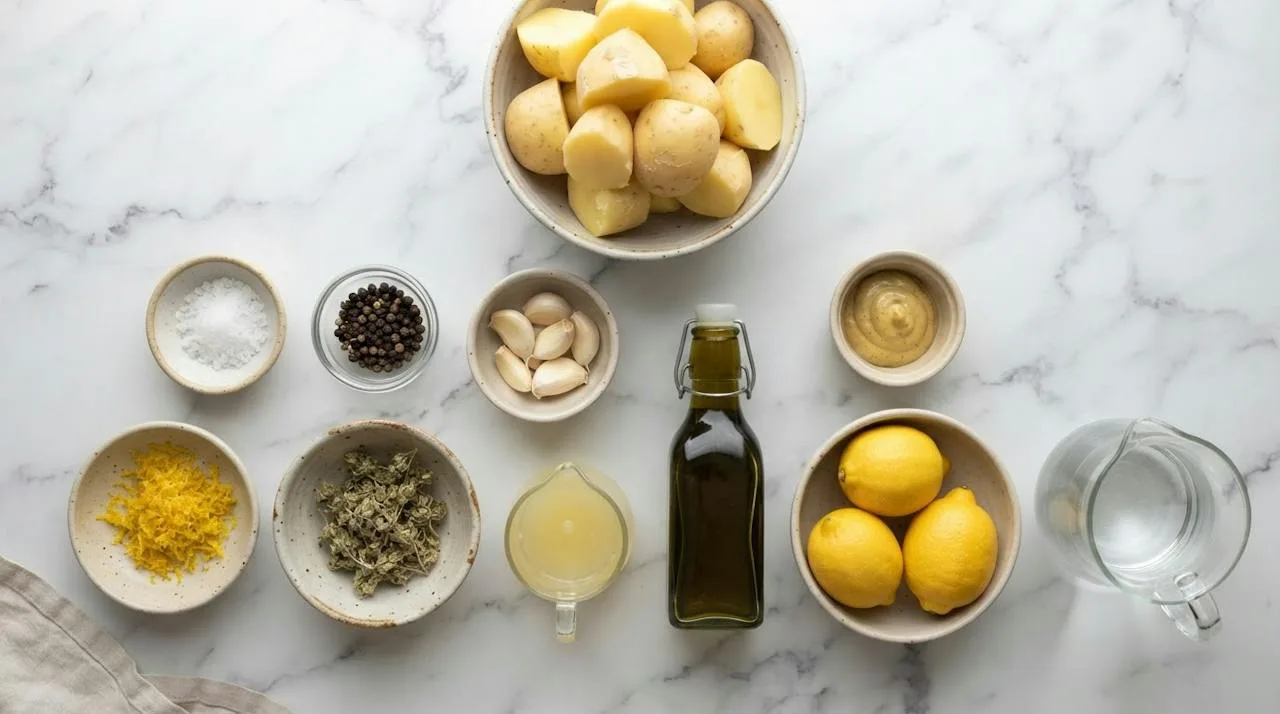
- 1.2 kg floury (starchy) potatoes, peeled and cut into wedges about 4 cm long
For the lemon mixture
- 70 ml fresh lemon juice
- Zest of 1 lemon
- 90 ml extra virgin olive oil
- 250 ml water
- 1 tablespoon Dijon mustard
- 2½ teaspoons dried Greek oregano
- 1½ teaspoons salt
- ½ teaspoon black pepper
- 4 garlic cloves, lightly crushed
To finish
- 1 to 2 teaspoons fresh lemon juice, squeezed over the whole pan just before serving
Before You Start: What to Watch For
- Use a metal roasting pan. In my testing, a 33 × 23 cm metal pan browned the edges noticeably better and reduced the liquid faster than a ceramic dish of the same size.
- Cut wedges, not cubes. Wedges about 4 cm long cooked evenly. Small cubes got too soft before the liquid had reduced. My vegetable roasting times and temperatures chart shows how much size changes roasting time.
- Choose floury potatoes for creamy centers. They gave the soft, almost creamy center I wanted. Waxier potatoes held their shape better but were less fluffy.
- Don’t drown them. Too much liquid steams the potatoes instead of roasting them. With 250 ml water and 70 ml lemon juice, the liquid was mostly gone by the end.
- Save some lemon for the end. A small squeeze of fresh lemon just before serving gives a brighter flavor than adding more lemon before roasting.
- Use good dried oregano. Greek oregano gives the classic flavor; my guide to Greek oregano vs. regular oregano explains why.
Method
- Heat the oven. Heat a fan oven to 200°C (about 390°F) with a rack in the middle.
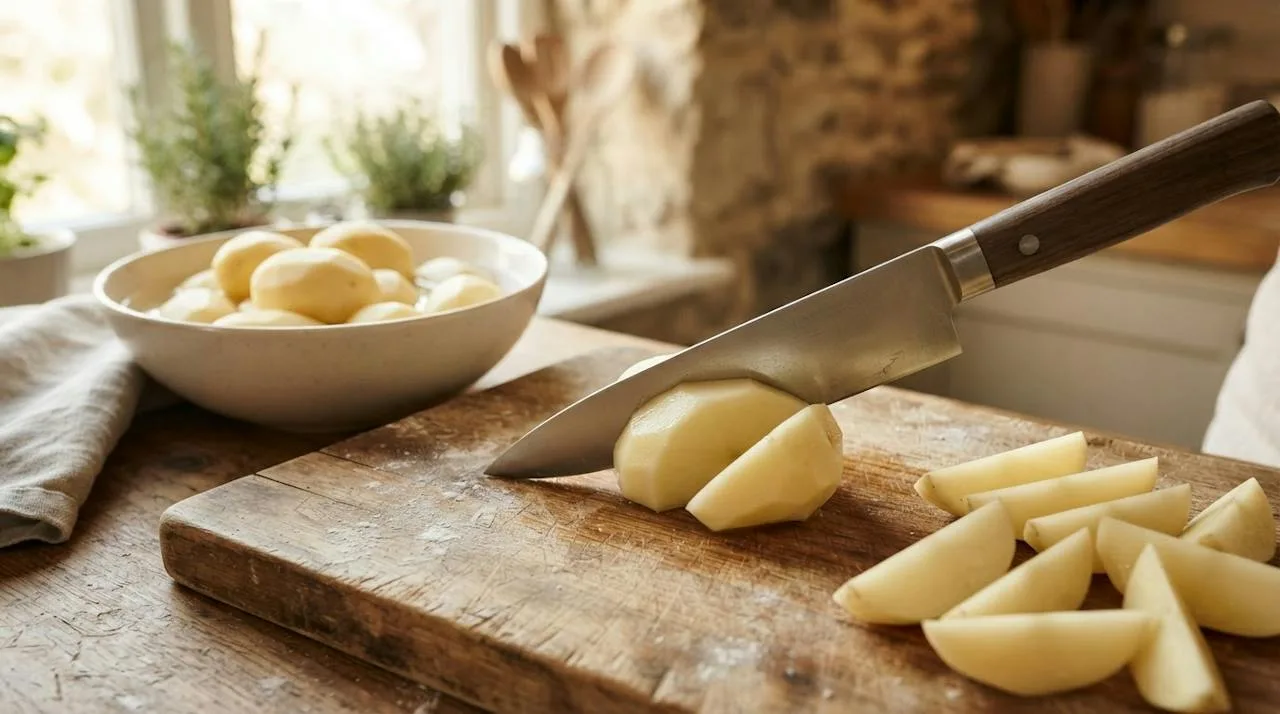
- Cut the potatoes. Peel the potatoes and cut them into wedges about 4 cm long. Put them in a 33 × 23 cm metal roasting pan.
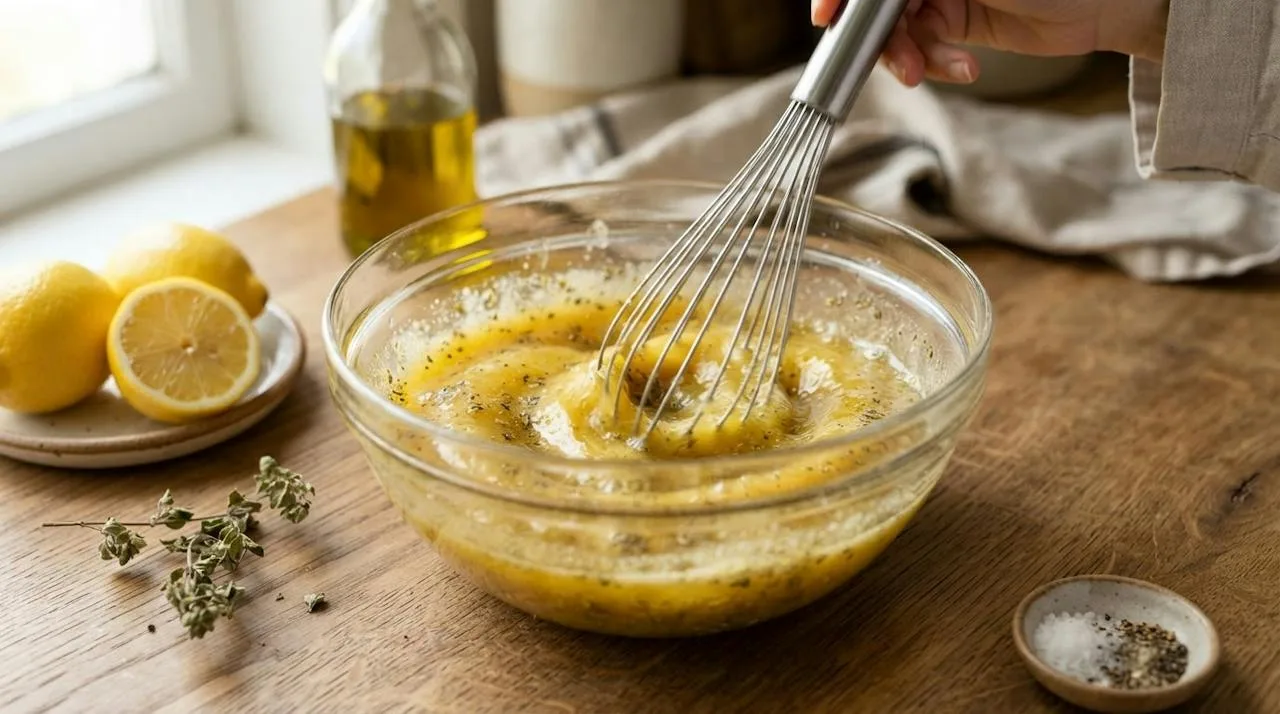
- Whisk the lemon mixture. In a bowl, whisk together the lemon juice, lemon zest, water, Dijon mustard, olive oil, oregano, salt and pepper until combined.
- Pour and toss. Pour the mixture over the potatoes, add the crushed garlic and toss well so every wedge is coated. Arrange the potatoes cut-side down as much as possible.
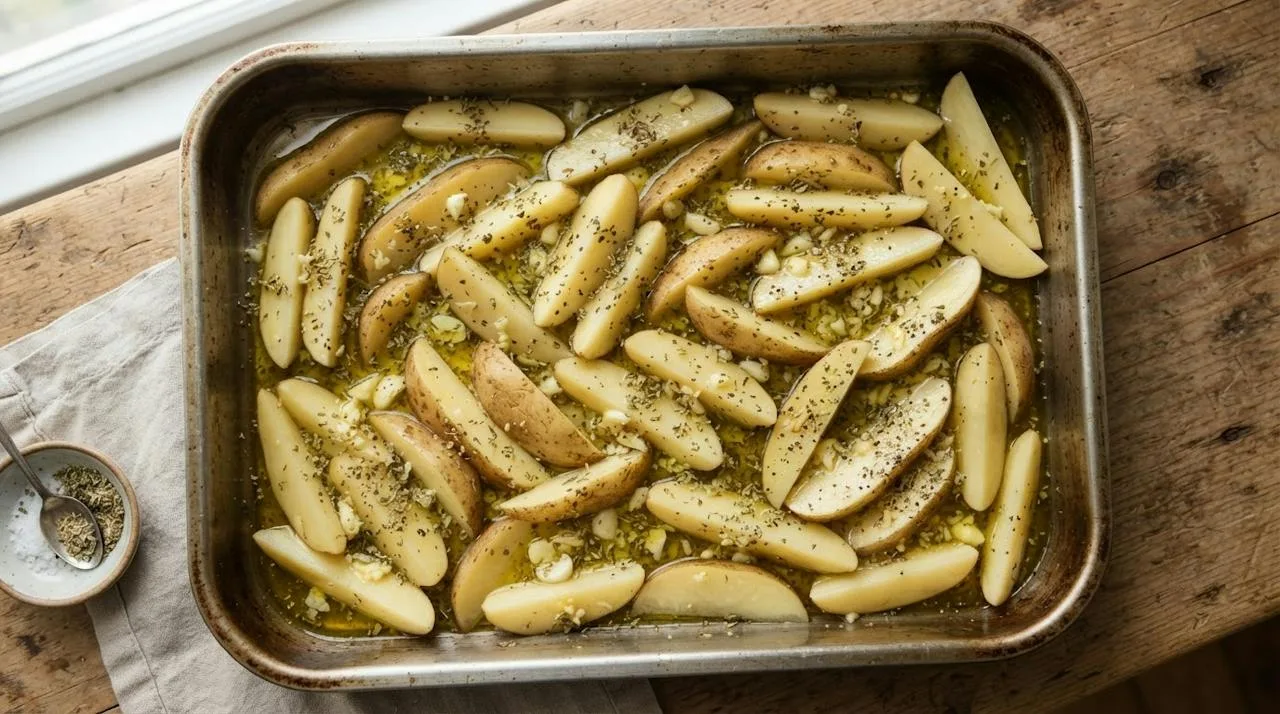
- Roast for 40 minutes. Roast at 200°C fan for 40 minutes, uncovered. The potatoes will start to soften, and there will still be plenty of liquid in the pan at this stage.
- Turn and baste. Turn the potatoes and spoon the lemony liquid over the tops. Roast for another 15 minutes.
- Turn again and raise the heat. Turn the potatoes a second time, spoon over the liquid again and increase the oven to 220°C fan (about 425°F).
- Finish at high heat. Roast for another 15 to 20 minutes. This is when most of the liquid is absorbed and reduces, and the edges turn deeply golden. In round 1, a ceramic dish and only 10 minutes at the higher temperature left the edges pale and the pan wet.
- Check for doneness. A knife should slide easily into the thickest part of a wedge. Look for deeply golden-brown edges, a few darker roasted corners and very soft, almost creamy centers. There should be almost no free liquid left, just a thin layer of concentrated lemon-garlic oil under the potatoes, enough to spoon over them. Don’t aim for a completely dry pan. The outside won’t be French-fry crisp; it should be roasted and caramelized.
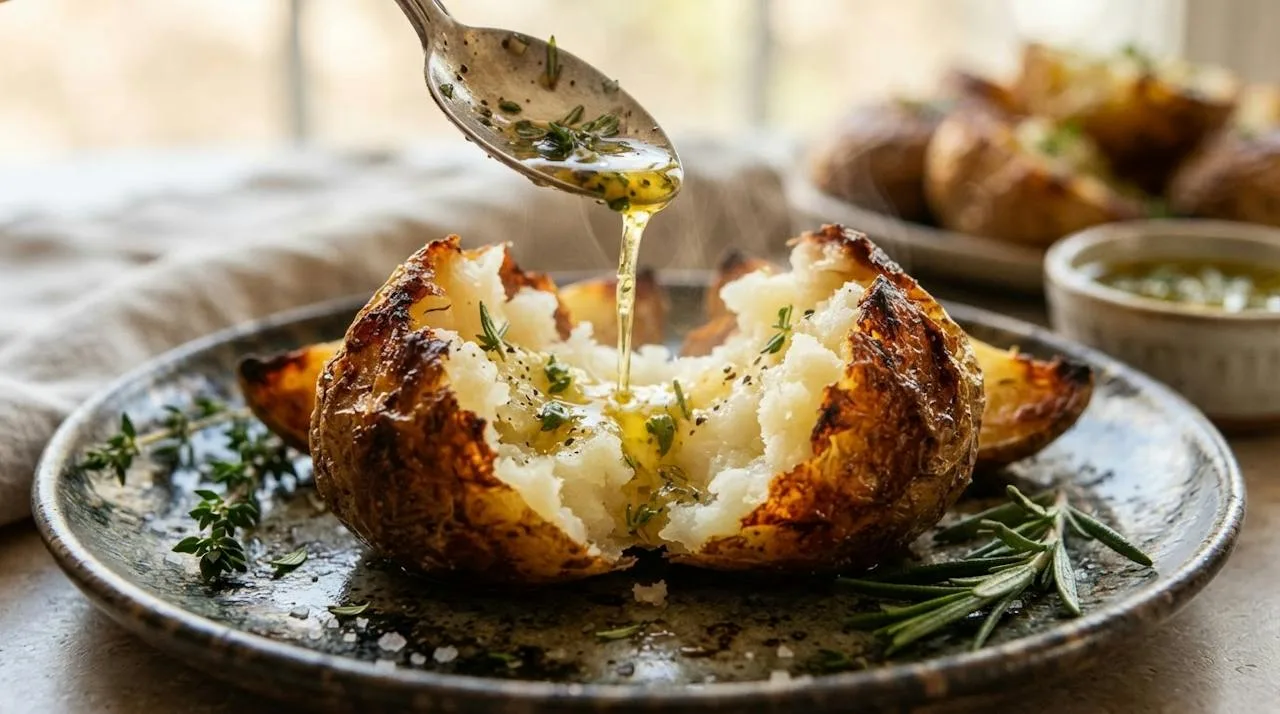
- Rest briefly. Let the potatoes rest for 5 to 10 minutes.
- Finish with fresh lemon. Squeeze 1 to 2 teaspoons of fresh lemon juice over the whole pan just before serving. It gave the potatoes a fresh lemon flavor without overpowering the garlic and oregano.
Tested Substitutions
| Original | Tested substitute | Result |
|---|---|---|
| Water | Vegetable stock | Slightly more savory, but the difference wasn’t huge, since the lemon, garlic and oregano were already strong. |
| Floury potatoes | Waxier, Yukon Gold-style potatoes | Held their shape better but were less fluffy inside. Floury potatoes gave the creamier center I preferred. |
| Metal roasting pan | Ceramic baking dish | The ceramic dish browned less and left more liquid in the pan. Metal was clearly better. |
| Floury potatoes | Russets or red potatoes (untested) | I haven’t tried these specifically. Let me know in the comments. |
| Peeled potatoes | Unpeeled potatoes (untested) | I haven’t tried this yet. Let me know in the comments. |
| Water | Chicken stock or bouillon concentrate (untested) | I haven’t tried these yet. Let me know in the comments. |
| Dried oregano | Fresh oregano, rosemary or thyme (untested) | I haven’t tried these yet. Let me know in the comments. |
| None | Honey, maple syrup or butter (untested) | I haven’t tried these yet. Let me know in the comments. |
| Feta on the side | Feta baked with the potatoes (untested) | I haven’t tried this yet. Let me know in the comments. |
Why This Recipe Can Fail (And How to Fix It)
Common Problems
- Too much liquid left in the pan: Too much water and lemon for the pan size, or a ceramic dish. In round 1, 300 ml water and 80 ml lemon juice in a ceramic dish never reduced. Use 250 ml water and 70 ml lemon juice in a metal pan, and give the final 220°C stage a full 15 to 20 minutes.
- Pale, steamed bottoms: The potatoes sat in liquid in a dish that doesn’t brown well. Switch to a metal roasting pan, place the wedges cut-side down and turn them twice so different sides get time against the hot pan.
- Too sour: Eighty milliliters of lemon juice was slightly too sharp. Use 70 ml in the pan and add a small squeeze of fresh lemon at the end instead.
- Edges not browned: The final stage was too short or too cool. Raise the oven to 220°C fan for the last 15 to 20 minutes and watch for deeply golden edges and darker corners. For the potatoes, golden rather than burnt is the goal: the FDA suggests cooking cut potatoes to a golden yellow rather than a dark brown to reduce acrylamide.
- Mushy potatoes: The pieces were cut too small. Small cubes went soft before the liquid reduced; wedges about 4 cm long held up.
- Thin, watery sauce: Too much water, or not enough time at high heat. With less water and the hotter finish, the liquid reduces to a concentrated lemon-oil coating.
Serving Suggestions
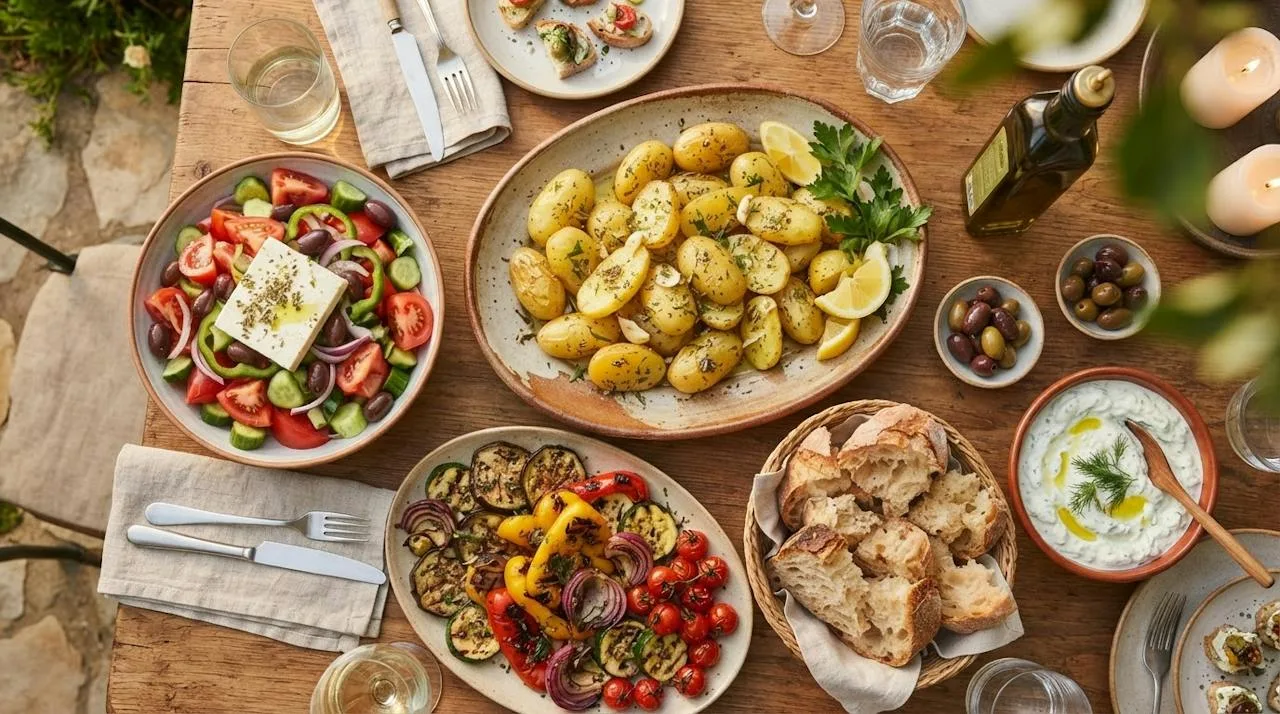
Serve the potatoes hot, after a short rest, with grilled vegetables, a Greek-style salad, feta (regular or vegan) and crusty bread to catch the lemon-garlic oil.
They’re a natural partner for other Greek dishes, too. Serve them alongside my gigantes plaki for a hearty meatless Greek dinner. Since the olive oil carries so much of the flavor, use a good bottle; my guide to how to cook with olive oil explains why extra virgin holds up so well in a hot oven.
Storage, Reheating and Make-Ahead
Refrigerator: Store leftovers in a covered container in the fridge. Here’s how mine changed:
- Day 1: Best texture. Soft inside, browned edges and a bright lemon flavor.
- Day 2: Still very good. The potatoes absorbed more of the lemon-garlic oil overnight; the edges were softer, but the flavor was deeper.
- Day 3: Good but noticeably softer, almost stew-like around the edges, though they still held their shape.
- Day 4: Edible but not as appealing. The centers were still soft, but the roasted exterior was gone.
That matches the USDA’s leftovers and food safety guidance, which recommends eating refrigerated leftovers within 3 to 4 days.
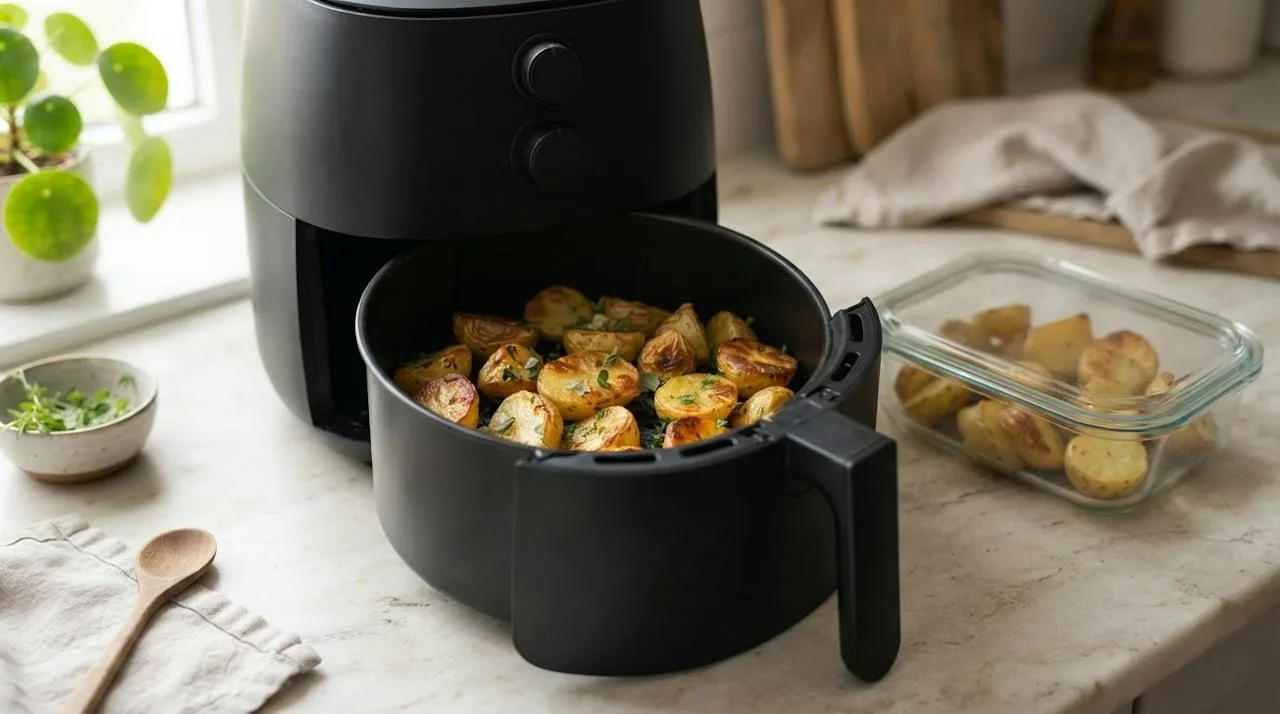
Reheating: The oven worked best: spread the potatoes in a single layer and reheat at 200°C fan for about 12 to 15 minutes. An air fryer at 190°C for about 6 to 8 minutes also worked well and gave the edges more crispness than the oven, especially for small portions. Avoid the microwave if texture matters; it made the potatoes softer and wetter.
Mediterranean Secret: The fresh squeeze of lemon at the end is worth keeping. Instead of making the whole dish more acidic during cooking, it gives the finished potatoes a bright lemon flavor without overpowering the garlic and oregano.
Continue Cooking
- Mediterranean herbs and spices: the complete pantry guide
- 7-day Mediterranean diet meal plan with grocery list
- Mediterranean diet shopping list: what to buy and skip
With a hot pan of potatoes and one more lemon for the table, Nevaeh Hall
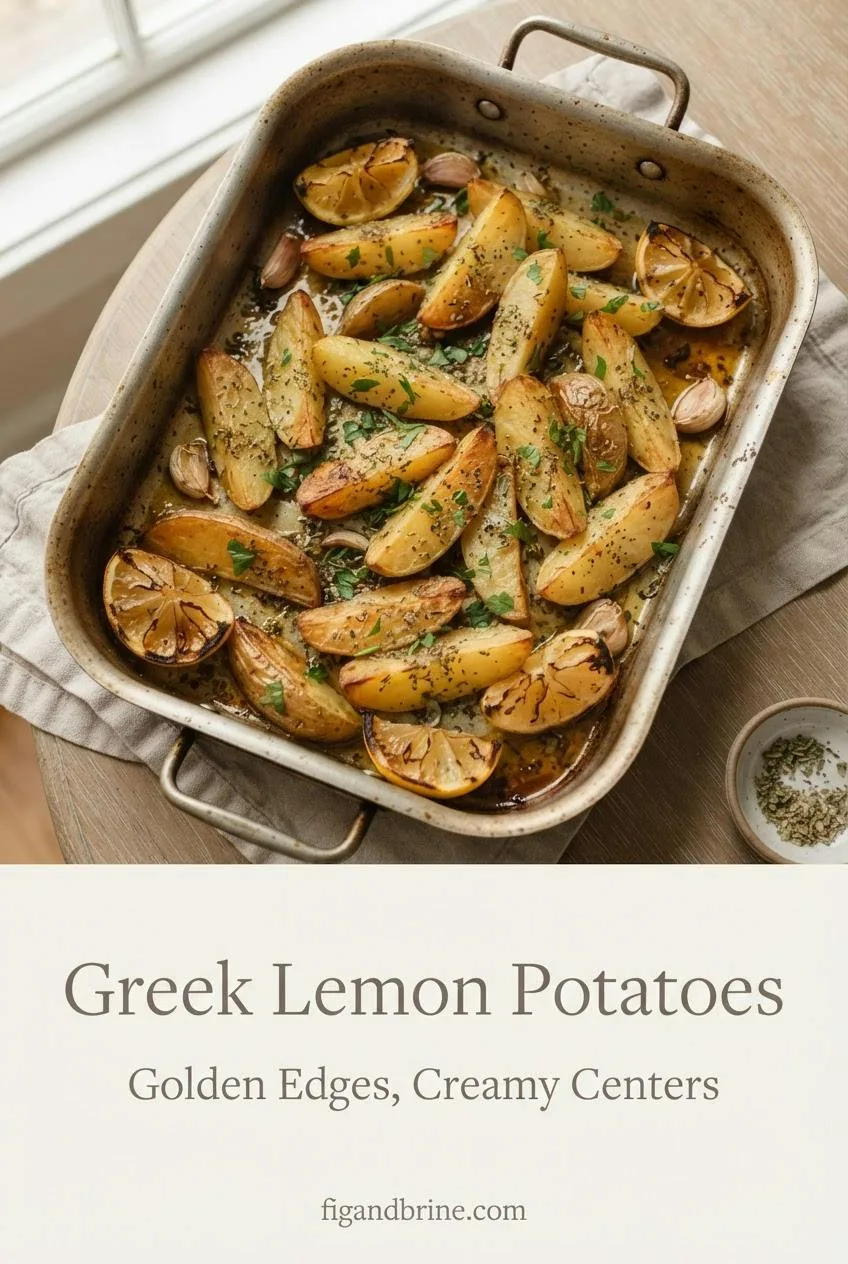

Greek Lemon Potatoes
- Total Time: 100 minutes
- Yield: 4 servings
- Diet: Vegetarian
Description
Delicious roasted Greek lemon potatoes with caramelized edges and creamy centers, infused with garlic and oregano.
Ingredients
- 1.2 kg floury (starchy) potatoes, peeled and cut into wedges about 4 cm long
- 70 ml fresh lemon juice
- Zest of 1 lemon
- 90 ml extra virgin olive oil
- 250 ml water
- 1 tablespoon Dijon mustard
- 2½ teaspoons dried Greek oregano
- 1½ teaspoons salt
- ½ teaspoon black pepper
- 4 garlic cloves, lightly crushed
- 1 to 2 teaspoons fresh lemon juice, for finishing
Instructions
- Heat a fan oven to 200°C (about 390°F) with a rack in the middle.
- Peel the potatoes and cut them into wedges about 4 cm long. Put them in a 33 × 23 cm metal roasting pan.
- Whisk together the lemon juice, lemon zest, water, Dijon mustard, olive oil, oregano, salt, and pepper until combined.
- Pour the mixture over the potatoes, add the crushed garlic and toss well so every wedge is coated. Arrange the potatoes cut-side down.
- Roast at 200°C for 40 minutes, uncovered. The potatoes will start to soften.
- Turn the potatoes and spoon the lemony liquid over the tops. Roast for another 15 minutes.
- Increase the oven to 220°C (about 425°F) and turn the potatoes a second time, spoon over the liquid again.
- Finish roasting for another 15 to 20 minutes until golden and soft.
- Rest the potatoes for 5 to 10 minutes.
- Squeeze fresh lemon juice over the pan just before serving.
Notes
For best results, use a metal roasting pan and choose floury potatoes for creamy centers.
- Prep Time: 25 minutes
- Cook Time: 75 minutes
- Category: Side Dish
- Method: Roasting
- Cuisine: Greek


