
Mediterranean Diet Shopping List: What to Buy (and Skip)
Fig & Brine started at a farmers market stall, with a paper bag of figs and a tub of glossy olives. That’s still how I think about Mediterranean shopping: a few simple, whole ingredients doing most of the work. The hard part isn’t knowing what to eat. It’s walking into a big American grocery store and knowing which of the thousands of products on the shelves actually fit.
This Mediterranean diet shopping list breaks the store down section by section, with what to put in your cart and what to leave on the shelf. If you’re just getting started, read my complete Mediterranean diet guide for beginners first for the why, then use this list for the how.
The Rule Behind the List
Every item on this list traces back to the same pattern. According to the Harvard T.H. Chan School of Public Health, the Mediterranean diet emphasizes daily whole grains, olive oil, fruits, vegetables, beans and other legumes, nuts, herbs and spices, with fish as the preferred animal protein at least twice a week and red meat limited to a few times a month.
So the shopping logic is simple:
- Fill most of the cart with vegetables, fruit, whole grains, beans, nuts and olive oil.
- Add moderate amounts of fish, eggs, yogurt, cheese and poultry.
- Buy rarely red meat, processed meat and sweets.
Mediterranean Secret: Shop by plate, not by aisle. Picture half your plate as vegetables, a quarter as grains and a quarter as beans or fish. If your cart roughly matches that picture, you’re shopping the Mediterranean way.
Vegetables and Fruit
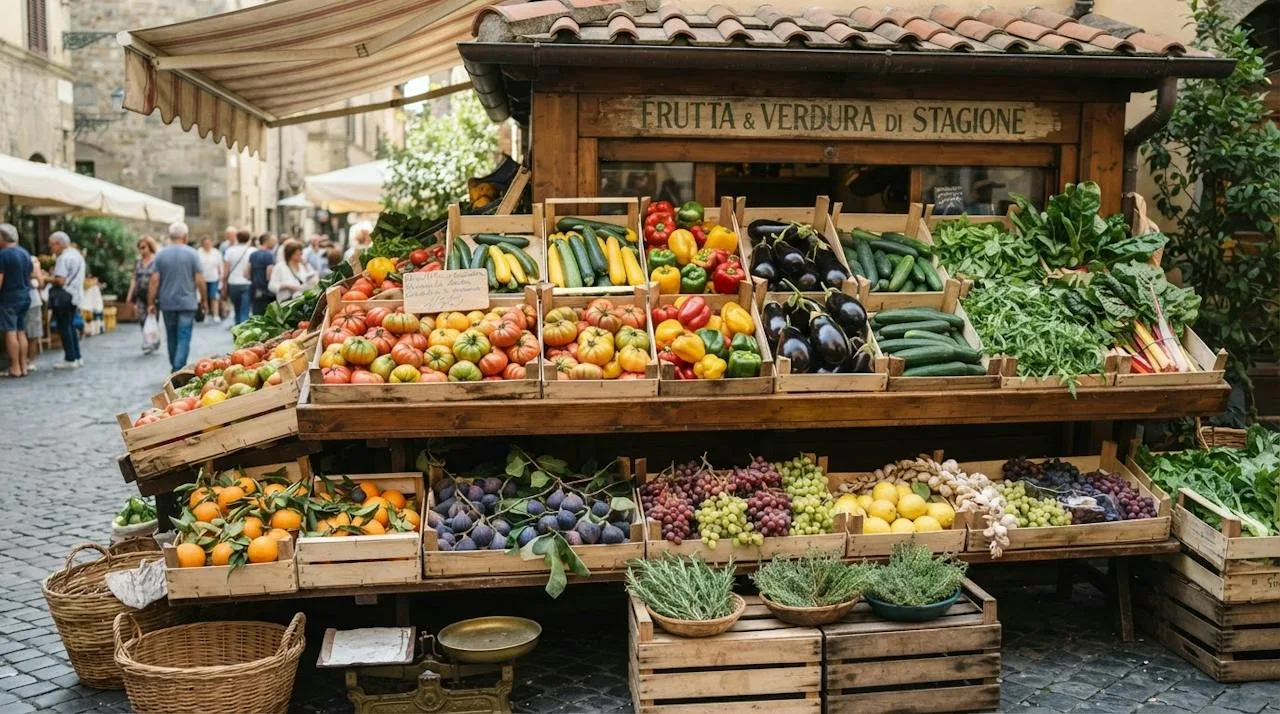
This is the biggest part of your cart. The American Heart Association describes the Mediterranean pattern as one that emphasizes vegetables, fruits, whole grains, beans and legumes, with fruit as a common dessert instead of sweets.
What to buy:
- Everyday vegetables: tomatoes, cucumbers, bell peppers, zucchini, eggplant, onions, garlic, carrots, cauliflower, broccoli
- Leafy greens: spinach, romaine, arugula, kale
- Fresh herbs: parsley, mint, dill, basil
- Fruit: lemons (lots of them), oranges, apples, grapes, berries, pears, and figs when they’re in season
- Frozen vegetables and fruit: plain frozen spinach, broccoli, green beans and berries are just as useful and keep for months
- Canned tomatoes: whole, diced and crushed, for stews, sauces and soups
What to skip:
- Fruit canned in heavy syrup
- Frozen vegetables in butter or cream sauces
- Pre-dressed salad kits with creamy dressings and candied toppings
Not sure what to do with a bag of vegetables? My guide to roasting vegetables the Mediterranean way turns almost anything in this section into dinner, and my vegetable roasting times and temperatures chart gives you tested times for 14 of them.
Olive Oil and Other Fats
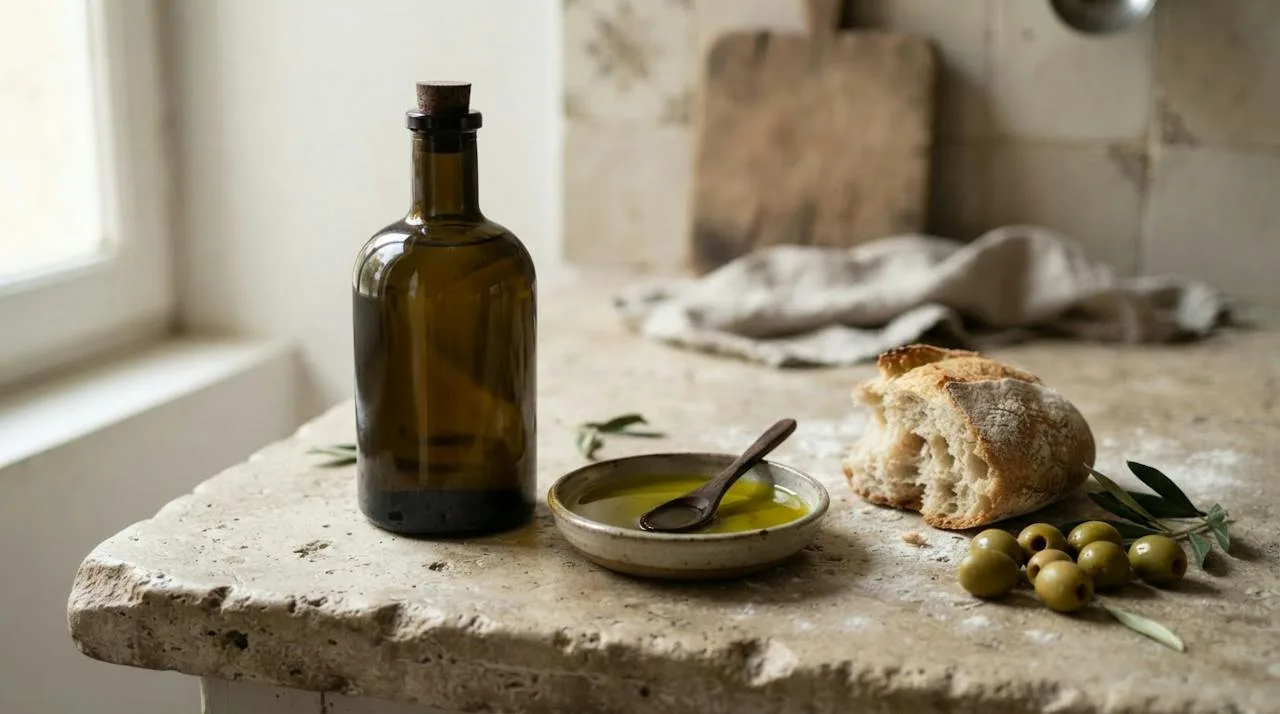
Olive oil is the main fat in the Mediterranean diet. Mayo Clinic highlights extra virgin olive oil as the primary fat source and notes that unsaturated fats are a strength of the diet.
What to buy:
- Extra virgin olive oil for cooking, roasting and drizzling. One good everyday bottle is enough to start.
- Dark glass or tin containers, which protect the oil from light better than clear plastic.
- Olives in brine or oil, for snacking and cooking.
What to skip:
- “Light” olive oil, if you’re buying it for fewer calories. “Light” refers to flavor and color, not calories. My comparison of extra virgin vs. light vs. pure olive oil explains exactly what each label means.
- Butter and margarine as everyday cooking fats. Keep butter for the occasional baking project and reach for olive oil the rest of the time.
Wondering whether extra virgin olive oil can handle high heat? My guide to how to cook with olive oil covers sautéing, roasting and frying.
Whole Grains and Bread
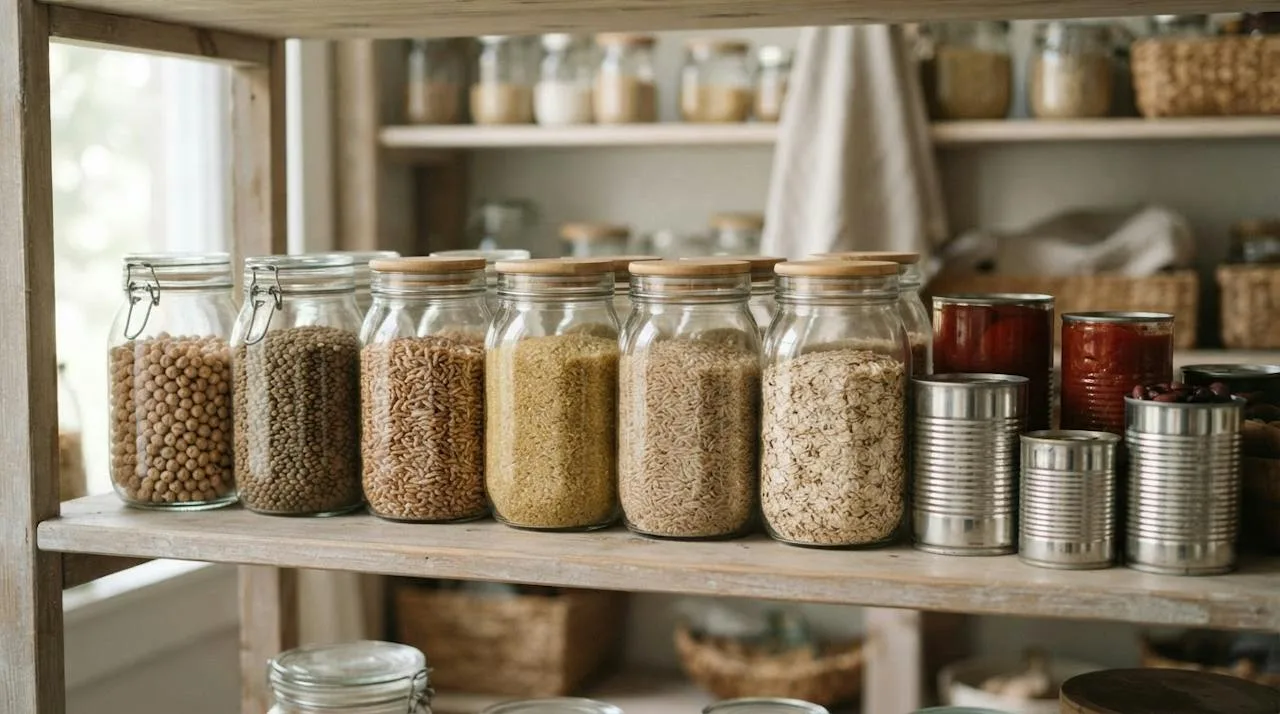
What to buy:
- Farro, bulgur, freekeh and barley, the classic Mediterranean grains
- Brown rice and quinoa
- Old-fashioned or steel-cut oats
- Whole-wheat pasta and couscous
- Whole-grain bread and pita
How to check: Look for the Whole Grain Stamp. The Whole Grains Council explains that the 100% Stamp means all of a product’s grain ingredients are whole grain, with at least 16 grams per serving, while the Basic Stamp means at least 8 grams but possibly more refined grain than whole. No stamp? Check that a whole grain is the first item on the ingredient list.
What to skip:
- White bread and rolls as everyday staples
- Sugary breakfast cereals and granola with lots of added sugar
- Flavored rice and couscous mixes with high-sodium seasoning packets (buy the plain grain and season it yourself)
My Mediterranean grain bowls guide shows how to turn these grains into easy lunches all week.
Beans, Lentils and Chickpeas
Beans are the backbone of Mediterranean protein, and they’re one of the cheapest things in the store.
What to buy:
- Dried chickpeas, lentils (brown, green and red) and white beans. These are the most economical choice. My guide to cooking dried chickpeas walks you through soaking and simmering them until creamy.
- Canned chickpeas, cannellini beans, kidney beans and lentils for busy nights. Low-sodium or no-salt-added versions are worth looking for.
- Hummus, or tahini to make your own.
Tip for canned beans: Drain and rinse them. In a University of Tennessee study reported by Today’s Dietitian, draining alone reduced sodium in canned beans by 36%, and draining plus rinsing reduced it by 41%.
What to skip:
- Canned baked beans in sweet sauce as an everyday bean
- Refried beans made with lard
Fish and Seafood
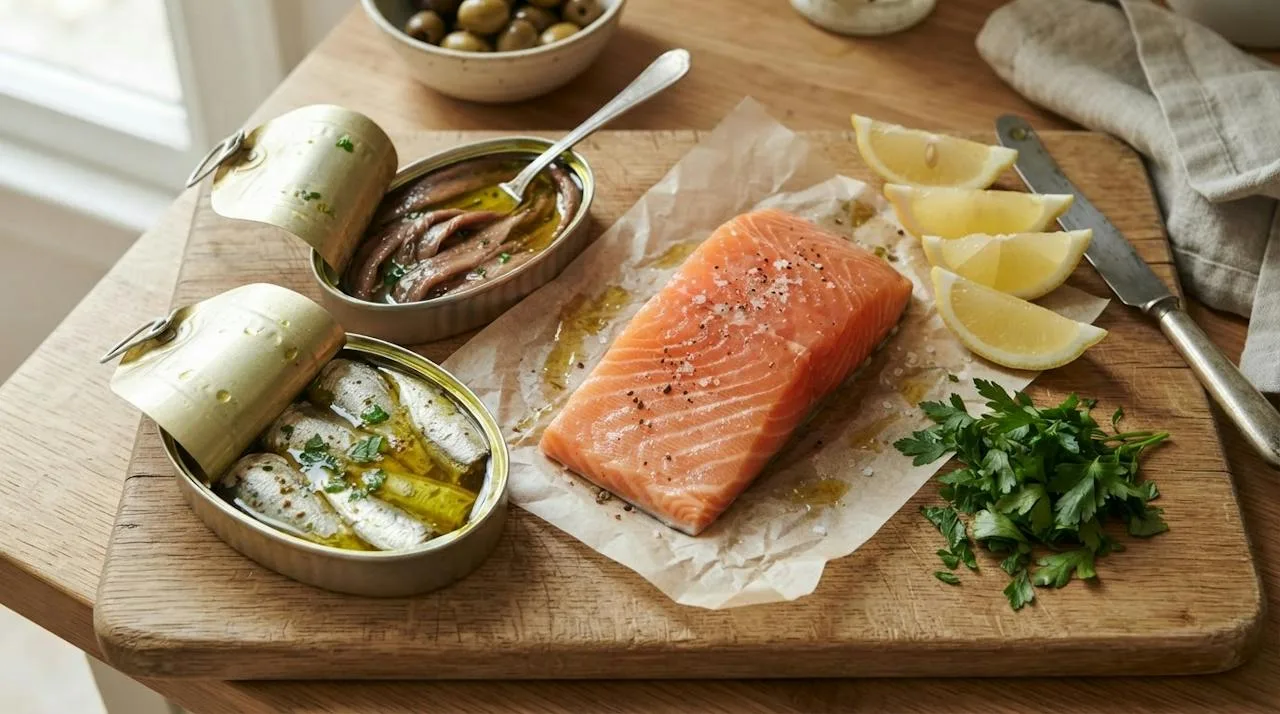
Aim for fish or seafood at least twice a week. The FDA’s advice about eating fish lists salmon, sardines, anchovies, cod, trout and many others among its lower-mercury “best choices.”
What to buy:
- Canned sardines, anchovies and mackerel in olive oil or water. They’re inexpensive, shelf-stable and ready to eat.
- Canned or pouched tuna, for salads and quick lunches
- Fresh or frozen salmon, trout and cod fillets
- Frozen shrimp, for quick dinners
What to skip:
- Breaded, battered and pre-fried fish sticks and fillets
- Seafood in heavy cream sauces
Eggs, Dairy and Poultry
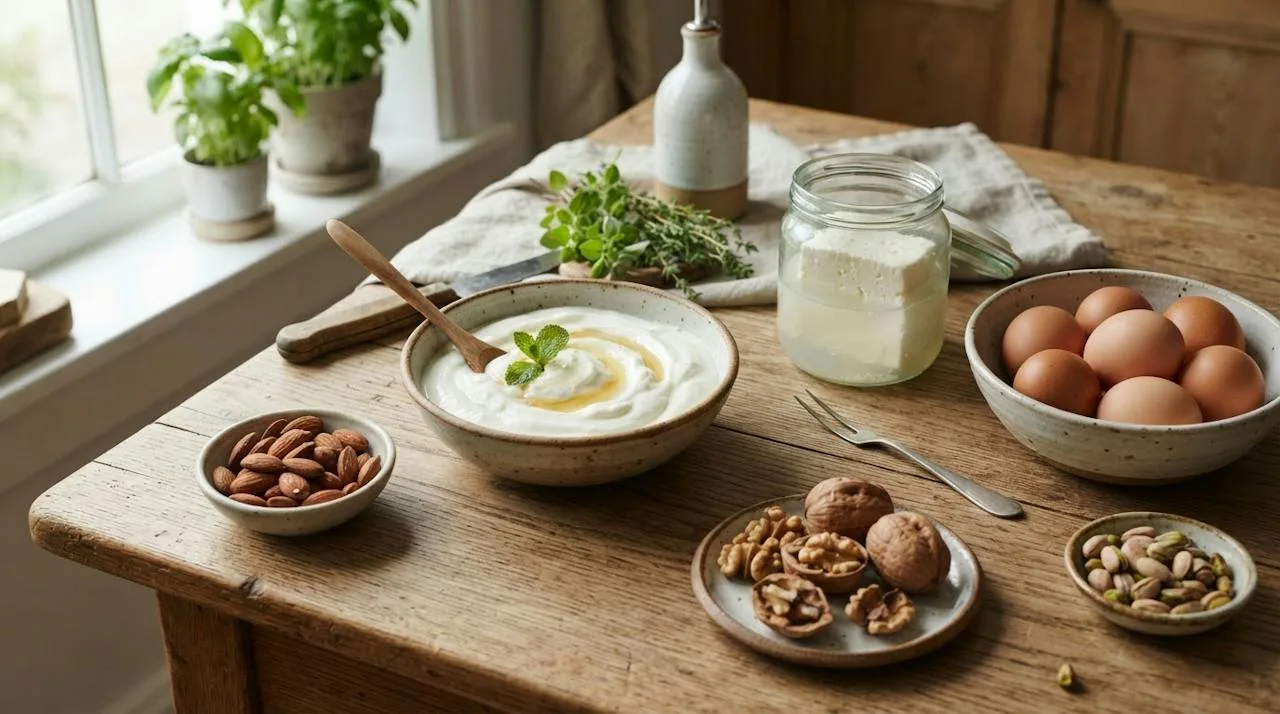
These belong in the Mediterranean diet in moderate amounts. Oldways, the nonprofit behind the original Mediterranean diet pyramid, recommends poultry, eggs, cheese and yogurt in moderate portions, daily to weekly.
What to buy:
- Plain Greek yogurt. Sweeten it yourself with fruit and a little honey.
- Feta, halloumi, Parmesan or aged sheep’s milk cheeses. Strong-flavored cheeses go further, so a little is enough.
- Eggs
- Chicken thighs or breasts, if you eat poultry
What to skip:
- Flavored and fruit-on-the-bottom yogurts with lots of added sugar
- Processed cheese slices and spreads
- Processed meats such as hot dogs, salami and bacon as everyday foods
Nuts and Seeds
What to buy:
- Unsalted almonds, walnuts, pistachios and pine nuts
- Sesame seeds and tahini
- Sunflower and pumpkin seeds
What to skip:
- Candied, honey-roasted or heavily salted nuts
- Nut-based snack bars with long ingredient lists and lots of added sugar
Flavor Builders: The Pantry That Makes It Work
This is the section that makes simple food taste like the Mediterranean. Most of it keeps for months.
What to buy:
- Garlic, onions and shallots
- Lemons for juice and zest
- Red wine vinegar, sherry vinegar and balsamic vinegar
- Dried oregano, cumin, paprika, red pepper flakes, cinnamon and black pepper
- Capers and olives
- Harissa, sun-dried tomatoes and roasted red peppers in jars
- Preserved lemons. Buy a jar, or better yet, make your own preserved lemons with just lemons and salt.
Mediterranean Secret: Salty, tangy jars are what make a plain bowl of beans and grains taste finished. Brined olives, pickled vegetables and preserved lemons all come from the same tradition, which I cover in my Mediterranean preserving and brining guide.
What to skip:
- Bottled creamy dressings (whisk olive oil, lemon or vinegar, salt and garlic instead)
- Seasoning blends where salt is the first ingredient
What to Limit Across the Whole Store
Beyond the section-by-section skips, a few categories don’t fit the everyday Mediterranean pattern:
- Sugary drinks: soda, sweet tea, energy drinks and juice drinks
- Sweets and pastries: keep them for special occasions and choose fruit for everyday dessert
- Red and processed meat: a few times a month rather than a few times a week
- Ultra-processed snacks: chips, crackers and cookies made mostly from refined flour, sugar and oil
None of these are forbidden. They’re simply not what your weekly cart is built around.
How to Read a Label in 30 Seconds
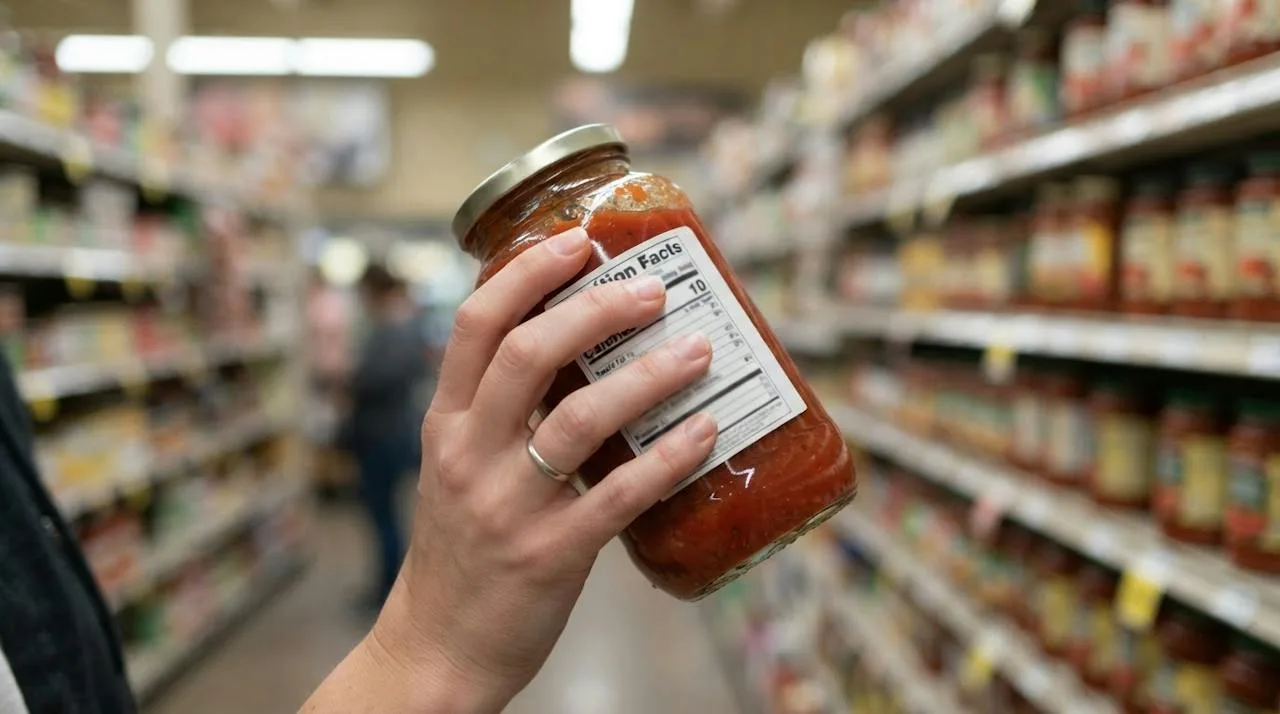
Packaged foods are where hidden salt and sugar hide. The FDA notes that over 70% of the sodium Americans eat comes from packaged and prepared foods, not the salt shaker.
Three quick checks:
- Ingredient list first. Shorter is usually better, and the first ingredient should be the food you’re buying (tomatoes in tomato sauce, a whole grain in bread).
- Sodium % Daily Value. The FDA says 5% DV or less per serving is low and 20% DV or more is high. The Daily Value for sodium is less than 2,300 mg a day.
- Added sugars. Compare brands of yogurt, tomato sauce and bread. Plain versions usually win.
Your Printable Mediterranean Diet Shopping List
Produce: tomatoes, cucumbers, bell peppers, zucchini, eggplant, onions, garlic, carrots, cauliflower or broccoli, leafy greens, fresh herbs, lemons, seasonal fruit
Frozen: plain vegetables, berries, fish fillets, shrimp
Grains: farro or bulgur, brown rice, oats, whole-wheat pasta, whole-grain bread or pita
Beans: dried chickpeas and lentils, canned beans (low-sodium), hummus or tahini
Fish: canned sardines or tuna, salmon or other fish twice a week
Dairy and eggs: plain Greek yogurt, feta or another flavorful cheese, eggs
Nuts and seeds: unsalted almonds, walnuts, pistachios
Pantry: extra virgin olive oil, olives, canned tomatoes, vinegar, capers, dried herbs and spices, preserved lemons
Want to see this list turned into actual meals? My 7-day Mediterranean diet meal plan includes a full week’s grocery list built from these staples, plus a prep session that makes the week easy.
Frequently Asked Questions
Do I need to buy organic to follow the Mediterranean diet? No. The Mediterranean pattern is about what you eat, not how it’s certified. Buy the vegetables, beans and grains you can afford, and buy organic only if it fits your budget and priorities.
Is frozen produce okay on the Mediterranean diet? Yes. Plain frozen vegetables and fruit, with no added sauces or sugar, fit the diet and help you keep vegetables on hand all week.
Is pasta allowed on the Mediterranean diet? Yes. Pasta is a traditional Mediterranean food. Whole-wheat pasta adds more fiber, and the Mediterranean way is to serve it with plenty of vegetables, beans or fish rather than heavy cream sauces.
Can I drink wine on the Mediterranean diet? Oldways includes wine in moderation as part of the traditional pattern, but you don’t need to drink to follow the diet. If you don’t drink, there’s no reason to start.
Continue Learning
- The complete Mediterranean diet guide for beginners
- 7-day Mediterranean diet meal plan with grocery list
- How to cook with olive oil like a Mediterranean
With a tote bag of figs and a full pantry, Nevaeh Hall


