

Vegetable Roasting Times and Temperatures Chart (Tested Tray by Tray)
Every roasting chart I found online gave me the same vague ranges: “20 to 40 minutes,” “until tender.” So I roasted 14 vegetables myself, one tray at a time, writing down the exact cut, temperature, time, and what each one looked like when it was done. This chart is the result.
Use it as your starting point, then trust your eyes. Every oven runs a little differently, and the doneness cues in the chart matter more than the minutes. If you want the full technique behind these numbers (oil, seasoning, regional dishes, and more), my complete guide to roasting vegetables the Mediterranean way covers it all.
How I Tested
Testing Setup Oven: electric, fan (convection) on for all main tests. Set to 220°C (about 425°F); a basic oven thermometer read about 215 to 220°C. Tray: large dark metal baking tray, about 33 × 45 cm, lined with parchment paper, on the middle rack. Oil: about 1½ tablespoons of olive oil per full tray. Tray preheating: not preheated for most tests, except one potato test (see below). Last updated: October 2026.
Because I tested with the fan on, if your oven doesn’t have a fan (or you roast with it off), expect to add time. When I roasted carrots and cauliflower at 220°C with the fan off, they needed about 5 to 8 minutes longer and browned less evenly.
The Roasting Chart
All times are at 220°C (about 425°F), fan on, unless noted. Flip once about halfway unless the chart says otherwise.
| Vegetable | Cut and size | Temp | Time | Flip | Done when |
|---|---|---|---|---|---|
| Green beans | Whole | 220°C | 18 min | Once | Wrinkled spots, still a little snap |
| Broccoli | Florets, about 3 cm | 220°C | 20 min | Once at 12 min | Browned tips, stems easy to bite |
| Zucchini | Half-moons, about 2 cm | 220°C | 22 min | Once | Browned edges, still slightly firm inside |
| Bell pepper | Large strips | 220°C | 25 min | Once | Skin blistered, flesh soft |
| Red onion | Wedges | 220°C | 25 min | Once | Edges dark, layers soft |
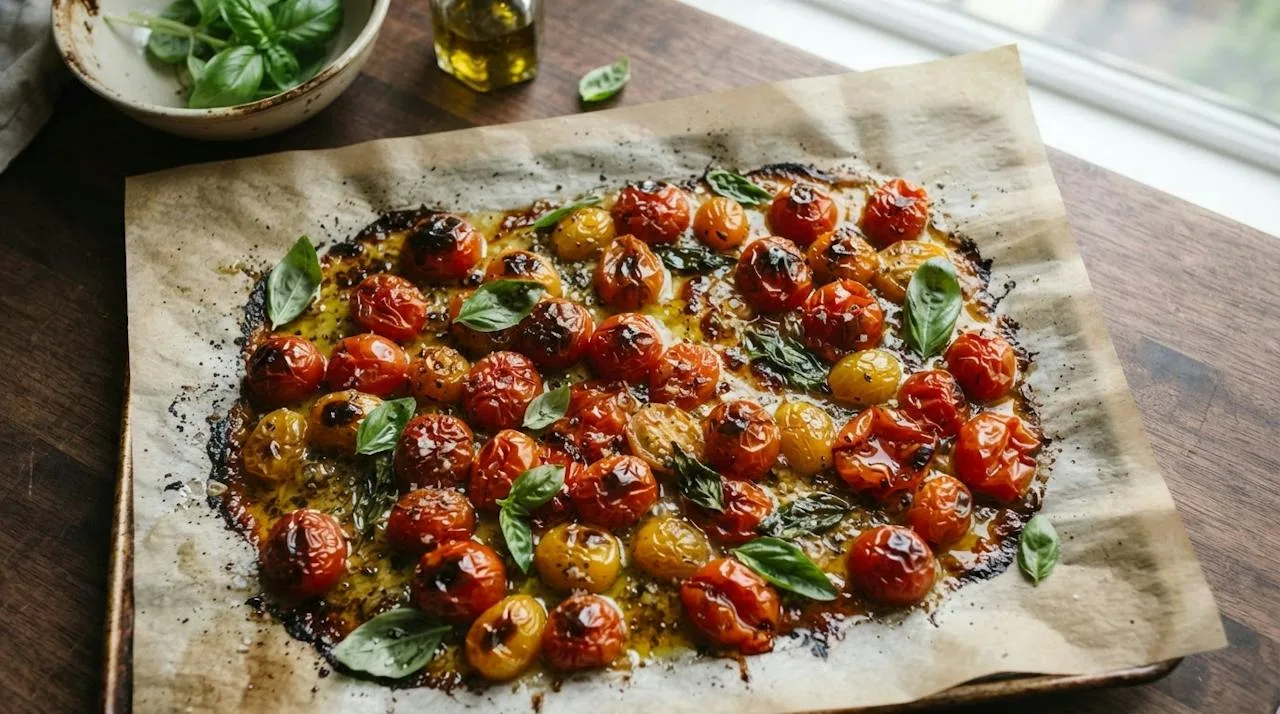
| Cherry tomatoes | Whole | 200°C | 25 min | No | Skins wrinkled, juices starting to burst |
| Cauliflower | Florets, 3 to 4 cm | 220°C | 28 min | Once at 15 min | Dark golden edges, stems tender |
| Carrots | Sticks, about 1.5 × 6 cm | 220°C | 28 min | Once at 15 min | Edges caramelized, fork slides in |
| Sweet potatoes | 3 cm cubes | 220°C | 30 min | Once | Browned edges, knife goes through |
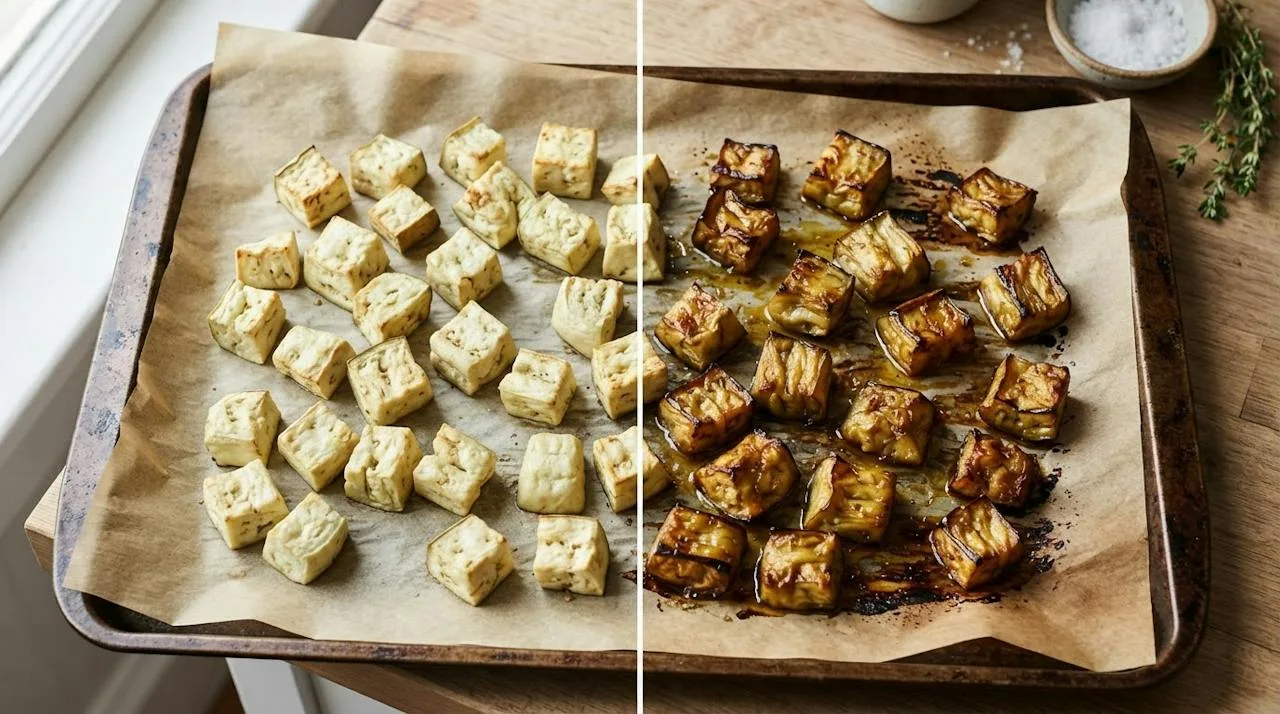
| Eggplant | 3 cm cubes | 220°C | 30 min | Once at 15 min | Collapsed and soft inside, browned edges |
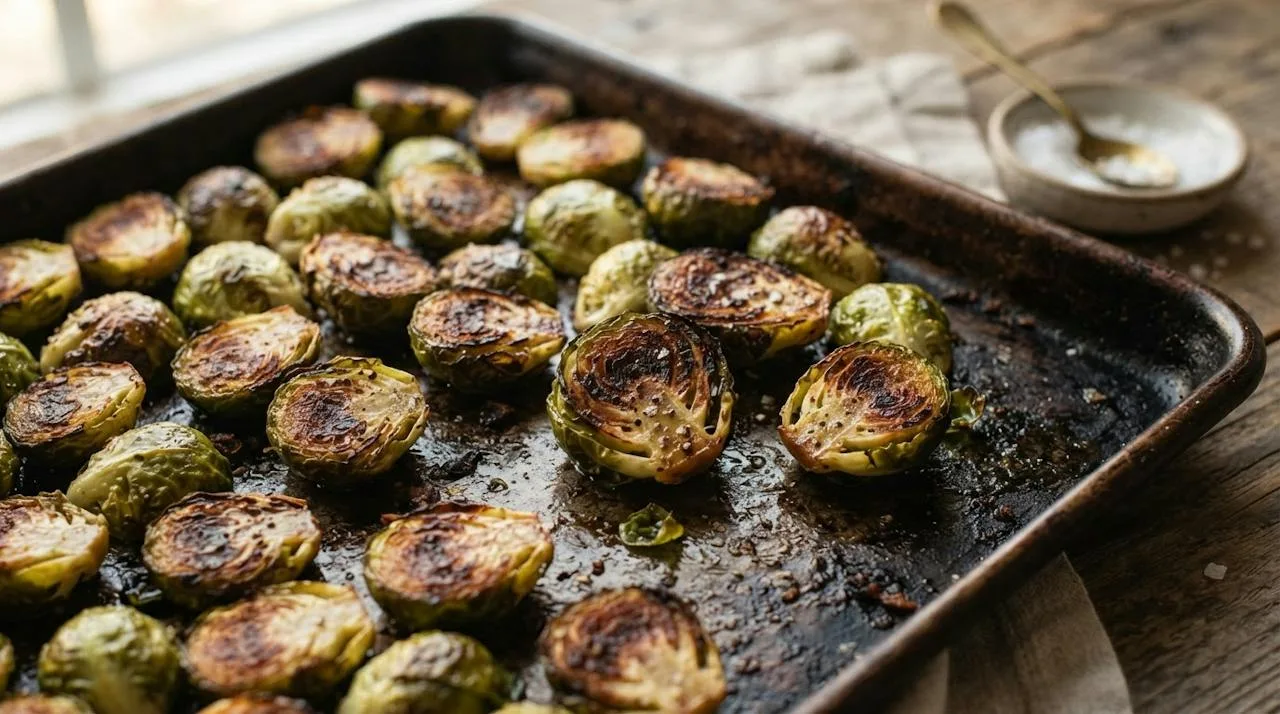
| Brussels sprouts | Halves | 220°C | 30 min | Once | Cut sides dark brown, center tender |
| Butternut squash | 3 cm cubes | 220°C | 35 min | Once | Caramelized edges, fork slides through |
| Potatoes | 3 cm cubes | 220°C | 38 min | Twice | Crisp edges, fluffy center |
| Beets | 2 cm cubes | 220°C | 40 min | Once | Tender all the way through |
Mediterranean Secret: Size changes everything. Bigger pieces needed noticeably more time in my tests: larger carrot chunks took about 32 minutes, and bigger butternut cubes needed about 40. Cut evenly, and match the sizes in the chart if you want to match the times.
Vegetable-by-Vegetable Notes
The chart gives you the numbers. These notes tell you what I saw on the tray.
Fast Roasters (Under 25 Minutes)
Green beans: 18 minutes was enough. At 25 minutes, they turned too wrinkly and dry.
Broccoli: 20 minutes was plenty. At 25 minutes, some tips were too dark. Cut the stems to the same size as the florets so everything finishes together.
Zucchini: It holds a lot of water. At 25 minutes it started going too soft; 22 minutes was better. Don’t crowd the tray, or the water will steam it.
Medium Roasters (25 to 30 Minutes)
Bell peppers: Large strips worked much better than small pieces. At 25 minutes, the skins blistered nicely and the flesh was soft.
Red onion: Some outer pieces burned at 30 minutes. 25 minutes was better. In mixed trays, onion is always the first thing to darken.
Cherry tomatoes: I first tried 220°C for 20 minutes, and the skins split quickly and the tops darkened. 200°C for 25 minutes gave juicier, more even tomatoes, which is why they’re the one exception in the chart.
Cauliflower: At 25 minutes it was almost done, but the centers were still a bit firm. 28 minutes was much better. Dark edges are a good sign.
Carrots: At 25 minutes they were fine but still crunchy. At 28 minutes they were sweet and browned. Bigger chunks needed almost 32 minutes.
Sweet potatoes: Easy to overcook. 30 minutes gave a soft center and caramelized edges; at 35 minutes, they started getting too dark.
Eggplant: At 20 minutes, the outside looked cooked but the inside was still spongy, which is not pleasant to eat. At 30 minutes, it was much softer and creamy inside. Oil matters too: dry patches meant not enough oil, so I added about 1 extra teaspoon for the next batch.
Brussels sprouts: Placing them cut side down gave much better browning. 30 minutes was good; smaller sprouts were done around 25.
Slow Roasters (35 Minutes and Up)
Butternut squash: At 30 minutes it was still firm. 35 minutes was good; bigger cubes needed 40.
Potatoes: At 30 minutes, the centers were okay but the outsides weren’t crisp enough. Cutting smaller (3 cm instead of about 4 cm), preheating the tray, and roasting for 35 to 38 minutes made all the difference (more on that below).
Beets: The slowest of everything I tested. At 35 minutes, the centers were still firm. At 40 minutes, they were finally tender.
What Went Wrong (And How I Fixed It)
The Crowded Tray
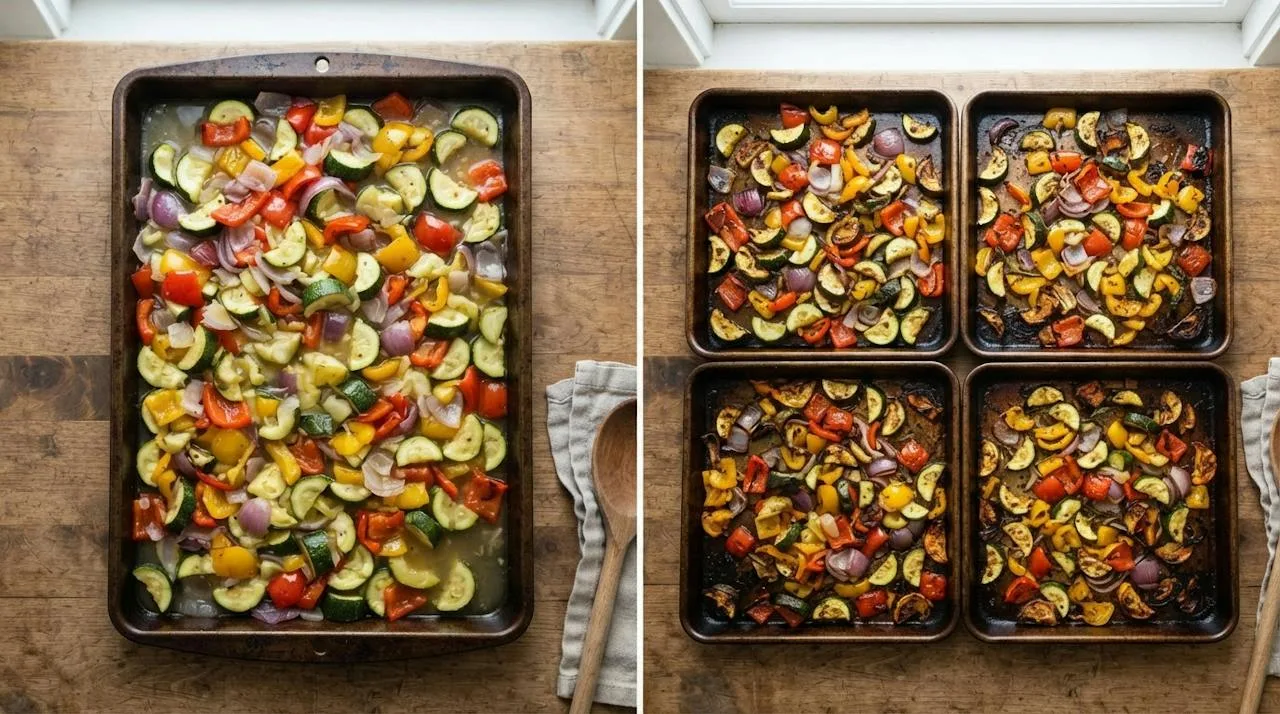
My first mixed tray was simply too full. Zucchini, peppers, and onion released so much water that everything steamed instead of roasting, with almost no browning.
What I changed: I split the vegetables across 2 trays instead of 1, left more space between pieces, and used about 1½ tablespoons of oil per tray. The color was much better.
Browning needs a dry surface. As University of Illinois Extension explains, the Maillard reaction, the browning that gives roasted food its flavor, depends on heat, moisture, and time. When the tray is crowded, the moisture can’t escape, so the vegetables steam.
Potatoes That Weren’t Crisp
At 30 minutes at 220°C, my first potatoes were cooked through but pale and soft on the outside.
What I changed: I cut them from about 4 cm to 3 cm cubes, preheated the empty tray for 10 minutes, and put the potatoes straight onto the hot tray. The bottoms crisped up much better, and they were done in about 35 to 38 minutes.
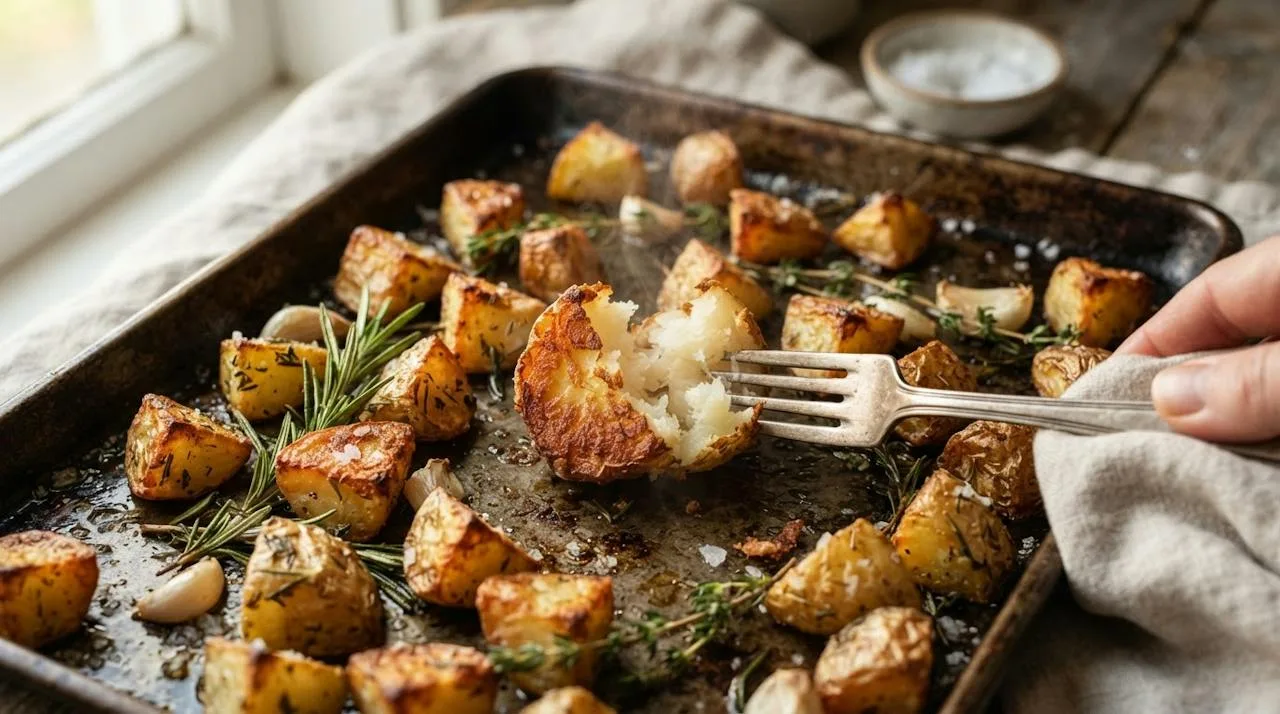
One food-safety note on potatoes: the FDA suggests cooking cut potatoes to a golden yellow rather than a dark brown to reduce acrylamide, and notes that soaking raw potato pieces in water for 15 to 30 minutes before roasting (then drying them well) also helps. Aim for golden, crisp edges rather than very dark ones.
Spongy Eggplant
My first eggplant looked done at 20 minutes but was spongy inside. Ten more minutes and about 1 extra teaspoon of oil fixed it. With eggplant, judge doneness by the inside, not the color.
200°C vs. 220°C: Does Temperature Matter?
I roasted potatoes at both temperatures:
| 200°C (about 400°F) | 220°C (about 425°F) | |
|---|---|---|
| Time | About 45 min | About 38 min |
| Color | Lighter | Much better browning |
| Texture | Cooked through, softer crust | Crispier outside, center still fluffy |
220°C won clearly for potatoes. Across the other vegetables, 220°C gave better color and faster results. 200°C was gentler and useful for tomatoes, when I didn’t want the skins to burn.
That fits general guidance: University of Kentucky Cooperative Extension recommends roasting vegetables at 375°F (about 190°C) or higher for good color and flavor.
Roasting Mixed Trays
Mixing vegetables works, as long as you respect their different times. Here’s what happened in my tests:
- Cauliflower + carrots + red onion: All went in together at 220°C and were good after about 28 minutes. The onion darkened first, the carrots were fine, and the cauliflower had the best color.
- Potatoes + Brussels sprouts: Not ideal to start together, since potatoes need about 38 minutes and Brussels sprouts about 30. I put the potatoes in first and added the Brussels sprouts after 8 minutes, and they finished together.
- Sweet potato + bell pepper + red onion: These worked well added all at once, roasting for 25 to 30 minutes. I checked the onion at 20 minutes because its edges darkened faster.
The rule: start the slowest vegetables first, and add faster ones partway through so everything finishes at the same time.
Roasting Frozen Vegetables
You can roast vegetables straight from the freezer, but expect a slightly different result:
- Frozen broccoli: 220°C for about 30 minutes, flipped once at 15. There was more water on the tray than with fresh broccoli and it was less crisp, but the edges browned okay.
- Frozen cauliflower: About 32 to 35 minutes, and spacing was especially important.
Don’t thaw them first; roast directly from frozen and give them extra room on the tray.
Storing and Reheating Roasted Vegetables
Fridge: I stored roasted vegetables in shallow airtight containers for 3 days. Day 1 had the best texture. By day 2 they were still good but slightly softer, and by day 3 the zucchini was noticeably softer and the potatoes less crisp. That’s within the USDA’s leftovers and food safety guidance, which recommends refrigerating leftovers within 2 hours and eating them within 3 to 4 days.
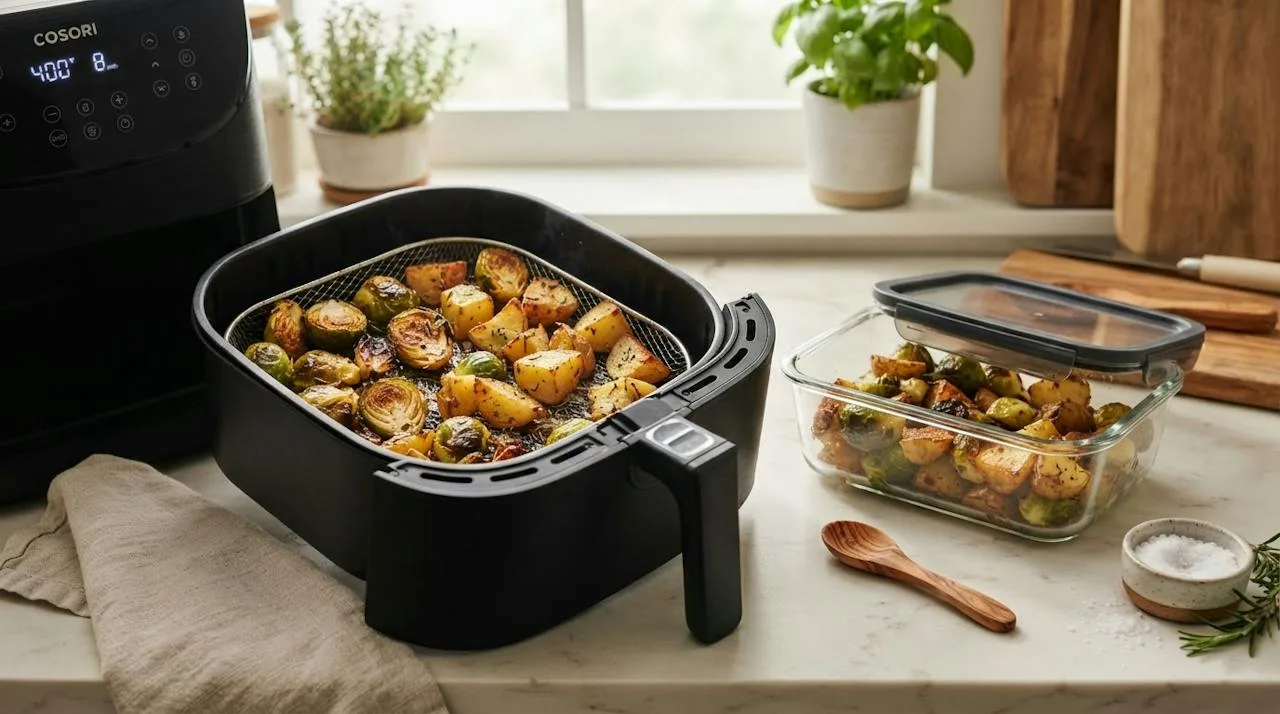
Reheating in the oven: 200°C with the fan on for about 10 to 12 minutes. Much better than the microwave. Potatoes crisped up again reasonably well, Brussels sprouts reheated surprisingly well, and zucchini stayed soft.
Reheating in the air fryer: 190°C for 5 to 7 minutes. Best for potatoes and Brussels sprouts; tomatoes became very soft.
Microwave: Works, but everything turns soft rather than crisp.
Getting the Most From Your Roasted Vegetables
Choose your oil well. I used about 1½ tablespoons of olive oil per full tray. My guide to how to cook with olive oil explains why extra virgin handles oven heat well, and my comparison of extra virgin vs. light olive oil helps you decide which bottle to roast with and which to save for drizzling.
Build meals around them. Roasted vegetables are the easiest way to fill half your plate the Mediterranean way, as I explain in my Mediterranean diet guide for beginners. USDA MyPlate recommends that most adults eat 2 to 3 cups of vegetables a day, and a couple of trays a week make that much easier.
Turn them into bowls. Pile them onto farro or bulgur with creamy home-cooked chickpeas and a tahini dressing. My Mediterranean grain bowls guide shows you the full formula.
Finish with something bright. A little finely chopped rind from a jar of homemade preserved lemons is wonderful on roasted cauliflower, carrots, and potatoes. Quick-pickled onions or olives from my Mediterranean preserving guide add the same salty, tangy contrast.
Quick Reference: Roasting Rules From My Tests
- 220°C (about 425°F), fan on, for nearly everything; 200°C for cherry tomatoes.
- No fan? Add about 5 to 8 minutes and expect less even browning.
- Don’t crowd the tray. Use two trays if the vegetables are touching.
- About 1½ tablespoons of olive oil per full tray, a little more for eggplant.
- Cut evenly. Bigger pieces need noticeably more time.
- Preheat the tray for potatoes for a crisper bottom.
- Place Brussels sprouts cut side down.
- Judge by doneness cues, not just minutes.
Continue Learning
- Roasting vegetables the Mediterranean way: the complete guide
- Mediterranean grain bowls: grains, legumes and dressings
- How to cook with olive oil like a Mediterranean
With a hot tray in the oven and figs on the counter, Nevaeh Hall


