

Greek Oregano vs. Regular Oregano: Why It Matters
Open a jar of supermarket oregano and you’ll probably smell something faint, dusty and vaguely herbal. Crush a pinch of good Greek oregano between your fingers and it’s a different herb entirely: sharp, warm, almost peppery, with a bite that lingers on your tongue.
That difference is why Greek salads, roasted potatoes and grilled fish taste so much better in Greece than they do at home. It isn’t just freshness. “Oregano” covers several different plants, and the jar on most American shelves often isn’t the one Mediterranean cooks rely on.
In this guide, you’ll learn what makes Greek oregano different, how it compares to Mexican oregano, Italian oregano and marjoram, how to spot a good bottle, and when it’s worth the swap. For the bigger picture, see my complete guide to Mediterranean herbs and spices.
The Quick Answer
The Short Version: Greek oregano (Origanum vulgare subsp. hirtum) is a specific Mediterranean oregano with a strong, sharp, peppery flavor, thanks to high levels of the aromatic compound carvacrol. “Regular” supermarket oregano is often milder, older or less clearly labeled, and Mexican oregano is a different plant altogether. For Greek and most Mediterranean dishes, Greek oregano gives the most authentic flavor.
What Makes Greek Oregano Different

It’s a Specific Subspecies
Oregano belongs to the genus Origanum, part of the mint family, and the species most of us mean by “oregano” is Origanum vulgare. That species has several subspecies with noticeably different flavors.
Greek oregano is Origanum vulgare subsp. hirtum. It grows wild on the dry, rocky hillsides of Greece and the eastern Mediterranean, and it’s prized for its intensity. In Greek markets, it’s often sold as long, dried stems with the flowers and leaves still attached, sometimes labeled rigani.
Carvacrol: The Compound Behind the Bite
The sharp, warm, slightly spicy flavor of Greek oregano comes largely from carvacrol, an aromatic compound concentrated in its essential oil. A 2020 study in Foods analyzed Greek oregano and found carvacrol made up as much as 32% of a key fraction of its aromatic compounds.
That’s why a little Greek oregano goes a long way. It doesn’t just add a “herby” note; it brings a pungent, almost peppery warmth that stands up to lemon, garlic, feta and grilled food.
Hot, Dry Growing Conditions Concentrate Flavor
Like many Mediterranean herbs, oregano develops its strongest flavor under tough conditions: full sun, poor soil and little water. Plants grown in rich soil with plenty of water tend to be leafier but milder. It’s one reason wild-harvested and sun-grown Mediterranean oregano often tastes so much more intense.
Greek Oregano vs. Other “Oreganos”
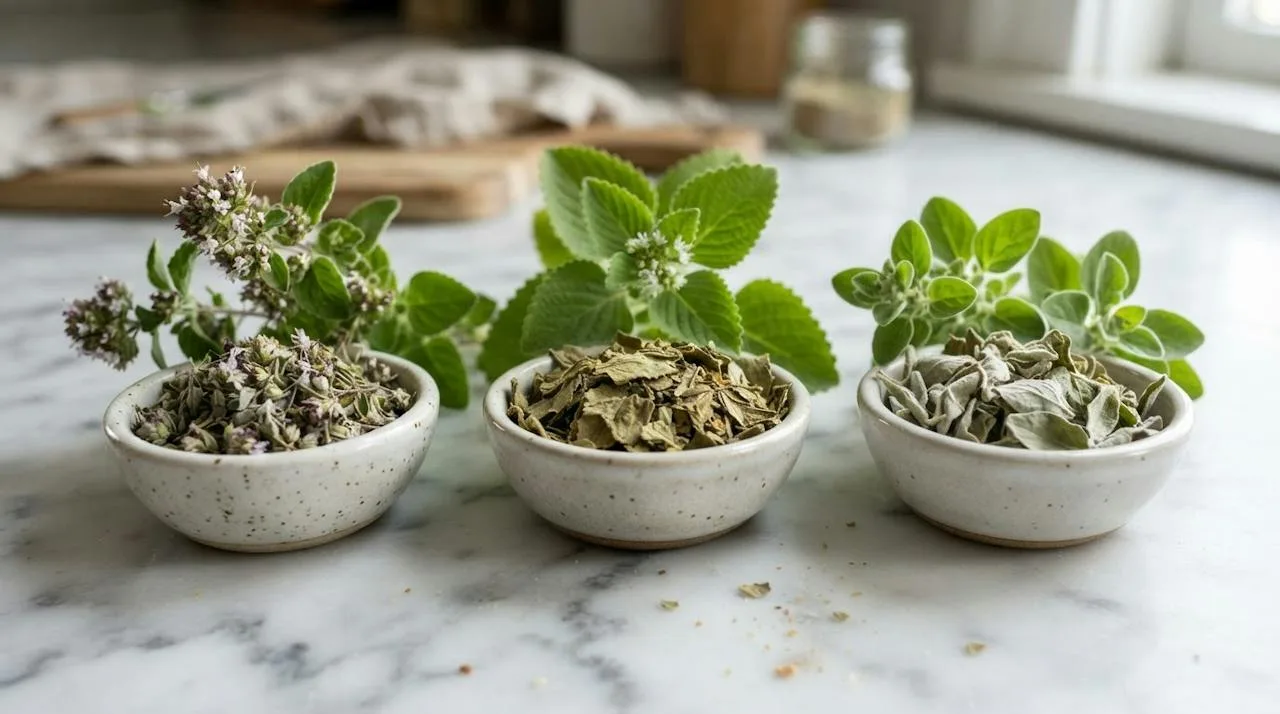
Here’s how the most common types compare.
| Type | Plant | Flavor | Best for |
|---|---|---|---|
| Greek oregano | Origanum vulgare subsp. hirtum | Sharp, warm, peppery, pungent | Greek salad, potatoes, grilled fish and meat, feta, tomato sauces |
| “Regular” supermarket oregano | Usually Origanum species, origin often unstated | Milder, varies widely by brand and age | General cooking when nothing better is available |
| Italian oregano | Often a milder Origanum type or hybrid | Gentler, slightly sweet | Pizza, pasta sauces, Italian dishes |
| Mexican oregano | Lippia graveolens, a different plant family | Citrusy, grassy, sweet and intense | Mexican and Tex-Mex dishes, chili, salsas, beans |
| Marjoram | Origanum majorana | Sweet, floral, delicate | Lighter dishes, eggs, vegetables, finishing |
Mexican Oregano Isn’t Oregano at All
Despite the name, Mexican oregano isn’t a true oregano. The Brooklyn Botanic Garden explains that Mexican oregano, Lippia graveolens, belongs to the verbena family, not to the Origanum genus of the mint family. A review in the Revista Mexicana de Ciencias Agrícolas likewise notes that Origanum vulgare is native to Europe, while Lippia graveolens is native to the Americas.
It’s a wonderful herb, with a sweet, citrusy intensity that many cooks love, and it’s the right choice for Mexican food. But in a Greek salad or a pan of lemon potatoes, its citrusy, grassy flavor tastes out of place.
Marjoram: Oregano’s Gentler Cousin
Marjoram is a close relative of oregano in the same genus, but it’s sweeter and more delicate, with a floral note and far less bite. It works beautifully in lighter dishes and as a finishing herb. If you substitute it for Greek oregano, you’ll need more of it, and you won’t get the same peppery punch.
What About Za’atar?
In the eastern Mediterranean, za’atar is both a spice blend and the name of a wild herb, Origanum syriacum, a type of oregano native to the region. A study in Foods describes its central role in Levantine cooking. Since it’s hard to find in the US, most home za’atar blends use a mix of thyme and oregano, and Greek oregano is a great choice.
Why “Regular” Oregano Often Disappoints
If your oregano tastes of almost nothing, there are a few likely reasons.
It’s old. Dried herbs lose their aromatic oils over time. Oklahoma State University Extension gives a rule of thumb of about 1 year for dried herbs, stored in tightly sealed containers in a dark cupboard away from the stove. Many jars sit on store shelves and then in our cabinets for much longer.
It’s finely ground. Finely crumbled or ground oregano exposes more surface area to air, so it loses flavor faster than whole dried leaves and flowers.
It isn’t what it says on the label. Dried oregano is one of the herbs most often adulterated. When the Australian consumer group Choice tested 12 dried oregano products, FoodNavigator reported that 7 of them contained other ingredients, mainly olive leaves and in some cases sumac leaves, making up between 50% and 90% of the affected products.
It’s a milder type. Even when it’s genuine, a generic “oregano” with no species or origin listed may simply be a gentler variety.
Common Mistake: Judging oregano by the dish alone. If your Greek salad tastes flat, smell your oregano before blaming the tomatoes. If you have to search for the aroma, the jar is the problem.
How to Buy Good Greek Oregano
Look for these signs of quality:
- On the stem or in whole leaves and flowers. Greek oregano sold in bundles or as coarse, flowery pieces keeps its flavor far longer than fine powder.
- A named species or origin. Labels that say “Greek oregano,” Origanum vulgare subsp. hirtum or name a Greek region are a good sign.
- Gray-green color, not brown or dusty yellow.
- A strong aroma. Even through the bag, good Greek oregano should smell pungent.
- A busy shop. Greek, Middle Eastern and Mediterranean grocers, as well as specialty spice shops, tend to have fresher stock and better turnover.
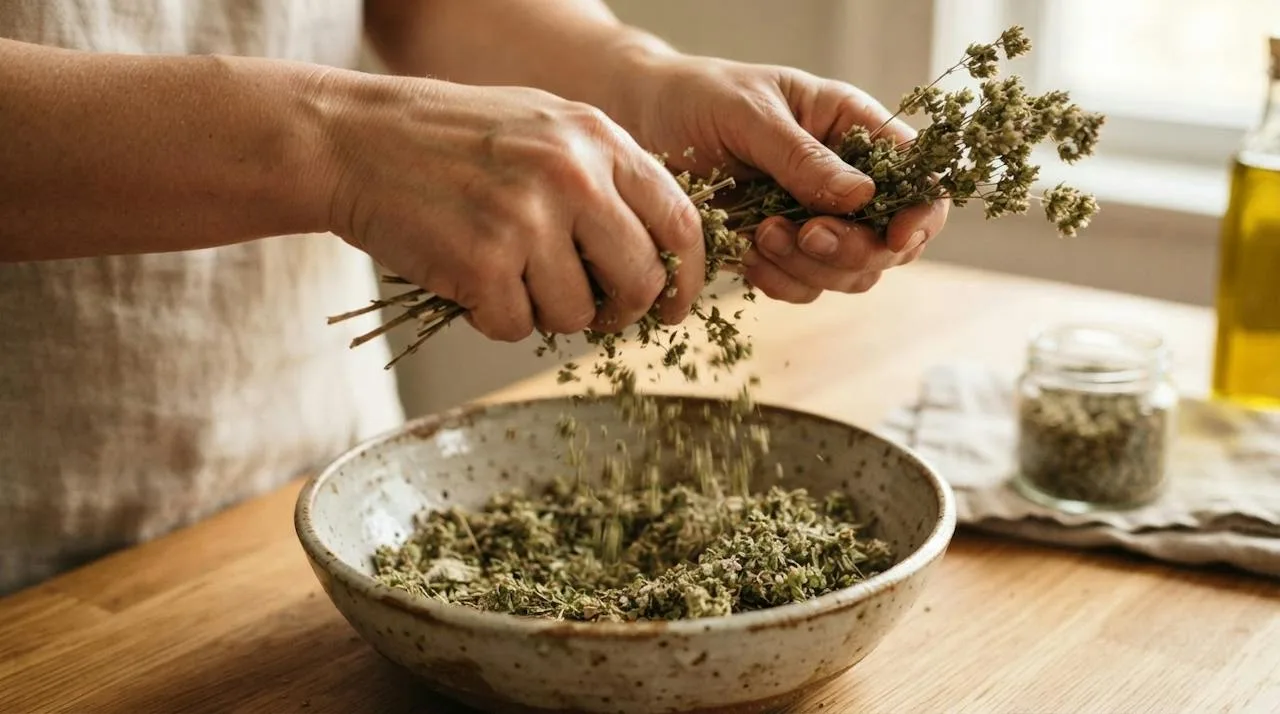
Buy in small amounts you’ll use within a few months, and store it whole. Rub the stems between your palms over a bowl right before cooking, discarding the woody stems, and you’ll release the oils at the moment you need them.
My Mediterranean diet shopping list includes Greek oregano among the pantry staples worth keeping on hand.
How to Cook With Greek Oregano
Greek oregano is one of the rare herbs that’s often better dried than fresh. Drying concentrates its flavor, and many classic Greek dishes call for dried oregano specifically.
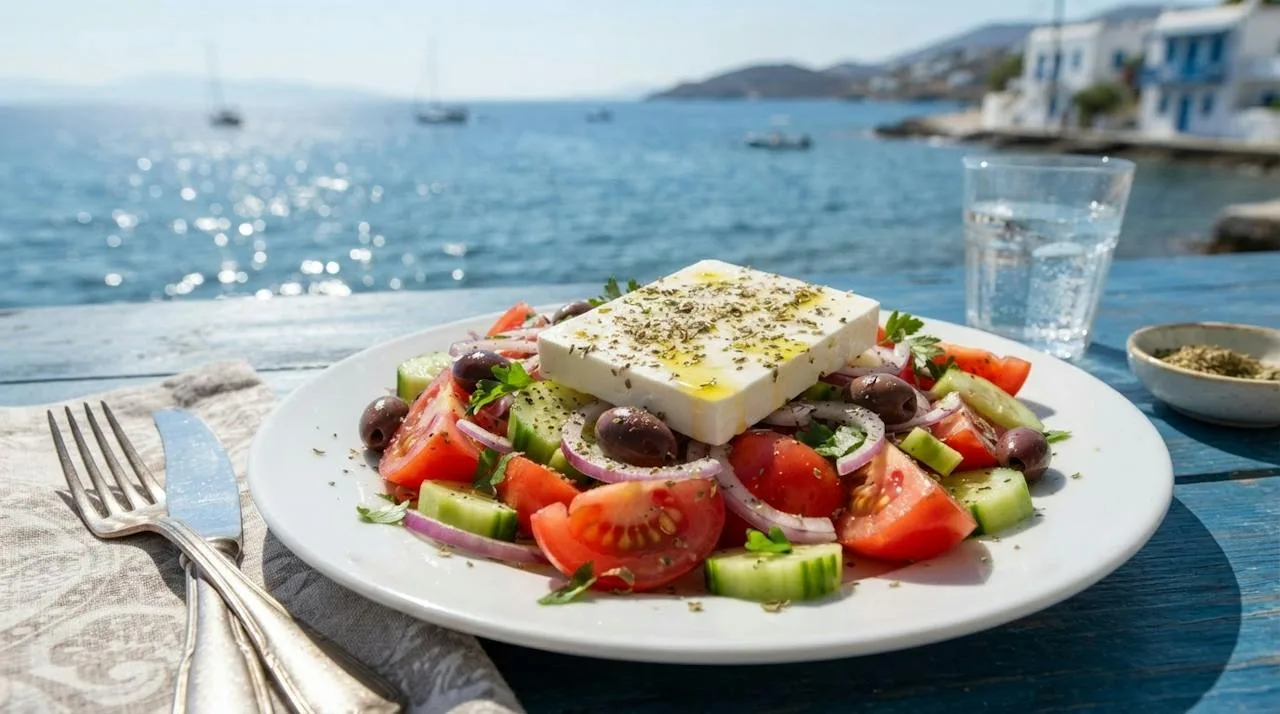
Greek salad. Crumble dried Greek oregano generously over tomatoes, cucumbers, onions, olives and a slab of feta, then drizzle with good olive oil.
Roasted potatoes and vegetables. Toss with olive oil, lemon, garlic and dried oregano before roasting. My vegetable roasting times and temperatures chart gives tested times for 14 vegetables, and my guide to roasting vegetables the Mediterranean way covers seasoning in depth.
Grilled fish, chicken and meat. Rub with olive oil, lemon zest, garlic and dried oregano before cooking. Ladolemono, a simple Greek dressing of olive oil, lemon and oregano, is perfect drizzled over grilled food.
Beans and stews. Dried oregano belongs in Greek bean dishes, like my gigantes plaki, where it simmers into the tomato sauce.
Tomato sauces. Add dried oregano early so it has time to rehydrate and flavor the sauce.
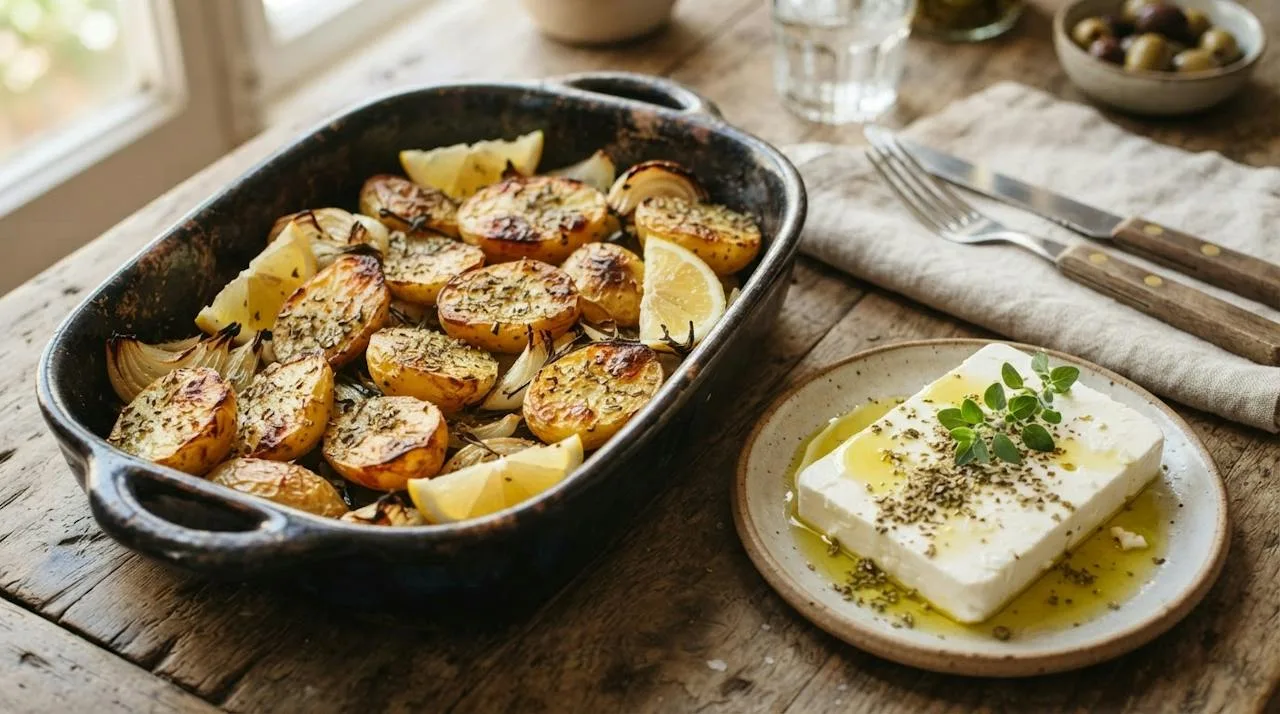
Feta. Drizzle a slab of feta with olive oil and crumbled oregano and serve with bread, or bake it until soft.
When to add it: Add dried oregano early in cooking, so it rehydrates and releases its flavor, or crumble it over cold dishes like salads and give it a few minutes to soften. Learn more about timing in my fresh vs. dried herbs conversion guide.
Substitution Guide
Need to swap? Here’s how to get closest to Greek oregano.
| If you have | Use it like this |
|---|---|
| Regular dried oregano | Use the same amount or a little more, and smell it first |
| Fresh oregano | Use about 3 times as much as dried, and add it later in cooking |
| Italian oregano | Use the same amount or slightly more; expect a gentler flavor |
| Marjoram | Use more, and expect a sweeter, milder result |
| Mexican oregano | Use a little less and only in robust dishes; the flavor will be citrusy |
| Dried thyme | Works in a pinch in beans, stews and roasts, with an earthier flavor |
The fresh-to-dried ratio comes from the standard 3-to-1 rule: University of Illinois Extension notes that you’ll typically use three times as much fresh herb as dried.
Growing and Drying Your Own Greek Oregano
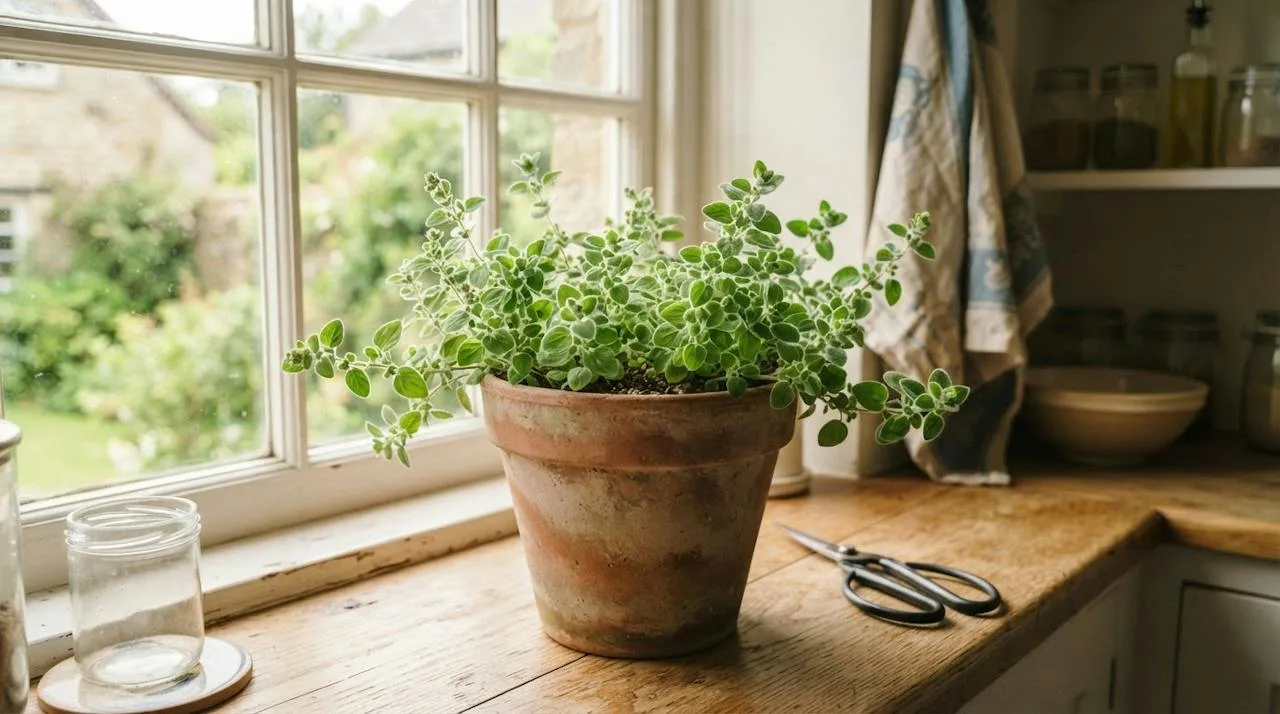
Greek oregano is one of the easiest herbs to grow, as long as you give it what it wants: sun and drainage. Clemson University’s Home and Garden Information Center notes that almost all herbs grow best with at least six hours of sun a day, and that Mediterranean herbs need excellent drainage.
- Plant it in full sun in a terracotta pot or a well-drained bed.
- Water sparingly. Let the soil dry between waterings. Overwatering is the most common way to kill it, and lean, dry conditions concentrate its flavor.
- Harvest just before flowering, when the flavor is often at its peak, and cut stems rather than individual leaves.
To dry it, tie the stems in small bundles and hang them upside down. The National Center for Home Food Preservation recommends air-drying herbs in small bundles, preferably indoors, or using a food dehydrator at 95 to 115°F. Once the leaves crumble easily, store the stems or whole leaves in an airtight jar, and crumble them only as you cook.
With a bundle of rigani hanging by the window, Nevaeh Hall


