

Gigantes Plaki (Greek Baked Giant Beans in Tomato Sauce)
Gigantes plaki is the Greek dish that proves a pot of beans can be the main event. Big, creamy beans bake slowly in a thick tomato sauce with onion, carrot, celery, dill and plenty of olive oil, until the top catches and the oil pools at the edges.
My first batch had firm beans and a thin, sharp sauce. The fix was to treat the beans and the sauce separately: soak the beans longer with a little baking soda and simmer them until they’re truly creamy before they go in the oven, then build a thicker sauce with more tomato paste and bake it without stirring. The oven finishes the dish; it doesn’t rescue undercooked beans.
It’s worth the effort. Beans and legumes sit at the base of the Mediterranean diet pyramid from Oldways, alongside vegetables, whole grains and olive oil, and Harvard’s Nutrition Source describes legumes as an inexpensive source of protein, vitamins, complex carbohydrates and fiber. If you’re new to cooking dried legumes, my guide to how to cook dried chickpeas uses the same soak-and-simmer approach.
Follow this recipe and you’ll get beans that are creamy inside with their skins still intact, in a sauce thick enough to hold a spoon line.
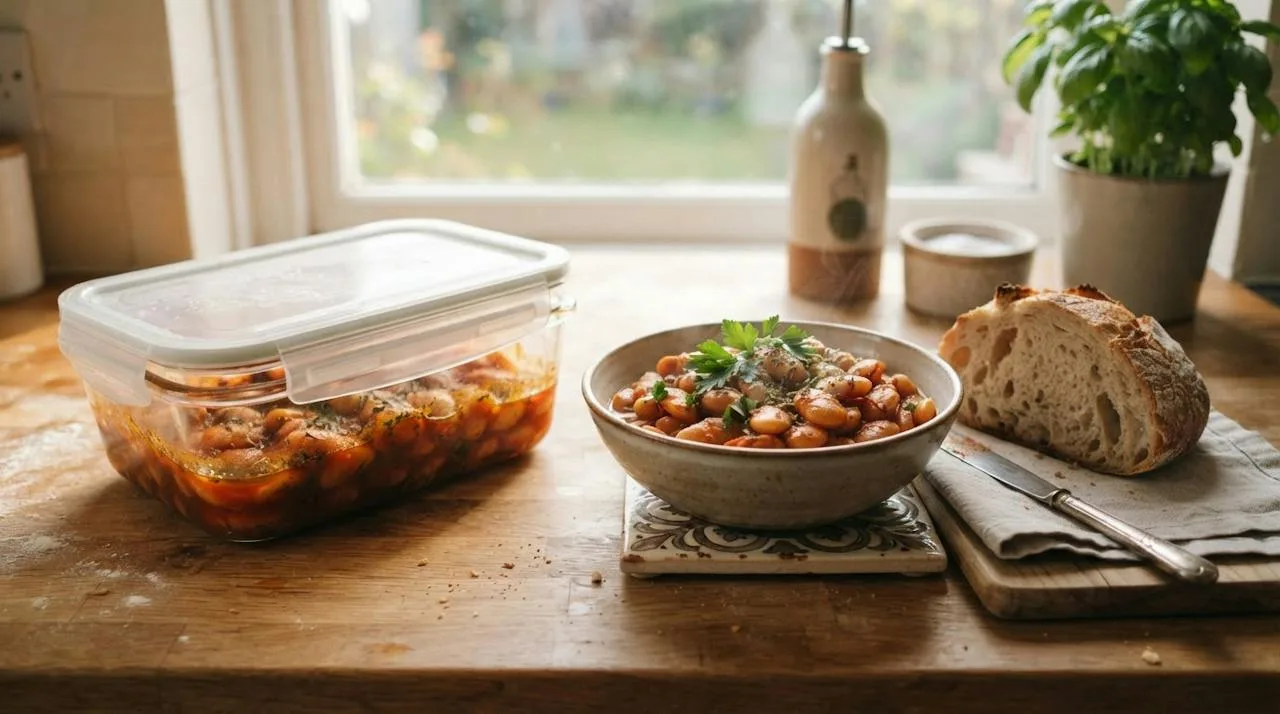
What I Learned From Testing This Recipe
Recipe Testing Note Tested in 2 full rounds, plus tests with canned beans and Greek gigantes. Last updated: October 2026. Equipment: induction stovetop, 24 cm heavy-bottomed stainless-steel pot, 30 × 20 cm ceramic baking dish, electric fan oven at 190°C (about 375°F). Key variables tested: soaking time and baking soda, simmering time, tomato paste, bean cooking liquid, baking time and stirring.
In round 1, I soaked 300 g of dried butter beans for 10 hours with no baking soda, then simmered them for about 55 minutes. They looked cooked on the outside, but some were still firm in the center and a few skins split. I assumed they’d finish in the oven. They didn’t. The beans stayed firmer than expected, the tomato sauce tasted too sharp and looked thin after baking, the herbs barely came through, and the top hardly colored. I also stirred halfway through baking, which broke some of the softer beans.
For round 2, I soaked the beans for 14 hours with ½ teaspoon of baking soda, rinsed them very well, and simmered them for about 75 minutes, until the centers were creamy but the skins were still mostly intact. I doubled the tomato paste, added a teaspoon of brown sugar, used more parsley and dill, and baked the dish for 45 minutes without stirring at all. The second round had a much better texture.
What I changed after testing: Soaking went from 10 to 14 hours with ½ teaspoon of baking soda, simmering from 55 to 75 minutes, tomato paste from 1 to 2 tablespoons, bean cooking liquid from 200 to 250 ml, olive oil from 100 to 90 ml, and baking from 35 to 45 minutes with no stirring. I also added 1 teaspoon of brown sugar. The round 1 beans were still firm in the center, the sauce was thin and acidic, and stirring broke the beans.
One more lesson: I tried baking in the same pot I simmered the beans in, but the beans dried out faster around the edges. Transferring everything to a ceramic baking dish worked better.
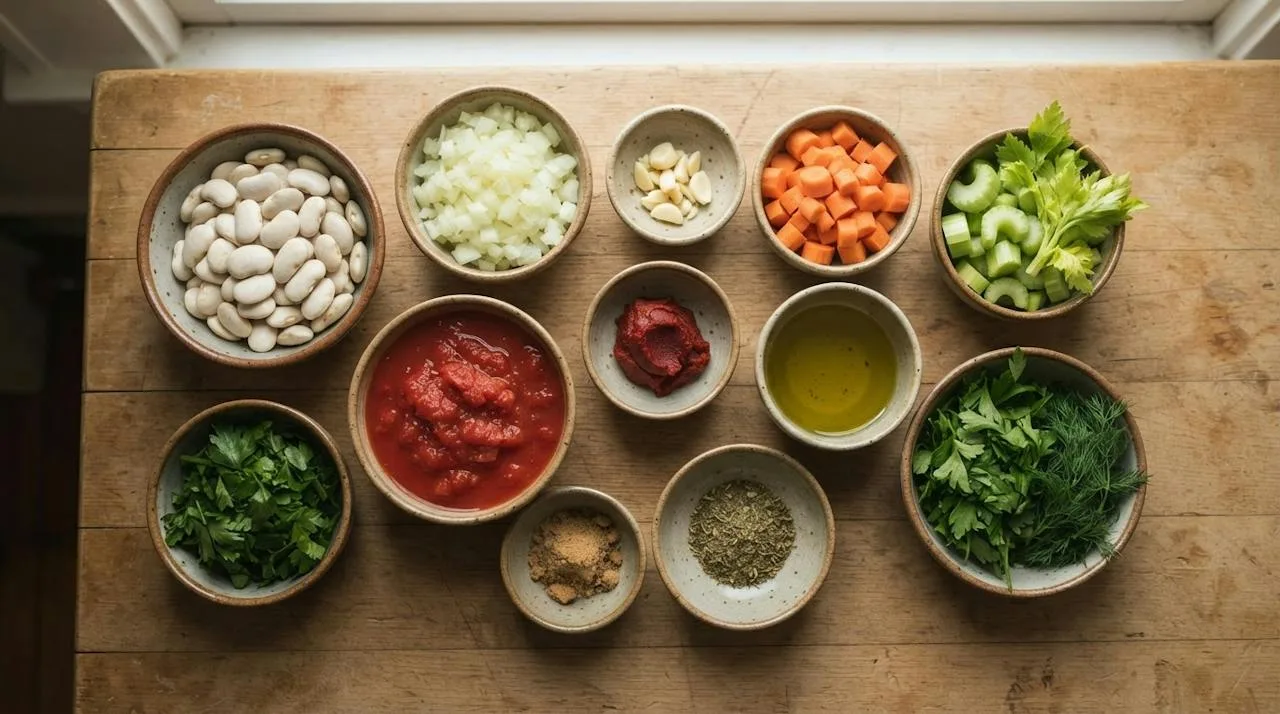
Ingredients
Serves 4 to 6. Prep: 20 minutes | Soaking: 14 hours | Simmering: 75 minutes | Sauce: 15 minutes | Baking: 45 minutes | Resting: 15 minutes Active time: about 50 minutes | Total: about 16½ hours, mostly soaking
For the beans
- 300 g (about 1½ cups) dried butter beans (large lima beans)
- ½ teaspoon baking soda, for the soaking water
- Water, for soaking and simmering
For the sauce
- 90 ml (6 tablespoons) olive oil
- 1 large yellow onion (about 200 g), diced
- 1 medium carrot, diced
- 2 celery stalks, finely sliced
- 3 garlic cloves, finely chopped
- 2 tablespoons tomato paste
- 500 g (about 18 oz) crushed tomatoes
- 1 teaspoon brown sugar
- 1 teaspoon dried oregano
- 1½ teaspoons salt
- ½ teaspoon black pepper
- 250 ml (about 1 cup) bean cooking liquid, reserved from simmering the beans
To finish
- 3 tablespoons chopped fresh parsley
- 2 tablespoons chopped fresh dill
The extra tablespoon of tomato paste surprised me: it gave the sauce much more body than the round 1 version.
Before You Start: What to Watch For
- Plan ahead. The beans need about 14 hours of soaking, so start the night before.
- Cook the beans fully on the stove. The oven won’t soften firm beans. In round 1, beans that were slightly firm going in were still firm coming out.
- Check doneness by cutting a bean open. Take one from the middle of the pot and cut it in half. The center should be creamy with no chalky or hard bit.
- Keep the bean cooking liquid. It’s starchy and helps give the sauce body. Reserve a little more than you need.
- Don’t stir once it’s in the oven. The beans are soft by then, and stirring breaks them.
- Use a ceramic baking dish. Baking in the cooking pot dried out the edges in my testing. Use good olive oil, too; there’s a lot of it in this dish, and my comparison of extra virgin vs. light olive oil explains which bottle to choose.
Method
- Soak the beans. Put the dried beans in a large bowl, cover with plenty of cold water, and stir in ½ teaspoon of baking soda. Soak for about 14 hours. In round 1, a 10-hour soak without baking soda wasn’t enough.
- Rinse well. Drain and rinse the beans very well under cold running water, to wash away the baking soda.
- Simmer the beans. Put the beans in a 24 cm heavy-bottomed pot, cover with fresh water by a few centimeters, and bring to a boil. Lower the heat and simmer gently for about 75 minutes.
- Check the beans. Take a bean from the middle of the pot and cut it open. It’s ready when the center is creamy, with no chalky or hard bit, but the skin is still mostly intact. You don’t want them falling apart, because they still have to bake. If the center is still firm, keep simmering and check again every 10 minutes.
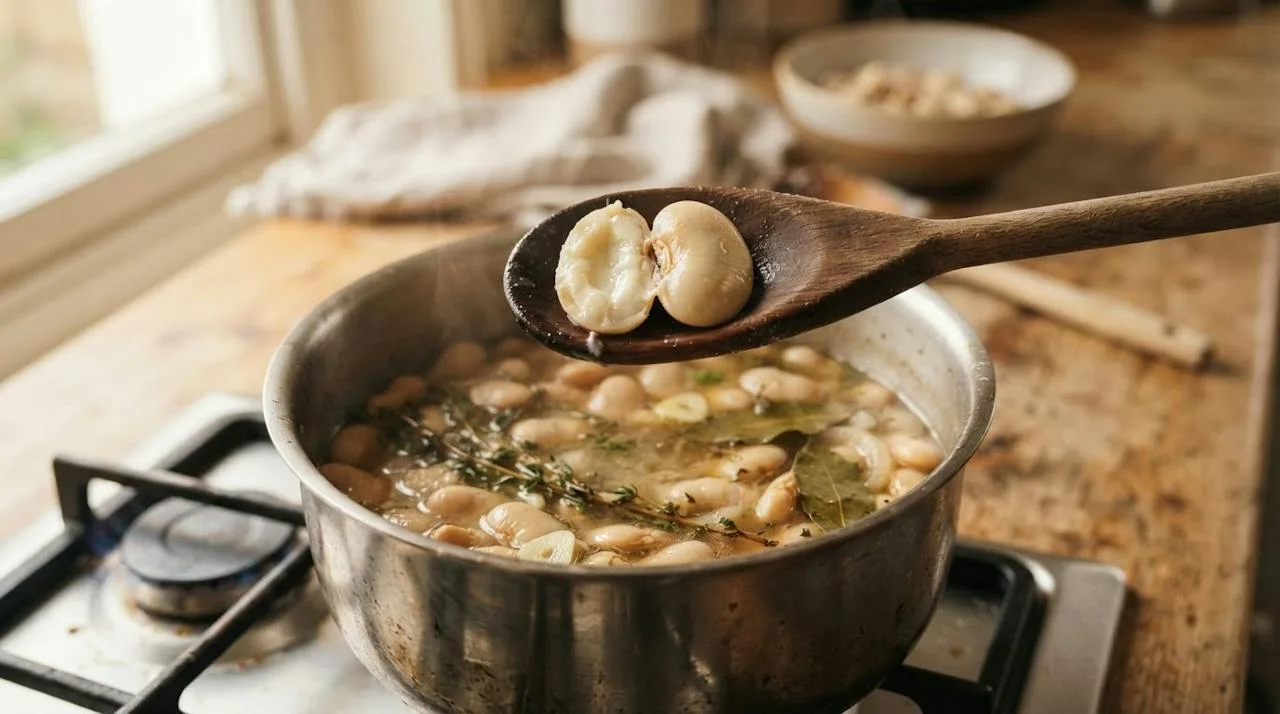
- Drain and save the liquid. Drain the beans, reserving at least 300 ml of the cooking liquid. Heat the oven to 190°C fan (about 375°F).
- Soften the vegetables. In the same pot over medium heat, warm about half of the olive oil. Add the onion, carrot and celery and cook, stirring often, for about 8 to 10 minutes, until the onion is soft and translucent. Add the garlic and cook for 1 minute, until fragrant.
- Build the sauce. Stir in the tomato paste and cook for 1 to 2 minutes, until it darkens slightly. Add the crushed tomatoes, brown sugar, oregano, salt and pepper, then stir in 250 ml of the bean cooking liquid. Simmer for a few minutes, until it comes together into a loose sauce.
- Combine with the beans. Gently fold in the cooked beans and most of the parsley and dill, keeping a little for garnish. Transfer everything to a 30 × 20 cm ceramic baking dish and spread it into an even layer. The mixture should look saucy, with the beans just covered. If it looks dry, add a splash more of the reserved cooking liquid. Drizzle the remaining olive oil over the top.
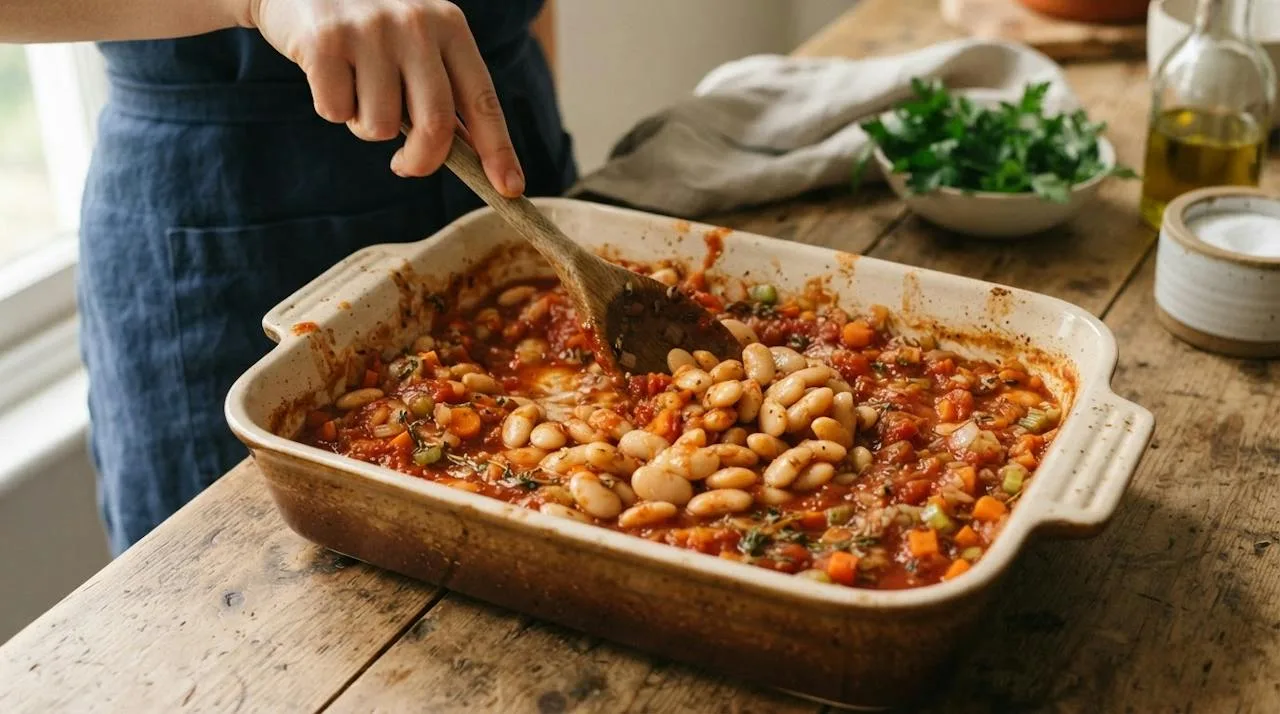
- Bake covered. Cover the dish with foil or a lid and bake for 20 minutes.
- Bake uncovered, without stirring. Uncover and bake for another 25 minutes. Don’t stir. It’s done when the sauce is thick, the top is slightly browned with a few darker roasted tomato spots, and olive oil is visible in little pools around the edges. A spoon pulled through the sauce should leave a line that doesn’t run back in.
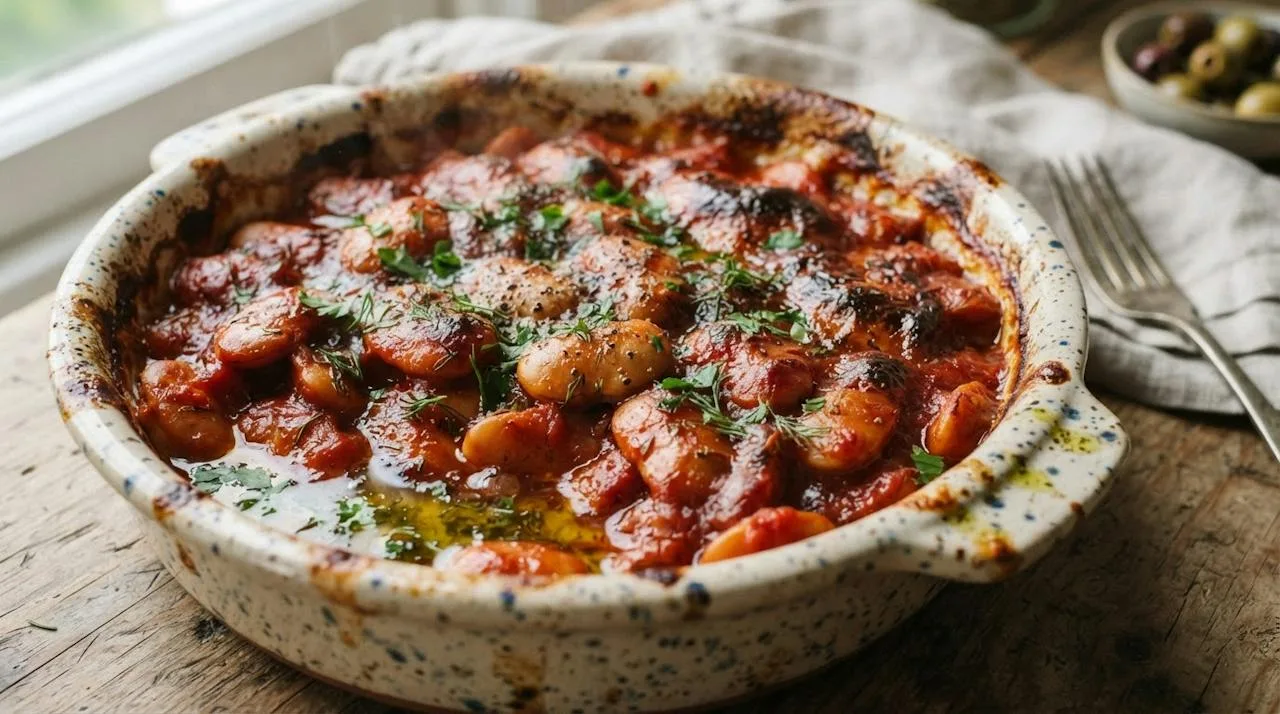
- Rest for 15 minutes. Let the dish sit for about 15 minutes before serving. The sauce thickens noticeably as it rests. Straight from the oven, the tomato tasted sharper and the sauce looser; after 15 to 20 minutes, the sauce was thicker and the herbs easier to taste.
- Finish and serve. Scatter over the remaining parsley and dill and serve warm or at room temperature.
Tested Substitutions
| Original ingredient | Tested substitute | Result |
|---|---|---|
| Dried butter beans | Greek gigantes beans | Larger, more delicate beans that looked beautiful in the dish. They needed about 90 minutes of simmering, and I didn’t stir them at all in the oven. |
| Dried butter beans | Dried lima beans | Worked, but slightly softer |
| Dried butter beans | Canned beans (2 cans, about 480 g drained) | No pre-cooking needed and the sauce was ready faster, but the beans softened a lot during baking and were less creamy. A good weeknight version. |
| No baking soda in the soak | ½ tsp baking soda | Faster-cooking, softer beans |
| Crushed tomatoes | Passata | Smoother, less rustic sauce |
| Fresh dill | Extra parsley | Good, but a less Greek-style flavor |
| Oregano only | Oregano, dill and parsley | Fresher flavor |
| Brown sugar | Maple syrup | Worked, slightly sweeter |
| Carrot | No carrot | Still good, but I missed the extra sweetness |
| Crushed tomatoes | Fresh tomatoes (untested) | I haven’t tried this yet. Let me know in the comments. |
| None | Kalamata olives (untested) | I haven’t tried this yet. Let me know in the comments. |
| None | Lemon juice (untested) | I haven’t tried this yet. Let me know in the comments. |
Why This Recipe Can Fail (And How to Fix It)
Common Problems
- Beans still firm after baking: They weren’t fully cooked before going in the oven. In round 1, 10 hours of soaking and 55 minutes of simmering left firm centers that never softened in the oven. Soak for 14 hours with ½ teaspoon of baking soda, simmer for about 75 minutes, and cut a bean open to check before baking.
- Thin, watery sauce: Not enough tomato paste or baking time. My round 1 sauce was still loose after 35 minutes. Use 2 tablespoons of tomato paste, bake 20 minutes covered and 25 uncovered, and let the dish rest 15 minutes, because it thickens as it sits.
- Sauce too acidic: Tomatoes can taste sharp, especially straight from the oven. A teaspoon of brown sugar balanced it in round 2, and the sharpness softened further after resting.
- Broken, mushy beans: Stirring after the beans are soft breaks them apart. Fold them in gently once, then leave the dish alone in the oven.
- Dry edges: Baking in the cooking pot dried out the beans around the edges in my testing. Use a ceramic baking dish, and make sure the beans are just covered with sauce before baking.
- Pale top: Too short a bake or too much time covered. Uncover for the final 25 minutes so the top can brown and the tomato can roast in spots.
Serving Suggestions
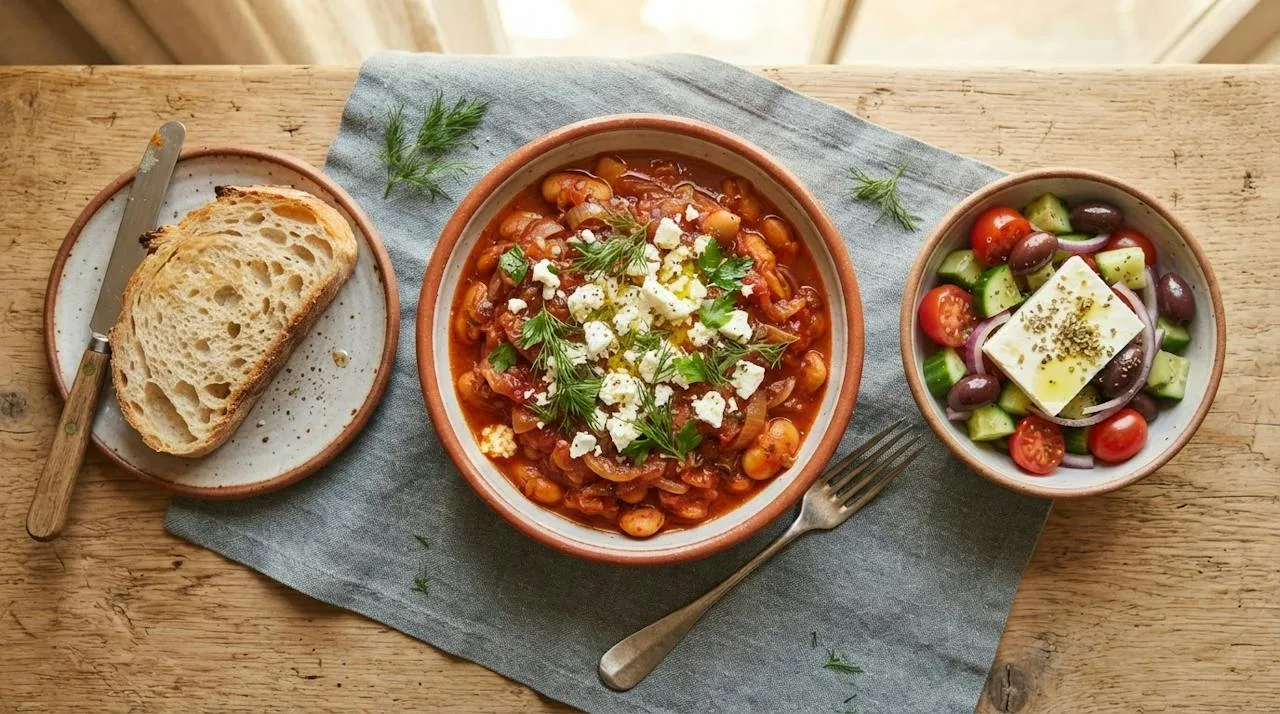
Serve gigantes warm or at room temperature with crusty bread to mop up the sauce, a block of feta and a simple Greek salad. It’s hearty enough to be the main course, or it can sit alongside grilled fish or roasted vegetables as part of a bigger spread.
For a Mediterranean mezze table, pair it with my Sicilian caponata, olives and warm pita. Leftovers make a great lunch spooned over farro or bulgur, following the formula in my Mediterranean grain bowls guide.
Storage, Reheating and Make-Ahead
Make-ahead: This is one I happily make ahead. In my testing, the next day had the best texture: the beans were super creamy and the sauce was thick like a proper braise, with plenty of olive oil but not greasy.
Refrigerator: Store covered in the fridge. Here’s how mine changed:
- Day 1: Very good, with soft beans and a thickening sauce.
- Day 2: Better. The tomato and herbs were more blended.
- Day 3: Still good, the beans even softer but not mushy.
- Day 4: The texture was starting to turn very soft. Still usable, but not as nice.
I kept it for 4 days at most. That fits the USDA’s leftovers and food safety guidance: refrigerate leftovers within 2 hours and eat them within 3 to 4 days.
Freezer: I froze one portion. After thawing, the beans were softer and a few skins split, but the sauce was still very good. It’s fine for a quick lunch, but the fresh or fridge-rested version has a better texture.
Serving after storage: Serve at room temperature, or warm it gently. Room temperature was one of my favorite ways to eat it, with the olive oil and tomato flavors more balanced.
Mediterranean Secret: Gigantes belongs to the Greek family of slow-cooked, olive oil-rich dishes, and like most of them, it’s better the next day. Make it on a Sunday and you’ve got lunches sorted. My 7-day Mediterranean diet meal plan shows how to build a week around dishes like this.
With a dish of beans resting on the counter, Nevaeh Hall
Print
Gigantes Plaki
- Total Time: 16 hours 20 minutes
- Yield: 4 to 6 servings
- Diet: Vegetarian
Description
Gigantes plaki is a traditional Greek dish featuring creamy butter beans baked in a rich tomato sauce with vegetables and herbs, making it a hearty and satisfying main course.
Ingredients
- 300 g (about 1½ cups) dried butter beans (large lima beans)
- ½ teaspoon baking soda, for the soaking water
- Water, for soaking and simmering
- 90 ml (6 tablespoons) olive oil
- 1 large yellow onion (about 200 g), diced
- 1 medium carrot, diced
- 2 celery stalks, finely sliced
- 3 garlic cloves, finely chopped
- 2 tablespoons tomato paste
- 500 g (about 18 oz) crushed tomatoes
- 1 teaspoon brown sugar
- 1 teaspoon dried oregano
- 1½ teaspoons salt
- ½ teaspoon black pepper
- 250 ml (about 1 cup) bean cooking liquid, reserved from simmering the beans
- 3 tablespoons chopped fresh parsley
- 2 tablespoons chopped fresh dill
Instructions
- Soak the beans in a large bowl covered with cold water and stir in ½ teaspoon of baking soda for about 14 hours.
- Rinse the beans very well under cold running water to wash away the baking soda.
- Simmer the beans in a pot with fresh water over medium heat for about 75 minutes until they are creamy inside but skins are intact.
- Drain the beans, reserving at least 300 ml of the cooking liquid.
- Heat the oven to 190°C (about 375°F) and warm half of the olive oil in the same pot.
- Add the diced onion, carrot, and celery. Cook for about 8 to 10 minutes until soft, then add the garlic.
- Stir in the tomato paste and cook for 1 to 2 minutes, then add the crushed tomatoes, brown sugar, oregano, salt, pepper, and reserved bean liquid.
- Simmer for a few minutes until the sauce comes together, then gently fold in the cooked beans and herbs.
- Transfer everything to a ceramic baking dish and drizzle with the remaining olive oil.
- Cover the dish with foil or a lid and bake for 20 minutes.
- Bake uncovered for another 25 minutes until thickened and browned on top.
- Rest for 15 minutes before serving, then garnish with remaining parsley and dill.
Notes
Avoid stirring the dish while baking, as it can break the beans. This dish is even better the next day as flavors meld.
- Prep Time: 20 minutes
- Cook Time: 75 minutes
- Category: Main Course
- Method: Baking
- Cuisine: Greek


