

7-Day Mediterranean Diet Meal Plan (With Grocery List and Prep Guide)
Most meal plans fall apart by Wednesday. They ask for a brand-new recipe every night, three fresh herbs you’ll use once, and a grocery bill that makes takeout look tempting. So when I built this Mediterranean week, I set one rule: cook once, eat several times.
This 7-day Mediterranean diet meal plan is built around one prep session and a few staples that roll forward through the week: a pot of chickpeas, two trays of roasted vegetables, a batch of grains, and a jar of dressing. Each of those components comes from recipes I’ve already tested and written up here on Fig & Brine, so you’ll find exact times and temperatures linked along the way.
If you’re brand new to this way of eating, start with my Mediterranean diet guide for beginners, then come back here to put it into practice.
How This Meal Plan Works
The plan follows the everyday pattern described by Oldways, the nonprofit that created the original Mediterranean diet pyramid with the Harvard School of Public Health: build meals on vegetables, fruits, whole grains, beans, nuts, olive oil, herbs and spices; eat fish and seafood at least twice a week; enjoy eggs, cheese and yogurt in moderate portions; and eat meat and sweets less often.
In practice, that turns into a simple plate formula I use for almost every lunch and dinner:
- Half the plate: vegetables, roasted, raw or stewed
- A quarter: whole grains or good bread
- A quarter: beans, lentils, chickpeas, fish or eggs
- Finished with: olive oil, lemon, herbs, and something salty or tangy
The American Heart Association sums up the same pattern: vegetables, fruits, whole grains, beans and legumes, olive oil as the main fat, and fruit as a common dessert instead of sweets.
Mediterranean Secret: A meal plan doesn’t need seven different dinners. In the Mediterranean kitchens that inspire this blog, a pot of beans or a tray of vegetables becomes lunch, then dinner, then a mezze plate. Planning for leftovers is the whole strategy.
This plan has no calorie targets. Portions depend on your body, activity level and appetite. If you’re managing a medical condition or have specific nutrition goals, a registered dietitian can adjust it for you.
The Week at a Glance
| Day | Breakfast | Lunch | Dinner |
|---|---|---|---|
| Day 1 | Greek yogurt with figs and walnuts | Farro bowl with roasted vegetables and chickpeas | Lentil and vegetable soup |
| Day 2 | Tomato toast with olive oil and an egg | Leftover lentil soup with a side salad | Roasted salmon with green beans and roasted sweet potato |
| Day 3 | Oats with yogurt and fruit | Chickpea, cucumber and tomato salad | Chickpea and spinach stew with preserved lemon |
| Day 4 | Greek yogurt with figs and walnuts | Leftover chickpea stew | Whole-wheat pasta with roasted zucchini, peppers and onion |
| Day 5 | Tomato toast with olive oil and an egg | Leftover pasta as a cold pasta salad | Crispy potatoes and Brussels sprouts with sardines |
| Day 6 | Eggs baked in tomato and pepper sauce | Chopped salad with chickpeas, feta and olives | Build-your-own grain bowls |
| Day 7 | Oats with yogurt and fruit | Clean-out-the-fridge mezze plate | Roasted eggplant with chickpeas, yogurt sauce and bulgur |
Snacks, any day: a piece of fruit, a small handful of almonds or walnuts, olives, or hummus with raw vegetables.
Fish count: salmon on Day 2 and sardines on Day 5, which meets the twice-a-week guideline.
The Prep Session (About 2 Hours, Before Day 1)
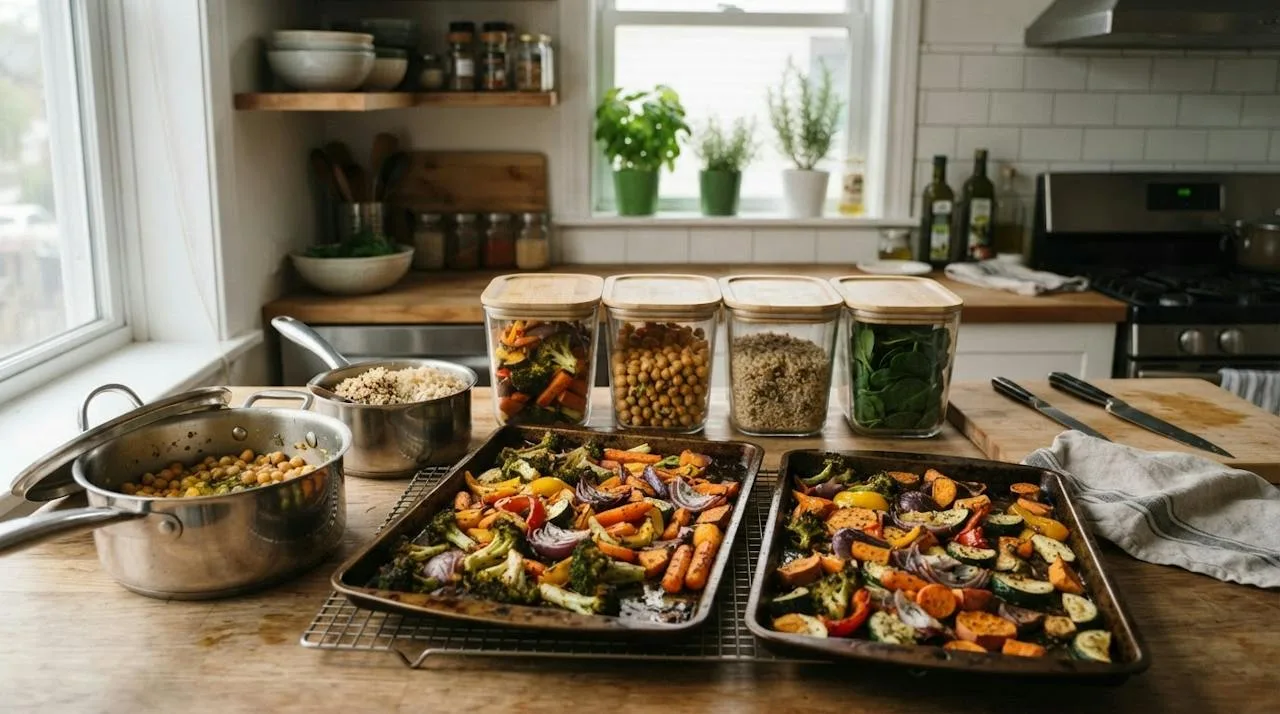
Everything below happens in one afternoon, and most of it is hands-off oven and stove time.
1. Cook a big pot of chickpeas. Soak 1 pound of dried chickpeas the night before, then simmer them until creamy using my guide to cooking dried chickpeas. Keep about half in the fridge for Days 1 to 3, and freeze the rest in their cooking liquid for Days 6 and 7. Canned chickpeas work too; you’ll need about four 15-ounce cans for the week.
2. Roast two trays of vegetables. These are combinations I tested for my vegetable roasting times and temperatures chart, at 220°C (about 425°F) with the fan on:
- Tray 1: cauliflower florets, carrot sticks and red onion wedges, all in together for about 28 minutes. The onion darkens first, so pull out any pieces that are getting too dark.
- Tray 2: sweet potato cubes, bell pepper strips and red onion wedges, all in together for 25 to 30 minutes. Check the onion at 20 minutes.
Use about 1½ tablespoons of olive oil per tray and don’t crowd them. My first crowded mixed tray steamed instead of browning, and splitting it across two trays fixed it.
3. Cook a pot of farro. Simmer about 1½ cups of dry farro in plenty of salted water like pasta until tender but still chewy, then drain. My Mediterranean grain bowls guide covers other grains if you’d rather use bulgur, brown rice or quinoa.
4. Make a jar of lemon-tahini dressing. Whisk ⅓ cup tahini, the juice of 1 large lemon, 1 small grated garlic clove, a pinch of salt and enough cold water to make it pourable. It keeps in the fridge for the week and goes on bowls, salads and roasted vegetables.
5. Quick-pickle a red onion. Thinly sliced red onion in vinegar, water, a little salt and sugar gives you a bright, tangy topping for every bowl. My Mediterranean preserving and brining guide explains how quick pickles differ from long-cured olives and lemons.
6. Wash and dry your greens and herbs. Wrap parsley and salad greens in a towel inside a container so they’re ready to grab.
Day-by-Day Meal Plan
Day 1
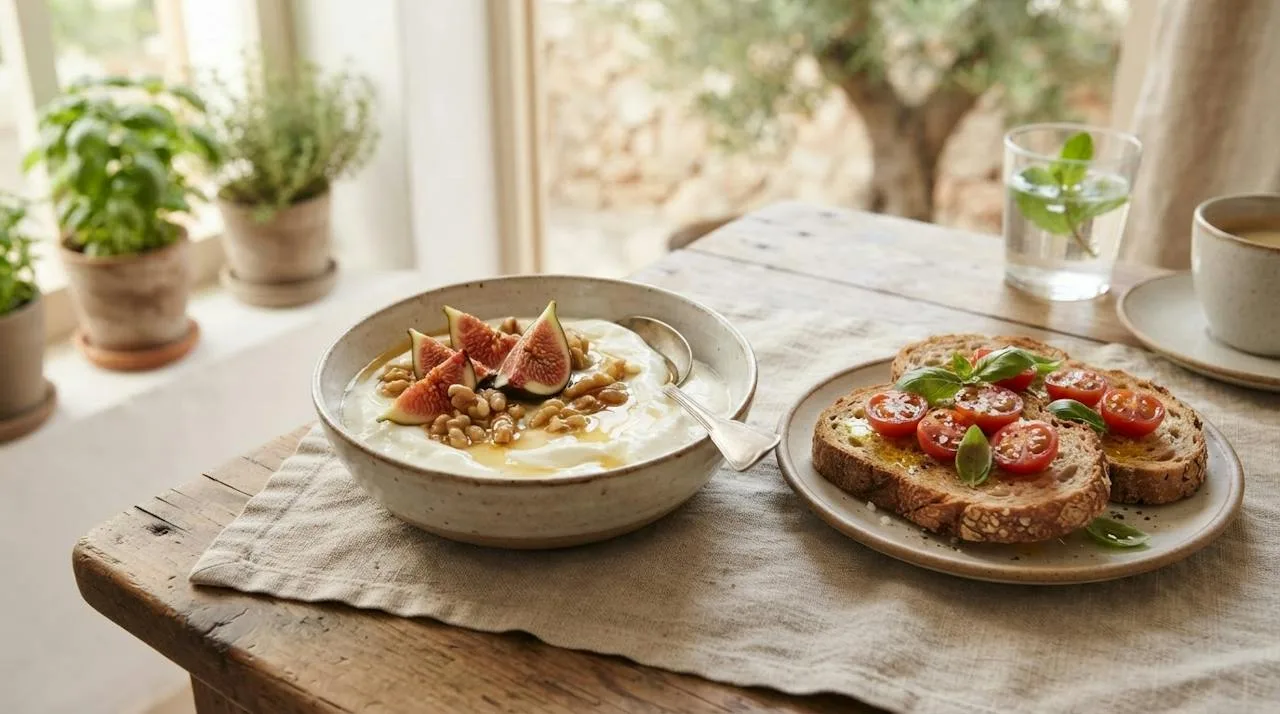
- Breakfast: Greek yogurt topped with sliced figs (or any seasonal fruit), a small handful of walnuts and a drizzle of honey.
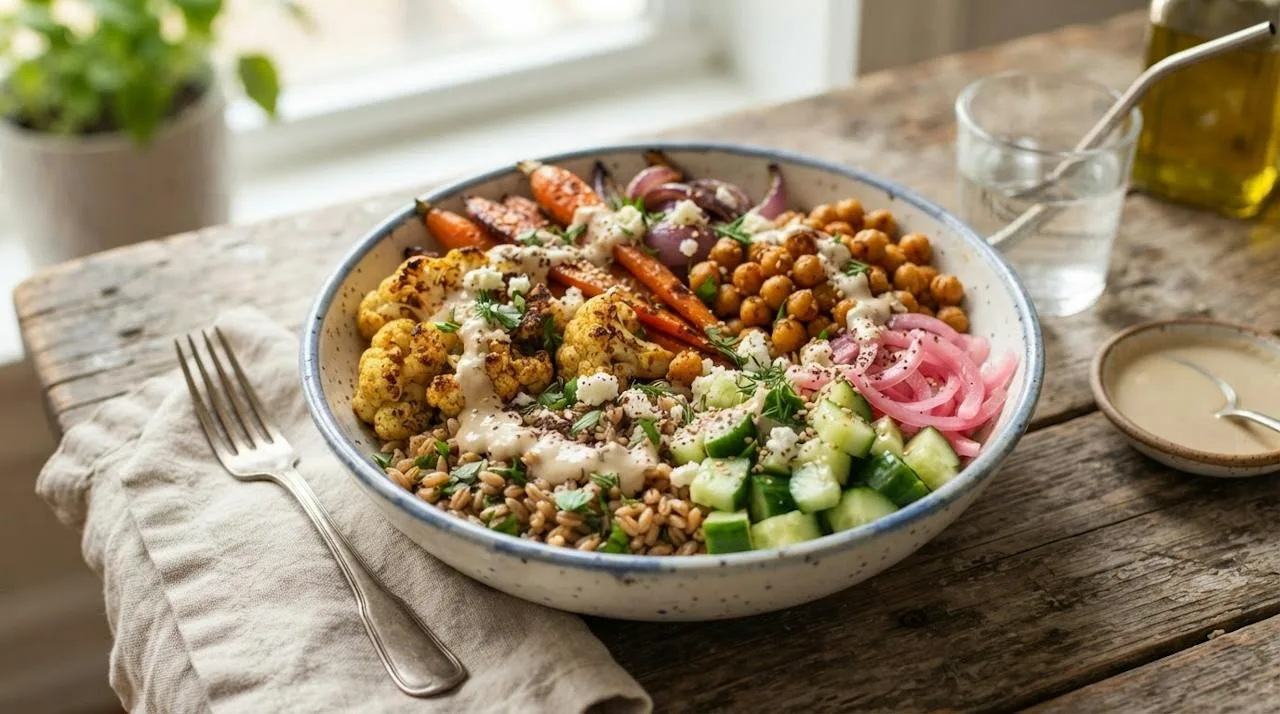
- Lunch: Farro bowl with Tray 1 vegetables, a big spoonful of chickpeas, cucumber, pickled onions and lemon-tahini dressing.
- Dinner: Lentil and vegetable soup. Sauté onion, carrot, celery and garlic in olive oil, add 1½ cups of brown or green lentils, a can of diced tomatoes, cumin and enough broth to cover generously. Simmer until the lentils are tender. Make the full pot; half of it is tomorrow’s lunch.
Day 2
- Breakfast: Whole-grain toast rubbed with a cut tomato, drizzled with olive oil and topped with a soft-boiled or fried egg.
- Lunch: Leftover lentil soup with a simple side salad of greens, cucumber, olive oil and lemon.
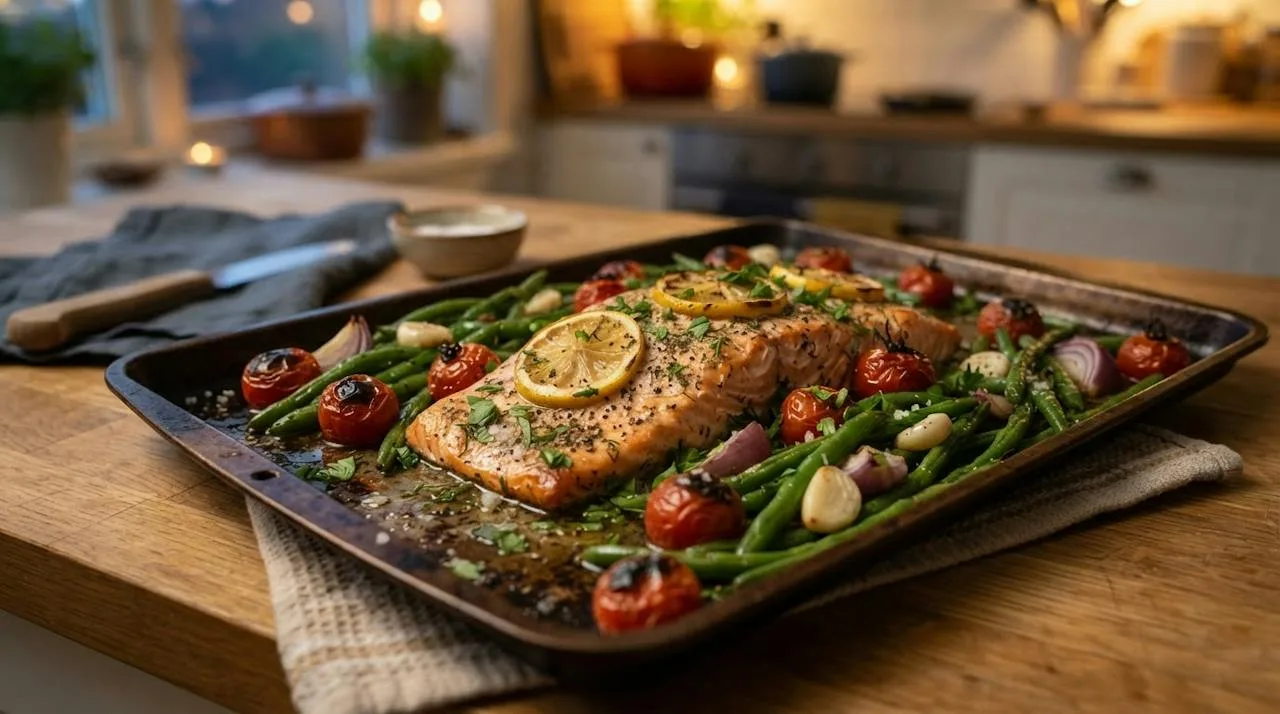
- Dinner: Roasted salmon with green beans, plus the rest of the Tray 2 sweet potatoes and peppers. In my roasting tests, whole green beans needed 18 minutes at 220°C to get wrinkled spots while keeping a little snap. Cook the salmon until it flakes easily and reaches 145°F (63°C), the safe minimum temperature for fish listed by FoodSafety.gov. Finish with lemon and parsley.
Day 3
- Breakfast: Oats cooked in water or milk, topped with a spoonful of yogurt, fruit and a few chopped almonds.
- Lunch: Chickpea salad with diced cucumber, tomato, red onion, parsley, olive oil, lemon and a little crumbled feta. It packs well for lunch.
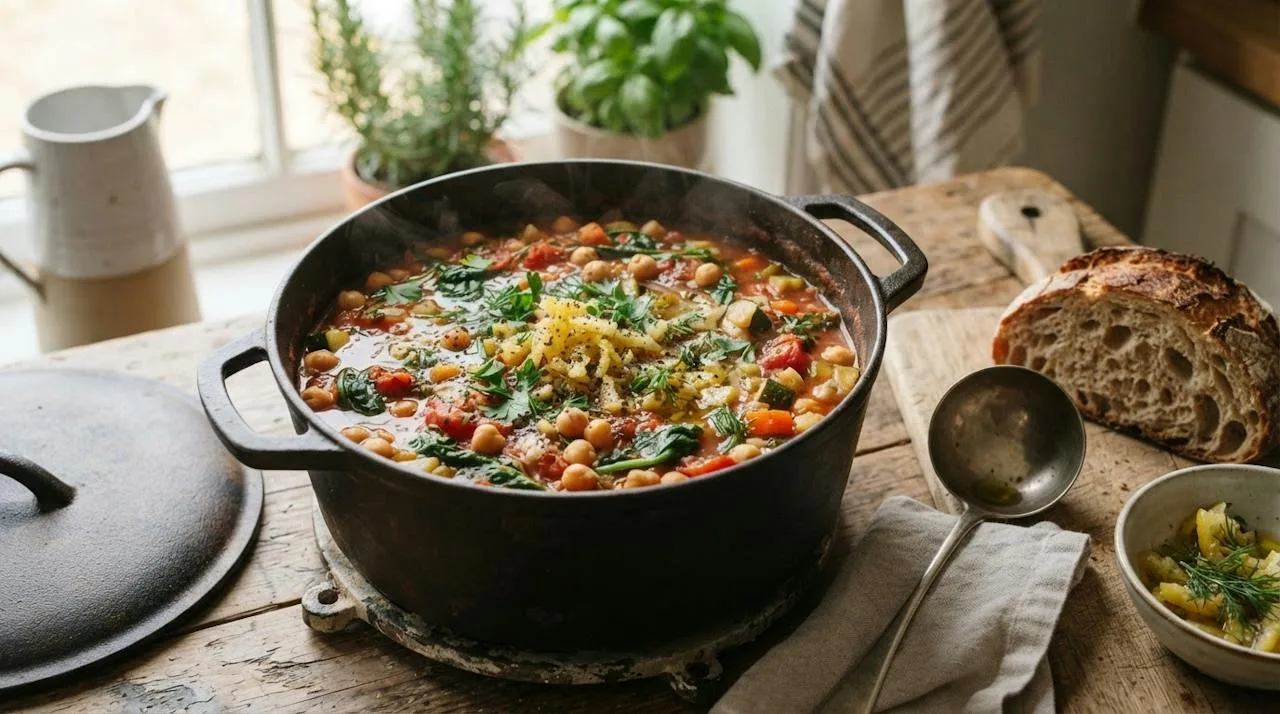
- Dinner: Chickpea and spinach stew with preserved lemon. Sauté onion and garlic in olive oil, add paprika and cumin, a can of crushed tomatoes and 2 to 3 cups of cooked chickpeas. Simmer 15 minutes, stir in a few big handfuls of spinach until wilted, then finish with finely chopped rind from my homemade preserved lemons. No preserved lemons yet? Use fresh lemon zest and juice. Make enough for tomorrow’s lunch.
Day 4
- Breakfast: Greek yogurt with fruit and walnuts.
- Lunch: Leftover chickpea stew, with a piece of whole-grain bread for the sauce.
- Dinner: Whole-wheat pasta with roasted zucchini, bell peppers and red onion. This is your fresh midweek roast. From my tests at 220°C: zucchini half-moons needed about 22 minutes, while pepper strips and onion wedges needed about 25. Use two trays, because zucchini releases a lot of water and steams when crowded. Toss with the pasta, olive oil, a splash of pasta water, crumbled feta and basil. Cook extra pasta for tomorrow.
Day 5
- Breakfast: Tomato toast with olive oil and an egg.
- Lunch: Leftover pasta and vegetables, served cold as a pasta salad with a squeeze of lemon and a few olives.
- Dinner: Crispy potatoes and Brussels sprouts with sardines. This is a combination I tested: put 3 cm potato cubes in first on a preheated tray, add the halved Brussels sprouts (cut side down) after 8 minutes, and both finish together at about 38 minutes total. Serve with good canned sardines in olive oil, lemon wedges and parsley. Sardines are one of the “best choices” in the FDA’s advice about eating fish, which lists them among lower-mercury options.
Day 6
- Breakfast: Eggs baked in a quick tomato and pepper sauce, shakshuka-style, with bread for dipping. A good weekend breakfast.
- Lunch: Chopped salad of romaine, cucumber, tomato, bell pepper, olives and feta, with thawed chickpeas from the freezer and an olive oil and red wine vinegar dressing.
- Dinner: Build-your-own grain bowls. Put out whatever grains, chickpeas, raw vegetables, pickled onions and dressing you have left, and let everyone build their own. My Mediterranean grain bowls guide has the full formula.
Day 7
- Breakfast: Oats with yogurt and fruit.
- Lunch: A clean-out-the-fridge mezze plate: hummus, olives, cucumber and carrot sticks, leftover chickpeas, a little cheese and warm pita.
- Dinner: Roasted eggplant with chickpeas, garlicky yogurt sauce and bulgur. In my tests, 3 cm eggplant cubes needed a full 30 minutes at 220°C. At 20 minutes they looked done but were still spongy inside. Toss them generously with oil; dry patches mean they need a bit more. Spoon over bulgur with the last of the chickpeas, yogurt mixed with garlic and lemon, and fresh herbs.
How the Leftovers Flow Through the Week
| Cooked on | Becomes |
|---|---|
| Prep day: chickpeas | Day 1 bowls, Day 3 salad and stew; frozen half for Days 6 and 7 |
| Prep day: Tray 1 vegetables | Day 1 lunch bowl, extra bowls or sides on Day 2 |
| Prep day: Tray 2 vegetables | Day 2 dinner side |
| Prep day: farro | Day 1 bowl, Day 6 grain bowls |
| Day 1: lentil soup | Day 2 lunch |
| Day 3: chickpea stew | Day 4 lunch |
| Day 4: roasted vegetable pasta | Day 5 lunch |
When I tested how roasted vegetables hold up in the fridge, day 1 had the best texture, day 2 was slightly softer, and by day 3 zucchini was noticeably soft and potatoes had lost their crispness. That’s why this plan uses the prep-day vegetables early and adds a fresh roast on Day 4. For safety, the USDA’s leftovers and food safety guidance says to refrigerate leftovers within 2 hours and eat them within 3 to 4 days, or freeze them.
Common Mistake: Reheating roasted vegetables in the microwave. They turn soft. In my reheating tests, a 200°C fan oven for 10 to 12 minutes, or an air fryer at 190°C for 5 to 7 minutes, brought potatoes and Brussels sprouts back much closer to fresh.
Your Grocery List
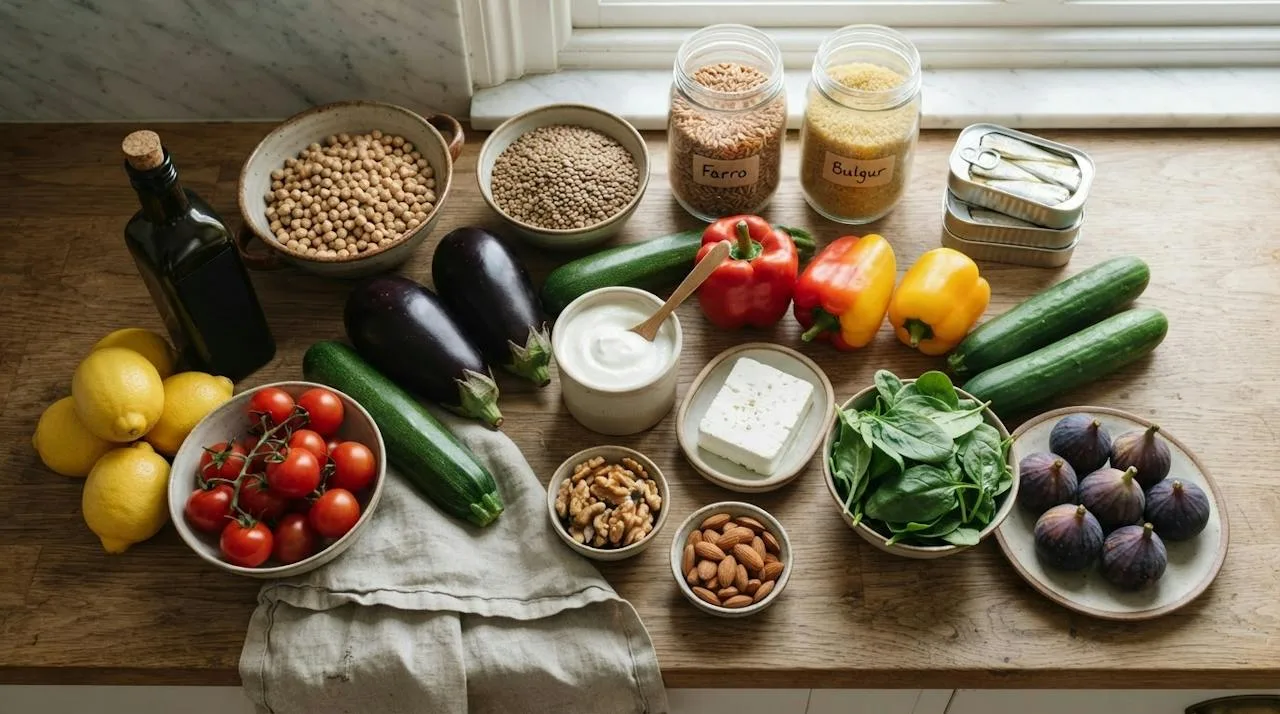
This list covers the full week for about two people. Adjust quantities to your household.
Vegetables
- 1 head cauliflower
- 1 lb carrots, plus a few for snacking
- 4 red onions and 2 yellow onions
- 1 head garlic
- 2 sweet potatoes
- 4 bell peppers (mixed colors)
- 2 zucchini
- 1 large eggplant
- 1 lb potatoes
- 1 lb Brussels sprouts
- ½ lb green beans
- 1 celery bunch
- 1 large bag of spinach
- 1 head romaine or mixed salad greens
- 3 cucumbers
- 4 to 6 tomatoes
- 2 large bunches of parsley, 1 small bunch of basil
Fruit
- 4 to 5 lemons
- Fresh figs or other seasonal fruit for breakfasts
- Fruit for snacks (oranges, apples, grapes, whatever looks best)
Grains and bread
- Farro (about 1½ cups dry)
- Bulgur (about 1 cup dry)
- Old-fashioned oats
- 1 lb whole-wheat pasta
- Whole-grain bread and pita
Beans and fish
- 1 lb dried chickpeas (or about four 15-oz cans)
- 1½ cups brown or green lentils
- 2 salmon fillets
- 1 to 2 cans sardines in olive oil
Dairy and eggs
- Large tub of plain Greek yogurt
- Feta cheese
- 1 dozen eggs
Pantry
- Extra virgin olive oil
- Tahini
- 2 cans diced or crushed tomatoes
- Low-sodium vegetable broth
- Red wine vinegar
- Olives
- Hummus (or make your own with some of the chickpeas)
- Walnuts and almonds
- Honey
- Cumin, paprika, dried oregano, salt and black pepper
Mediterranean Secret: Buy one good bottle of extra virgin olive oil and use it for everything this week, roasting included. My guide to how to cook with olive oil explains why it holds up to oven heat, and my comparison of extra virgin vs. light olive oil shows why “light” is not the lighter choice it sounds like.
Easy Swaps
| If you… | Swap this | For this |
|---|---|---|
| Don’t eat fish | Salmon and sardines | Extra lentils, white beans or chickpeas |
| Eat gluten-free | Farro, bulgur, pasta, bread | Brown rice, quinoa, gluten-free pasta |
| Skip dairy | Greek yogurt and feta | Unsweetened plant yogurt, extra olives or toasted nuts |
| Are short on time | Dried chickpeas | Canned chickpeas, rinsed |
| Can’t find figs | Fresh figs | Berries, sliced pears or a few chopped dried figs |
These swaps keep the same plate formula, so the meals still follow the Mediterranean pattern.
Frequently Asked Questions
Is this meal plan good for weight loss? It isn’t designed around weight loss and has no calorie targets. It’s designed around the Mediterranean eating pattern itself. If weight loss is your goal, a registered dietitian can adjust portions for you.
Can I make this meal plan vegetarian? Yes. Only two meals include fish. Swap the salmon and sardines for lentils, white beans or extra chickpeas, and the rest of the week is already vegetarian.
How many times a week should I eat fish on a Mediterranean diet? Oldways recommends fish and seafood at least twice a week, and Mayo Clinic suggests at least 2 to 3 times a week. This plan includes two fish dinners.
Can I freeze any of the meals? Yes. The lentil soup, chickpea stew and cooked chickpeas all freeze well in airtight containers. Roasted vegetables and salads are best eaten fresh from the fridge within a few days.
How do I keep this going after the first week? Repeat the structure, not the exact meals. Every week, cook one pot of beans or lentils, roast two trays of vegetables, cook one grain, and make one dressing. Then rotate the vegetables with the seasons. My guide to roasting vegetables the Mediterranean way has plenty of ideas.
Continue Learning
- The complete Mediterranean diet guide for beginners
- Vegetable roasting times and temperatures chart
- How to cook dried chickpeas
With a full fridge and a lighter week ahead, Nevaeh Hall


