

How to Cook with Olive Oil Like a Mediterranean: The Complete Guide
The afternoon an olive farmer handed me a paper cup of oil pressed that same week, I took one sip and actually coughed. It was grassy, bitter, and fiercely peppery. Then it hit me: the “olive oil” I’d been cooking with for years had never tasted like anything at all.
I’m far from the only one cooking with it. According to the USDA Economic Research Service, U.S. olive oil consumption has climbed from about 28,000 metric tons in the early 1970s to more than 400,000 metric tons in the 2020s. Yet when the UC Davis Olive Center tested store-bought oils, 69% of the imported samples labeled “extra virgin” failed to meet the standard.
For years, my bottles sat right next to the stove. I bought the cheapest jugs I could find, plus the occasional “fancy” import. I once worked out that I’d spent roughly $180 in a single year on oil that was stale, flat, or quietly rancid by the time I used it, and I cooked with it timidly because I’d heard olive oil “can’t take heat.”
If you’re still frying with one oil, dressing salads with another, and saving olive oil for “special” dishes, you’re missing the heart of Mediterranean cooking. If this whole way of eating is new to you, start with my guide to the Mediterranean diet for beginners to see why olive oil sits at its center.
Here’s what I’ve learned since that peppery sip: olive oil isn’t a garnish, and it isn’t fragile. It’s an everyday workhorse that Mediterranean cooks use to sauté, roast, braise, fry, and finish. The secret is buying it fresh, storing it well, and matching the right bottle to the right job. In this guide, you’ll learn how to read a label, taste for quality, cook with olive oil at every heat level, and keep it tasting alive from the first pour to the last.
Understanding Olive Oil: What’s Really in the Bottle
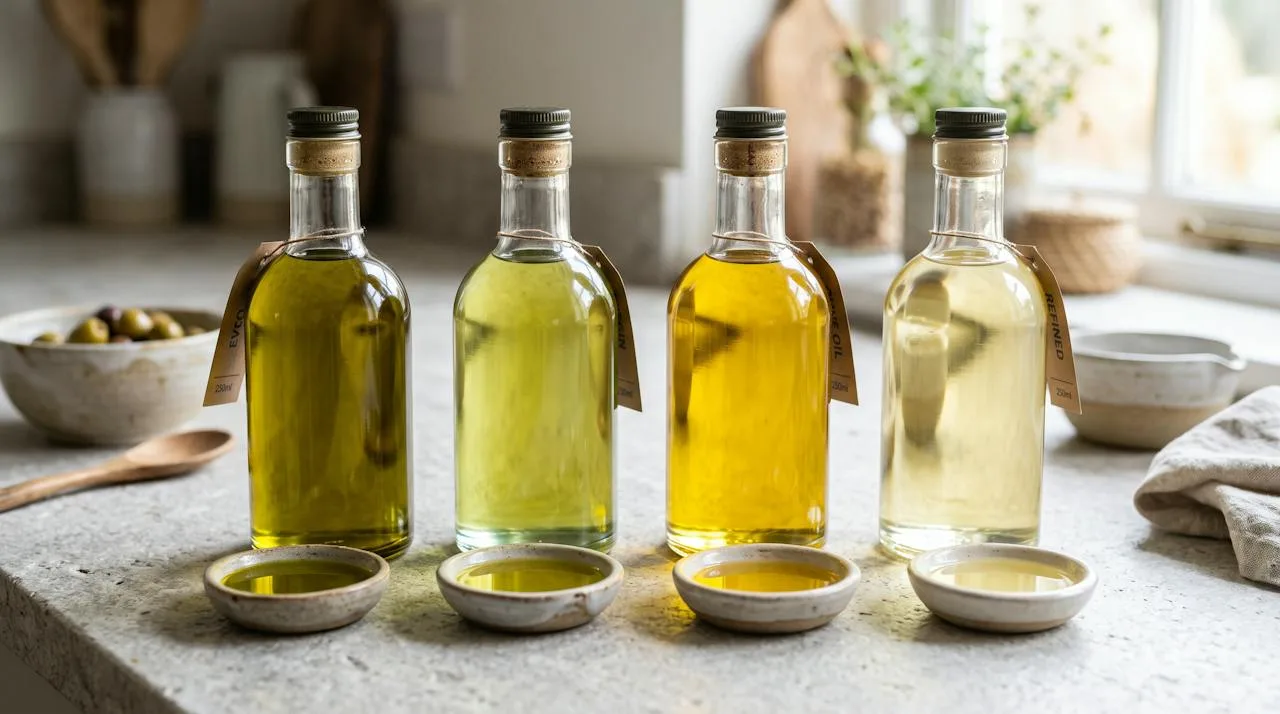
Before you can cook with olive oil like a Mediterranean, you need to know which olive oil you’re actually holding, and the label doesn’t always make that easy.
Olive Oil Is Fruit Juice
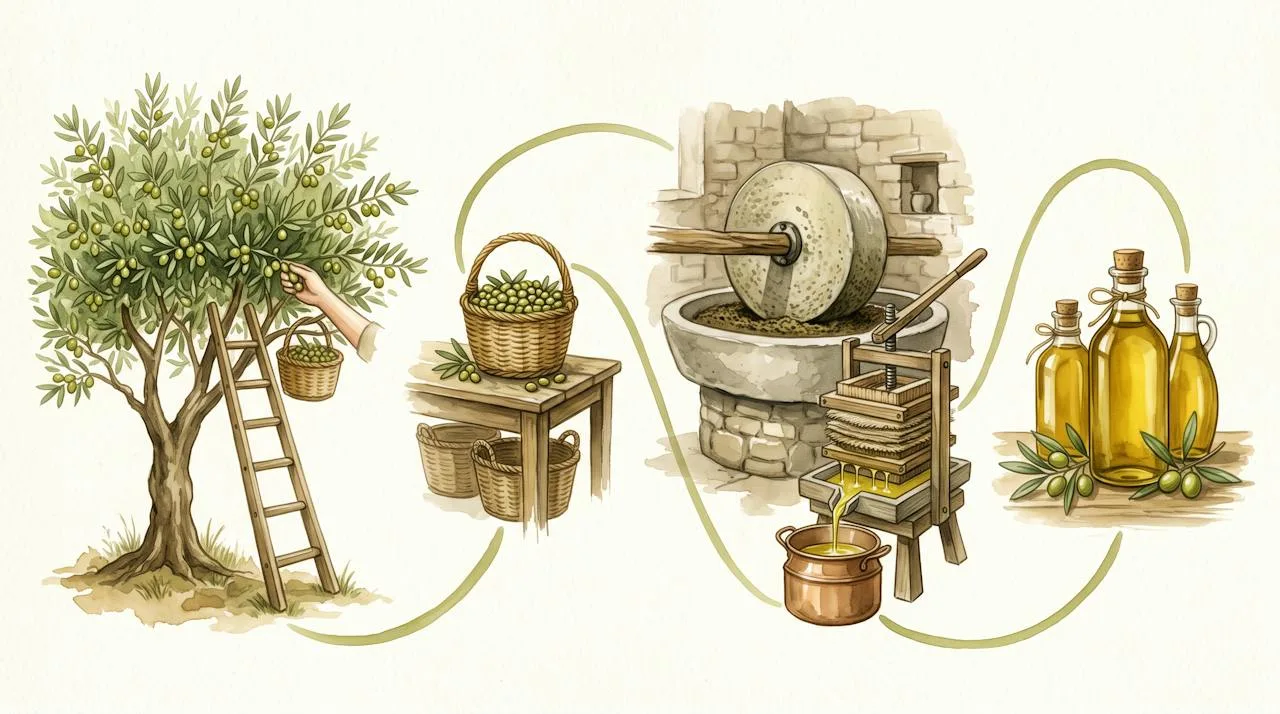
This is the single most useful idea I can give you: olive oil is the pressed juice of a fruit. Like any fresh juice, it’s at its best soon after it’s made and slowly loses flavor over time. Extra virgin olive oil is made by crushing olives and separating the oil by mechanical means, with no chemical solvents and no refining. That gentle process keeps its color, its aroma, and its natural compounds.
Those compounds include polyphenols, the natural antioxidants responsible for olive oil’s bitterness and peppery bite. A review in the journal Foods explains that the bitter compound oleuropein is what makes raw olives inedible straight from the tree, and related phenolic compounds carry through into the oil. That cough-inducing sting I felt? It was a sign of freshness, not a flaw.
MEDITERRANEAN SECRET: In olive-growing regions, a cough after tasting fresh oil is a compliment. Producers sometimes rate oils as “one-cough” or “two-cough” oils. Peppery means alive.
The Official Grades, Decoded
The United States has voluntary grade standards for olive oil. According to the USDA’s olive oil and olive-pomace oil standards, the main grades you’ll meet include:
- U.S. Extra Virgin Olive Oil: The highest grade, with free acidity of no more than 0.8 grams per 100 grams, plus excellent flavor and aroma.
- U.S. Virgin Olive Oil: Still unrefined, but with free acidity up to 2.0 grams per 100 grams and some minor flavor flaws.
- U.S. Refined Olive Oil: Virgin oil that has been refined to remove defects, leaving it pale and nearly flavorless.
- U.S. Olive Oil: A blend of refined olive oil with some virgin oil added for flavor.
- Olive-Pomace Oil: Extracted from the leftover olive paste, usually with solvents, then refined.
Notice what’s missing from that list: “light” and “pure.” The USDA standards don’t define those terms as grades. “Light” olive oil is light in flavor and color, not in calories. Every olive oil, from the finest extra virgin to the blandest pomace oil, has about the same number of calories per tablespoon.
Why “Extra Virgin” Doesn’t Always Mean Extra Virgin
The UC Davis study I mentioned in the opening tested 19 brands bought from supermarkets in California. The imported oils that failed had defects such as oxidation from heat, light, or age; oil from damaged or overripe olives; and in some cases dilution with cheaper refined oils. As one of the researchers put it, many of the failed oils “just did not taste good.”
The researchers also found that standard chemistry tests often missed defects that trained tasters could detect. That’s a big reason your own nose and tongue matter, and we’ll learn how to use them in a moment.
COMMON MISTAKE: Assuming a higher price or an Italian flag guarantees quality. Many oils are packed in one country from olives grown in several others. Look for where the oil was made, not just where it was bottled.
Health: Why Mediterranean Cooks Pour So Freely
Olive oil isn’t just tradition; it’s well studied. The Oldways Mediterranean Diet Pyramid, developed with the Harvard School of Public Health and the World Health Organization, places olive oil at the base of the diet alongside vegetables, fruits, grains, and beans, to be enjoyed at every meal. Olive oil is rich in monounsaturated fat, which the Harvard T.H. Chan School of Public Health counts among the healthy fats when it replaces saturated and trans fats.
In 2018, the FDA completed a review allowing a qualified health claim that supportive but not conclusive evidence suggests about 1½ tablespoons (20 grams) a day of oils high in oleic acid, the main fat in olive oil, may reduce the risk of coronary heart disease when used in place of saturated fat.
The landmark PREDIMED trial, published in the New England Journal of Medicine, found that adults at high cardiovascular risk who followed a Mediterranean diet supplemented with extra virgin olive oil had a lower rate of major cardiovascular events than those advised to follow a reduced-fat diet.
Organizations like the American Heart Association and the Mayo Clinic both point to the Mediterranean pattern, with olive oil as its main fat, as a heart-healthy way of eating.
And in a large U.S. study, researchers at Harvard followed more than 92,000 adults for 28 years. People who consumed more than half a tablespoon of olive oil a day had a 19% lower risk of cardiovascular death than those who rarely used it. Replacing about 10 grams a day of margarine, butter, mayonnaise, or dairy fat with olive oil was linked to an 8–34% lower risk of death from various causes. That study was observational, so it shows an association rather than proof, but it adds to a consistent picture.
The Harvard T.H. Chan School of Public Health’s review of the Mediterranean diet makes the same point: the benefits come from the overall pattern, with healthy fats like olive oil replacing less healthy ones. Even the Dietary Guidelines for Americans include a Healthy Mediterranean-Style Dietary Pattern among their example eating patterns.
The takeaway for your kitchen: olive oil works best as a swap. Pouring it over everything on top of an otherwise unchanged diet isn’t the goal. Using it instead of butter, margarine, and other saturated fats is.
Note: This guide is for general cooking education, not medical advice. If you have a health condition or follow a prescribed diet, talk with your doctor or a registered dietitian.
How to Buy and Taste Olive Oil
Every great dish in this guide starts at the store shelf, and that’s where most home cooks lose the battle.
Read the Label Like a Producer
Here’s my checklist, based on the UC Davis Olive Center’s buying advice:
- Look for a harvest date, not just a “best by” date. Choose the most recent harvest you can find. Northern Hemisphere oils are usually harvested from October to December; Southern Hemisphere oils (Chile, Australia, Argentina, South Africa) from May to July, so they can be fresher in our spring and summer.
- Check where it was made, not just where it was packaged.
- Look for quality seals. UC Davis notes that certifications from groups like the California Olive Oil Council carry quality standards stricter than international standards.
- Choose dark glass or tin. Light speeds up oxidation.
- Buy a size you’ll finish. UC Davis recommends using olive oil within 15 to 18 months of harvest and within a couple of months after opening.
MEDITERRANEAN SECRET: Buy two bottles. Keep a reliable, well-priced extra virgin olive oil for everyday cooking and a smaller, fresher, more expensive bottle for finishing. You’ll use more of both and waste neither.
How to Taste Olive Oil at Home
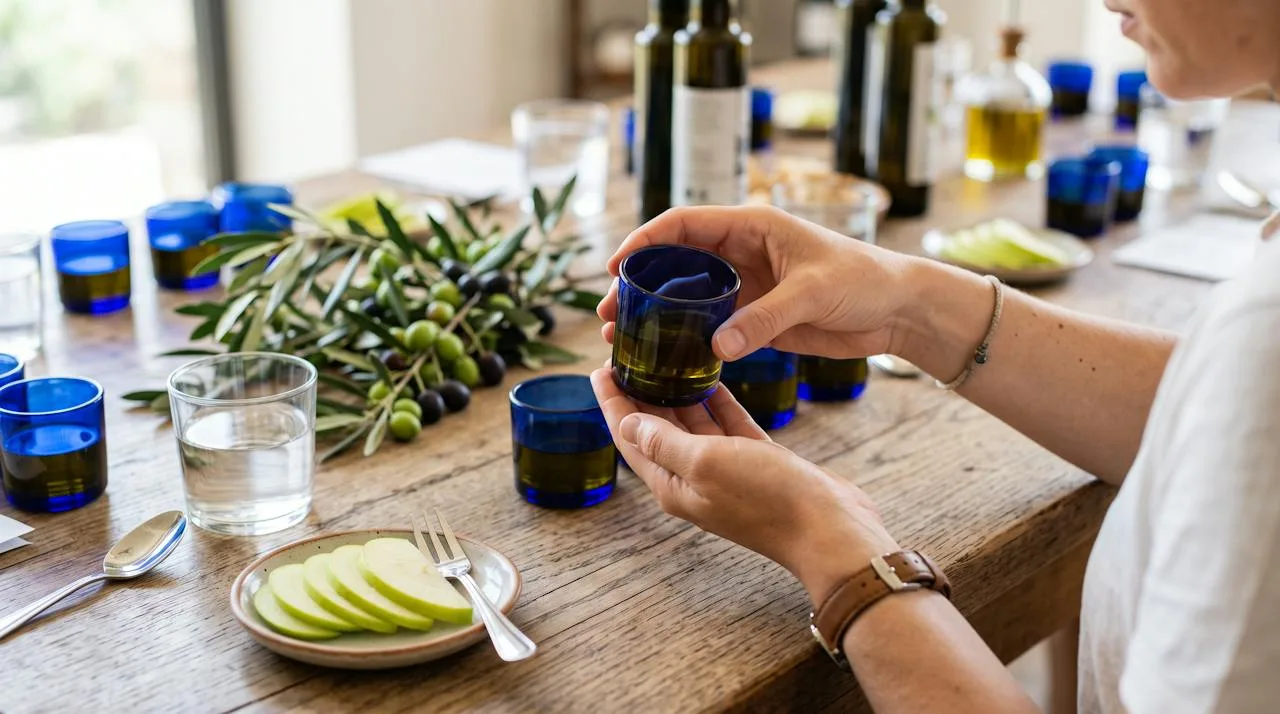
You don’t need special training to spot a good oil. You need a small glass, a few minutes, and your attention.
- Pour a tablespoon into a small glass or cup.
- Warm it by cupping the glass in your hand and covering the top for 30 seconds or so.
- Smell it. Fresh oil smells green and alive: cut grass, green apple, tomato leaf, artichoke, fresh herbs, or ripe fruit.
- Sip it with a little air, slurping gently so the oil spreads across your tongue.
- Notice three things: fruitiness (aroma and flavor of fresh olives), bitterness (felt on the tongue), and pungency (the peppery sting in the throat).
UC Davis describes fruitiness, bitterness, and pungency as the positive attributes to look for. Off-flavors tell a different story:
- Crayons, putty, or stale walnuts usually signal rancid, oxidized oil.
- Vinegar or wine can signal fermentation in the fruit.
- Musty or muddy notes can come from olives that sat too long before pressing.
- Nothing at all often means a refined or very old oil.
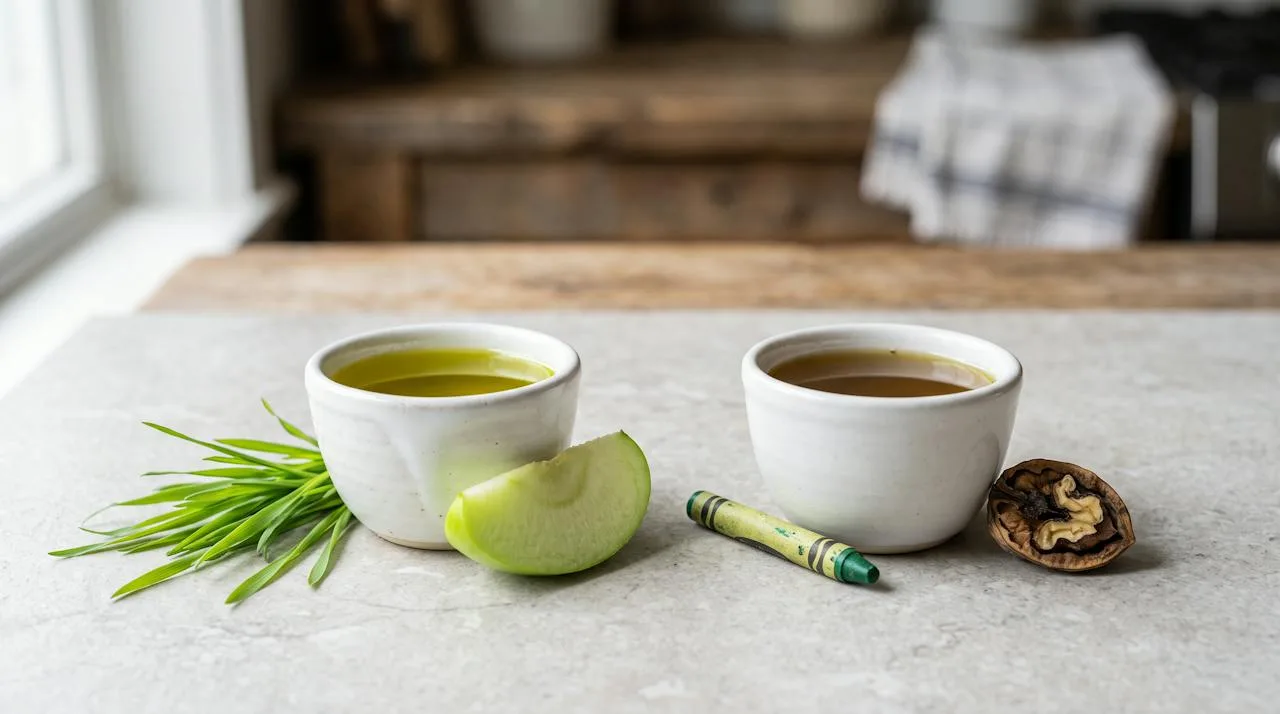
READER STORY: Rachel from Portland, Oregon, did the tasting test with the three bottles in her pantry. “Two of them tasted exactly like crayons,” she wrote. “I’d been blaming my cooking for flat dinners. It was the oil all along.”
What About the Fridge Test?
You may have heard that real extra virgin olive oil solidifies in the refrigerator. Don’t rely on it. How an oil behaves in the cold depends on the olive variety, the waxes in the oil, and the temperature of your fridge, not on whether it’s genuinely extra virgin. Your nose and a harvest date are far more reliable.
Essential Olive Oil Tools and Pairings
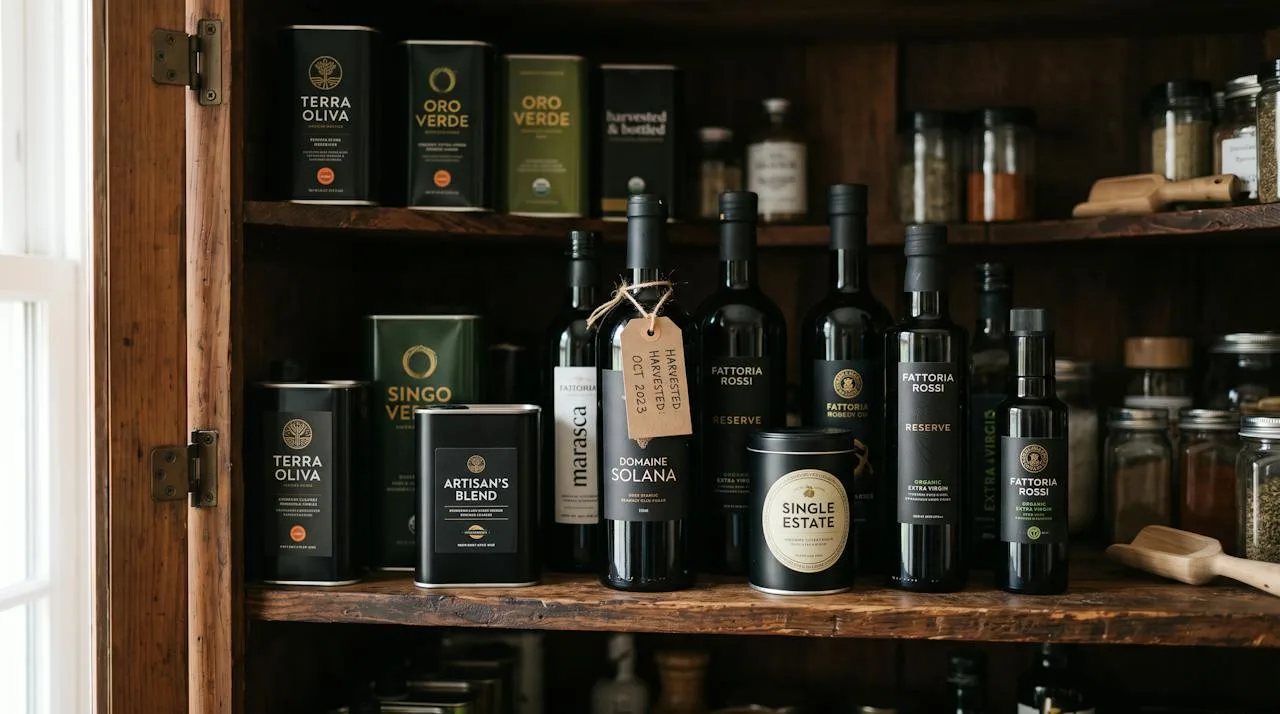
The best olive oil in the world will go flat in a few weeks if you treat it badly, and Mediterranean cooks are almost fussy about this.
Store It Like a Mediterranean
UC Davis recommends storing olive oil in a cool, dark place, because oil left in light or near heat loses freshness more quickly. In practice, that means:
- Not next to the stove or oven, even though that’s where you reach for it.
- Not on a sunny windowsill or open shelf, however pretty the bottle looks.
- In a closed cupboard away from appliances that give off heat.
- Tightly capped, because oxygen is the third enemy after heat and light.
- Decanted into a small, dark cruet for daily use, refilled from a larger tin you keep stored away.
Unopened, UC Davis notes, a fresh extra virgin olive oil bought within its harvest year may last up to two years. Once opened, aim to finish it within a couple of months.
COMMON MISTAKE: Buying a giant jug “to save money.” If it takes you six months to finish it, the last half will be noticeably stale. A smaller bottle you finish quickly is the better deal.
Partners That Make Olive Oil Shine
Olive oil rarely works alone in a Mediterranean kitchen. These are its constant companions:
- Acid: lemon juice, red wine vinegar, sherry vinegar, pomegranate molasses
- Aromatics: garlic, shallots, onions, leeks
- Herbs: oregano, thyme, rosemary, parsley, mint, basil, dill
- Spices: cumin, paprika, chili flakes, sumac, za’atar
- Salt: flaky sea salt for finishing, kosher salt for cooking
- Briny accents: olives, capers, anchovies, preserved lemon
The Basic Mediterranean Vinaigrette
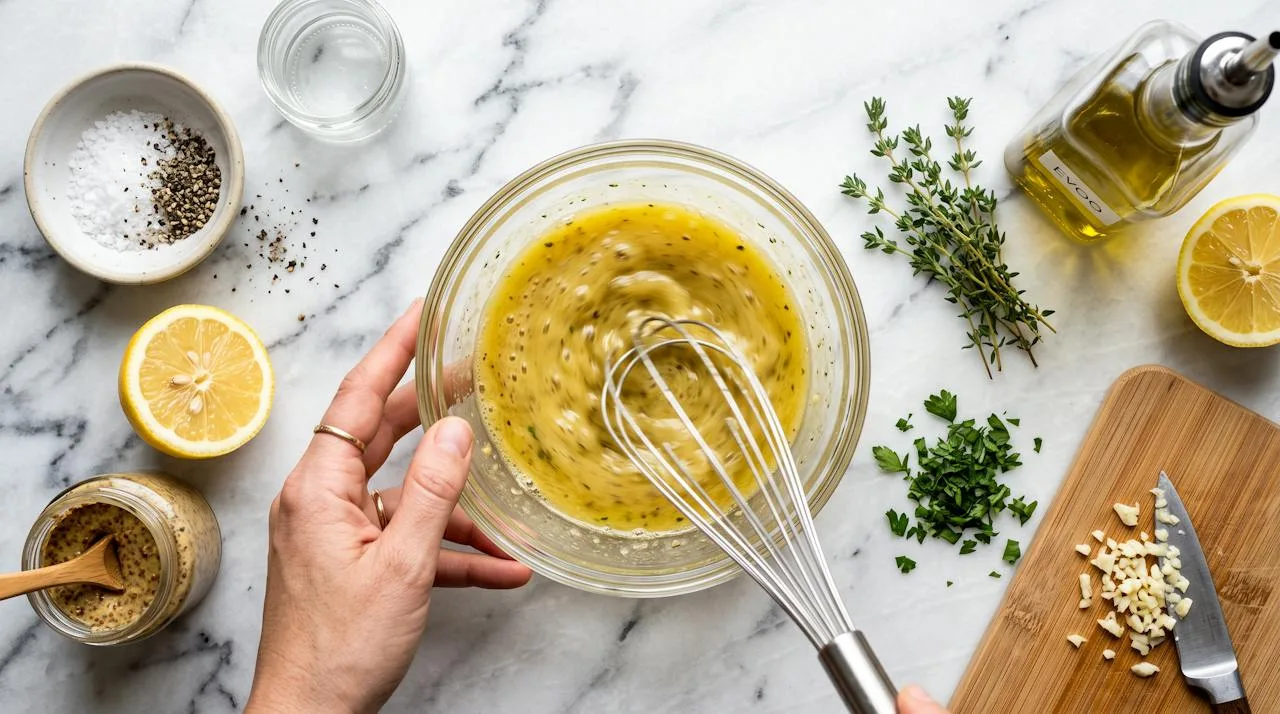
If you learn one olive oil recipe, make it this one. The classic ratio is 3 parts olive oil to 1 part acid.
- In a jar or bowl, combine 1 tablespoon lemon juice or vinegar, a pinch of salt, ½ teaspoon Dijon mustard, and a small minced garlic clove.
- Let it sit for 5 minutes so the salt dissolves and the garlic mellows.
- Add 3 tablespoons extra virgin olive oil.
- Whisk or shake until it looks creamy and slightly thickened; the mustard helps it emulsify.
- Taste on a lettuce leaf, not a spoon, and adjust salt and acid.
Make it fresh, or keep a jar in the refrigerator for about a week. The oil may cloud and firm up in the cold; that’s normal. Let it sit at room temperature for 15 minutes and shake again.
MEDITERRANEAN SECRET: Dress warm foods while they’re still warm. Roasted potatoes, beans, lentils, and grains soak up a vinaigrette far better hot than cold.
Cooking with Olive Oil: Heat, Smoke, and the Big Myth
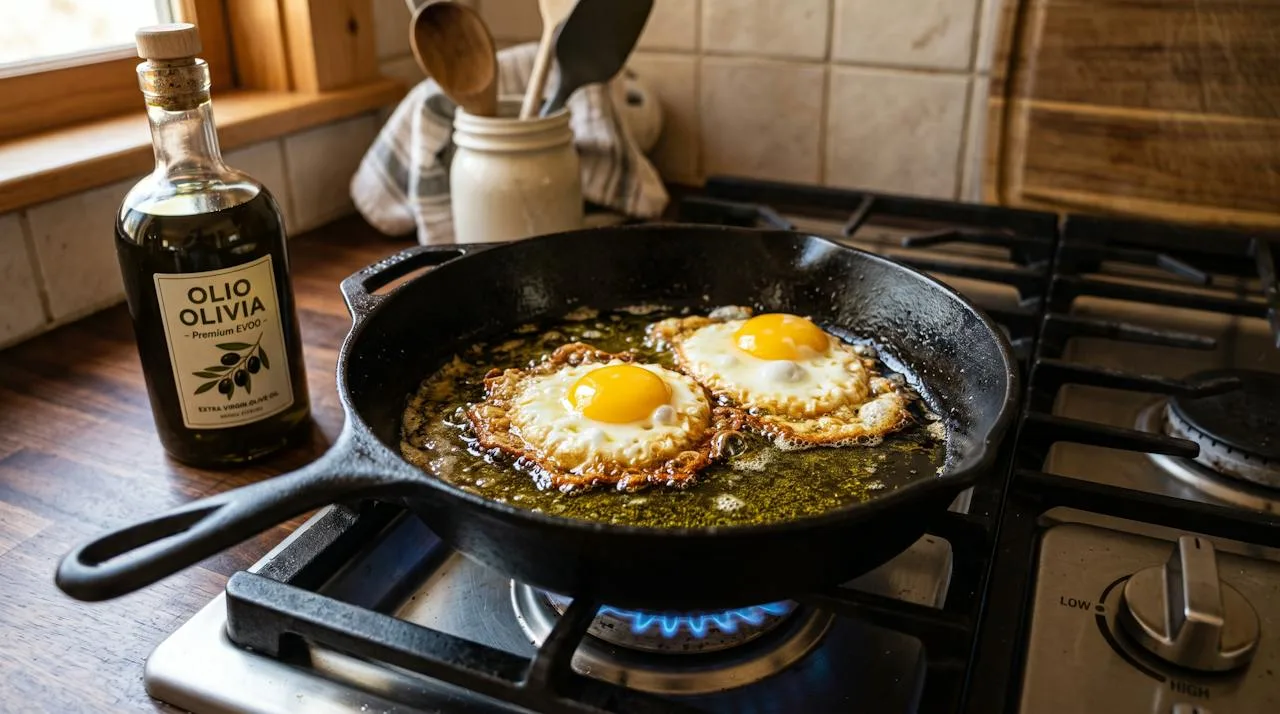
Here’s the myth that kept me from cooking properly for years: “You can’t cook with extra virgin olive oil because the smoke point is too low.” Mediterranean grandmothers have been frying in it for centuries, and the science is on their side.
Smoke Point Isn’t the Whole Story
The smoke point is the temperature at which an oil starts to visibly smoke. It’s real, and you don’t want your oil smoking. But it turns out that smoke point alone isn’t the best measure of how an oil behaves under heat.
In a 2018 study published in Acta Scientific Nutritional Health, researchers heated extra virgin olive oil and other common cooking oils, including canola and coconut oil, to 240°C (464°F) and held them at 180°C (356°F) for 6 hours, measuring how they broke down. They found that smoke point did not predict how oils performed when heated. Instead, oxidative stability and the amount of polyunsaturated fat were better indicators. Extra virgin olive oil produced the lowest levels of harmful polar compounds of the oils tested, thanks to its natural antioxidants and its mostly monounsaturated fat.
In other words, extra virgin olive oil is more stable under heat than its reputation suggests. Its natural antioxidants help protect it, and its fat profile resists breakdown.
Heat Levels in a Mediterranean Kitchen
Here’s how I think about heat when cooking with olive oil:
- Low heat (gentle): Poaching, confit, slowly sweating onions and garlic. The oil should barely move.
- Medium heat (everyday): Sautéing vegetables, softening aromatics, cooking eggs, building a sofrito. The oil shimmers but doesn’t smoke.
- Medium-high heat: Searing fish and chicken, shallow-frying vegetables. The oil ripples and a drop of water sizzles hard.
- High heat: Brief, hot searing and roasting in a 425°F (220°C) oven. Watch closely and pull back if the oil starts to smoke.
COMMON MISTAKE: Heating an empty pan until it’s scorching, then adding oil. The oil hits a surface far hotter than you need and smokes instantly. Heat the pan and oil together over medium heat, and add food when the oil shimmers.
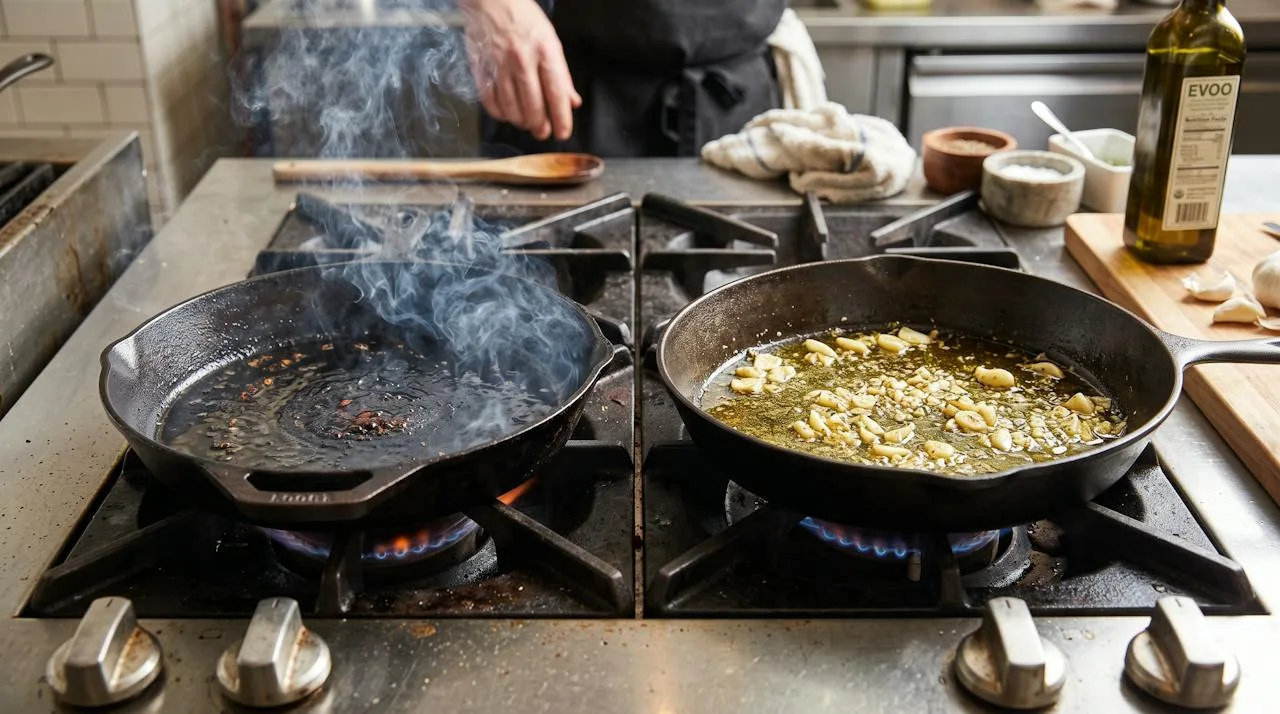
If Your Oil Smokes
Smoking oil is breaking down, and the flavor turns acrid. If it happens:
- Take the pan off the heat immediately.
- Turn on your vent or open a window.
- Let the pan cool, wipe it out, and start again with fresh oil at a lower temperature.
Don’t try to cook through it. Burned oil will make the whole dish taste bitter.
Six Mediterranean Olive Oil Cooking Methods
Once you stop being afraid of heat, olive oil opens up an entire repertoire. These are the methods I use every week.
1. Sautéing and the Sofrito
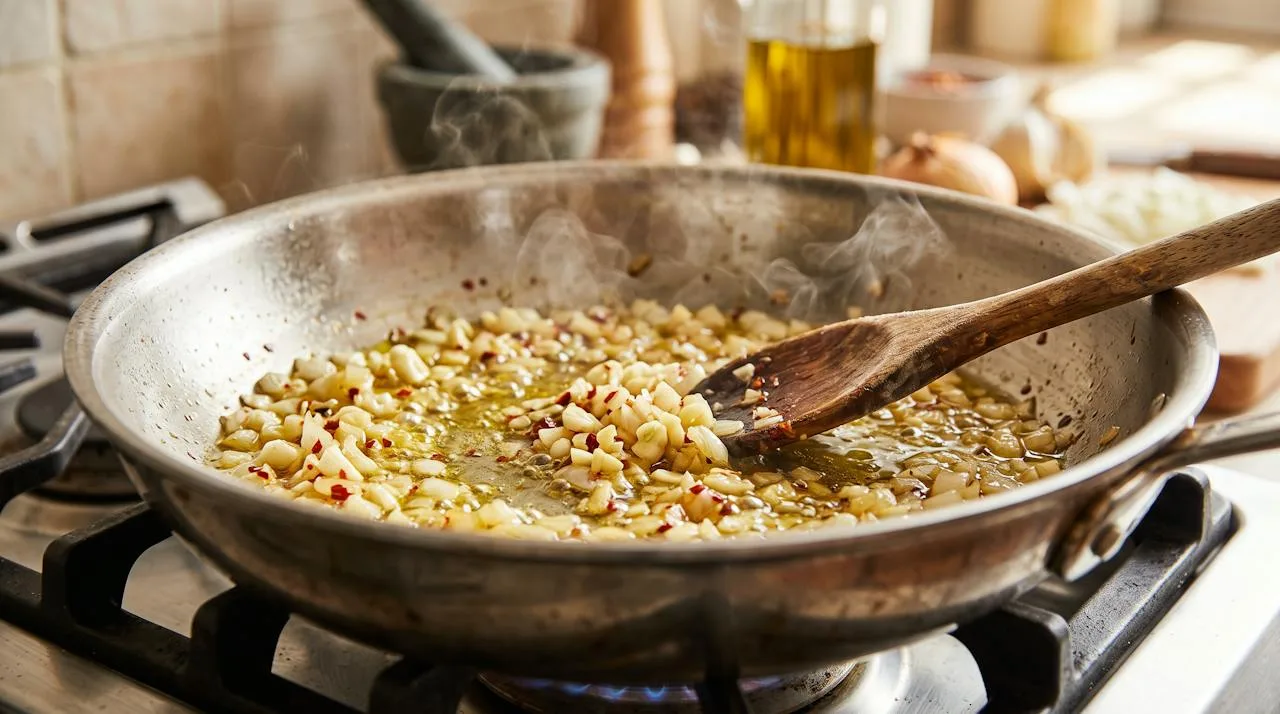
Almost every Mediterranean cuisine starts its stews, sauces, and rice dishes the same way: aromatics slowly softened in olive oil. In Spain it’s a sofrito, in Italy a soffritto, in Greece the start of nearly every pot of beans.
Here’s how I do it:
- Warm 3 to 4 tablespoons of olive oil in a wide pan over medium-low heat.
- Add finely chopped onion and a pinch of salt. Cook, stirring often, for 10 to 15 minutes, until soft, translucent, and just starting to turn golden at the edges.
- Add garlic and spices and cook for about a minute, until fragrant but not browned.
- Add tomatoes and cook down until the oil starts to separate and pool around the edges, a sign the sauce has concentrated.
Patience pays off here, and not only in flavor. Researchers at the University of Barcelona studied tomato sofrito made with olive oil and found that longer cooking (around an hour) and adding onion increased beneficial forms of lycopene, the antioxidant pigment in tomatoes.
2. Roasting Vegetables
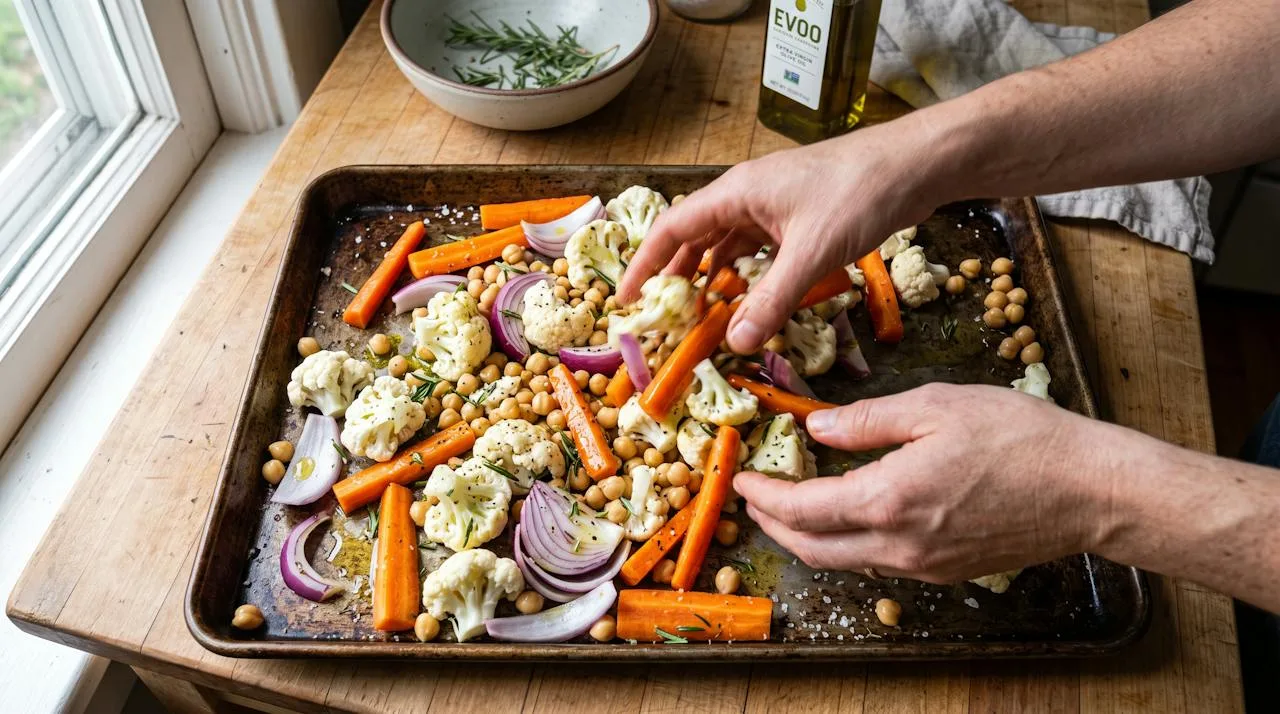
Roasting is where olive oil turns ordinary vegetables into something you crave. My method:
- Heat the oven to 425°F (220°C).
- Use enough oil: about 1 to 2 tablespoons per sheet pan of vegetables, enough that every piece is lightly coated and glossy.
- Toss on the pan with your hands so every surface gets oil and salt.
- Spread in a single layer with space between pieces, so they brown instead of steam.
- Roast until deeply golden at the edges, flipping once halfway through.
Olive oil does more than prevent sticking. A 2019 study in Antioxidants found that when Mediterranean vegetables like eggplant, tomato, and pumpkin were cooked in extra virgin olive oil, phenolic compounds transferred from the vegetables into the oil. The cooking fat and the vegetables trade flavor and nutrients both ways.
3. Shallow-Frying
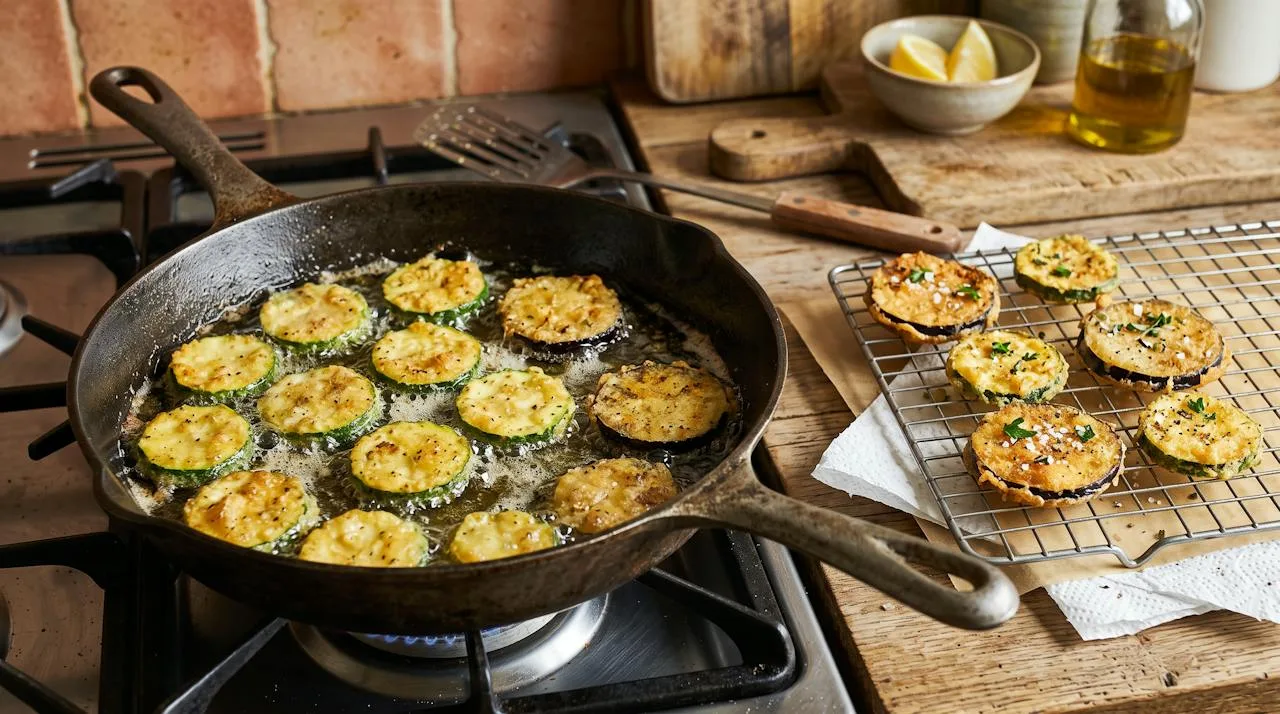
Yes, you can fry in olive oil. In Spain, Greece, and southern Italy, people have done it for generations. For shallow-frying:
- Use a heavy pan and enough oil to come about ¼ inch up the sides.
- Heat over medium-high until the oil shimmers and a piece of bread sizzles immediately and steadily.
- Fry in small batches so the temperature doesn’t drop.
- Drain on a wire rack rather than paper towels so the bottoms stay crisp.
For deep-frying in large volumes, many home cooks prefer a regular (non-extra-virgin) olive oil to keep costs down, and that’s a perfectly Mediterranean choice too.
4. Braising in Olive Oil (Ladera)
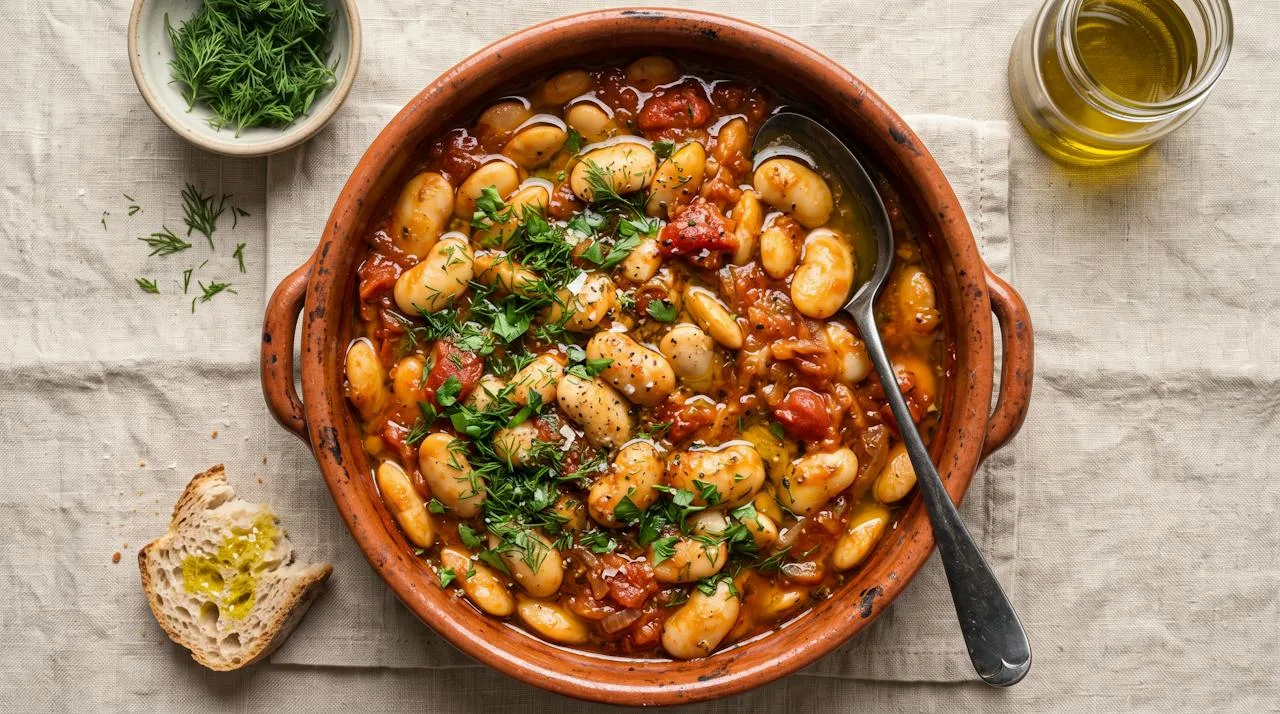
Greek cooking has an entire category of dishes called ladera, meaning “oily ones.” Green beans, okra, peas, artichokes, or giant beans are slowly stewed with tomato, onion, herbs, and a generous amount of olive oil until meltingly tender. They’re often served at room temperature with bread and feta.
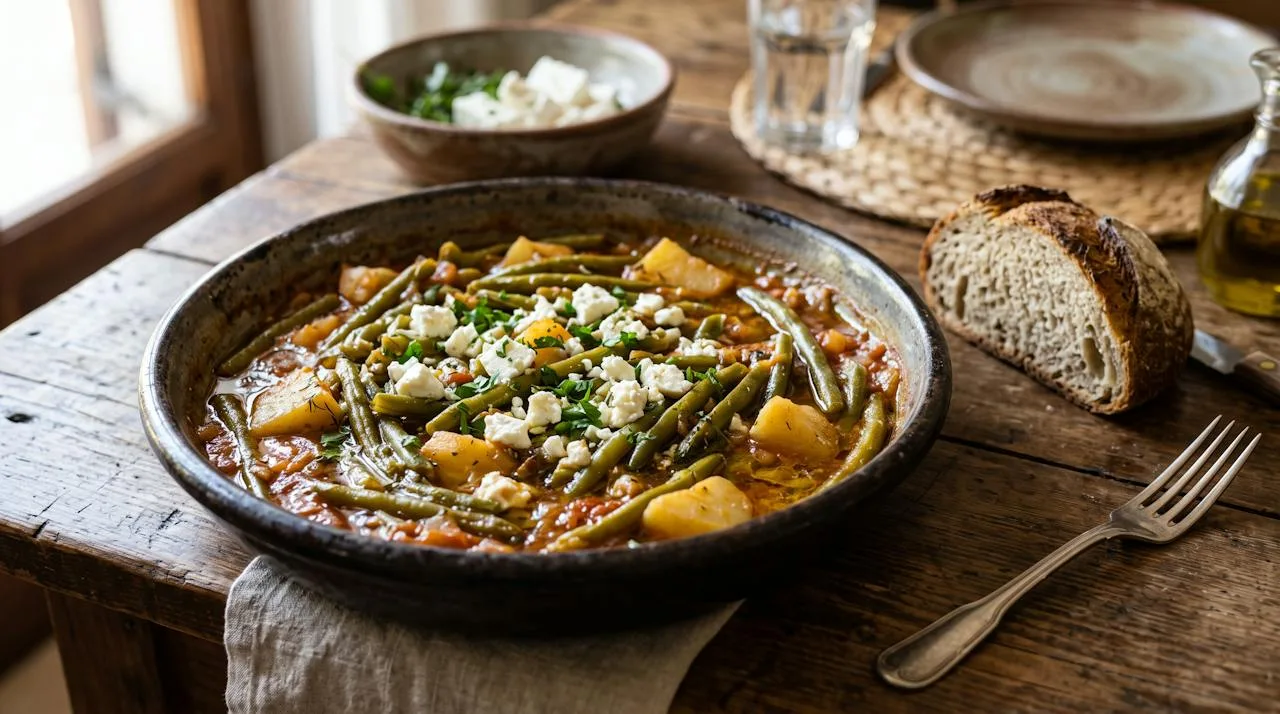
The trick is low heat and time. The vegetables cook in the tomato and oil until the liquid reduces to a glossy sauce. Don’t skimp on the oil; it’s what makes these dishes so satisfying, and it carries the flavor of the herbs into every bite.
5. Poaching and Confit
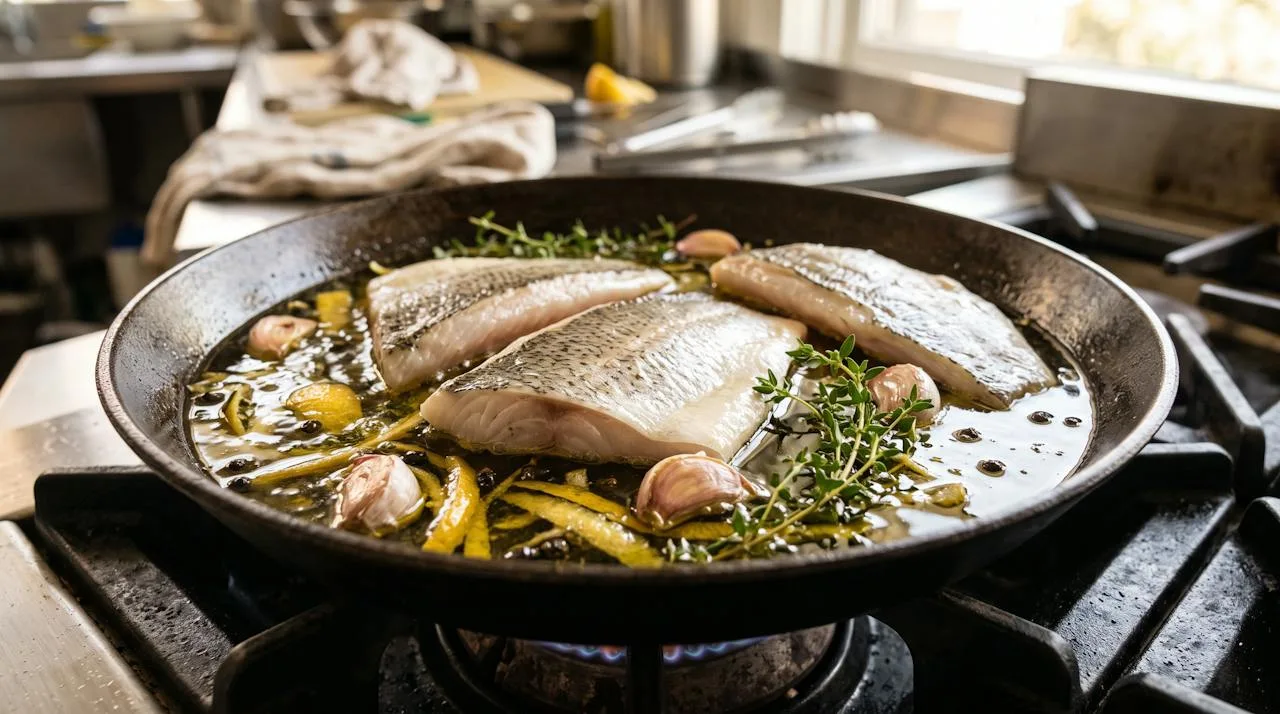
Poaching fish in olive oil sounds extravagant, but it’s one of the gentlest, most forgiving techniques I know.
- Pour enough olive oil into a small pan to cover the fish, and add garlic, lemon peel, and herbs.
- Warm it over low heat until it barely shimmers. You shouldn’t see bubbles.
- Slip in the fish and cook gently until it’s opaque and flakes easily. The USDA’s safe minimum internal temperature chart lists 145°F (63°C) for fish.
You can strain and reuse the oil once for cooking another fish dish, stored in the refrigerator and used within a day or two.
COMMON MISTAKE: Storing garlic or herbs in olive oil at room temperature. The CDC advises refrigerating homemade oils made with garlic or herbs and throwing them away after 4 days, because those mixtures can create conditions where botulism bacteria grow. Make infused oils in small batches and keep them cold.
6. Finishing: The Mediterranean Signature
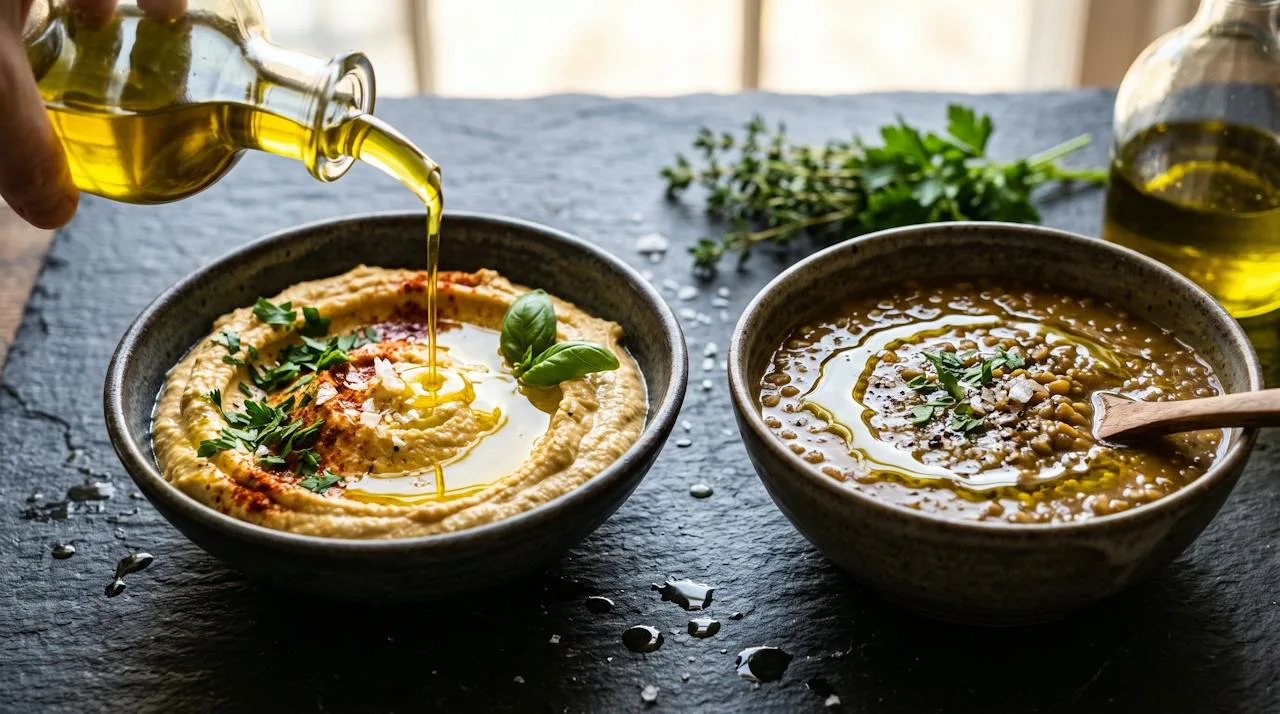
If there’s one habit that separates Mediterranean cooking from everything else, it’s the finishing drizzle. A spoonful of raw, peppery extra virgin olive oil goes over almost everything right before serving:
- Bean and lentil soups
- Hummus and other dips
- Grilled fish and vegetables
- Fresh tomatoes and cheese
- Grain bowls and salads
- Even a scoop of vanilla ice cream (try it with flaky salt)
This is where your best, freshest bottle belongs. Heat dulls the most delicate aromas, so the finishing drizzle is your chance to taste the oil at its peak.
READER STORY: Marcus from Columbus, Ohio, emailed after trying the finishing drizzle on his weeknight lentil soup. “Same soup I’ve made for years,” he said. “One spoonful of good oil on top, and my wife asked if I’d ordered takeout.”
Olive Oil Across the Mediterranean
Every Mediterranean kitchen uses olive oil differently, and exploring them is the most delicious education you’ll ever get.
Spain and Italy: Bread, Oil, and Tomato
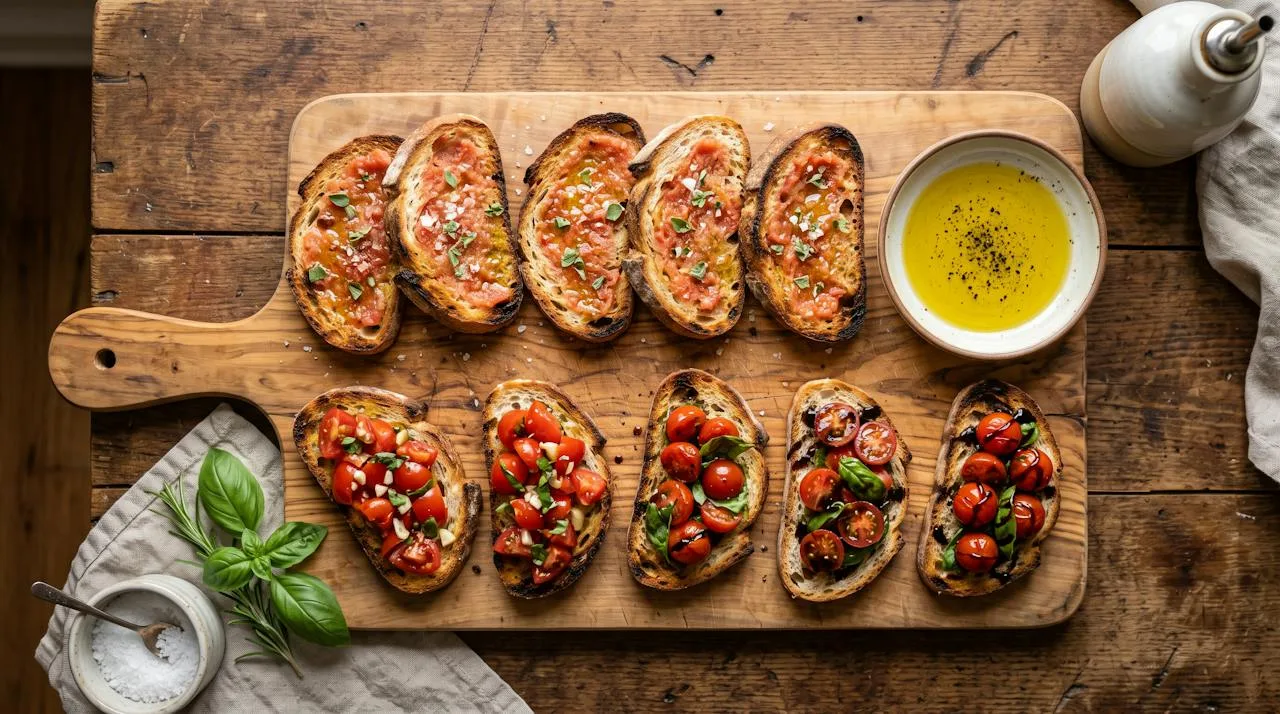
In Catalonia, pan con tomate is breakfast: toasted bread rubbed with garlic and a halved ripe tomato, then soaked with olive oil and sprinkled with salt. In Italy, bruschetta follows the same idea. Both are proof that a few great ingredients need very little help.
Greece: Generosity in Every Dish
Olive growing, pressing, and sharing oil at the table are part of what UNESCO recognized when it added the Mediterranean diet to its list of the Intangible Cultural Heritage of Humanity, with Greece among the countries named. Greek home cooks are famously generous with olive oil. Ladera, roasted lemon potatoes, baked fish, and horta (boiled wild greens dressed with lemon and oil) all depend on it. Olive oil isn’t added at the end; it’s part of the structure of the dish.
North Africa and the Levant: Oil Meets Spice
In Morocco, Tunisia, Lebanon, and Syria, olive oil carries warm spices into tagines, couscous, and mezze. A shallow plate of olive oil with za’atar for dipping bread is a classic Levantine breakfast, and a pool of oil over hummus is non-negotiable.
Olive Oil and Olives: A Natural Pair
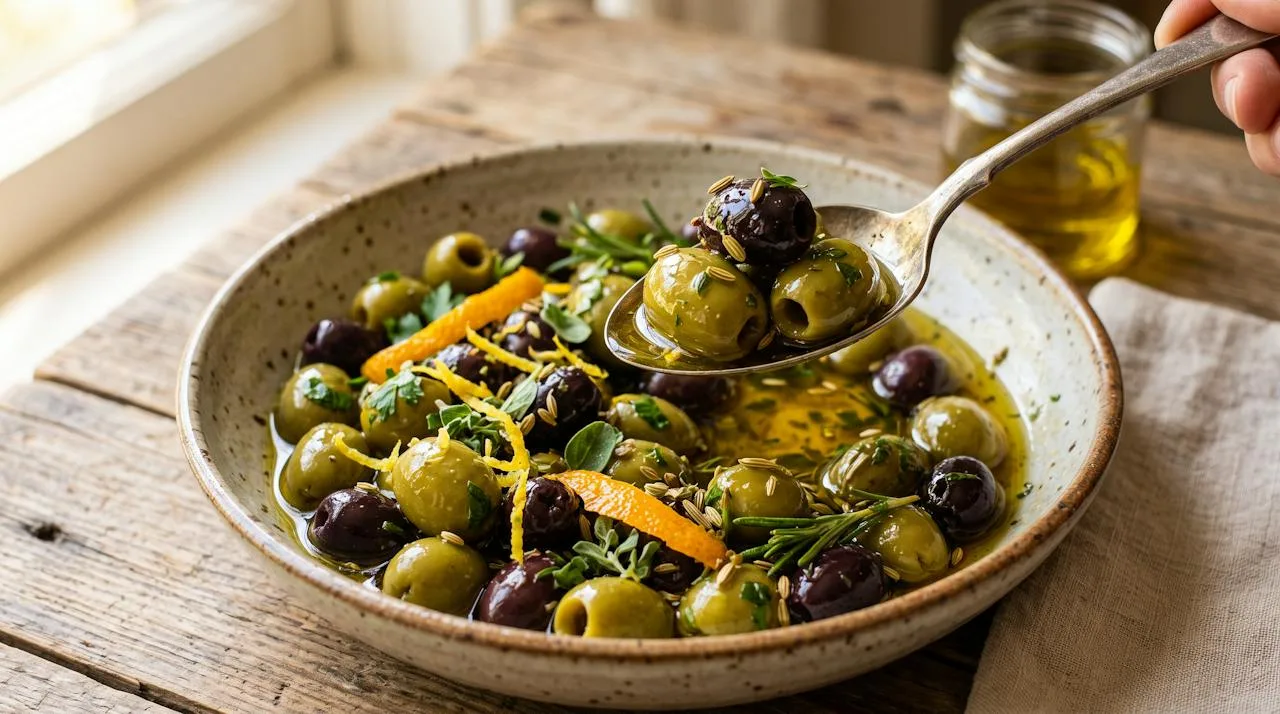
Nothing shows off good olive oil like good olives. Once you’ve learned how to brine olives at home, dress a small bowl of them in olive oil with citrus zest, fennel seed, and fresh herbs right before serving. Make only what you’ll eat in a few days, and keep any garlic-and-herb oil in the refrigerator.
Olive Oil in Baking
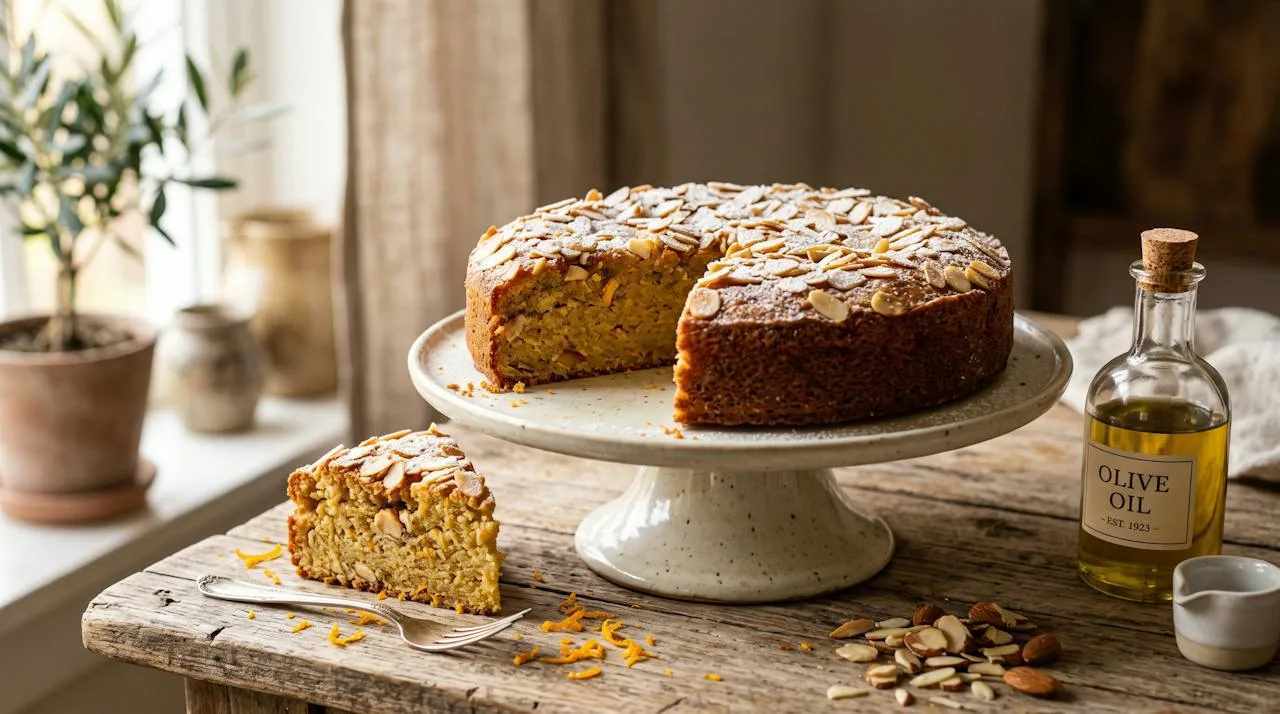
Olive oil cake is one of the great Mediterranean desserts: moist, tender, and fragrant with citrus. In many cakes, muffins, and quick breads, you can replace melted butter or vegetable oil with olive oil. Choose a milder, fruitier oil for delicate cakes and a bolder one for chocolate or citrus.
Troubleshooting Common Olive Oil Problems
Even experienced cooks run into these. Here’s how to diagnose and fix them.
“My Olive Oil Tastes Bitter or Burns My Throat”
If it’s a fresh extra virgin oil, that’s normal and usually a sign of high polyphenol content. If it’s too strong for a particular dish:
- Use it for cooking, where heat softens its edge
- Save it for robust foods like beans, grilled meat, and bitter greens
- Buy a milder, riper-tasting oil for delicate dishes and baking
“My Olive Oil Tastes Like Crayons or Stale Nuts”
That’s rancidity, caused by oxidation from heat, light, air, or age. The oil isn’t dangerous to taste, but it will make your food taste stale. Replace it, and next time:
- Buy smaller bottles with a recent harvest date
- Store it in a cool, dark cupboard away from the stove
- Keep the cap tightly closed
- Finish an open bottle within a couple of months
“My Food Is Greasy, Not Golden”
Greasiness usually means the oil was too cool when the food went in, or the pan was crowded. The food absorbs oil instead of searing. Fix it by heating the oil until it shimmers, cooking in smaller batches, and giving each piece room.
“My Vinaigrette Separates Instantly”
That’s normal for a simple oil-and-acid dressing. For a creamier, longer-lasting emulsion, add an emulsifier like Dijon mustard, a little honey, or a spoonful of tahini, and whisk vigorously. Shake again just before serving.
“My Oil Turned Cloudy in the Cold”
Olive oil clouds and partly solidifies when chilled. It’s harmless. Let it sit at room temperature until clear and fluid again.
TROUBLESHOOTING FLOWCHART:
- Tastes like crayons or stale walnuts → Rancid oil → Replace it; store away from heat and light
- Oil smoking in the pan → Pan too hot → Remove from heat, cool, restart at medium
- Greasy, pale food → Oil too cool or pan crowded → Heat until shimmering, cook in batches
- Dressing separates → No emulsifier → Add Dijon or tahini and whisk hard
- Cloudy oil from the fridge → Normal cold reaction → Let it warm to room temperature
Your Journey to Olive Oil Mastery
The Mediterranean Olive Oil Advantage: 5 Key Takeaways
- Olive oil is fruit juice. Buy by harvest date, store in a cool, dark place, and finish an open bottle within a couple of months.
- “Light” and “pure” aren’t quality grades. For flavor and natural antioxidants, choose extra virgin.
- You can cook with extra virgin olive oil. Research shows it’s more stable under heat than its smoke-point reputation suggests. Just don’t let it smoke.
- Use olive oil as a swap for butter, margarine, and other saturated fats, not as an extra on top.
- Keep two bottles: an everyday oil for cooking and a fresh, peppery one for finishing.
Your 30-Day Olive Oil Journey
Week 1: Taste and Store. Do the tasting test with every oil in your pantry. Toss any rancid bottles. Move your oil away from the stove, and buy one fresh extra virgin oil with a recent harvest date.
Week 2: Everyday Cooking. Use olive oil as your only cooking fat this week. Make the 3-to-1 vinaigrette, roast at least two sheet pans of vegetables, and build one slow sofrito.
Week 3: New Techniques. Try shallow-frying vegetables, braising a ladera-style dish, and poaching fish in olive oil.
Week 4: The Finishing Touch. Buy a small bottle of a premium, peppery oil. Finish soups, hummus, beans, and grilled fish with it every day, and bake one olive oil cake.
Frequently Asked Questions
Why does good extra virgin olive oil taste bitter and peppery?
That bitterness and peppery sting come from natural polyphenols, the antioxidant compounds found in fresh, high-quality extra virgin olive oil. The bitterness is felt on the tongue, while the pepperiness, called pungency, catches the back of the throat, sometimes strongly enough to make you cough. Experts consider fruitiness, bitterness, and pungency to be positive attributes in olive oil. As oil ages or is refined, these compounds decline, which is why old or refined oils taste flat. If an oil is too intense for a delicate dish, use it for cooking hearty foods, where heat softens it, and keep a milder oil for baking or simple salads.
Can I really cook with extra virgin olive oil?
Yes. Mediterranean cooks have sautéed, roasted, braised, and fried with extra virgin olive oil for generations. A 2018 study that heated several cooking oils for hours found that extra virgin olive oil produced the lowest levels of harmful polar compounds, and that smoke point alone did not predict how oils performed under heat. Its natural antioxidants and mostly monounsaturated fat help it resist breakdown. The practical rule is simple: cook over medium to medium-high heat, heat the pan and oil together, and never let the oil smoke. If it does, start over at a lower temperature. For large-batch deep-frying, a regular olive oil is a more economical choice.
How long does olive oil last once opened?
UC Davis recommends using olive oil within a couple of months after opening, and within 15 to 18 months of its harvest date. Unopened, a fresh extra virgin olive oil bought within its harvest year may keep for up to two years in a cool, dark place. Once opened, oxygen begins to work on it, and the bright, grassy flavors fade. To make an open bottle last, keep it tightly capped, store it away from the stove and sunlight, and buy a size you’ll finish quickly. If it starts to smell like crayons or stale walnuts, it’s rancid and time to replace it. Writing the opening date on the label helps you keep track.
What’s the minimum amount of olive oil I should use for roasting vegetables?
For a standard sheet pan of vegetables, about 1 to 2 tablespoons is usually enough to coat everything lightly. The vegetables should look glossy, not dry and not swimming. Too little oil and they’ll scorch and stick before they brown; too much and they’ll turn greasy. Toss the vegetables with the oil and salt directly on the pan using your hands, then spread them out in a single layer with space between the pieces. Roast at around 425°F (220°C), flipping once, until the edges are deeply golden. Denser vegetables like potatoes and carrots may need a little more oil, while leafy or watery vegetables need less.
Is it possible to tell if olive oil is fake or low quality?
You can’t run a lab test at home, but your senses are surprisingly good guides. Warm a tablespoon in a small glass, smell it, then sip it. Fresh extra virgin olive oil smells green or fruity and tastes bitter and peppery. Signs of trouble include crayon, putty, or stale-nut aromas (rancidity), vinegary or musty notes, or no flavor at all. On the label, look for a recent harvest date, dark glass or tin, a specific place of production, and quality seals. Don’t rely on the refrigerator test; whether oil solidifies in the cold depends on many factors besides quality. When in doubt, trust your nose.
How do I store olive oil properly?
Store olive oil in a cool, dark cupboard, away from the stove, oven, dishwasher, and sunny windows. Heat, light, and oxygen are the three things that make it go stale. Keep the bottle tightly capped. Dark glass or metal tins protect better than clear bottles. If you buy oil in a large tin to save money, decant a small amount into a dark cruet for daily use and keep the tin sealed in the pantry. Don’t refrigerate your everyday bottle; it will cloud and thicken, which is harmless but inconvenient. Most importantly, buy only what you’ll use within a couple of months of opening, and note the opening date on the bottle.
Can I substitute olive oil for butter in baking?
Yes, in many recipes. Olive oil works especially well in cakes, muffins, quick breads, brownies, and some cookies, where it produces a tender, moist crumb. A common starting point is to use about three-quarters as much olive oil as butter, since butter contains some water, but follow a tested recipe when you can. Choose a mild, fruity oil for delicate or vanilla cakes and a bolder oil for chocolate, citrus, or spiced bakes. Olive oil isn’t a good swap where solid butter creates structure, like flaky pie crusts, laminated pastries, or shortbread. Start with recipes written for olive oil, then experiment.
Why does my olive oil turn cloudy in the refrigerator?
Olive oil contains natural fats and waxes that firm up and crystallize at cold temperatures, making the oil look cloudy or even partly solid. It’s completely harmless and doesn’t mean the oil has gone bad. Simply let it sit at room temperature for a while and it will turn clear and fluid again. This is common with homemade vinaigrettes stored in the refrigerator. It’s also why the so-called fridge test isn’t reliable for judging quality: how quickly and how firmly an oil solidifies depends on the olive variety, its natural waxes, and how cold your refrigerator is. Clouding is never a sign of spoilage.
How do I know when olive oil is hot enough for cooking?
Look for a shimmer. When olive oil is ready for sautéing, its surface begins to ripple and shimmer, and it flows easily when you tilt the pan. A small piece of onion or bread dropped in should sizzle steadily right away. If nothing happens, the oil is too cool, and food will absorb oil and turn greasy. If you see wisps of smoke, it’s too hot: take the pan off the heat, let it cool, and start again. For gentle methods like poaching or confit, the oil should be warm but show no bubbles at all. An instant-read thermometer takes the guesswork out if you’re unsure.
What’s the best way to start cooking with olive oil like a Mediterranean?
Start by replacing your other everyday cooking fats with extra virgin olive oil for one week. Buy a fresh bottle with a recent harvest date and store it away from the stove. Then practice three simple habits: make a 3-to-1 olive oil vinaigrette, roast a sheet pan of vegetables with a generous coating of oil, and finish soups and beans with a raw drizzle right before serving. Once those feel natural, try slower techniques like a sofrito or a braised ladera dish. Within a month, cooking with olive oil will feel effortless rather than special, and your food will taste noticeably brighter.
Take Action: Start Cooking with Olive Oil Today
Pick the path that fits where you are:
- Beginner: Tonight, do the tasting test with the olive oil in your pantry. If it tastes flat or like crayons, replace it. Then make the 3-to-1 vinaigrette.
- Intermediate: This week, use olive oil as your only cooking fat. Roast vegetables, build a sofrito, and finish every soup with a raw drizzle.
- Advanced: This month, try every method in this guide: shallow-frying, ladera, poaching, and an olive oil cake, using two bottles matched to the job.
Track Your Progress
- Note the harvest date and opening date on every bottle you buy
- Record how long each bottle lasts so you can buy the right size
- Write down tasting notes (fruity, bitter, peppery, or off) for each oil
- Keep a list of dishes where switching to olive oil made the biggest difference
Continue Learning Olive oil is the thread that ties Fig & Brine together. If you’re just starting out, my Mediterranean diet guide for beginners shows where olive oil fits on your plate, and my guide to Mediterranean preserving shows you how to brine olives and preserve lemons that pair perfectly with it. Guides on fresh herbs, Mediterranean vegetables, and grain bowls are on the way.
That first cough-inducing sip at the farmers market changed how I cook. Not because I started buying expensive oil (I still buy a reliable everyday bottle), but because I finally understood what olive oil is: a fresh, living ingredient that deserves to be tasted, stored with care, and used without fear.
Now my everyday bottle lives in a dark cupboard, a small cruet of something peppery sits on the table, and almost everything I cook starts and ends with olive oil. Start with one bottle. Taste it. Cook with it boldly. And when you find an oil that makes you cough with joy, come tell me about it.
With golden oil on my hands and figs on the counter, Nevaeh Hall


