

How to Store Olive Oil So It Stays Fresh (Light, Heat and Air)
You can buy a beautiful bottle of extra virgin olive oil, with a recent harvest date and that grassy, peppery taste, and ruin it in a few weeks without ever opening the wrong drawer. All it takes is the spot next to the stove, a sunny windowsill or a loose cap.
Olive oil doesn’t spoil the way milk does. It fades. Light, heat and air slowly oxidize it, and the fresh fruit and pepper flavors give way to something flat and stale. The good news is that storing it well takes no special equipment, just the right container and the right cupboard.
This guide covers what actually damages olive oil, which containers protect it best, where to keep it, how long it lasts before and after opening, whether the fridge helps, and how to tell when a bottle is past its best. For the bigger picture on cooking with it, see my complete guide to how to cook with olive oil like a Mediterranean.
The Quick Answer
The Short Version: Store olive oil in a dark glass bottle or a tin, tightly capped, in a cool, dark cupboard away from the stove, oven, dishwasher and windows. Unopened extra virgin olive oil bought within its harvest year can last up to about two years, but it’s best within 15 to 18 months of harvest. Once opened, use it within a couple of months. Buy a size you’ll finish in that time.
What Ruins Olive Oil: Light, Heat and Air
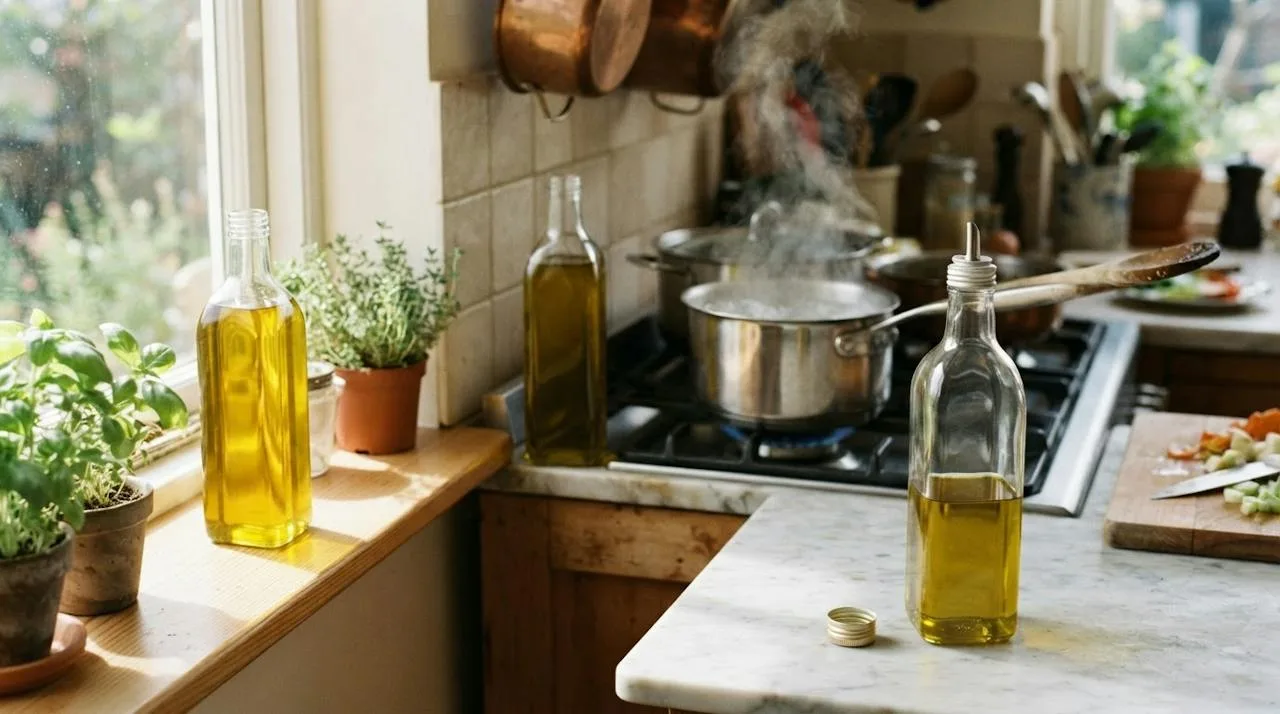
Olive oil is the pressed juice of a fruit, and like any juice it’s at its best when it’s fresh. Over time, its fats react with oxygen. That process, oxidation, is what eventually makes oil taste rancid. Three things speed it up:
- Light. Sunlight and even bright kitchen light trigger oxidation, especially in oil that sits in clear glass.
- Heat. Warmth speeds up every chemical reaction, including the ones that break oil down.
- Air. Every time you open the bottle, fresh oxygen gets in. The emptier the bottle, the more air sits on top of the oil.
Time is the fourth factor. Even perfectly stored oil slowly loses its fresh flavor and some of its natural antioxidants. Good storage slows the clock; it doesn’t stop it.
UC Davis puts it simply: store olive oil in a cool, dark place, because oil left in the light or near heat loses freshness more quickly.
Choosing the Right Container
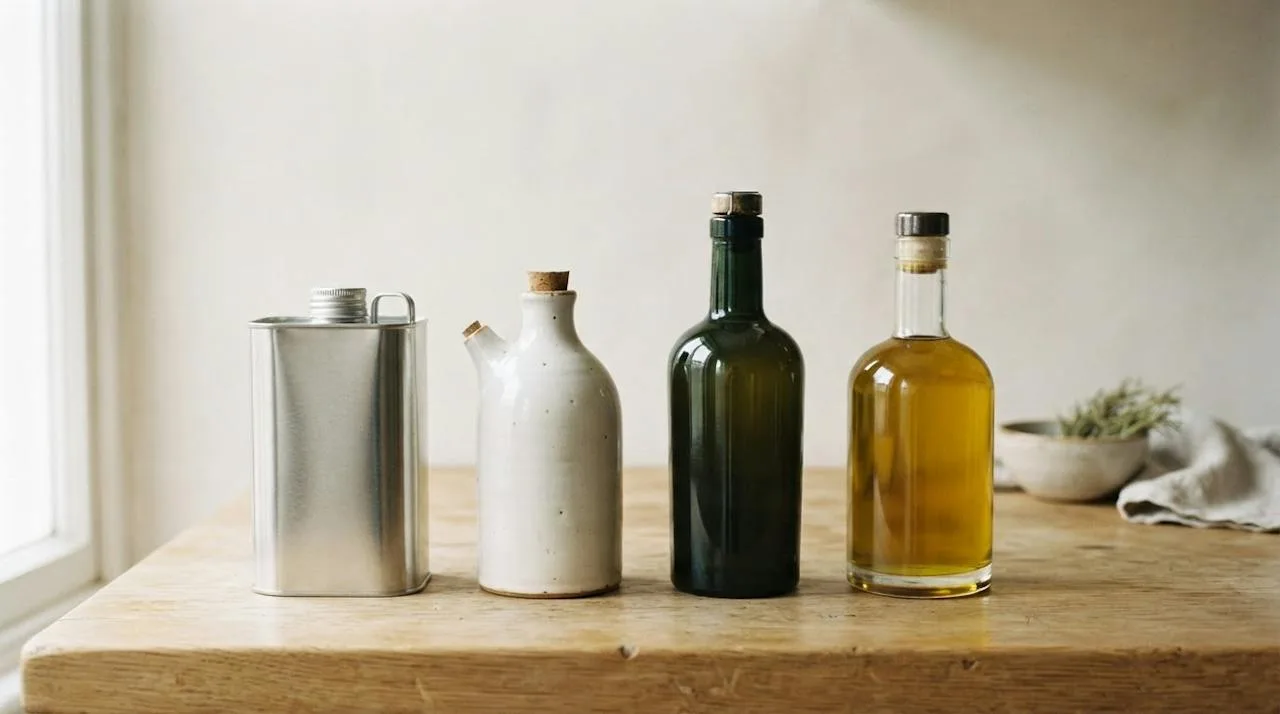
Light protection is where containers differ the most. In a 2019 study published in Food Science and Technology Research, Norihito Kishimoto tested extra virgin olive oil stored in sunlight for 5 weeks in three types of glass bottle: clear, clear wrapped in aluminum foil, and amber.
- Clear glass did worst. The oil had higher free fatty acids, peroxide values and other markers of deterioration, and it lost more of its chlorophyll, carotenoids and phenolic compounds. Sunlight also produced acrolein in the oil.
- Amber glass protected the oil much better, though it still formed some primary oxidation products.
- Foil-wrapped glass, which blocked light completely, showed no deterioration.
The lesson: the less light that reaches the oil, the better. Here’s how common containers compare:
| Container | Light protection | Notes |
|---|---|---|
| Metal tin | Complete | Ideal for larger amounts; decant into a smaller bottle for daily use |
| Opaque ceramic or stainless cruet | Complete | A good everyday pourer if it closes well |
| Dark green or amber glass | Good, not complete | Still keep it in a cupboard, not on the counter |
| Clear glass or clear plastic | Poor | Move it into the dark, or decant it into an opaque container |
If you love a clear glass bottle for the table, fill it with only what you’ll use in a few days and keep the main supply in a tin or dark bottle in the cupboard.
Where to Keep It in Your Kitchen
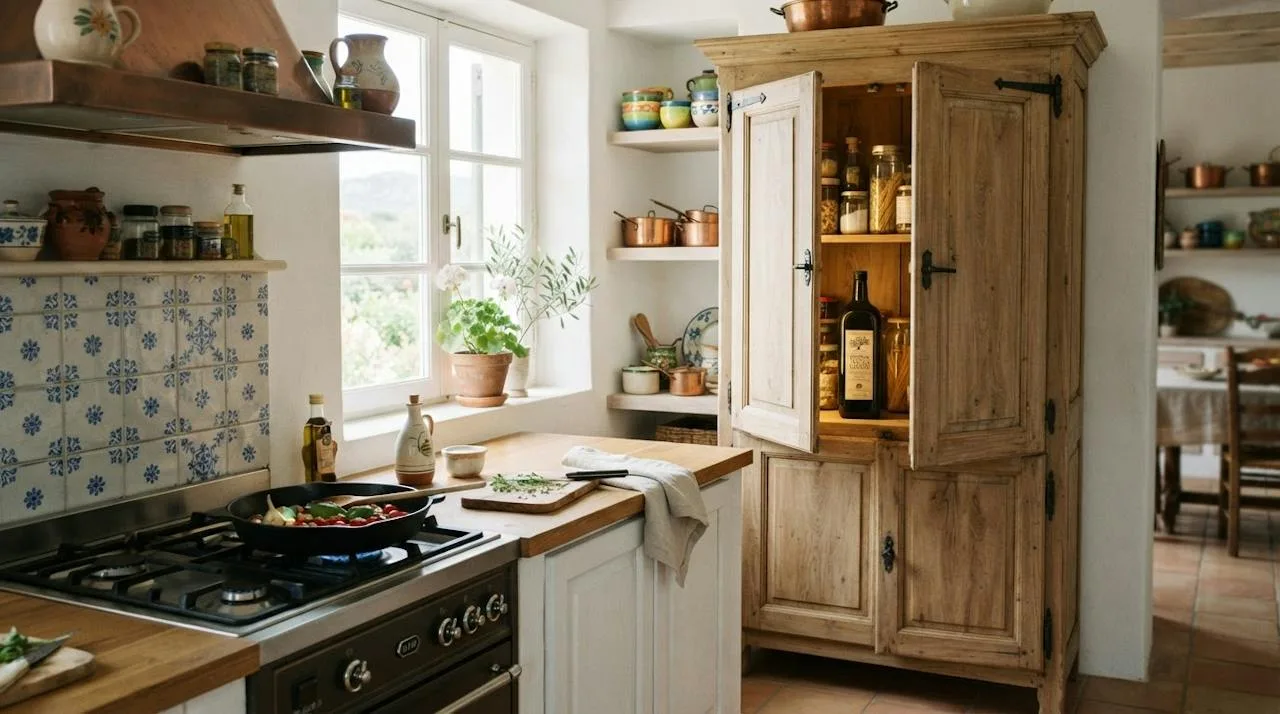
The best place is a closed cupboard or pantry that stays cool and dark. Places to avoid:
- Next to or above the stove. It’s the most convenient spot and the worst one. Heat rises from the burners and oven every time you cook.
- Beside the oven, dishwasher or refrigerator vents. All of them push out warm air.
- On a windowsill or open shelf in the sun. Even a few hours of direct sun a day adds up.
- Above a radiator or in a warm, closed cabinet over appliances.
If keeping oil within reach matters to you, keep a small cruet near the stove and refill it from the main supply every few days. That way only a little oil is exposed to the heat at a time.
Keeping Air Out
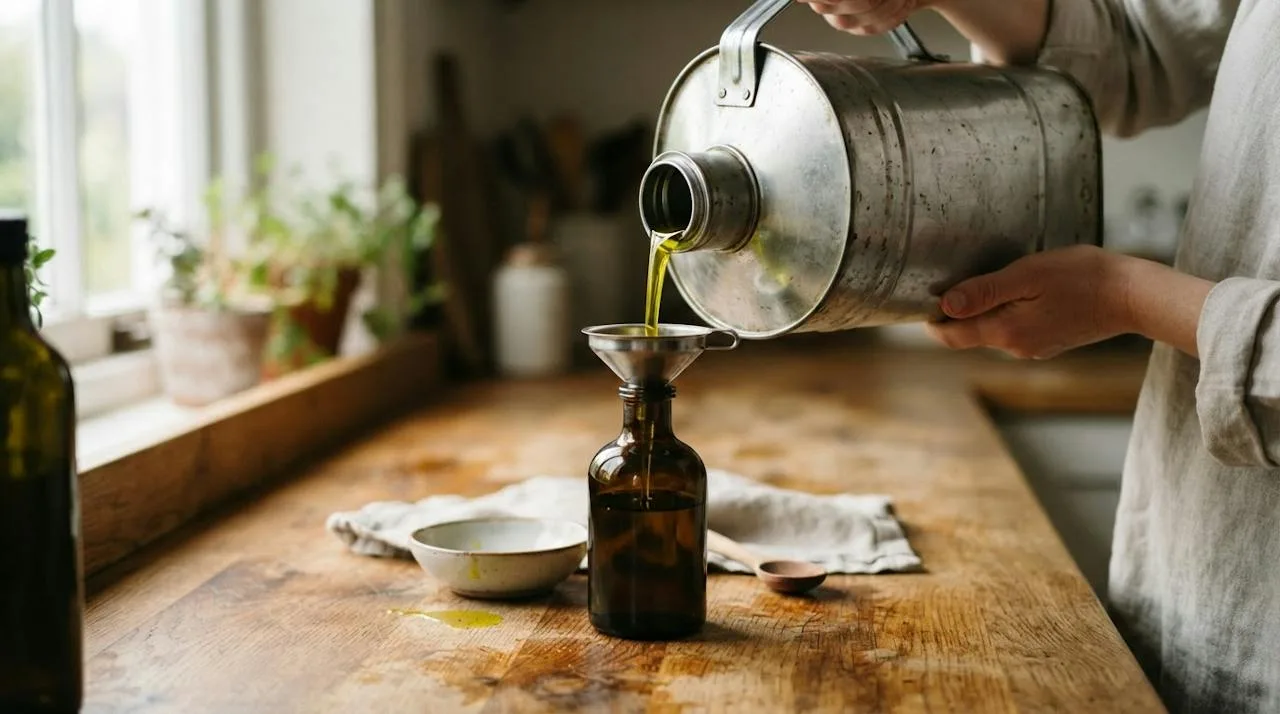
Oxygen is the enemy you invite in every time you cook. To limit it:
- Close the cap right after pouring. Don’t leave the bottle open on the counter while you cook.
- Skip open pour spouts for long-term storage. A spout without a cap lets air in all day.
- Decant from large containers. A big tin that’s half empty holds a lot of air above the oil. Pouring a few days’ worth into a smaller bottle keeps the main tin closed most of the time.
- Don’t top up old oil with new. Use up the cruet, then wash and dry it completely before refilling, so stale oil doesn’t mix with fresh.
The 2021 study I describe below gives an idea of how much opening matters. Once the researchers opened their bottles and kept them at room temperature in the dark, closed between uses as in everyday life, the oils broke down quickly. Eight months after opening, every sample had exceeded the legal limit for peroxide value, whatever the storage conditions had been before opening.
How Long Does Olive Oil Last?
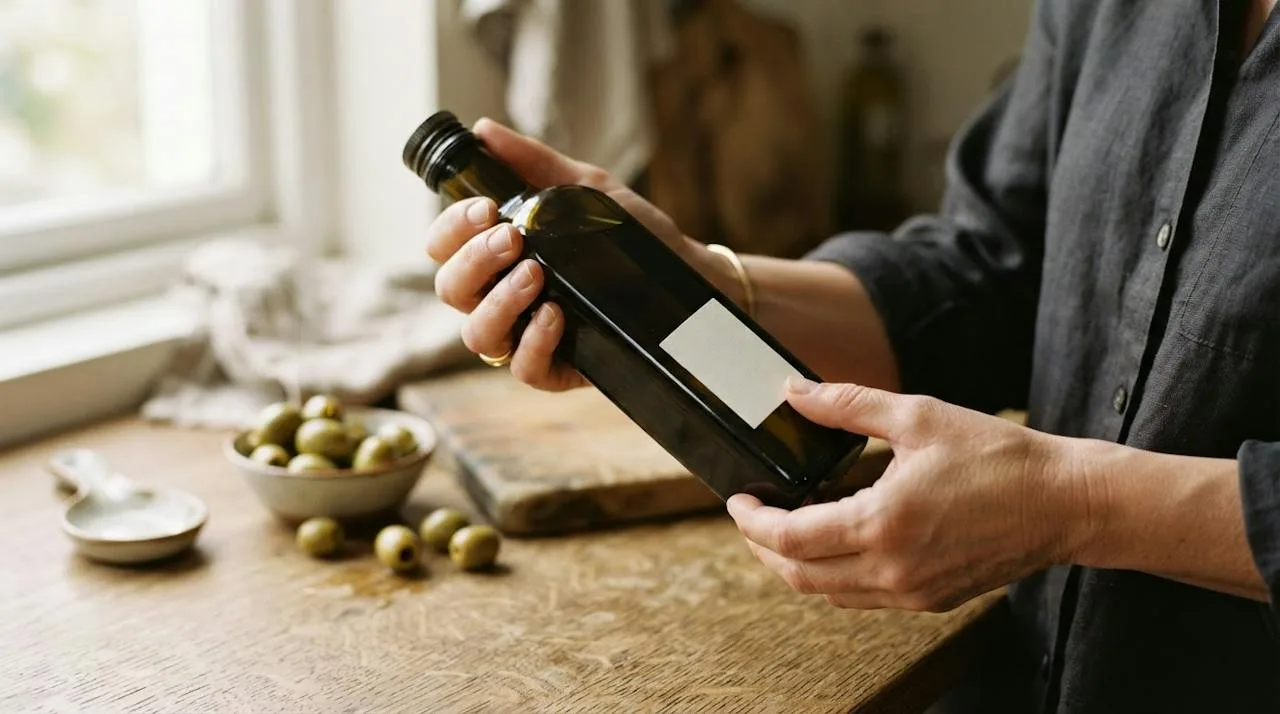
Shelf life depends on how fresh the oil was when you bought it and how you store it. UC Davis offers these guidelines for extra virgin olive oil:
| Situation | How long |
|---|---|
| Best quality | Within 15 to 18 months of the harvest date |
| Unopened, bought within the harvest year | Up to about two years |
| After opening | Best used soon, within a couple of months |
Look for a harvest date rather than relying on the “best by” date. The best-by date doesn’t tell you when the olives were picked, and a bottle can already be a year or more old when it reaches the shelf. For more on what the grades and labels mean, see my comparison of extra virgin vs. light vs. pure olive oil.
Buy a Size You’ll Finish
Since opened oil is best within about two months, the smartest storage decision happens at the store. Think about how much olive oil you use in a typical week, multiply by eight, and buy a bottle close to that size. If you cook with olive oil every day, a large tin is fine, as long as you decant from it and keep it closed and cool. If you use it a few times a week, a smaller bottle will taste better to the last drop. My Mediterranean diet shopping list covers what else to look for on the shelf.
Should You Refrigerate Olive Oil?
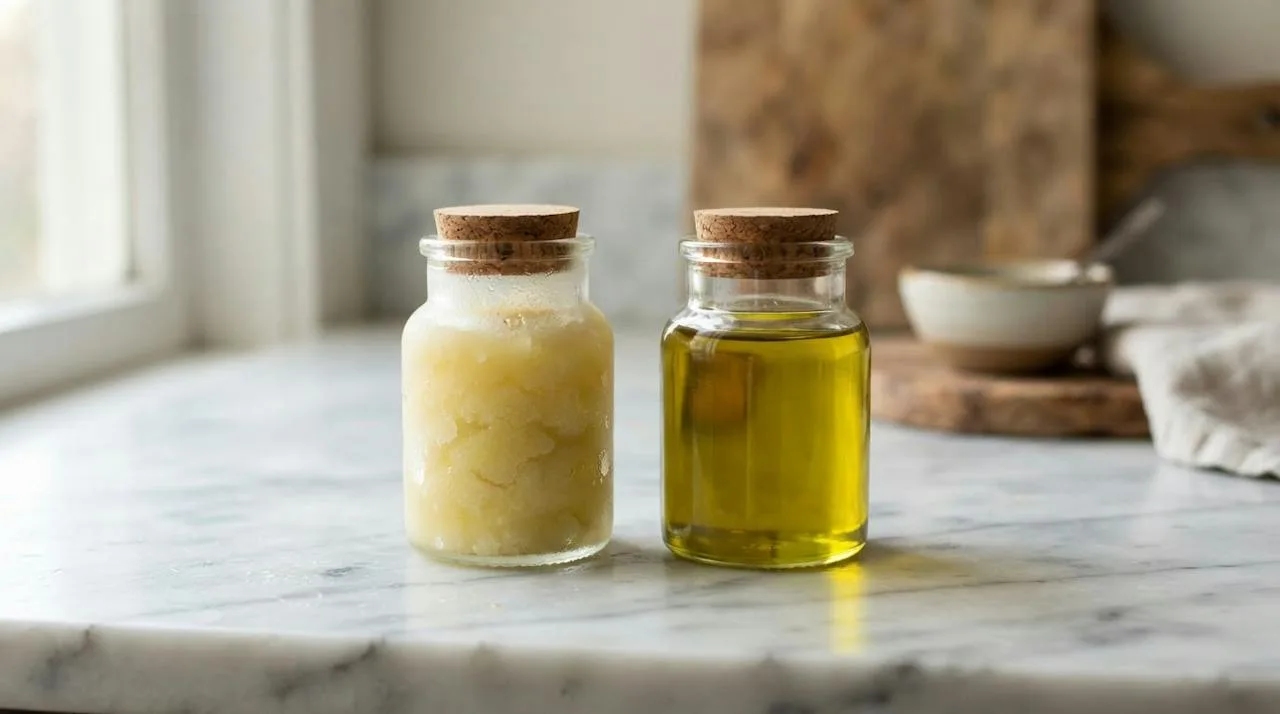
For your everyday bottle, no. A cool, dark cupboard is enough, and oil that goes in and out of the fridge clouds and thickens every time, which makes it hard to pour.
Cold does slow oxidation, though. In a 2021 study published in Foods, Mousavi and colleagues stored three extra virgin olive oils for up to 36 months in sealed amber bottles in the dark, at room temperature, at room temperature under argon gas, refrigerated at 4°C and frozen at -18°C. They concluded that 4°C was the best temperature for keeping the oils’ nutritional qualities over three years, especially in the first 18 months, while freezing best preserved their flavor and aroma. At room temperature, the oils degraded significantly by 36 months.
What that means at home:
- Everyday bottle: Cupboard. You’ll use it within a couple of months anyway.
- Extra unopened tins or bottles: If you buy several at a time, or your kitchen runs hot in summer, the coolest dark place you have is worth it. A refrigerator works for sealed stock you won’t open for a while.
- Cloudy oil from the fridge is fine. Olive oil clouds and partly solidifies when cold. Let it sit at room temperature and it turns clear and liquid again. Clouding is not a test of quality, in either direction.
How to Tell If Olive Oil Has Gone Bad
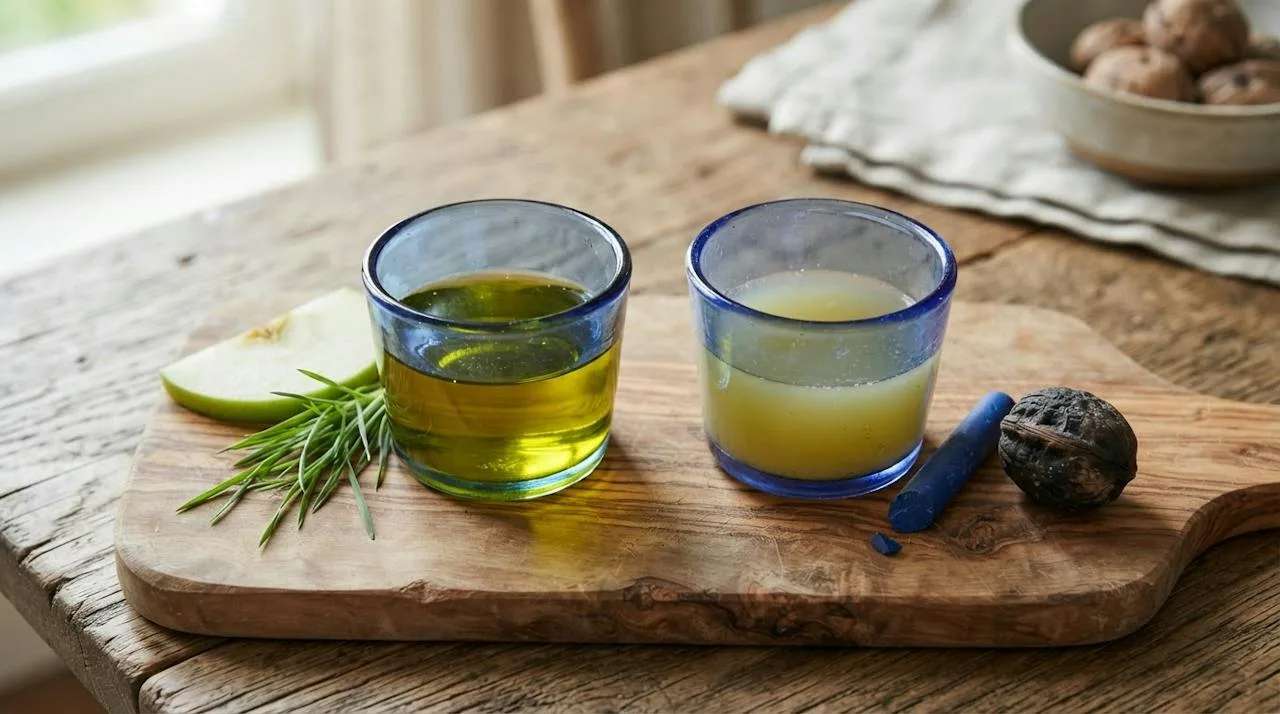
Your nose is the best tool. Pour a little into a small glass, cup it in your hand for a moment to warm it, then smell and taste.
- Fresh oil smells and tastes of fruit: green olives, cut grass, green apple or herbs. Good extra virgin oil often has some bitterness and a peppery sting at the back of the throat.
- Rancid oil smells like crayons, putty, stale walnuts or old paint, and tastes greasy and flat, with no fruit or pepper.
Rancid oil won’t make you sick, but it will make everything you cook with it taste stale. Don’t save it for frying either; oil that has already started to oxidize is more likely to smoke and taste off in the pan. Replace it, and use the experience to buy a smaller bottle or move the next one to a better spot.
Storing Oil Mixtures and Used Oil
Plain olive oil is shelf-stable. Once you add other ingredients or cook with it, the rules change.
- Garlic or herb oils: The CDC advises refrigerating homemade oils infused with garlic or herbs and throwing them away after 4 days, because these mixtures can create conditions for botulism. Make small batches and keep them cold.
- Pesto under oil: I cover my pesto Genovese with a thin layer of olive oil in the jar, but it’s still a garlic-and-herb mixture, so it belongs in the refrigerator and should be used within 3 to 4 days.
- Used frying oil: Strain it, cover it and keep it in a cool, dark place, as I explain in my guide to frying with extra virgin olive oil. Reuse it for similar foods, and use fresh oil when in doubt.
- Olives dressed in oil: Dress only what you’ll eat in a few days, and refrigerate anything with garlic or fresh herbs. My guide to preserving and brining covers olives in more depth.
Common Storage Mistakes
- Keeping the bottle next to the stove. Move it to a cupboard and use a small cruet for cooking.
- Buying the biggest jug for the best price. If you won’t finish it in a couple of months after opening, the savings end up as stale oil.
- Displaying clear bottles in the light. Pretty on the counter, hard on the oil.
- Leaving the cap off or using an open spout. Close it every time.
- Topping up a cruet without cleaning it. Old oil mixes with new and stales it faster.
- Saving the “good” oil for special occasions. Extra virgin olive oil is meant to be used. A bottle kept for a year for the right moment is a bottle past its best.
Mediterranean Secret: The best way to store olive oil is to use it. Buy fresh, keep it dark and cool, and cook with it every day, so no bottle sits around long enough to fade.
Continue Learning
- How to cook with olive oil like a Mediterranean: the complete guide
- Extra virgin vs. light vs. pure olive oil: which to buy and when
- Can you fry with extra virgin olive oil? The smoke point truth
With my tin safely in the cupboard, Nevaeh Hall


