

Pesto alla Genovese (Classic Basil Pesto That Stays Green)
Pesto alla Genovese is the taste of the Ligurian coast in a jar: fresh basil, pine nuts, garlic, aged cheese and olive oil, crushed into a fragrant green sauce. It only has six ingredients, which means every one of them, and every second in the food processor, matters.
My first batch was good but not balanced. It was slightly too garlicky, a little oily and loose, the pine nuts got lost, and the basil darkened faster than I wanted. The biggest lesson from testing was that keeping everything cool and not over-processing matters more than trying to make the pesto perfectly smooth. A chilled bowl, very dry basil, short pulses, lightly toasted pine nuts and a little less garlic and oil gave a brighter, better-balanced pesto.
Every main ingredient here, from fresh herbs and nuts to olive oil, sits at the base of the Mediterranean diet pyramid from Oldways. Basil is one of the tender herbs that’s best used fresh; my guide to Mediterranean herbs and spices explains why. Follow this recipe and you’ll get a coarse-creamy pesto with a fresh basil aroma, small pieces of pine nut and cheese, and just enough oil to coat pasta without leaving a pool in the bowl.
What I Learned From Testing This Recipe
Recipe Testing Note Tested in 2 rounds, plus a mortar-and-pestle comparison. Last updated: October 2026. Equipment: food processor with a 1.2-liter bowl and standard S-blade; marble mortar and wooden pestle for the comparison batch. Key variables tested: garlic and oil quantities, raw vs. toasted pine nuts, chilling the equipment, pulse length, food processor vs. mortar and pestle.
For round 1, I pulsed 2 garlic cloves (about 8 g) with salt, then 30 g raw pine nuts, then 60 g of Genovese basil leaves in 1-second pulses for about 30 to 40 seconds, before adding 35 g Parmigiano Reggiano, 15 g Pecorino Romano and 100 g of olive oil while pulsing. It was good, but slightly too garlicky, somewhat oily and a little loose, and the pine nuts weren’t very noticeable. The processor generated some heat, the basil started losing its bright color, and the flavor turned slightly bitter after sitting.
For round 2, I chilled the processor bowl for about 10 minutes, dried the basil very thoroughly, lightly toasted the pine nuts, cut the garlic to about 6 g, used a little less cheese and oil, pulsed in even shorter bursts and added the oil more slowly. The pesto stayed noticeably brighter green, and the toasted pine nuts added depth without needing more salt or cheese.
What I changed after testing: Garlic went from 8 g to 6 g, olive oil from 100 g to 90 g and total cheese from 50 g to 45 g; the 30 g of pine nuts went from raw to lightly toasted. I also chilled the processor bowl, used shorter pulses and added the oil more slowly. Round 1 was too garlicky, a little oily and loose, and the basil darkened.
Ingredients
Makes about 190 to 200 g of pesto, enough for 6 to 7 pasta servings at 25 to 30 g each. Active prep: about 15–20 minutes | Processing: under 1 minute of machine time
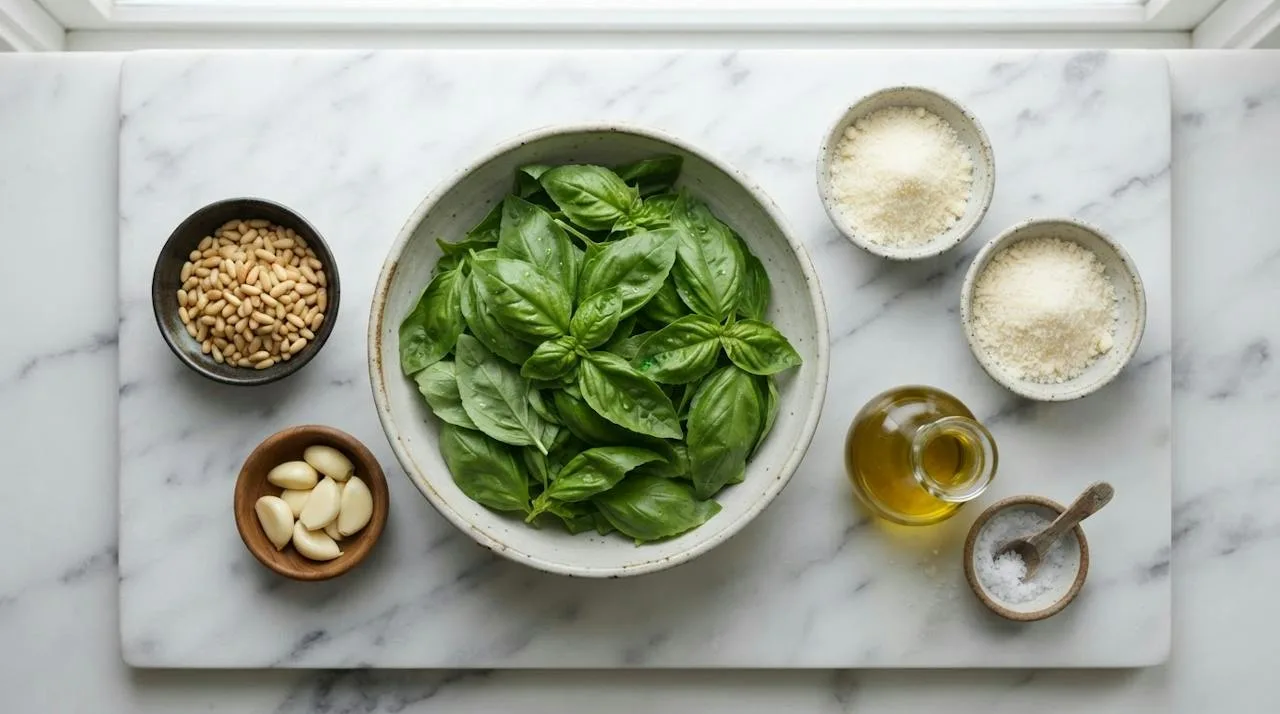
- 60 g fresh Genovese basil leaves, stems removed (the thicker stems made the pesto slightly more fibrous)
- 30 g pine nuts, lightly toasted
- 1½ garlic cloves (about 6 g)
- 30 g Parmigiano Reggiano, finely grated
- 15 g Pecorino Romano, finely grated
- 90 g extra virgin olive oil
- 3 g fine sea salt
For one serving of pasta: 90 g dry pasta (I used trofie), about 25 to 30 g pesto and 1 to 2 tablespoons of pasta cooking water.
Before You Start: What to Watch For
- Dry the basil completely. Wet leaves make a looser, duller pesto. In round 2, I dried the basil very thoroughly, and it stayed brighter.
- Chill the processor bowl. About 10 minutes in the fridge or freezer helps offset the heat from the blade, which darkened the basil in round 1.
- Toast the pine nuts lightly. Lightly golden, not deeply browned. Toasted pine nuts gave more depth; raw ones got lost in the first batch.
- Pulse, don’t blend. Short pulses of about 1 second, with the motor running only intermittently, keep the basil cool and the texture coarse-creamy.
- Grate the cheese finely. It blends in more evenly and doesn’t need long processing.
- Use a good olive oil. You’ll taste it raw. My comparison of extra virgin vs. light olive oil explains why extra virgin is the one for uncooked sauces.
- Use fresh basil only. Dried basil loses most of its flavor; my fresh vs. dried herbs conversion guide explains why it’s no substitute here.
Method
- Chill the bowl. Put the food processor bowl and blade in the fridge or freezer for about 10 minutes.
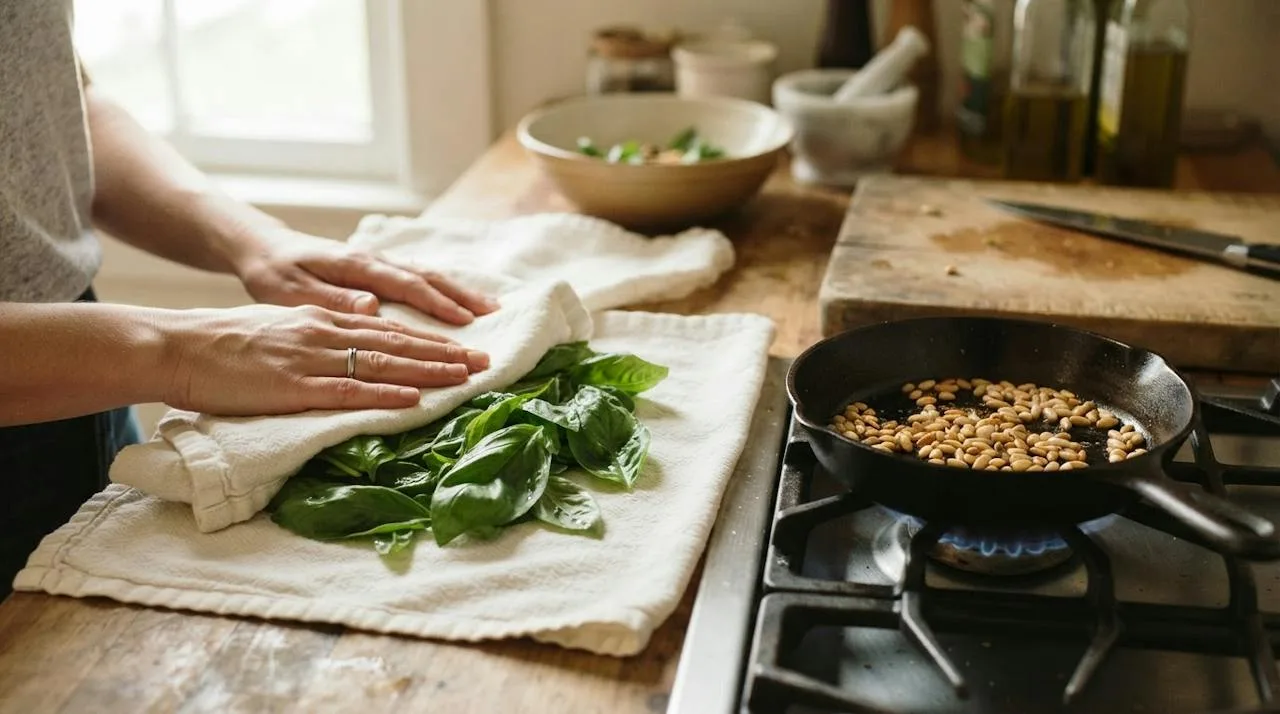
- Prepare the basil and pine nuts. Wash the basil leaves and dry them very thoroughly, which takes about 5 to 10 minutes. Toast the pine nuts in a dry skillet over medium-low heat for about 3 to 4 minutes, shaking often, until lightly golden, and let them cool. Finely grate both cheeses.
- Pulse the garlic and salt. Put the garlic and salt in the chilled bowl and pulse about 5 to 6 times, until finely chopped.
- Add the pine nuts. Add the toasted pine nuts and pulse another 6 to 8 times, until coarsely ground.
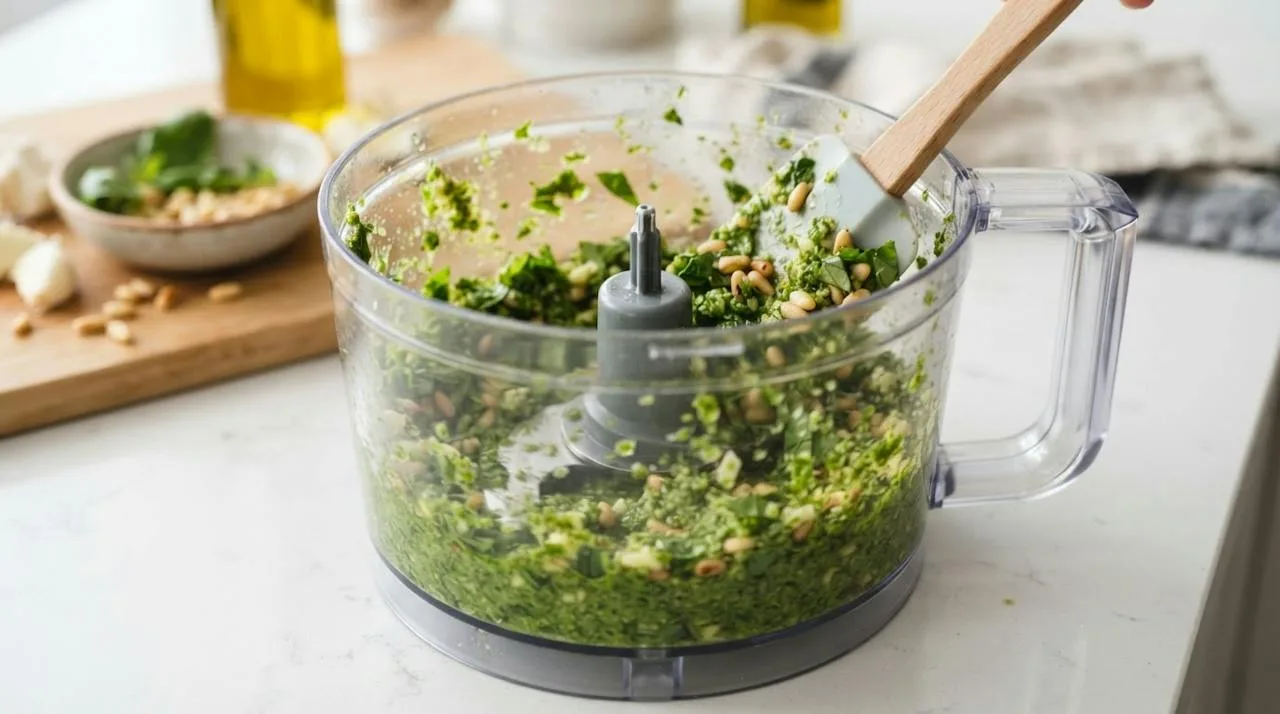
- Add the basil in short pulses. Add the basil and pulse in short bursts of about 1 second, scraping down the sides once, until it’s finely chopped but not a smooth paste. Don’t run the machine continuously; that’s what heated and darkened the basil in round 1.
- Add the cheese. Add the grated Parmigiano and Pecorino and pulse a few times to combine.
- Add the oil slowly. Pour in the olive oil slowly while pulsing, until the pesto comes together. Total processing time is about 45 seconds to 1 minute, with the motor running only intermittently.
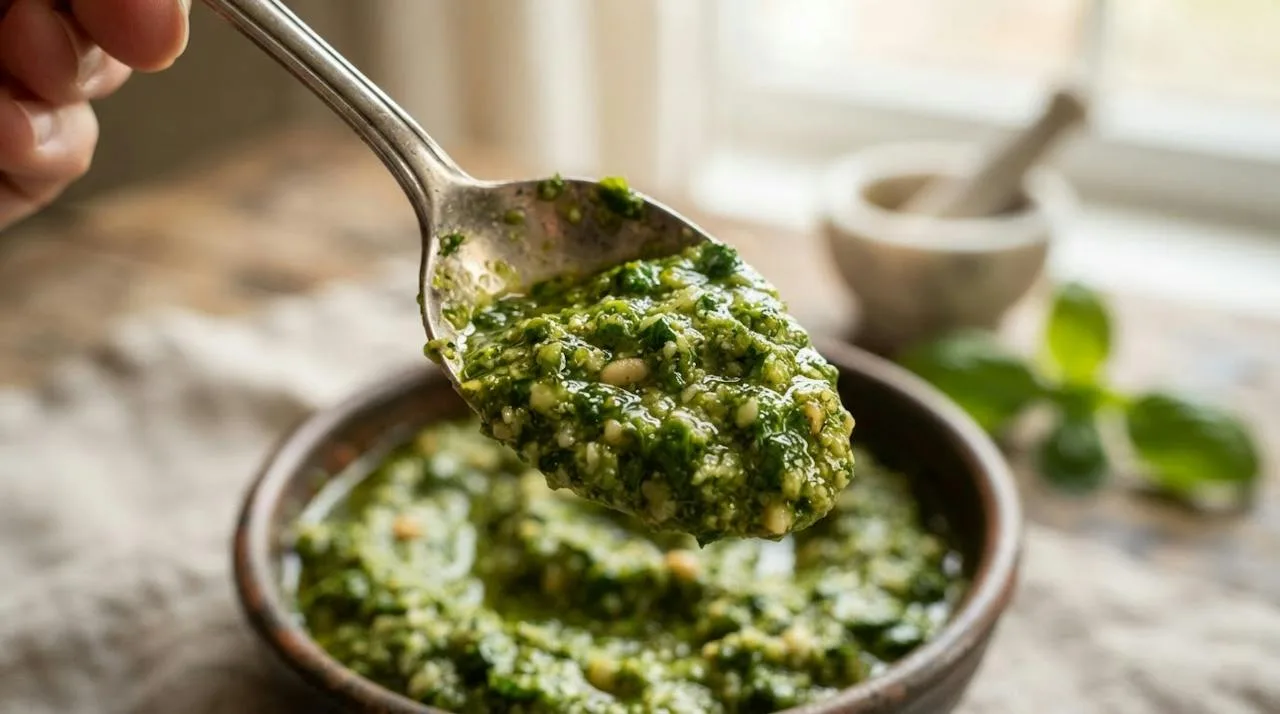
- Check the texture. The pesto should be coarse-creamy rather than completely smooth. It should coat the back of a spoon but still show tiny visible pieces of basil and pine nut, not a uniform green paste.
- Cook the pasta. Cook the pasta in well-salted water and reserve some of the cooking water before draining.
- Toss off the heat. Off the heat, toss the hot pasta with about 25 to 30 g of pesto per serving and 1 to 2 tablespoons of pasta water, until glossy and creamy. Don’t cook the pesto in the pan: heat made the basil darker and the oil more likely to separate.
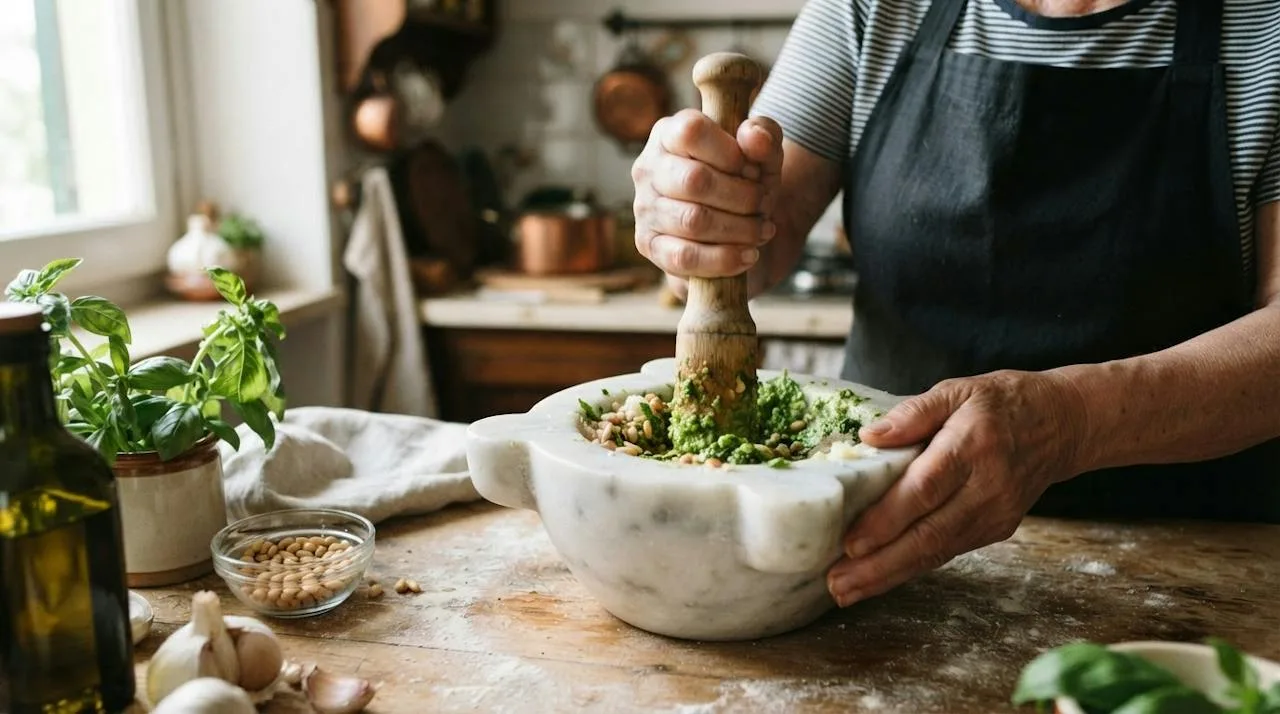
Mortar-and-pestle option: For a smaller, more textured and aromatic pesto, pound the garlic and salt, then the pine nuts, then the basil, then the cheeses, and finally work in the oil. My comparison batch took about 8 to 10 minutes. It’s slower, so I use the food processor for everyday batches.
Tested Substitutions
| Original ingredient | Tested substitute | Result |
|---|---|---|
| Pine nuts | Walnuts | Richer and more earthy, but less delicate than the pine-nut version. |
| Pine nuts | Almonds | Good texture, but the almond flavor was more noticeable. |
| Parmigiano and Pecorino | Mostly Pecorino | Much saltier and sharper. I preferred the combination. |
| Part of the basil | About 20 g spinach | The color stayed green, but the basil flavor was less pronounced. |
| Food processor | Mortar and pestle | More textured and aromatic, but took about 8 to 10 minutes. |
| Basil | Arugula (untested) | I haven’t tried this yet. Let me know in the comments. |
| Pine nuts | Cashews, pistachios or sunflower seeds (untested) | I haven’t tried these yet. Let me know in the comments. |
| Cheese | No cheese, nutritional yeast or vegan Parmesan (untested) | I haven’t tried these yet. Let me know in the comments. |
| None | Lemon juice (untested) | I haven’t tried this yet. Let me know in the comments. |
| Raw basil | Blanched basil (untested) | I haven’t tried this; I kept the basil raw for the classic flavor. |
| Fresh basil | Dried basil (untested) | I haven’t tried this yet, and I don’t recommend it for pesto. |
Why This Recipe Can Fail (And How to Fix It)
Common Problems
- Pesto turns dark: Heat from the blade and wet basil. In round 1, the processor warmed the basil and it lost its bright color. Chill the bowl for 10 minutes, dry the basil thoroughly, use 1-second pulses and add the oil at the end. Some natural darkening after several hours is normal.
- Too garlicky: Two cloves (8 g) overpowered the basil in round 1. About 6 g, or 1½ cloves, let the basil, pine nuts and cheese come through.
- Oily and loose: Too much oil. One hundred grams left the first batch loose; 90 g, added slowly while pulsing, gave a pesto that coats pasta without pooling.
- Pine nuts don’t come through: Raw pine nuts were barely noticeable in round 1. Toast them lightly, until just golden, for more depth.
- Bitter after sitting: My round 1 batch turned slightly bitter after it sat. That batch had more garlic, warmer processing and raw pine nuts; the round 2 changes gave a better-balanced pesto overall.
- Oil separates on the pasta: The pesto was heated in the pan. Toss it with the hot pasta off the heat, loosened with a little pasta water.
Serving Suggestions
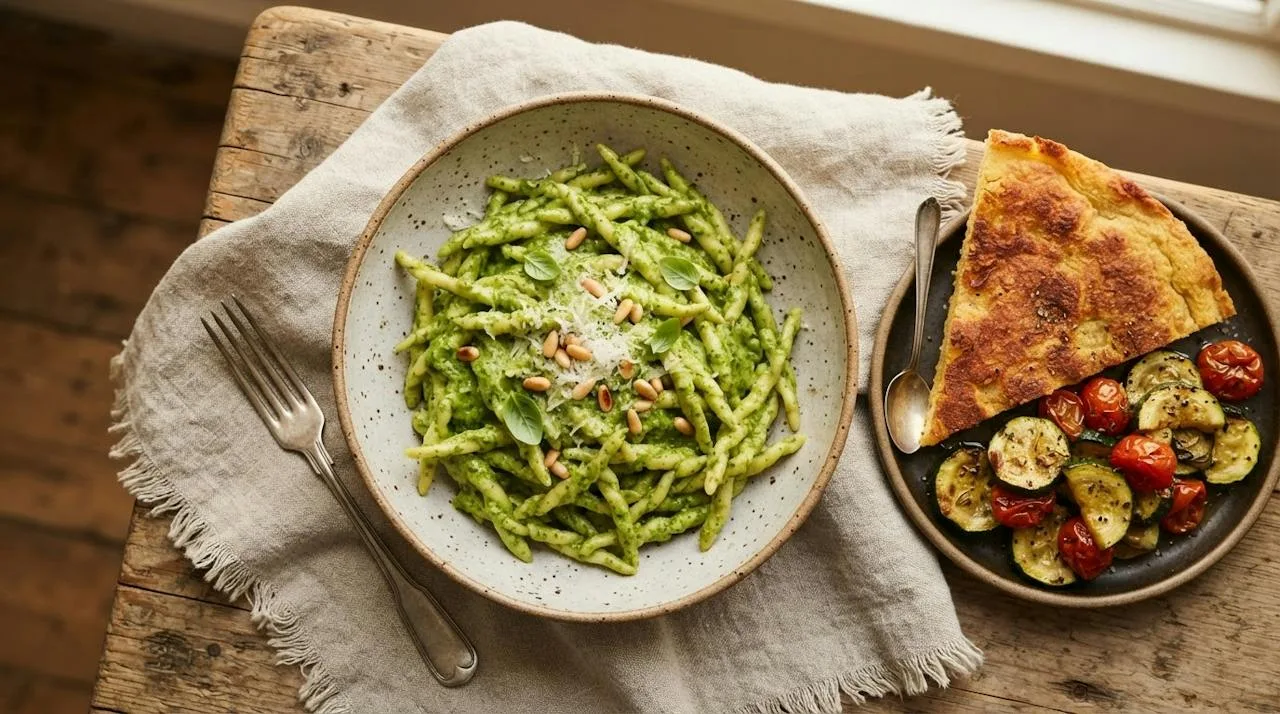
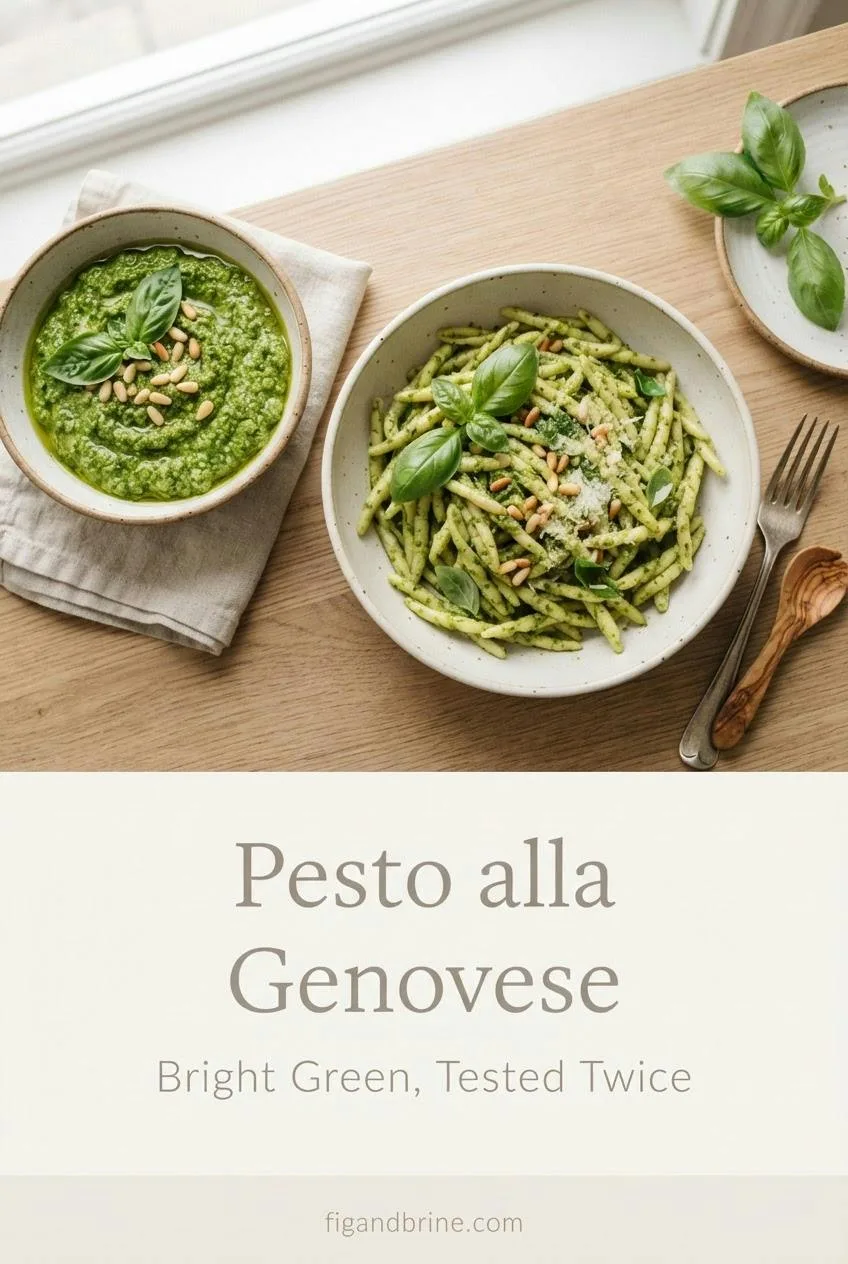
Trofie are the classic pasta for pesto, and they worked especially well because the pesto collected in the twists. Use about 90 g of dry pasta and 25 to 30 g of pesto per person, loosened with 1 to 2 tablespoons of pasta water. Straight from the fridge, the pesto is thick, but it loosens nicely with hot pasta and pasta water and turns glossy and creamy without looking oily.
Pesto also suits other dishes: spooned over my Ligurian farinata for an all-Ligurian plate, stirred into vegetable soup just before serving, tossed with roasted zucchini (my vegetable roasting times and temperatures chart has tested times) or spread thinly on toasted bread.
Storage, Freezing and Make-Ahead
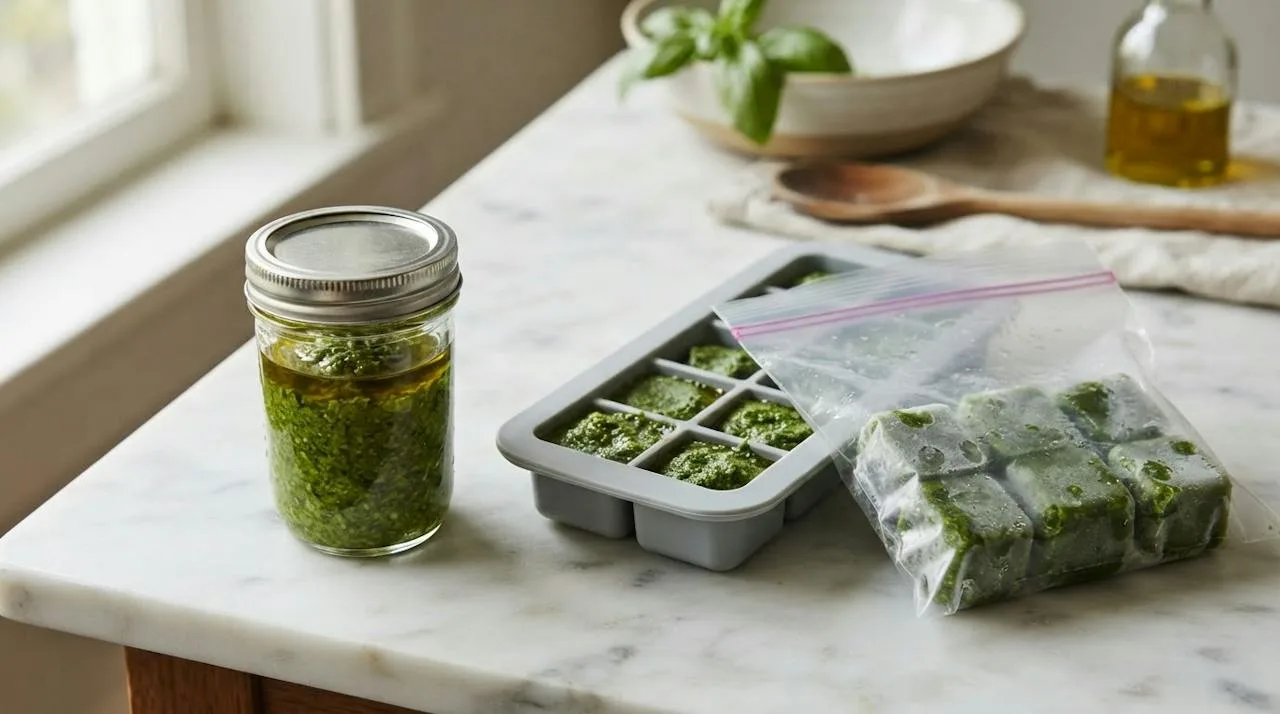
Refrigerator: Store the pesto in a small glass jar, press the surface flat and cover it with a thin layer of olive oil before closing. Here’s how mine changed:
- Day 1: Bright green, with a fresh basil aroma and strong cheese and pine-nut flavor.
- Day 2: Still very good. Slight darkening at the surface, but fairly bright underneath.
- Day 3: More noticeable darkening where the pesto touched the air. The flavor was still good but slightly less fresh.
- Day 4: The top had darkened further; underneath, it was still greenish and flavorful after stirring.
Use it within 3 to 4 days. Because pesto is a homemade mixture of garlic, herbs and oil, keep it refrigerated: the CDC advises refrigerating homemade oils made with garlic or herbs and throwing them away after 4 days.
Freezer: Freeze pesto in ice cube trays, then transfer the cubes to a freezer bag. Clemson University’s Home and Garden Information Center also recommends freezing basil to preserve its flavor. I froze one batch without the cheese and a small portion with cheese mixed in. Both were useful for pasta and cooked vegetables after thawing, though the basil tasted less fresh than refrigerated pesto, and the batch with cheese was slightly more crumbly. For the most flexibility, freeze the basil, nut, garlic and oil mixture and stir in freshly grated cheese after thawing.
Mediterranean Secret: Keep everything cool and stop processing early. In my testing, a cold bowl, dry basil and short pulses did more for the color and flavor than any change to the ingredients. A little texture is the sign of a pesto made with care.
With a jar of green pesto and a pot of water coming to a boil, Nevaeh Hall

Pesto alla Genovese
- Total Time: 25 minutes
- Yield: 6 to 7 servings
- Diet: Vegetarian
Description
A fragrant green sauce made from fresh basil, pine nuts, garlic, cheese, and olive oil, perfect for coating pasta.
Ingredients
- 60 g fresh Genovese basil leaves, stems removed
- 30 g pine nuts, lightly toasted
- 1½ garlic cloves (about 6 g)
- 30 g Parmigiano Reggiano, finely grated
- 15 g Pecorino Romano, finely grated
- 90 g extra virgin olive oil
- 3 g fine sea salt
Instructions
- Chill the processor bowl; put it in the fridge or freezer for about 10 minutes.
- Prepare the basil by washing and drying the leaves thoroughly.
- Toast the pine nuts in a dry skillet over medium-low heat for about 3 to 4 minutes until lightly golden.
- Pulse the garlic and salt in the chilled bowl for about 5 to 6 times until finely chopped.
- Add the toasted pine nuts and pulse another 6 to 8 times until coarsely ground.
- Incorporate the basil in short pulses, scraping down the sides until finely chopped.
- Add the grated Parmigiano and Pecorino and pulse to combine.
- Pour the olive oil slowly while pulsing until the pesto comes together.
- Check the texture; it should be coarse-creamy.
- Cook pasta in well-salted water and toss with pesto and pasta water off the heat.
Notes
To achieve the best flavor and color, ensure ingredients are kept cool and do not over-process.
- Prep Time: 20 minutes
- Cook Time: 5 minutes
- Category: Condiment
- Method: Blending
- Cuisine: Italian


