

Greek Briam (Roasted Vegetables in Tomato and Olive Oil)
Briam is the dish that changed my view of “simple vegetables.” There’s nothing complicated about cutting vegetables, adding tomato and olive oil and putting everything in the oven. The important part is learning how the vegetables behave: potatoes need plenty of time, zucchini doesn’t, and an overcrowded dish creates steam instead of browned, roasted edges.
My first attempt taught me not to chase a short cooking time or a covered dish. The version that worked uses a large, shallow dish, smaller potato pieces, a shorter covered bake and a longer, hotter uncovered finish. That last stage matters most: University of Illinois Extension explains that the browning reactions that create roasted flavor depend on heat, moisture and time, so the tomato liquid has to reduce before the edges can color.
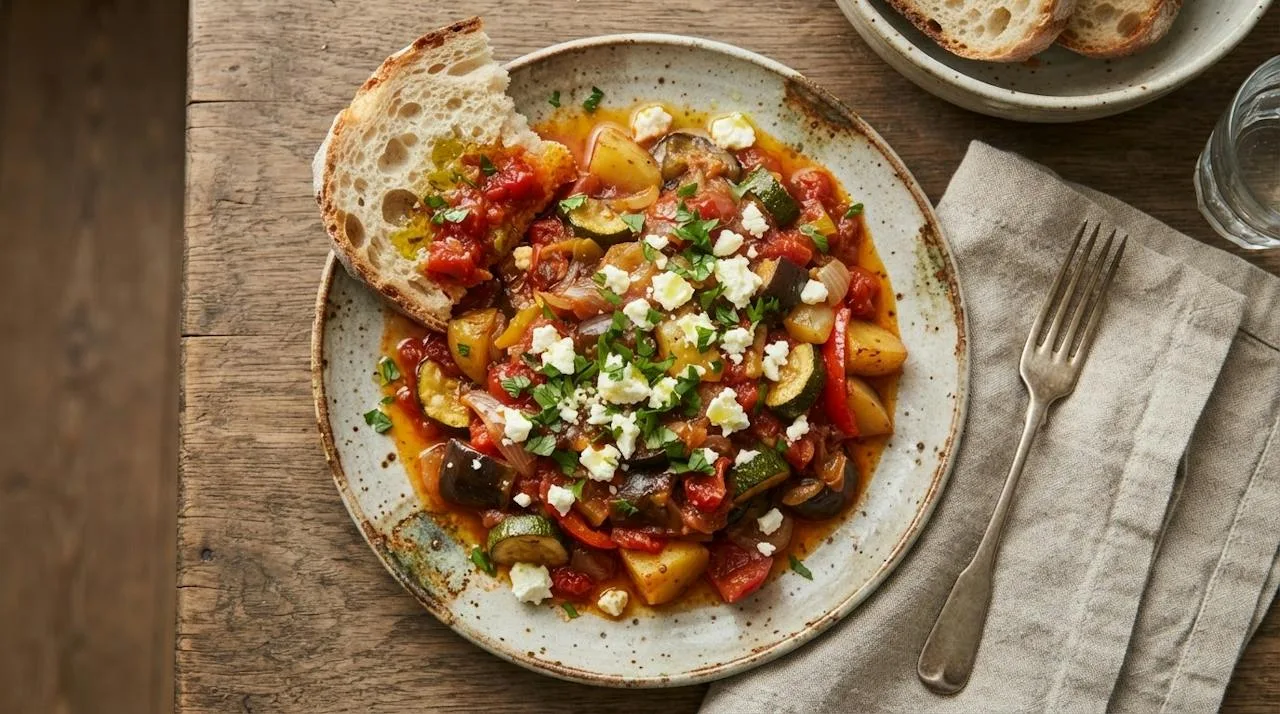
For the technique behind it, see my guide to roasting vegetables the Mediterranean way. Follow this recipe and you’ll get creamy potatoes, browned edges and a thick, glossy tomato sauce worth mopping up with bread.
What I Learned From Testing This Recipe
Recipe Testing Note Tested in 2 rounds. Last updated: October 2026. Equipment: fan (convection) oven, middle rack, 33 × 23 cm ceramic baking dish. Key variables tested: potato size, tomato quantity and tomato paste, olive oil, covered vs. uncovered time, oven temperature and how crowded the dish was.
In round 1, I baked the vegetables at 200°C fan, covered for 45 minutes and uncovered for 30, stirring once. The potatoes were cut into 3 to 3½ cm chunks, and I used 400 g of fresh tomatoes, 90 ml of olive oil and no tomato paste. It tasted good, but the texture wasn’t right. The potatoes were still slightly firm in the center, the zucchini had gone very soft, there was too much liquid in the bottom of the dish, the top was pale, it felt slightly oily, and the tomato flavor was weak. The biggest problem was that the vegetables were crowded and stayed covered for too long.
For round 2, I cut the potatoes smaller, kept the zucchini in thick rounds, increased the tomatoes, added a tablespoon of tomato paste, used less water and a little less oil, and spread everything into a more even layer. I shortened the covered time and finished uncovered at a higher temperature. The potatoes were soft and creamy, and the edges browned.
What I changed after testing: Potato chunks went from 3–3½ cm to 2½–3 cm, fresh tomatoes from 400 g to 500 g with less water, olive oil from 90 ml to 80 ml, and I added 1 tablespoon of tomato paste. Covered baking went from 45 to 35 minutes, uncovered baking from 30 to 35–40 minutes, and the uncovered temperature from 200°C to 210°C fan. Round 1 had firm potatoes, too much liquid, a pale top and a weak tomato flavor.
Ingredients
Serves 4 generously as a main dish, or 6 as a side. Prep: 25 minutes | Covered baking: 35 minutes | Uncovered baking: 35–40 minutes | Resting: 15–20 minutes | Total: about 1 hour 50 minutes
For the vegetables
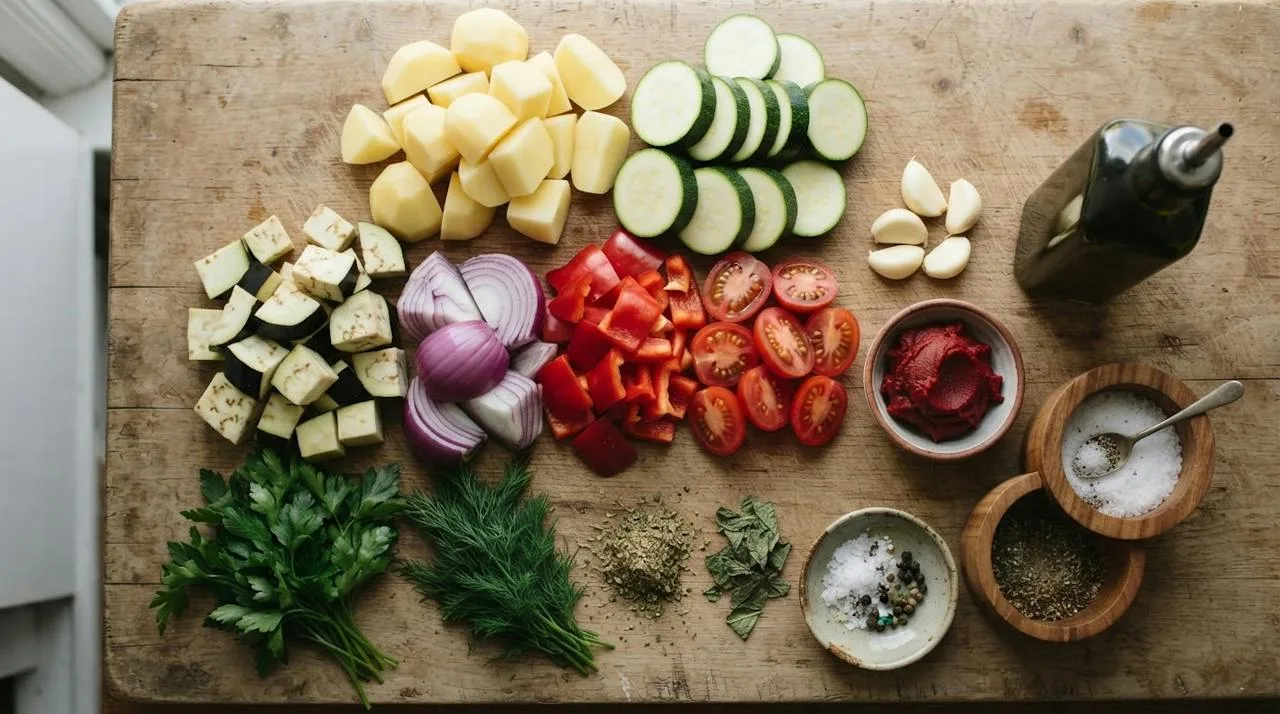
- 650 g potatoes, peeled and cut into 2½–3 cm chunks (I peeled them so the tomato and olive oil coat them directly and the centers turn soft and creamy)
- 300 g eggplant, cut into 3 cm chunks
- 300 g zucchini, cut into thick 2 cm rounds
- 200 g red bell pepper, cut into large pieces
- 1 medium red onion (about 200 g), cut into wedges
For the tomato mixture
- 500 g ripe fresh tomatoes, grated
- 1 tablespoon tomato paste
- 4 garlic cloves, thinly sliced
- 2 teaspoons dried Greek oregano
- 1 teaspoon dried mint
- 1½ teaspoons salt
- ½ teaspoon black pepper
- 100 ml water
To finish
- 80 ml extra virgin olive oil
- 2 tablespoons chopped fresh parsley
- 1 tablespoon chopped fresh dill
- Crumbled feta and crusty bread, to serve
Before You Start: What to Watch For
- Use a large, shallow dish. A 33 × 23 cm dish worked well. A deeper, smaller dish crowded the vegetables and steamed them instead of roasting them. My vegetable roasting times and temperatures chart shows how much crowding affects browning, too.
- Cut the potatoes smaller than everything else. Potatoes take the longest. At 3 to 3½ cm, they were still slightly firm in round 1; 2½ to 3 cm cooked through.
- Keep the zucchini thick. Two-centimeter rounds held their shape. Thin slices would disappear into the sauce.
- Don’t pile the vegetables high. The dish can be fairly full, but the vegetables shouldn’t rise above the rim.
- Go easy on stirring. The zucchini turned too soft when I disturbed it repeatedly. Stir once, when you uncover the dish, and that’s it.
- Use good dried oregano. Greek oregano gives the classic flavor; my guide to Greek oregano vs. regular oregano explains why it’s worth seeking out.
Method
- Heat the oven. Heat a fan oven to 200°C (about 390°F) with a rack in the middle.
- Prepare the vegetables. Peel the potatoes and cut them into 2½ to 3 cm chunks. Cut the eggplant into 3 cm chunks, the zucchini into thick 2 cm rounds, the pepper into large pieces and the onion into wedges. I didn’t salt the zucchini or eggplant beforehand.

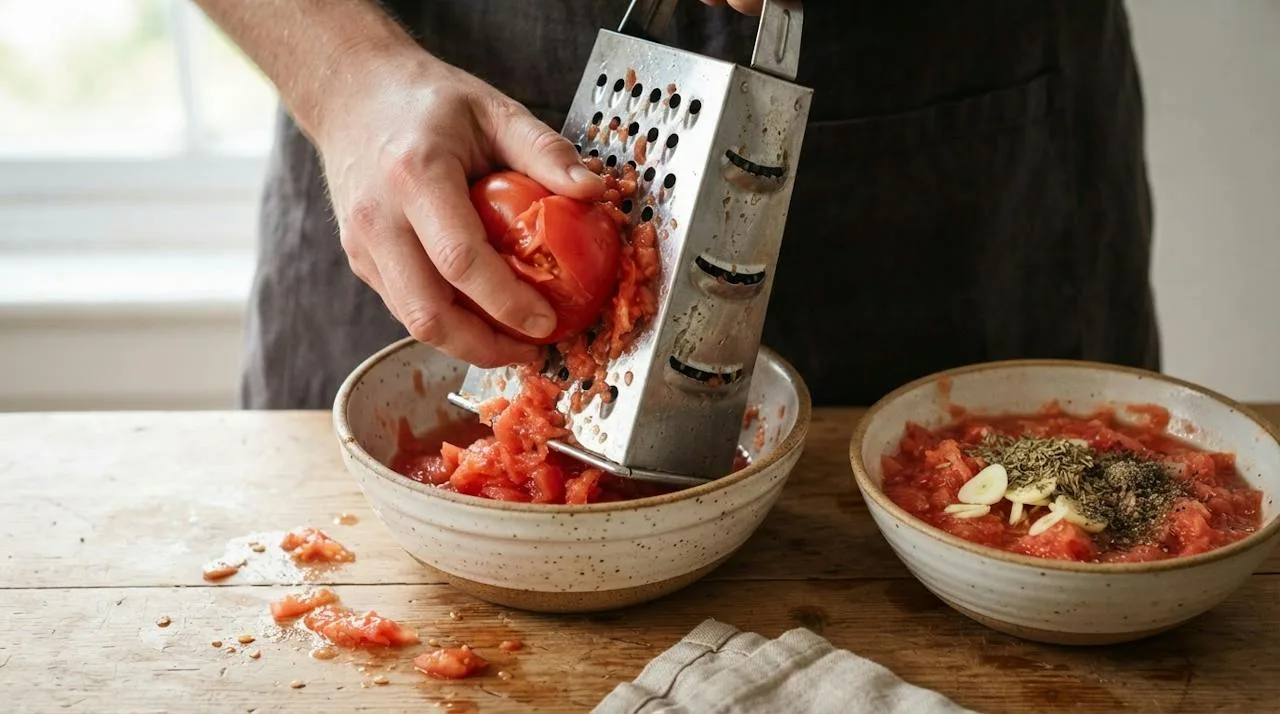
- Make the tomato mixture. Grate the tomatoes into a bowl, discarding the skins. Stir in the tomato paste, sliced garlic, oregano, dried mint, salt, pepper and 100 ml of water. I kept the tomato paste to a single tablespoon, because I wanted the dish to taste like roasted vegetables with tomato rather than vegetables in a thick tomato sauce.
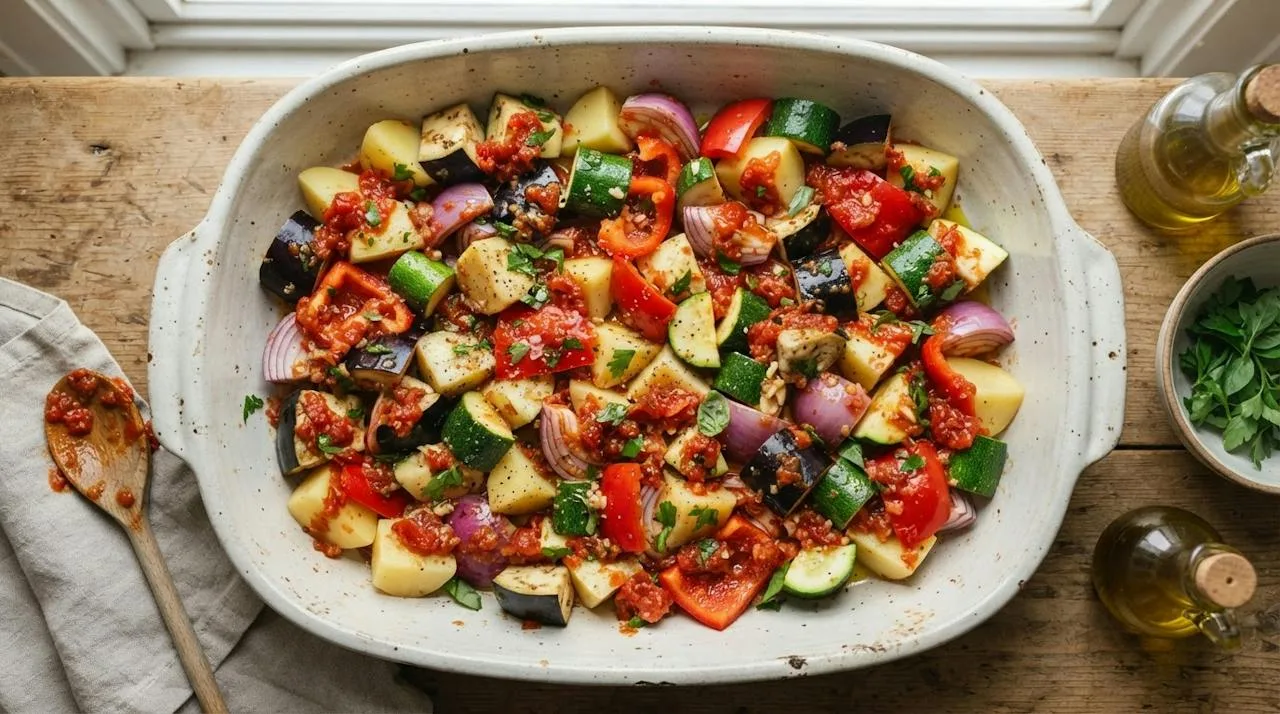
- Combine everything in the dish. Put the potatoes, eggplant, zucchini, pepper and onion in the baking dish. Pour over the tomato mixture, then the olive oil.
- Toss and spread evenly. Toss everything thoroughly with your hands or a spatula until every piece is coated, then spread the vegetables into a fairly even layer. The dish should be full, but nothing should be piled above the rim. I didn’t make neat layers, and this even, uncrowded layer was one of the most important changes from my first attempt.
- Bake covered. Cover the dish tightly with foil and bake at 200°C fan for 35 minutes. The foil traps moisture while the potatoes start to soften.
- Uncover, stir once and raise the heat. Remove the foil, stir gently once, and increase the oven to 210°C fan (about 410°F).
- Bake uncovered. Bake for another 35 to 40 minutes, without stirring. This is where the tomato liquid reduces and the edges brown. In round 1, only 30 minutes uncovered at 200°C left the top pale and too much liquid in the dish.
- Check for doneness. A thin knife should slide into the center of a potato with no resistance. The potatoes and eggplant should have browned edges, the zucchini should be soft but still recognizable, the onion partly caramelized, and the tomato reduced into a thick, glossy sauce with only a little liquid left around the vegetables. You don’t want it completely dry. The top should be a mix of deep red tomato, golden-brown edges and a few darker roasted spots.
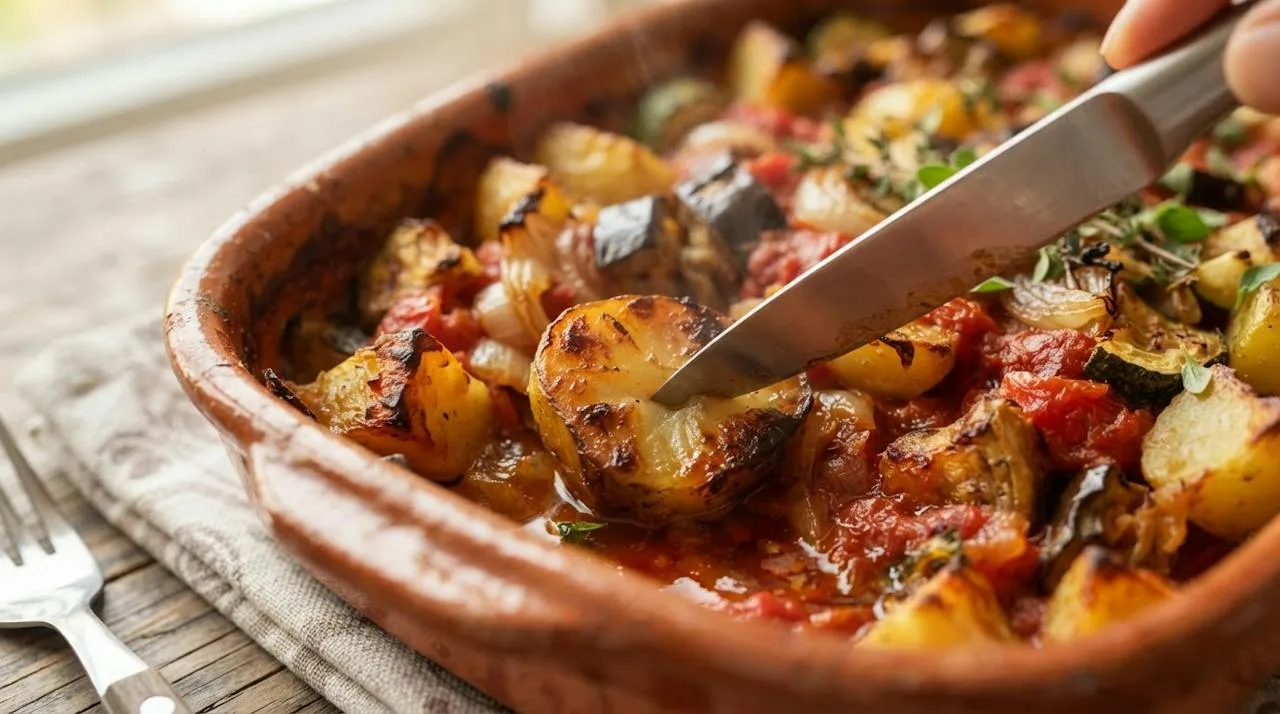
- Rest before serving. Let the briam rest for 15 to 20 minutes. It was best served warm rather than piping hot.
- Finish and serve. Scatter the chopped parsley and dill over the top, crumble over some feta and serve with crusty bread.
Tested Substitutions
| Original ingredient | Tested substitute | Result |
|---|---|---|
| Fresh grated tomatoes | Passata | Smoother, more consistent sauce, but the fresh tomato version tasted fresher. |
| Red bell pepper | Green bell pepper | Worked, but with a slightly more bitter flavor. |
| Some of the zucchini | Extra eggplant | Good texture, but the dish became richer and softer. |
| Potatoes | Sweet potatoes (untested) | I haven’t tried this yet. Let me know in the comments. |
| Grated tomatoes | Cherry tomatoes or canned chopped tomatoes (untested) | I haven’t tried this yet. Let me know in the comments. |
| Zucchini | Zucchini and yellow squash mix (untested) | I haven’t tried this yet. Let me know in the comments. |
| None | Carrots, mushrooms or fennel (untested) | I haven’t tried these yet. Let me know in the comments. |
| Dried oregano | Fresh oregano (untested) | I haven’t tried this yet. Let me know in the comments. |
| Dill | Basil (untested) | I haven’t tried this yet. Let me know in the comments. |
| Feta | Vegan feta (untested) | I haven’t tried this yet. Let me know in the comments. |
Why This Recipe Can Fail (And How to Fix It)
Common Problems
- Potatoes still firm in the center: The chunks were too big, or the dish stayed covered too briefly before a too-cool finish. In round 1, 3 to 3½ cm potatoes were still slightly firm after 75 minutes. Cut them to 2½ to 3 cm and check with a thin knife before taking the dish out.
- Too much liquid in the dish: Too much water, too long under foil, or not enough uncovered time. Cover for only 35 minutes, then bake uncovered for 35 to 40 minutes at 210°C fan, until only a little liquid remains.
- Pale top: The dish was crowded or the uncovered stage was too short and too cool. Spread the vegetables in an even layer in a large, shallow dish, and give it the full uncovered time at the higher temperature.
- Mushy zucchini: Thin pieces or too much stirring. Cut the zucchini into thick 2 cm rounds and stir only once, when you uncover the dish.
- Weak tomato flavor: Not enough tomato, or too much water. Increasing the tomatoes from 400 g to 500 g, using less water and adding a tablespoon of tomato paste gave a deeper flavor without turning it into a heavy sauce.
- Slightly oily: Reducing the oil from 90 ml to 80 ml, together with the longer uncovered roasting, made the final version feel rich rather than greasy.
For the potatoes, aim for golden-brown edges rather than very dark ones. The FDA suggests cooking cut potatoes to a golden yellow rather than a dark brown to reduce acrylamide.
Serving Suggestions
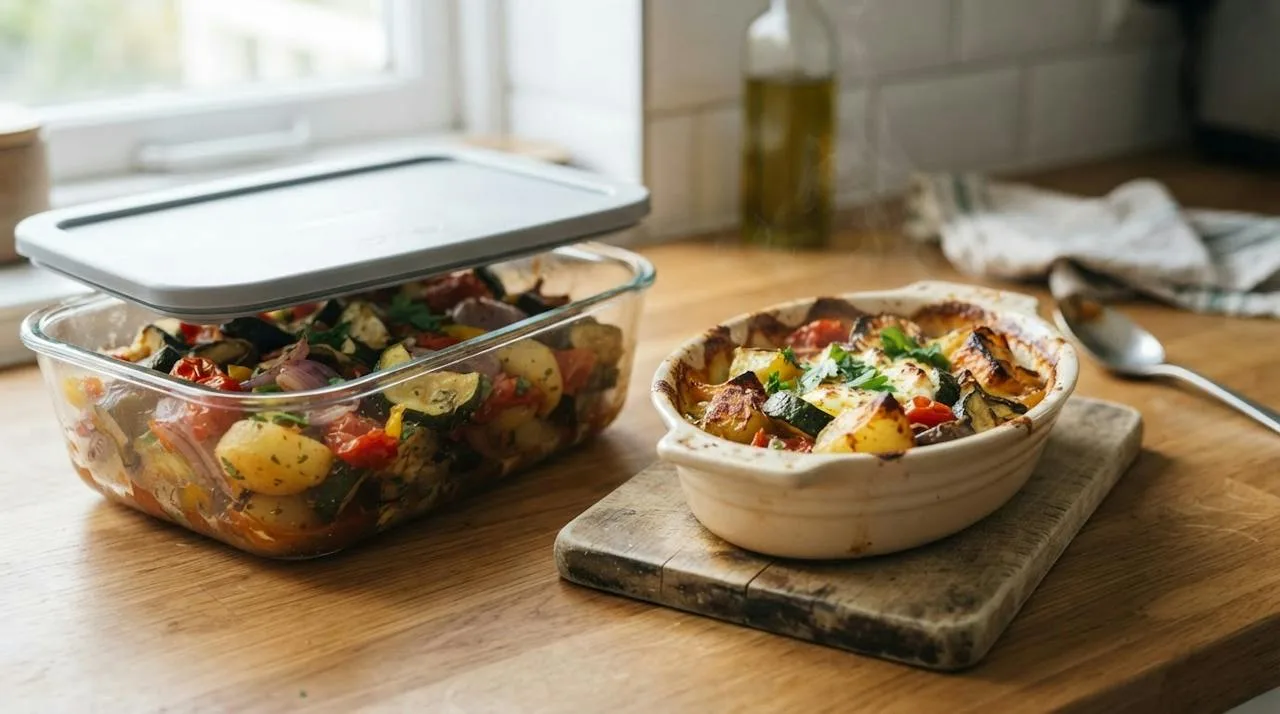
Serve briam warm, with crumbled feta, fresh parsley and plenty of crusty bread. The bread matters: the tomato and olive oil juices are one of the best parts of the dish. It also works well at room temperature, which makes it easy to bring to the table alongside other dishes.
It’s hearty enough to be the main course, or it can sit next to my gigantes plaki for a meatless Greek spread. Since the olive oil is a big part of the flavor, use a good bottle; my guide to how to cook with olive oil explains why extra virgin holds up so well in the oven.
Storage, Reheating and Make-Ahead
Refrigerator: Store leftovers covered in the fridge. Here’s how mine changed:
- Day 1: Best texture. The potatoes were creamy, and the roasted edges still had some bite.
- Day 2: The tomato sauce had thickened and the vegetables had absorbed more flavor. The zucchini was softer, but the dish was arguably more flavorful.
- Day 3: Still good. The potatoes stayed intact, but the roasted edges were no longer crisp.
- Day 4: The vegetables became softer and more stew-like. Still usable, but not the same roasted texture as day 1.
That fits the USDA’s leftovers and food safety guidance, which recommends eating refrigerated leftovers within 3 to 4 days.
Reheating: For the best result, reheat portions in a 200°C oven for about 10 to 15 minutes. The microwave works when you’re short on time, but the vegetables come out softer.
Make-ahead: Briam is a great next-day dish, which makes it much more than a side for one dinner. Make it a day ahead and serve it warm or at room temperature.
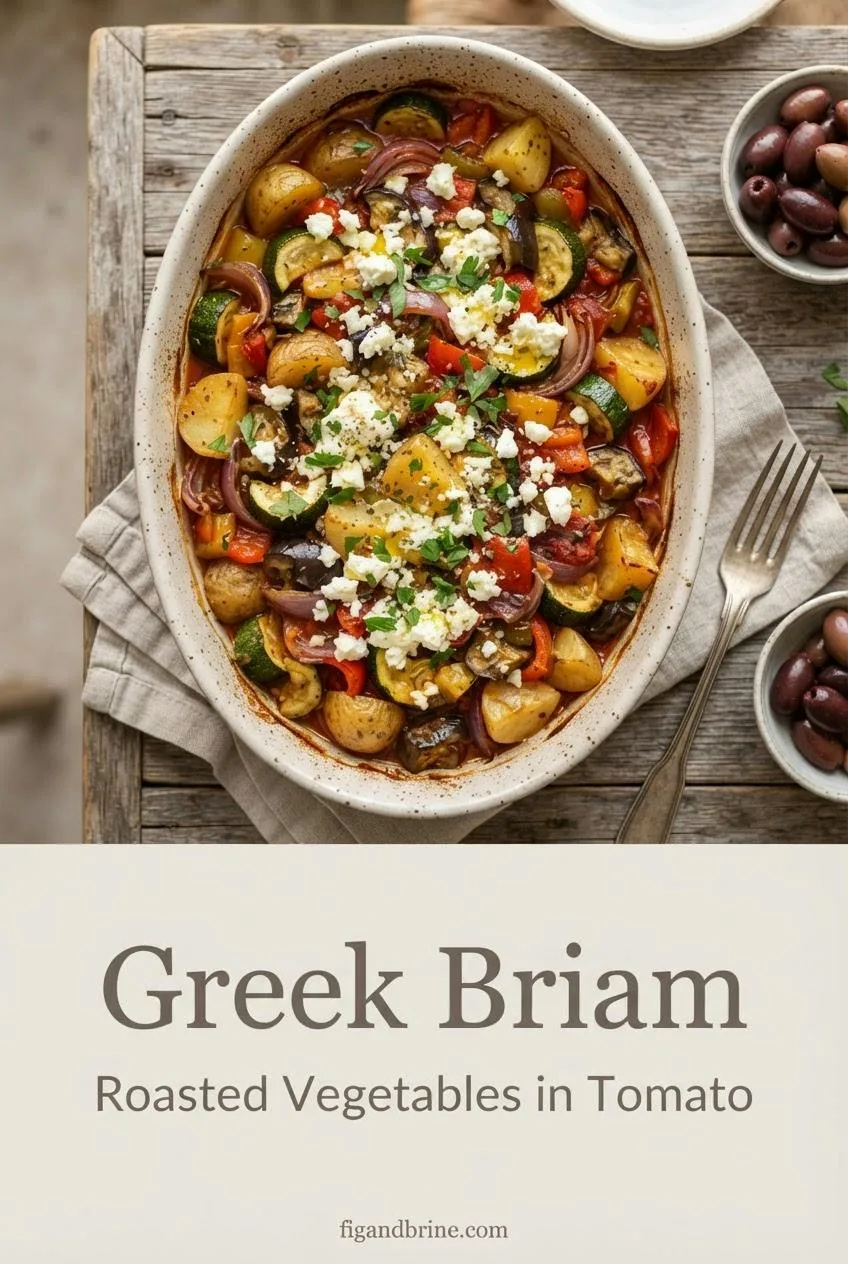
Mediterranean Secret: Briam belongs to the Greek tradition of vegetable dishes cooked generously in olive oil. Vegetables, olive oil and herbs sit at the base of the Mediterranean diet pyramid from Oldways, meant to be enjoyed every day, and a big dish of briam is one of the most satisfying ways to do it.
Continue Cooking
- Mediterranean herbs and spices: the complete pantry guide
- 7-day Mediterranean diet meal plan with grocery list
- Mediterranean diet shopping list: what to buy and skip
With a dish of briam resting on the counter and bread for the juices, Nevaeh Hall
Print
Briam
- Total Time: 95 minutes
- Yield: 4 servings
- Diet: Vegetarian
Description
A hearty Greek vegetable dish featuring roasted potatoes, zucchini, eggplant, and a rich tomato sauce.
Ingredients
- 650 g potatoes, peeled and cut into 2½–3 cm chunks
- 300 g eggplant, cut into 3 cm chunks
- 300 g zucchini, cut into thick 2 cm rounds
- 200 g red bell pepper, cut into large pieces
- 1 medium red onion (about 200 g), cut into wedges
- 500 g ripe fresh tomatoes, grated
- 1 tablespoon tomato paste
- 4 garlic cloves, thinly sliced
- 2 teaspoons dried Greek oregano
- 1 teaspoon dried mint
- 1½ teaspoons salt
- ½ teaspoon black pepper
- 100 ml water
- 80 ml extra virgin olive oil
- 2 tablespoons chopped fresh parsley
- 1 tablespoon chopped fresh dill
- Crumbled feta and crusty bread, to serve
Instructions
- Heat the oven. Heat a fan oven to 200°C (about 390°F) with a rack in the middle.
- Prepare the vegetables. Peel the potatoes and cut them into 2½ to 3 cm chunks. Cut the eggplant into 3 cm chunks, the zucchini into thick 2 cm rounds, the pepper into large pieces and the onion into wedges.
- Make the tomato mixture. Grate the tomatoes into a bowl, discarding the skins. Stir in the tomato paste, sliced garlic, oregano, dried mint, salt, pepper and 100 ml of water.
- Combine everything in the dish. Put the potatoes, eggplant, zucchini, pepper and onion in the baking dish. Pour over the tomato mixture, then the olive oil.
- Toss and spread evenly. Toss everything thoroughly with your hands or a spatula until every piece is coated, then spread the vegetables into a fairly even layer.
- Bake covered. Cover the dish tightly with foil and bake at 200°C fan for 35 minutes.
- Uncover, stir once and raise the heat. Remove the foil, stir gently once, and increase the oven to 210°C fan (about 410°F).
- Bake uncovered for another 35 to 40 minutes, without stirring.
- Check for doneness. A thin knife should slide into the center of a potato with no resistance.
- Rest before serving. Let the briam rest for 15 to 20 minutes.
- Finish and serve. Scatter the chopped parsley and dill over the top, crumble over some feta and serve with crusty bread.
Notes
For best results, ensure the vegetables are not overcrowded in the dish to achieve browning.
- Prep Time: 25 minutes
- Cook Time: 70 minutes
- Category: Main Course
- Method: Baking
- Cuisine: Greek


