
How to Read an Olive Oil Label (Harvest Date, Grades, Seals and Marketing Terms)
Stand in front of the olive oil shelf and every bottle seems to be shouting at you: extra virgin, first cold pressed, imported from Italy, pure, light, 100% natural. Some of those words are protected by law and tell you something real. Others are marketing that sounds reassuring and means very little.
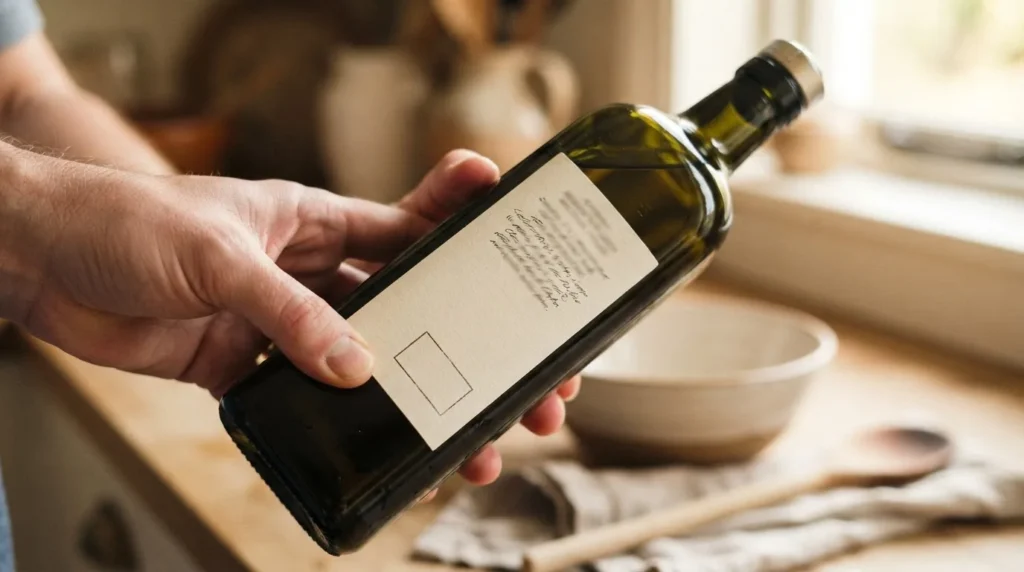
The good news is that you only need to know a handful of label terms to buy a fresh, genuine extra virgin olive oil almost every time. This guide walks through the front and back of a typical bottle: the grade, the dates, where the oil really comes from, the official seals, the claims that sound impressive but say little, and the packaging clues the label doesn’t spell out. For how to use that oil once it’s home, start with my complete guide to how to cook with olive oil like a Mediterranean.
The Quick Answer
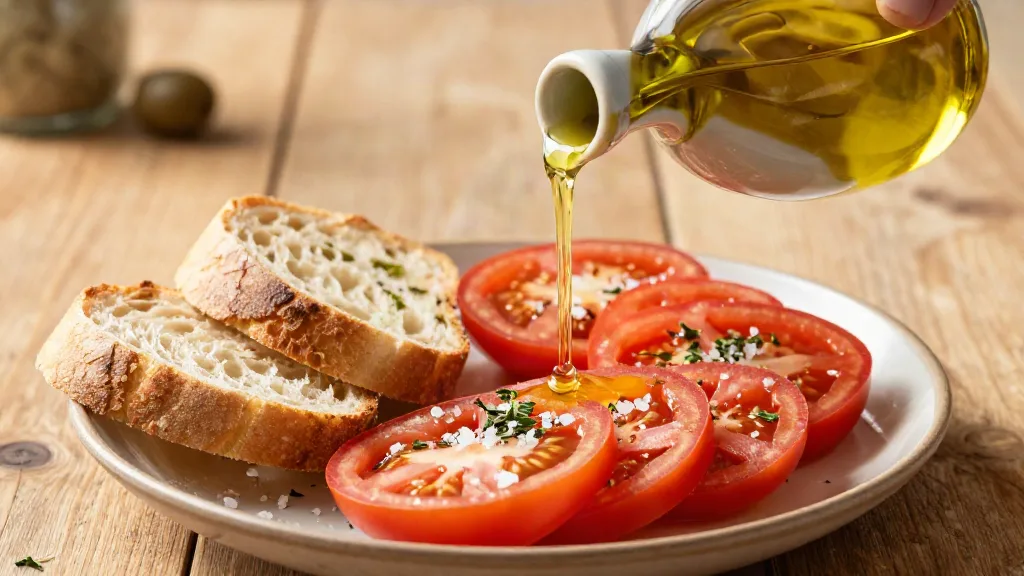
The Short Version: Look for “extra virgin olive oil” as the grade, a harvest date from the most recent season, a specific country or region of origin (not only where it was bottled), and a dark glass bottle or tin. A PDO or PGI seal or a quality seal from a producer council is a bonus. Ignore “pure”, “light” and vague claims like “imported from” or “100% natural”, and don’t count on “first cold pressed” to tell you much on its own.
Step 1: Find the Grade
The single most important words on the label are the grade, sometimes called the category. The International Olive Council sets out the categories most producing countries use, and each one has a maximum level of free acidity, a lab measure of how much the oil’s fats have broken down.
| Grade on the label | What it is | Maximum free acidity (IOC) |
|---|---|---|
| Extra virgin olive oil | Virgin olive oil fit to eat as it is, the top grade | 0.8 g per 100 g |
| Virgin olive oil | Also fit to eat as it is, with small flavor defects allowed | 2 g per 100 g |
| Olive oil | A blend of refined olive oil and virgin olive oils | 1 g per 100 g |
| Olive pomace oil | Refined oil from the pulp left after pressing, blended with virgin oil | 1 g per 100 g |
The words “olive oil” on their own, with no “virgin” in front, usually mean that blend of refined and virgin oil. Refining strips out most of the flavor and the color, which is why those bottles often look pale and taste of very little.
In the European Union, the grade must be explained on the label in fixed wording. According to the Food Safety Authority of Ireland, which summarizes the current EU olive oil marketing rules, extra virgin olive oil must carry the description “superior category olive oil obtained directly from olives and solely by mechanical means.” If you see that sentence, you’re holding the top grade.
In the United States, the USDA’s grade standards for olive oil, in effect since October 2010, use similar names such as U.S. Extra Virgin Olive Oil and U.S. Olive Oil. They are voluntary, though, so the grade on an American shelf isn’t checked the way an EU label is.
Step 2: Check the Dates
Harvest date: the one to look for
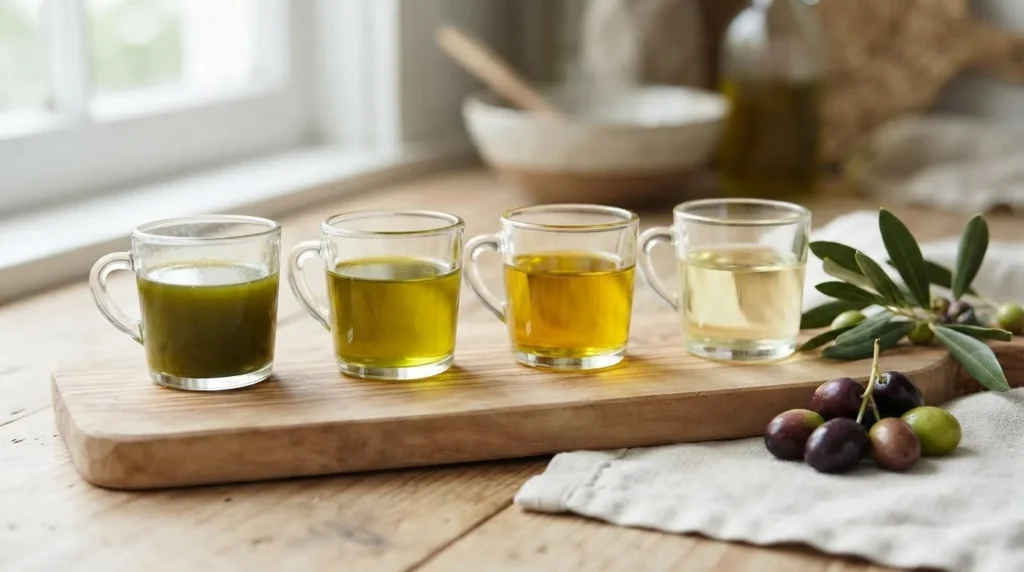
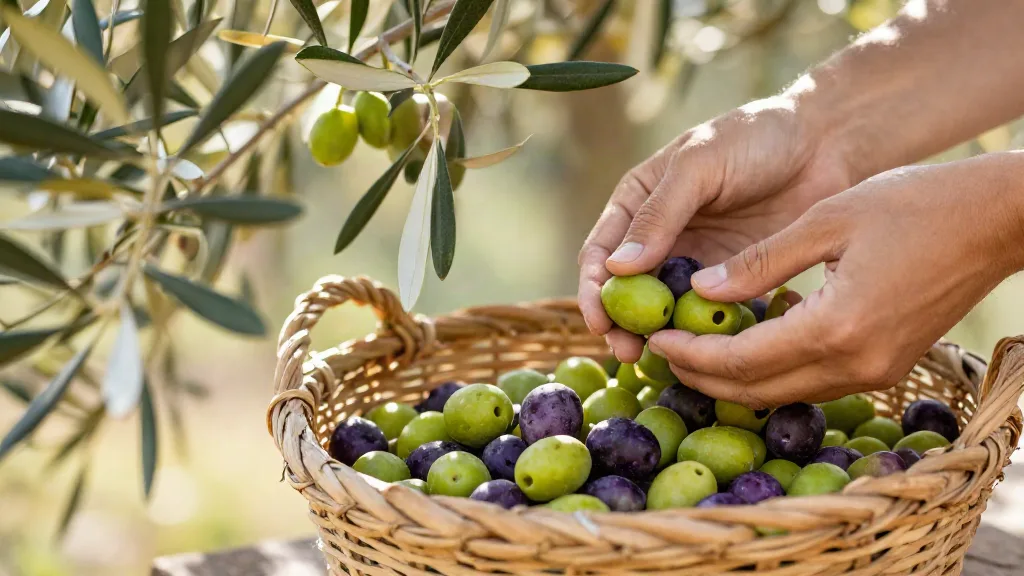
Olive oil is a fresh fruit juice, and it’s at its best young. The most useful date on a bottle is the harvest date, the season the olives were picked and pressed.
The UC Davis guide to choosing olive oil advises looking for a harvest date rather than a best-by date, using the oil within 15 to 18 months of harvest and choosing the most recent harvest available. It also notes that most oil doesn’t carry a harvest date at all, but the better producers tend to print one.
In the EU, a harvest year may only appear if 100% of the oil in the container comes from that harvest, according to the FSAI. So a harvest year on a European bottle is a real promise, not a guess.
Olives are picked in autumn and winter in the Northern Hemisphere, so a harvest is often written as two years, such as 2025/2026. That’s one season, not two.
Best-before date: less helpful
The best-before date is the producer’s estimate of how long the oil will keep its quality. It doesn’t tell you when the olives were picked, so a distant best-before date doesn’t prove the oil inside is young. That’s why the harvest date matters more.
If there’s no harvest date, the best-before date is still worth a glance. A bottle close to that date has probably been around a long time.
Step 3: Find Out Where It Really Comes From
The front of the bottle often makes a big deal of a country, but the important part is usually in small print on the back.
- Where the olives were grown and pressed. UC Davis suggests checking where the oil was made, not where it was packaged. “Bottled in Italy” or “packed in Italy” can describe oil grown somewhere else.
- Blends. In the EU, extra virgin and virgin olive oils must carry a designation of origin. Oils from several countries are labeled with phrases like “blend of EU olive oils” or “blend of EU and non-EU olive oils.” There’s nothing wrong with a blend, but it isn’t the single-country oil the front of the bottle may suggest.
- Refined blends don’t get one. The plain “olive oil” grade and olive pomace oil must not carry a designation of origin in the EU, according to the FSAI. A flag on one of those bottles describes the company, not the olives.
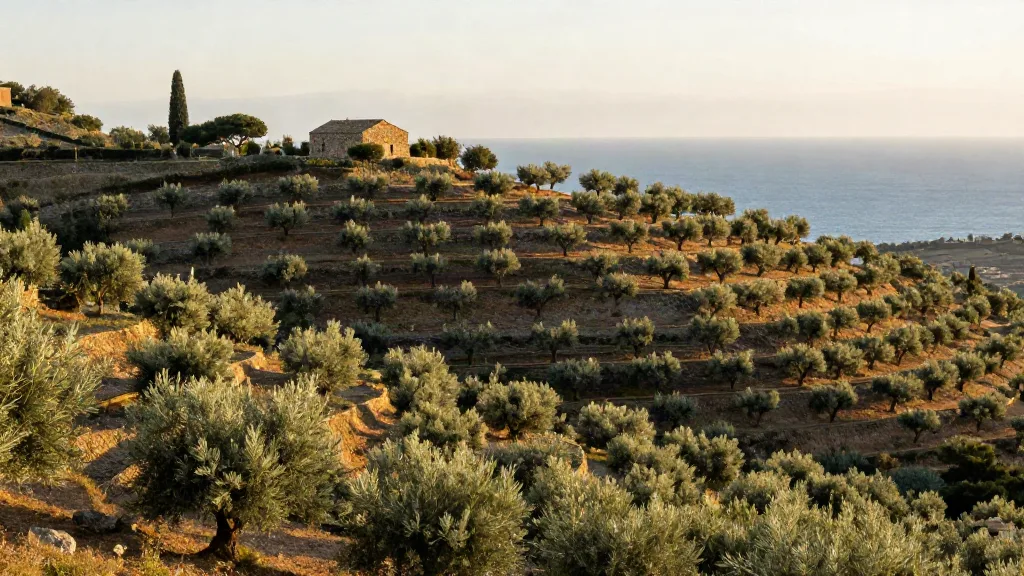
A specific region or a named estate is usually a good sign. It means someone was willing to be held to a place.
Step 4: Look for Official Seals
Quality seals mean someone outside the company has checked the oil against a standard.
- PDO (Protected Designation of Origin). The European Commission explains that for a PDO product, every part of the production, processing and preparation must take place in the named region. For olive oil, that means the olives are grown and pressed there.
- PGI (Protected Geographical Indication). For most PGI products, at least one stage of production, processing or preparation takes place in the region. It’s a looser link to place than PDO.
- Producer council seals. UC Davis points to seals from groups such as the California Olive Oil Council, and notes that quality standards for California olive oil are stricter than international standards.
A seal isn’t required for a good oil, and many excellent small producers don’t pay for one. But when it’s there, it’s a real check rather than a slogan.
Step 5: Know Which Claims Mean Little
These phrases sound like quality but deserve a second look.
“First cold pressed” and “cold extracted”
In the EU, these terms are regulated. Under the EU’s olive oil marketing standard, set out in Regulation 29/2012, “first cold pressing” may only be used for extra virgin or virgin oil made below 27°C with a traditional hydraulic press, and “cold extraction” for oil made below 27°C by percolation or centrifugation. Many modern mills use centrifuges rather than presses, which is why you’ll often see “cold extracted” instead.
What these phrases don’t do is make an oil better than other extra virgin oils. Any extra virgin olive oil is already mechanically extracted, and outside the EU the terms aren’t policed the same way. Treat them as a nice detail, not a reason to pay more.
“Pure” and “light”
Neither “pure” nor “light” is a grade in the USDA standards. On a shelf, these words usually appear on the refined-blend “olive oil” grade, and “light” refers to a lighter flavor and color, not fewer calories. My comparison of extra virgin vs. light vs. pure olive oil explains when, if ever, they’re worth buying.
“Imported from”, “100% natural”, “Mediterranean”
These aren’t grades or origins. “Imported from Italy” tells you where the bottle was shipped from, not where the olives grew, and “natural” and “Mediterranean” have no fixed meaning on an olive oil label.
Acidity numbers
Some bottles proudly print a low acidity, like 0.2% or 0.3%. In the EU, a stated acidity is only allowed alongside three other lab values (peroxide value, wax content and ultraviolet absorption), in the same size lettering, under Regulation 29/2012. Free acidity is a lab measurement, not a taste; it doesn’t tell you how fruity or peppery the oil will be, and an oil only has to be under 0.8 g per 100 g to qualify as extra virgin.
Tasting notes
Words like “fruity”, “bitter” and “pungent” are good signs when they’re real. In the EU, taste and smell descriptions may only appear on extra virgin and virgin olive oils, and specific tasting terms may only be used if they’re based on an official panel assessment.
Step 6: Read the Packaging
The bottle itself tells you something the words don’t.
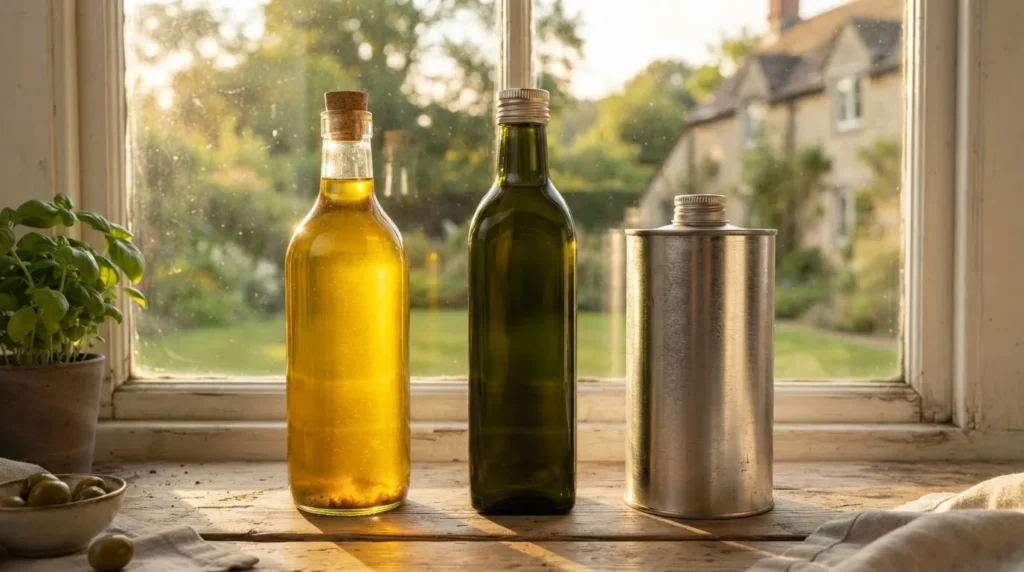
- Dark glass or tin. Light speeds up the breakdown of olive oil. A clear bottle on a brightly lit shelf has been exposed the whole time it’s been there. Dark green or brown glass and tins protect the oil.
- Storage instructions. In the EU, labels for extra virgin, virgin, olive oil and pomace oil must say that the oil should be stored away from light and heat, according to the FSAI. That’s the same advice in my guide to how to store olive oil so it stays fresh.
- Size. UC Davis notes that an unopened extra virgin olive oil bought within its harvest year may last up to two years, but it’s best used within a couple of months of opening. Buy a size you’ll finish in that time.
A Quick Label Checklist for the Store
Take this to the shelf, or keep it on your phone:
| Check | Good sign | Be cautious |
|---|---|---|
| Grade | “Extra virgin olive oil” | “Olive oil”, “pure”, “light” |
| Dates | A harvest date from the latest season | Only a best-before date, or one that’s close |
| Origin | A named country, region or estate where the olives were grown | “Bottled in” or “imported from” only |
| Seals | PDO, PGI or a producer council seal | Made-up badges with no organization behind them |
| Packaging | Dark glass or a tin | Clear glass under bright lights |
| Size | A bottle you’ll finish within a couple of months of opening | A huge bottle for a small household |
Taste It at Home
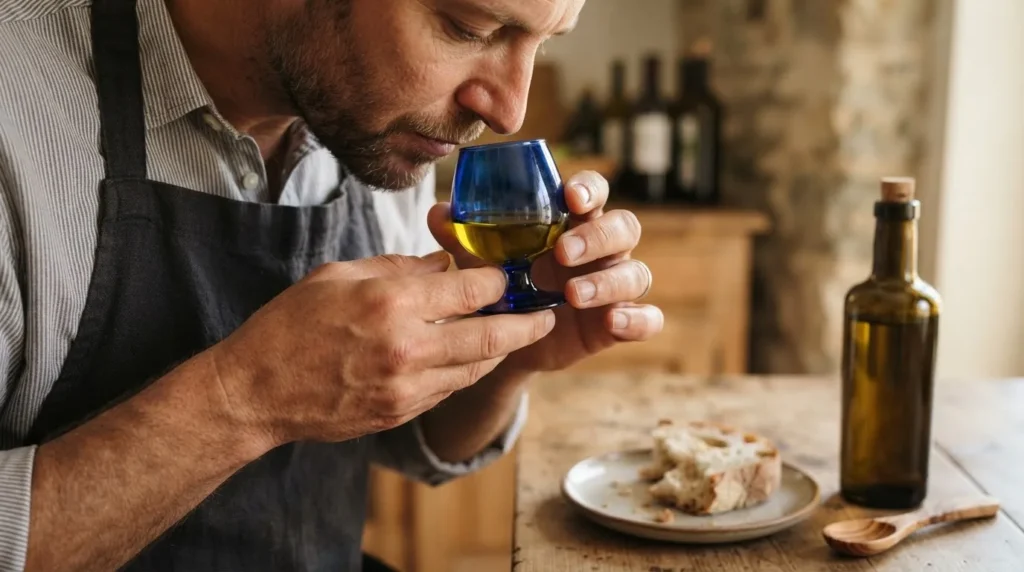
A label gets you most of the way. Your own nose and tongue finish the job. Pour a spoonful into a small glass, cup it in your hands for a moment to warm it, then smell it and taste it.
A fresh extra virgin olive oil smells green and fruity, like cut grass, green apple, tomato leaf or artichoke. It often tastes a little bitter and leaves a peppery catch at the back of the throat. That sting is a good thing. If it smells of crayons, putty or stale nuts, or tastes flat and greasy, the oil is past its best, whatever the label says.
Fresh, peppery oil is the one to save for finishing dishes where you’ll taste it raw, like a Greek village salad with a slab of feta or a bowl of homemade labneh. For everyday cooking, a good extra virgin oil works too, and yes, you can fry with extra virgin olive oil.
Common Label Mistakes
- Trusting the flag on the front. Turn the bottle over and read where the olives were grown.
- Choosing by best-before date. A long best-before date can hide an old oil. Look for the harvest date instead.
- Paying extra for “first cold pressed”. In the EU it’s a real process term, but it doesn’t make one extra virgin oil better than another.
- Buying “light” to save calories. “Light” is about flavor and color, not fat or calories.
- Grabbing the biggest bottle. A large bottle that sits open for months loses the freshness you paid for.
- Ignoring the packaging. Clear glass under supermarket lights is a poor start for any oil.
Med Secret: Once you find a producer whose harvest date, origin and taste you trust, stick with them and buy their newest harvest each year. A good label is a promise, and the best way to know it’s kept is to taste it every season.
Keep olive oil on your shopping list as a staple, and buy it the way you’d buy fresh produce: recent, well-stored and in an amount you’ll use.
Continue Learning
- The Mediterranean diet for beginners: the complete guide
- A 7-day Mediterranean diet meal plan
- Greek lemon potatoes, roasted in olive oil
With a fresh bottle on the counter, Nevaeh Hall


