
Can You Fry with Extra Virgin Olive Oil? The Smoke Point Truth
“Don’t fry with extra virgin olive oil, the smoke point is too low.” If you’ve spent any time in American cooking forums, you’ve heard it. Meanwhile, cooks in Spain, Greece and southern Italy have been frying eggplant, potatoes, fish and fritters in olive oil for generations.
So who’s right? The short answer: yes, you can fry with extra virgin olive oil, at home, at normal frying temperatures. The longer answer is more interesting, because smoke point turns out to be the wrong number to worry about. Here’s what the research actually says, how to fry with olive oil safely, and when it makes sense to reach for a cheaper bottle instead.
If you’re new to cooking with olive oil, my complete guide to how to cook with olive oil like a Mediterranean covers every method, from sautéing to poaching. This post goes deep on frying.
The Quick Answer
The Short Version: Extra virgin olive oil is safe for sautéing, shallow-frying and home deep-frying, as long as you keep the oil below the point where it smokes. Most frying happens at 350 to 375°F (175 to 190°C). Research suggests that an oil’s resistance to breaking down matters more than its smoke point, and extra virgin olive oil holds up well. The main reason to use a cheaper olive oil for deep-frying is cost, not safety.
What Smoke Point Actually Means
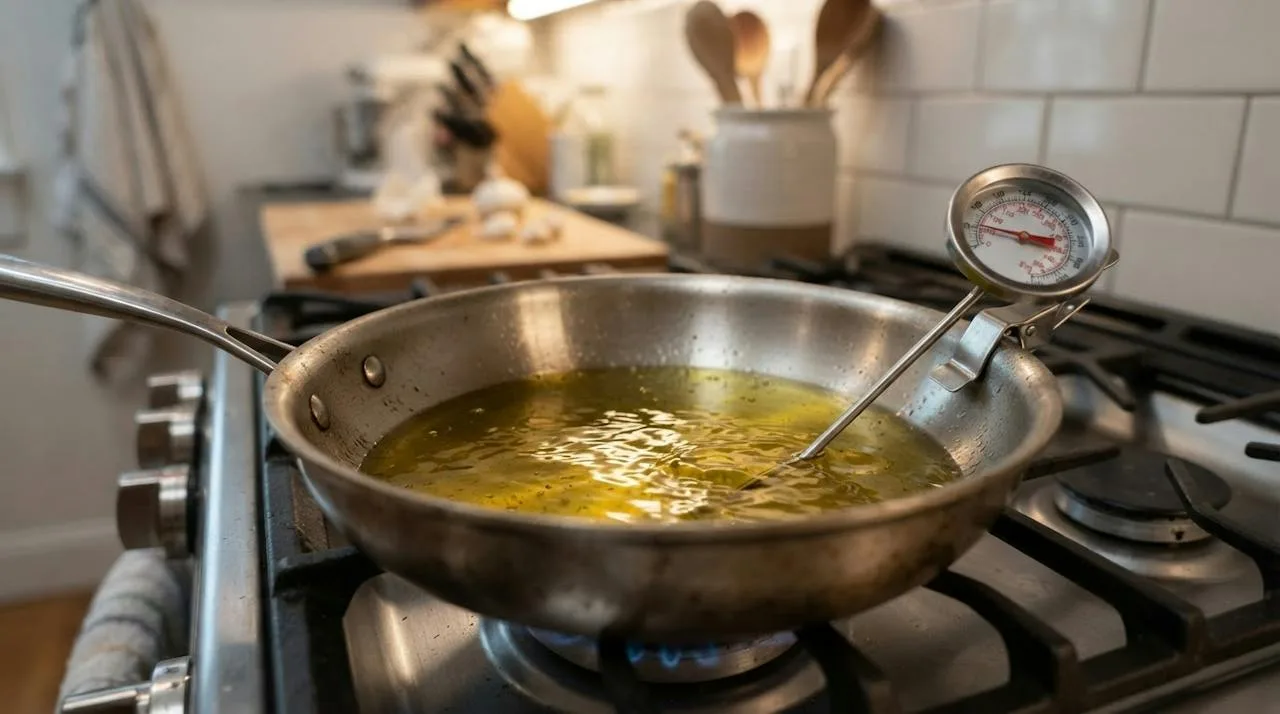
The smoke point is the temperature at which an oil starts to give off visible smoke. Past that point, the oil is breaking down, the flavor turns acrid, and the smoke itself is irritating. You never want to cook with smoking oil, whatever oil it is.
The problem is that smoke point gets treated as a single, fixed number for each oil, and it isn’t. For extra virgin olive oil, you’ll see figures quoted anywhere from the mid-300s to around 400°F, because the real number depends on the individual oil: how fresh it is, how carefully it was made, and how much free fatty acid it contains. A fresh, high-quality extra virgin olive oil generally smokes at a higher temperature than a tired, old one.
Here’s the key point: everyday frying happens at roughly 350 to 375°F (175 to 190°C). That’s within the range where a good extra virgin olive oil works without smoking. You only run into trouble if you overheat the pan, or if your oil is old.
Why Smoke Point Is the Wrong Question
The more useful question isn’t “when does this oil smoke?” It’s “how much does this oil break down while I’m cooking with it?”
In a 2018 study published in Acta Scientific Nutritional Health, researchers heated extra virgin olive oil and other common cooking oils, including canola and coconut oil, to 240°C (464°F) and then held them at 180°C (356°F) for 6 hours, testing them along the way. Their findings:
- Smoke point did not predict how oils performed when heated.
- Oxidative stability and the amount of polyunsaturated fat were better indicators of how an oil would hold up.
- Extra virgin olive oil produced the lowest level of polar compounds (breakdown products formed as oil degrades), closely followed by coconut oil. Oils high in polyunsaturated fat, like canola, broke down more readily.
The reason comes down to chemistry. Extra virgin olive oil is mostly monounsaturated fat, which resists oxidation better than polyunsaturated fat, and it carries natural antioxidants that help protect it under heat.
One honest caveat: the study’s authors work for Modern Olives Laboratory Services, an Australian lab connected to the olive oil industry. The results fit with what we know about oil chemistry, but it’s worth knowing who ran the tests.
What Happens to the Food You Fry
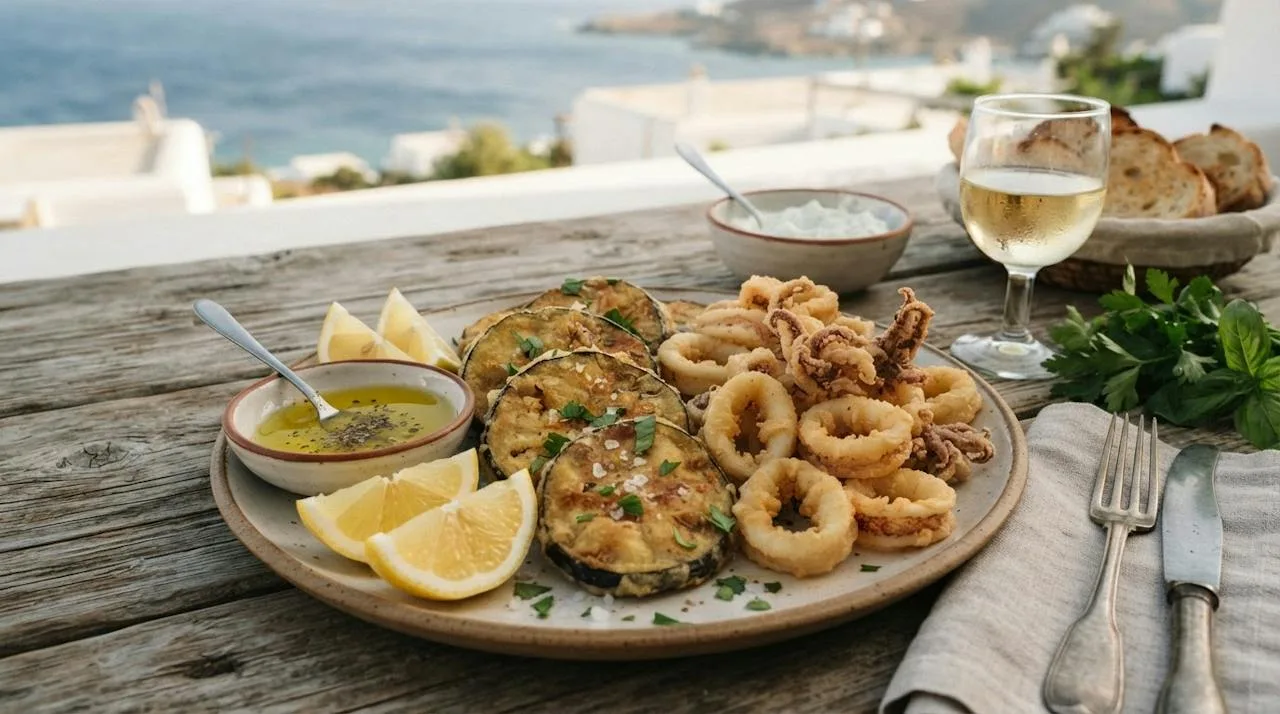
Frying in olive oil doesn’t just cook your food. It changes what ends up in it.
Researchers at the University of Granada, writing in Food Chemistry in 2015, cooked potato, tomato, eggplant and pumpkin by deep-frying, sautéing and boiling, and compared the results. As reported by FoodNavigator, deep-frying in extra virgin olive oil produced the greatest increase in phenolic compounds and antioxidant capacity, because phenols from the olive oil transferred into the vegetables.
The researchers were clear about the trade-off: frying also increases the energy density of food because of the oil it absorbs. Fried food is still fried food. It’s a once-in-a-while method, not an everyday one.
Is Frying in Olive Oil Bad for Your Heart?
Within a Mediterranean pattern, the evidence is reassuring. A large Spanish study published in the BMJ followed 40,757 adults for 11 years. According to ScienceDaily’s summary, eating fried food cooked in olive or sunflower oil was not linked to coronary heart disease or early death.
The researchers added an important caveat: Spain is a country where people fry in olive or sunflower oil. The results would likely be different where solid fats and repeatedly reused oils are common. The oil you fry in, and how many times you reuse it, matter.
For the bigger picture on how olive oil fits into healthy eating, see my Mediterranean diet guide for beginners.
How to Fry with Extra Virgin Olive Oil
Pan-Frying and Sautéing
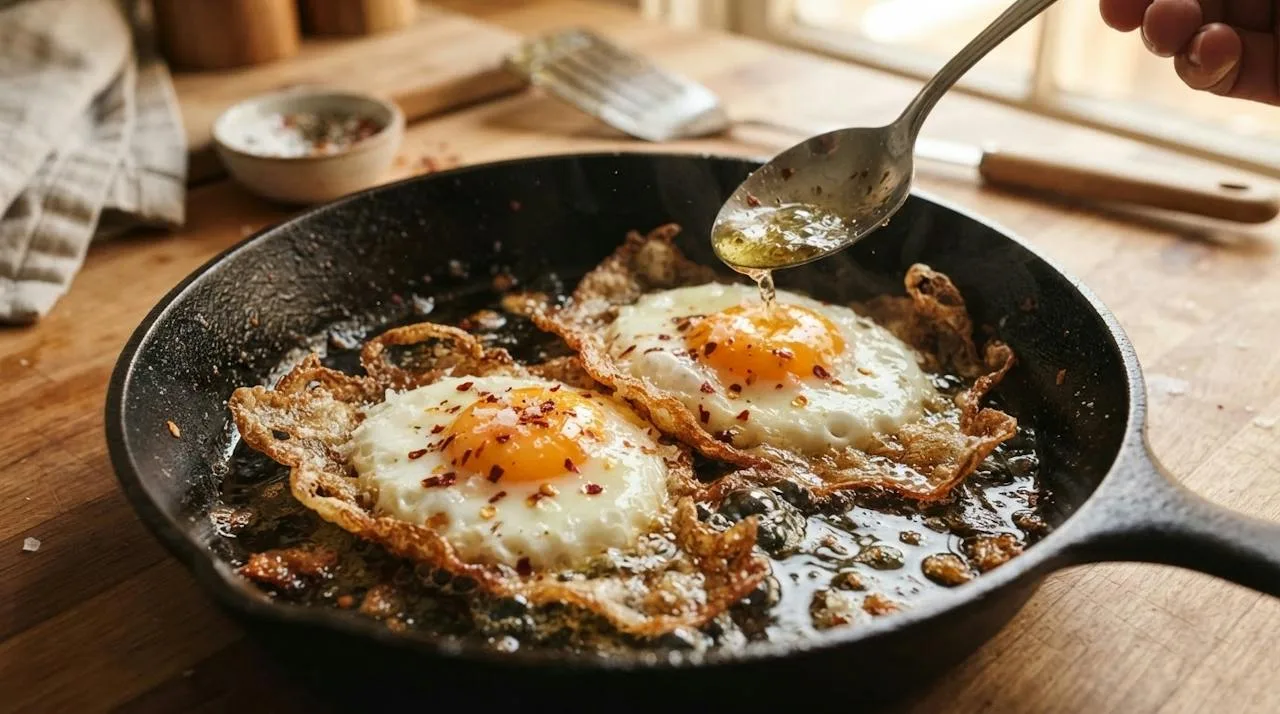
This is the easiest place to start, and where extra virgin olive oil shines.
- Heat the pan and oil together over medium heat, rather than heating an empty pan until it’s scorching.
- Wait for the shimmer. The surface ripples and the oil flows easily when you tilt the pan.
- Test with a small piece of food. It should sizzle steadily the moment it hits the oil.
- If you see smoke, pull the pan off the heat and let it cool before carrying on.
Olive-oil fried eggs with crisp, lacy edges are one of the simplest Mediterranean breakfasts there is.
Shallow-Frying
Perfect for zucchini, eggplant, fritters, fish fillets and cutlets.
- Use a heavy pan and enough oil to come about ¼ inch up the sides.
- Heat over medium-high until the oil shimmers and a piece of bread sizzles immediately.
- Fry in small batches so the oil temperature doesn’t drop and the food doesn’t turn greasy.
- Drain on a wire rack rather than paper towels, so the bottoms stay crisp.
Deep-Frying
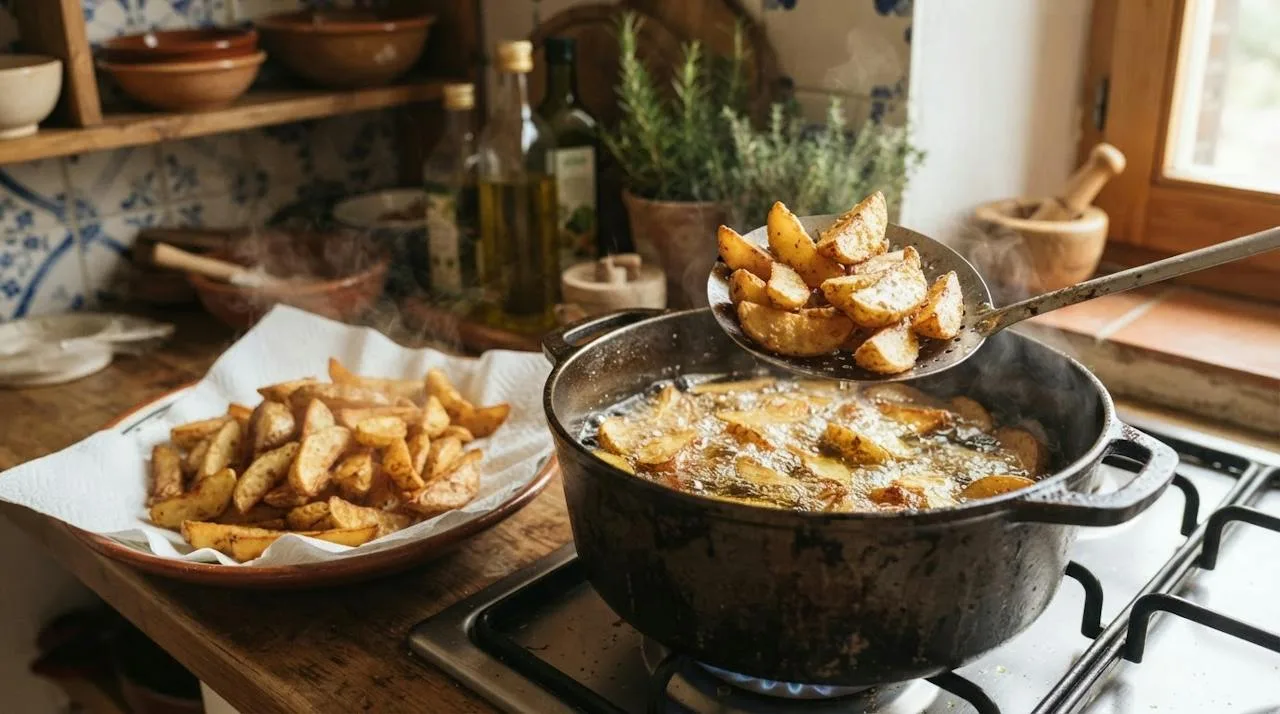
You can deep-fry in extra virgin olive oil, and in parts of Spain and Greece, people do. The main drawback is cost, since deep-frying takes a lot of oil.
- Use a heavy, deep pot, and fill it no more than halfway so there’s room for the oil to bubble up.
- Clip on a thermometer and aim for 350 to 375°F (175 to 190°C).
- Pat food dry before frying. Water makes hot oil spit.
- Fry in batches and let the oil come back up to temperature between them.
- Lift food out with a slotted spoon or spider and drain on a rack.
Which Olive Oil Should You Fry With?
All olive oils can be used for frying. The choice is mostly about flavor and budget.
| Frying job | Best choice | Why |
|---|---|---|
| Fried eggs, sautéing, pan-frying | Extra virgin | Small amounts, and you’ll taste the flavor |
| Shallow-frying vegetables and fish | Extra virgin or regular olive oil | Either works; choose by budget |
| Deep-frying large batches | Regular (“pure”) or light olive oil | Uses a lot of oil, so cost matters |
| Frying where you want no olive flavor | Light olive oil | Neutral taste |
Not sure what separates these bottles? My comparison of extra virgin vs. light vs. pure olive oil explains each grade, and my Mediterranean diet shopping list shows what to look for at the store.
Mediterranean Secret: Keep two bottles. Use an everyday extra virgin olive oil for cooking and frying, and save your best, freshest, most peppery bottle for drizzling over finished dishes, where you’ll actually taste the difference.
Signs Your Oil Is Too Hot or Breaking Down
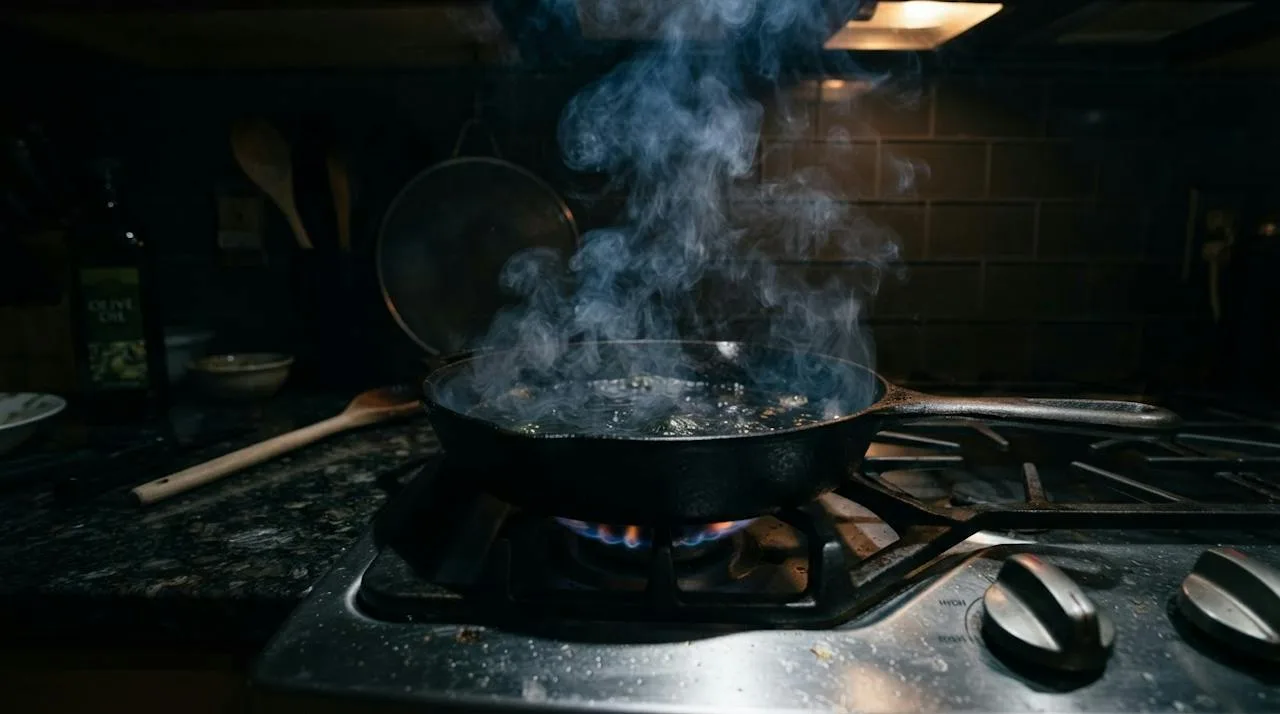
Watch for these, whatever oil you’re using:
- Visible smoke: the oil is too hot. Take the pan off the heat.
- An acrid, burnt smell: the oil has started breaking down.
- Much darker color than when you started.
- Thick, foamy or sticky oil that doesn’t drain cleanly from food.
Burnt oil will make the whole dish taste bitter. If your oil smokes heavily, let it cool, discard it, wipe out the pan and start again with fresh oil at a lower heat.
Common Mistake: Using an old bottle for frying “because it’s not good enough for salads anymore.” Oil that has been open for months, or stored near the stove, has already started to oxidize. It’s more likely to smoke and taste stale. Fry with oil that’s still fresh.
Can You Reuse Olive Oil After Frying?
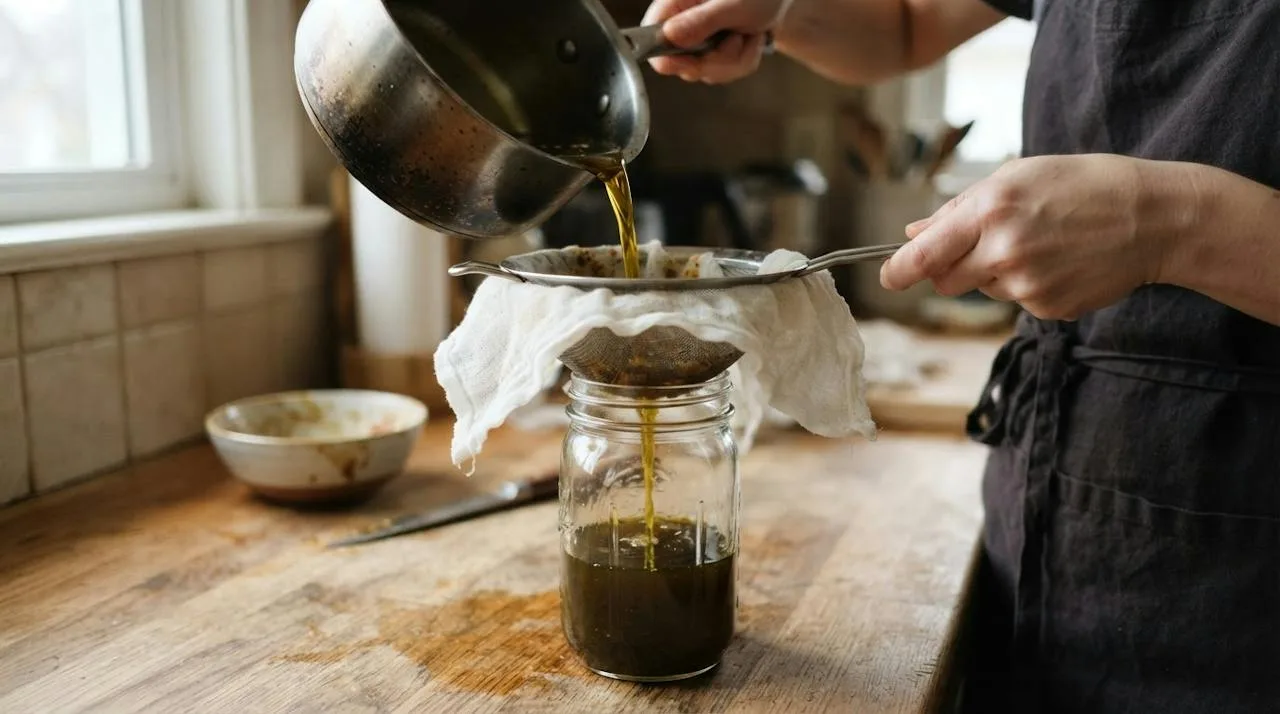
Yes, a few times, if you treat it well.
- Let the oil cool completely.
- Strain it through a fine sieve lined with cheesecloth or a coffee filter to remove crumbs, which burn and speed up breakdown.
- Store it covered in a cool, dark place, away from the stove.
- Reuse it for similar foods. Oil that fried fish will taste of fish.
- Discard it once it’s dark, foamy, thick or smells off.
Remember the BMJ researchers’ caveat: oils that are reused over and over are part of why fried food has a worse reputation in some countries. When in doubt, use fresh oil.
Frying Safety
Hot oil deserves respect, whatever kind it is. The U.S. Fire Administration advises you to “stand by your pan” and turn off the burner if you leave the kitchen, notes that fires start when the heat is too high, and recommends keeping a pan lid or baking sheet nearby to cover the pan if it catches fire. Never pour water on burning oil.
A few more habits worth building:
- Turn pot handles toward the back of the stove.
- Lower food into the oil gently, away from you.
- Let the oil cool completely before moving the pot.
Frequently Asked Questions
Is it unhealthy to fry with extra virgin olive oil? No more than frying with any other oil, and research suggests it holds up better than many. A 2018 heating study found it produced the lowest level of polar compounds of the oils tested, and a large Spanish study found no link between eating food fried in olive or sunflower oil and heart disease. Fried food is still higher in calories, so enjoy it in moderation.
Does frying destroy the benefits of extra virgin olive oil? Heat changes any oil, and some of the delicate aromas fade. But extra virgin olive oil keeps a good share of its stability under normal cooking, and the University of Granada research showed that its phenols can even transfer into the vegetables fried in it.
What temperature should I fry at with olive oil? Most frying happens at 350 to 375°F (175 to 190°C). Use a thermometer for deep-frying. For pan-frying, look for a shimmer and a steady sizzle, and back off the heat at the first sign of smoke.
Is light olive oil better for frying than extra virgin? Not healthier, just cheaper and more neutral in flavor. “Light” refers to flavor and color, not calories. It’s a sensible choice for big deep-frying jobs where you’d go through a lot of oil.
Can I roast at 425°F with extra virgin olive oil? Yes. The oven’s air temperature isn’t the same as the temperature of the thin coat of oil on vegetables, which stay cooler while they release moisture. My vegetable roasting times and temperatures chart uses about 1½ tablespoons of olive oil per tray at 425°F (220°C), and my guide to roasting vegetables the Mediterranean way covers the full technique.
Put It into Practice
Once you’re comfortable frying with olive oil, a whole range of Mediterranean dishes opens up. Shallow-fry thick rounds of eggplant and layer them with tomato sauce. Fry crispy home-cooked chickpeas in a little olive oil with cumin and paprika to scatter over a salad or one of the bowls from my Mediterranean grain bowls guide. Pan-fry fish fillets and finish them with chopped rind from a jar of homemade preserved lemons, or serve fried vegetables with salty brined olives from my Mediterranean preserving guide.
Want to fit these meals into a full week? My 7-day Mediterranean diet meal plan shows how olive oil cooking works day to day.
With a skillet of shimmering oil and no fear of the heat, Nevaeh Hall


