

How to Cook Eggplant So It’s Never Bitter or Soggy (Tested Methods)
Eggplant has a reputation problem. Ask people why they don’t cook it, and you’ll hear the same two complaints: it’s bitter, or it turns into a greasy, soggy mess. I’ve had both, so I tested eggplant side by side: salted vs. unsalted, cubes vs. rounds vs. long slices, peeled vs. unpeeled, pan-seared, broiled and roasted whole, plus the frying and oven-roasting tests from my caponata and roasting chart.
What I found surprised me. Bitterness was the smaller problem. The real culprits behind disappointing eggplant were too much oil, too little heat and a crowded pan. Get those right, and eggplant turns deeply browned outside and creamy inside, with or without salting.
For more on oven-roasting vegetables in general, see my guide to roasting vegetables the Mediterranean way.
The Quick Answer
The Short Version: Cut eggplant into 2 cm cubes, toss 500 g with about 1½ tablespoons of olive oil right before cooking, and sear it in a single layer in a large, hot skillet over medium-high heat for 10 to 12 minutes, leaving it undisturbed for about 3 minutes before the first turn. Salting is optional: it slightly softened a sharp edge in my test, but heat, space and controlled oil mattered far more.
Is Salting Eggplant Necessary?
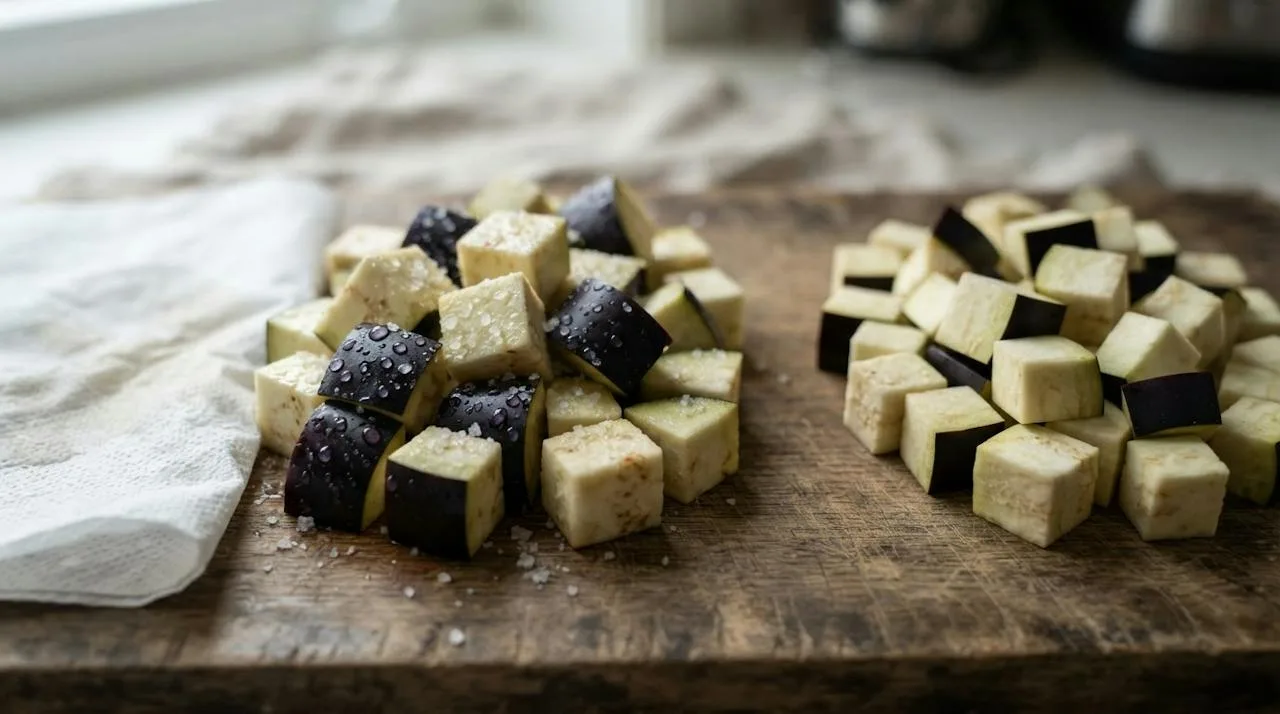
To find out, I cooked two 500 g batches of the same globe eggplant, cut into 2 cm cubes, in the same stainless-steel skillet over medium-high heat for about 10 to 12 minutes.
- Unsalted: Not dramatically bitter. There was a slightly sharper, more earthy taste near the skin.
- Salted: I sprinkled the cubes with 5 g of salt (about 1% of the eggplant’s weight), left them for 30 minutes and patted them very dry. They tasted a little less sharp, but the difference wasn’t dramatic.
My conclusion: salting isn’t necessary to make modern eggplant taste good. It can soften a sharp edge slightly, but its bigger effect is on moisture and texture. University of Illinois Extension notes that salting reduces the water content of eggplant and helps it absorb less oil during cooking. In my caponata testing, salting for 30 minutes instead of 10 helped the cubes brown instead of soaking up oil when frying.
I wouldn’t promise that salting always removes bitterness, though. The variety and freshness of the eggplant matter.
How to Salt Eggplant (If You Choose To)
- Cut the eggplant into the size you’ll cook it in.
- Sprinkle evenly with salt, about 0.5 to 1% of the eggplant’s weight (5 to 10 g per kilogram). I used 1% for the side-by-side test.
- Leave for 30 minutes. The pieces will release some moisture.
- Pat thoroughly dry with paper towels.
I didn’t rinse the salted eggplant, because rinsing adds water back to the surface. (Illinois Extension suggests rinsing and patting dry to avoid excess salt; if you skip the rinse like I did, keep the salt in that 0.5 to 1% range.) Kept to that range, the finished eggplant didn’t taste too salty. If your recipe includes salty cheese, olives or a salty sauce, reduce the salt at this stage.
Why Eggplant Turns Soggy (And How to Fix It)
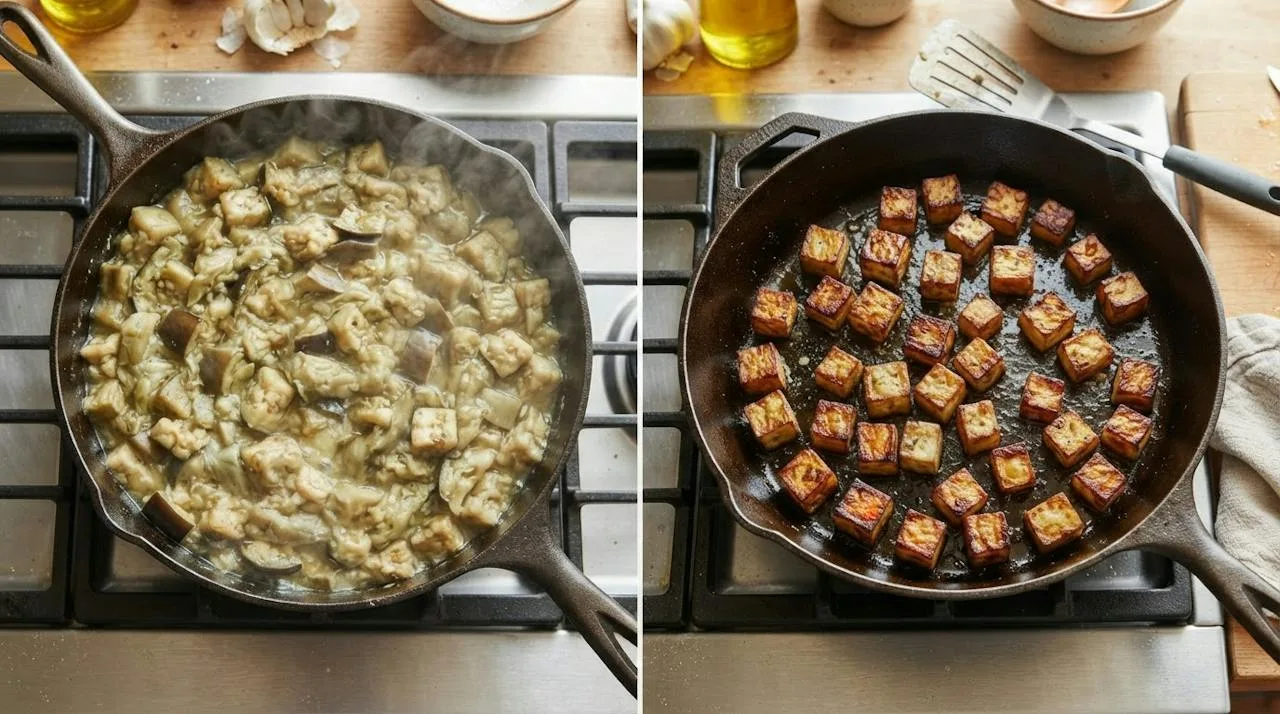
Eggplant is like a sponge: it’s full of air and water, and it absorbs whatever fat you give it. In my testing, four things caused trouble:
- Crowding the pan. Too much eggplant at once released water and steamed instead of browning.
- Low heat. The cubes went soft before they developed browned edges.
- Too much oil. The eggplant absorbed it quickly and became heavy and greasy. In my caponata tests, cutting the frying oil from 150 ml to about 100 ml for 900 g of eggplant made a big difference.
- Too little oil. This didn’t make it soggy, but the outside turned dry and leathery before the center became creamy. In my roasting chart tests, dry patches on oven-roasted eggplant meant it needed about 1 teaspoon more oil.
What worked: medium-high to high heat, a large skillet, a single layer of eggplant, just enough oil to lightly coat the pieces without pooling in the pan, and leaving the pieces alone for a few minutes before turning.
Choosing the Cut
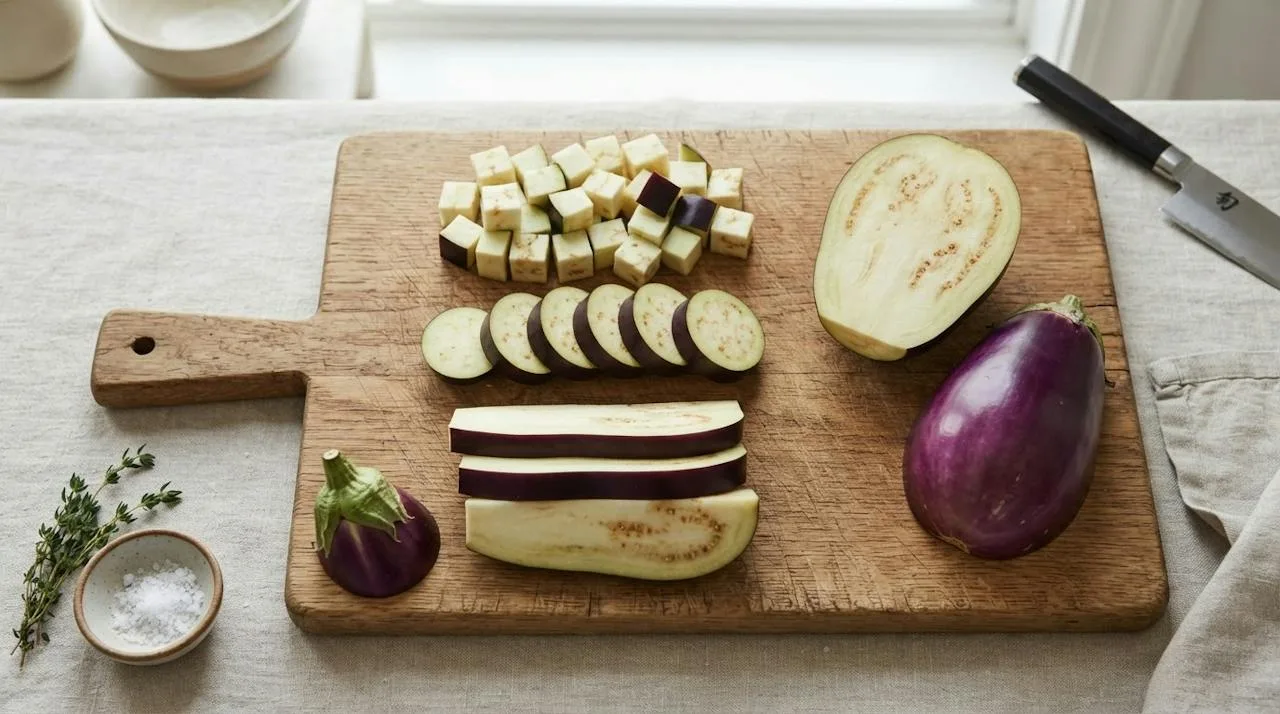
| Cut | Result | Best for |
|---|---|---|
| 2 cm cubes (my favorite) | Browned edges, creamy inside | Pasta, grain bowls, tomato-based dishes |
| 1.5 cm rounds | Easy to brown evenly on both sides; the center can get quite soft | Vegetable platters, layered dishes |
| Long, thicker slices | Creamy in the middle, but the surface can brown before the center softens | Grilling-style dishes; needs more attention |
Peeled or unpeeled? Leaving the skin on helped the pieces hold their shape and gave a little more chew and structure. Peeled eggplant turned softer and creamier. I keep the skin on for cubes and slices, and for dips I use peeled eggplant or whole roasted eggplant with the skin removed after cooking.
Method 1: Pan-Seared Eggplant Cubes (My Everyday Method)
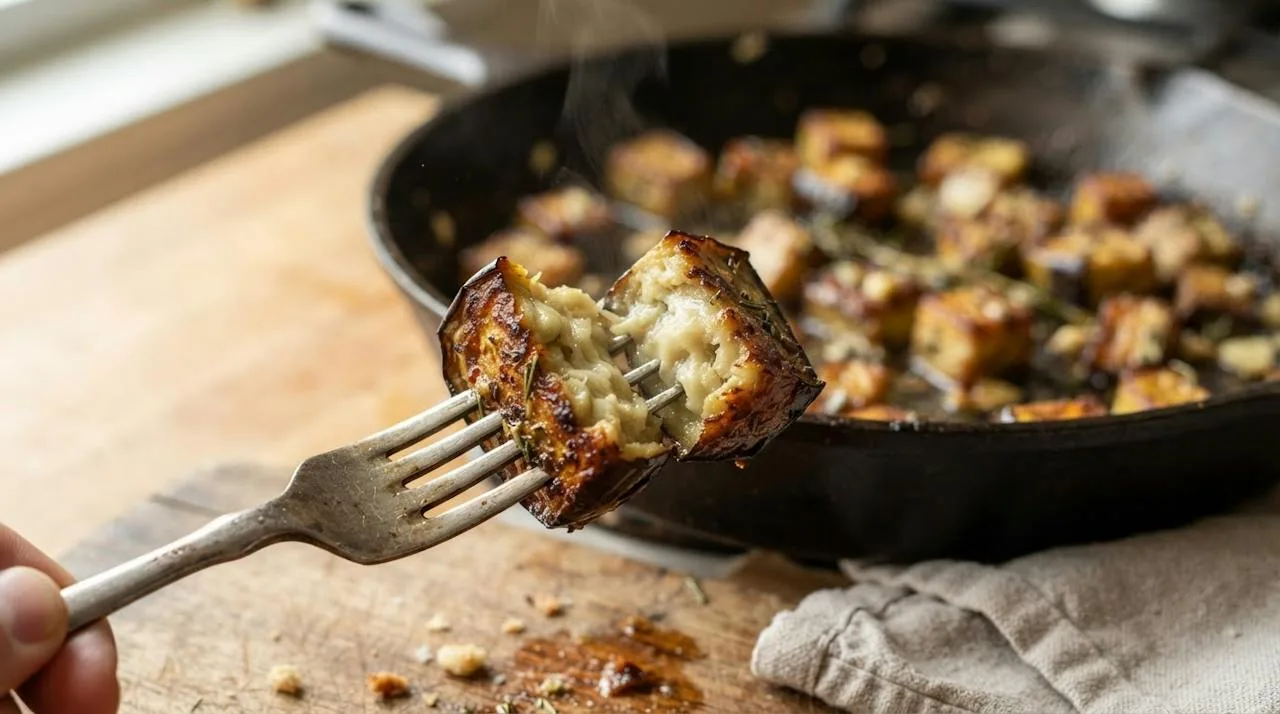
- Cut 500 g of eggplant into 2 cm cubes.
- Heat a large stainless-steel skillet over medium-high heat.
- Toss the cubes with about 1½ tablespoons of olive oil immediately before cooking.
- Add the eggplant in a single layer. Use two batches if it doesn’t fit.
- Leave it undisturbed for about 3 minutes, until the undersides are browned, then turn.
- Cook for about 10 to 12 minutes in total, turning occasionally. If the pan becomes completely dry, add a small teaspoon of oil rather than pouring in a large amount.
The result was a creamy center and a browned exterior, and much less greasy than the batch I cooked over lower heat. The goal is browned edges, not constant stirring.
Method 2: Broiled Eggplant Slices
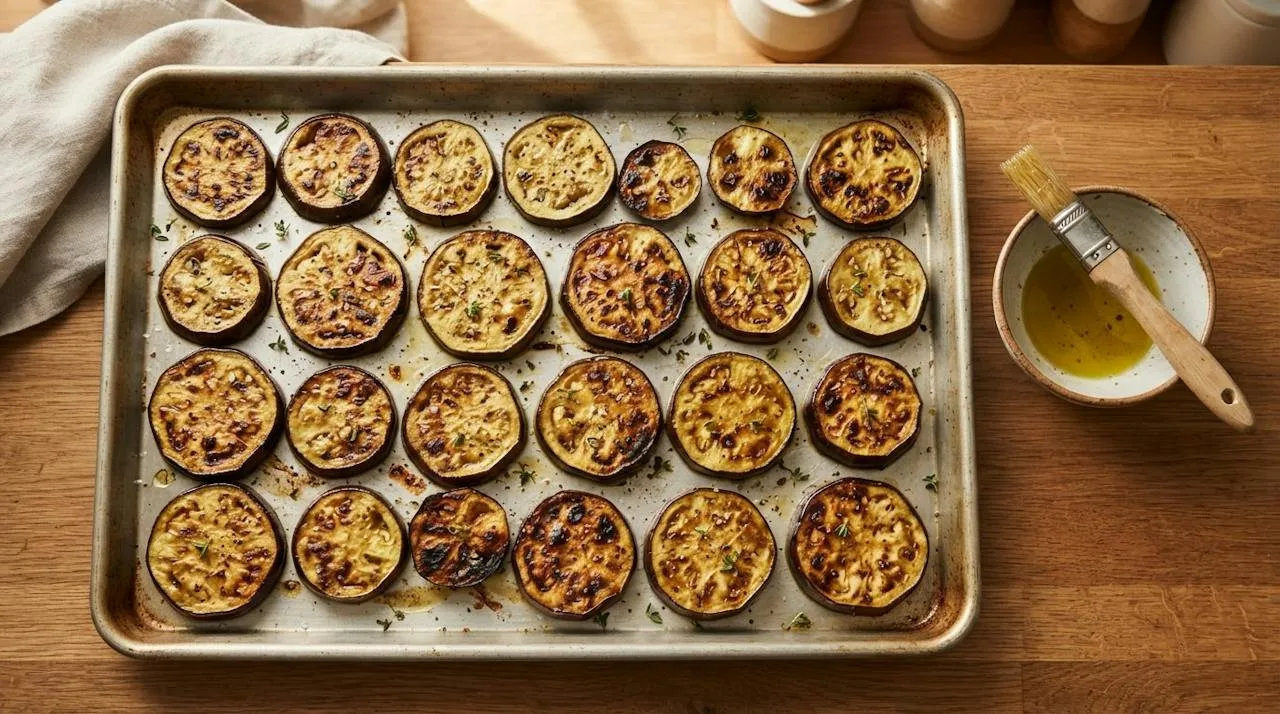
- Cut 500 g of eggplant into slices about 1.5 cm thick.
- Lightly brush both sides with about 1½ tablespoons of olive oil in total. Brushing gave a thinner, more even coating than tossing, which suits slices under the broiler.
- Broil on high about 7 to 10 cm (3 to 4 inches) from the element for about 4 to 6 minutes per side.
- Watch closely. The slices went from browned to burned fairly quickly.
Broiled slices had good browning and a slightly smoky flavor. They were softer than pan-seared eggplant, but not watery as long as they weren’t crowded.
Method 3: Whole Roasted Eggplant for Dips
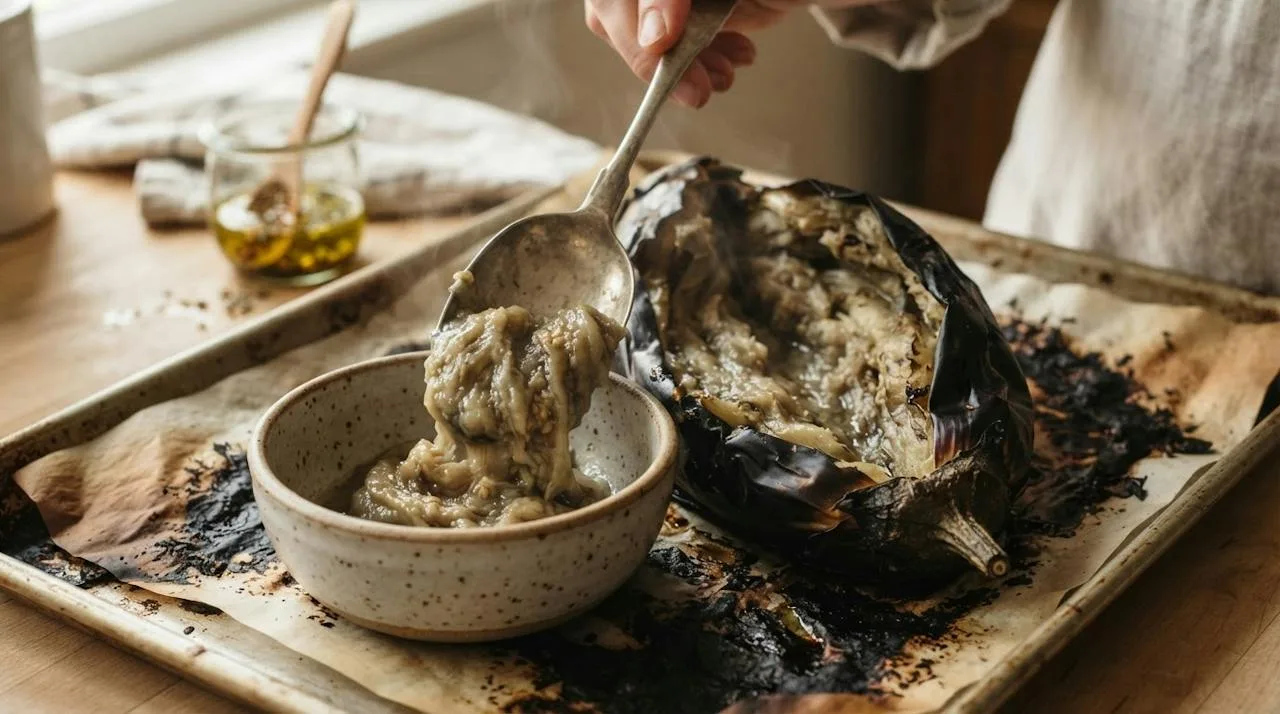
- Pierce whole globe eggplants a few times with a knife.
- Roast at 220°C fan (about 425°F) on the upper-middle rack for about 40 to 55 minutes, depending on size, turning once halfway through.
- Check for doneness. The skin should be deeply browned or blackened, the eggplant should have collapsed, and a knife should go through the center with almost no resistance.
- Cool, then scoop. Let it cool enough to handle, cut it open and scoop out the soft flesh.
This is the base for smoky dips like baba ganoush. A direct gas flame would give an even smokier result, but I haven’t tested that for eggplant yet. (The same principle works for peppers; see my guide to how to roast and peel peppers.)
Two More Methods From My Earlier Tests
Oven-roasted cubes: In my vegetable roasting times and temperatures chart, 3 cm cubes roasted at 220°C fan needed a full 30 minutes, flipped at 15. At 20 minutes they looked cooked outside but were still spongy inside. Oil matters here too: dry patches mean they need a little more.
Shallow-fried cubes: For my Sicilian caponata, I salted 900 g of 2½ to 3 cm cubes for 30 minutes, patted them dry and fried them in 3 batches with about 100 ml of olive oil in total, letting them brown before turning. Frying in extra virgin olive oil works well; my guide to frying with extra virgin olive oil explains why. It also adds flavor: University of Granada researchers found that frying eggplant and other vegetables in extra virgin olive oil increased their phenolic compounds, as FoodNavigator reported, though it also adds calories from the absorbed oil.
Brushing vs. Tossing With Oil
How you add the oil changes how much the eggplant absorbs.
- Brushing gives a relatively thin coating and works especially well for slices under the broiler.
- Tossing cubes in a bowl looks even at first, but the cut surfaces absorb oil quickly. Too much, and the cooked eggplant turns heavy.
My preferred amounts: about 1½ tablespoons of oil for 500 g of eggplant, either tossed with cubes just before cooking or brushed over both sides of slices. Eggplant doesn’t need to swim in oil to become creamy.
Which Eggplant to Buy
- Globe eggplant: My main variety. Larger, with firm flesh, good for cubes and slices, and it holds its shape reasonably well.
- Italian eggplant: Smaller and more tender, with thin skin. It turned creamy slightly faster and was my favorite for quick pan cooking.
- Small varieties: These generally cooked faster and had fewer large seeds. I wouldn’t claim every small eggplant is automatically less bitter, though; variety and freshness still matter.
Troubleshooting Eggplant
- Greasy and heavy: Too much oil. Use about 1½ tablespoons per 500 g, and add only a teaspoon more if the pan goes dry.
- Soggy and pale: Crowded pan or low heat. Cook in a single layer over medium-high to high heat, in batches if needed.
- Dry and leathery outside, firm inside: Too little oil, or the pieces were too thick for the heat. Lightly coat every piece, and choose 2 cm cubes for even cooking.
- Spongy inside: Not cooked long enough. Eggplant can look done outside before it’s creamy inside; cut a piece open to check.
- Slightly sharp or bitter: Try salting at 0.5 to 1% for 30 minutes, choose fresh eggplant, and remember that the skin carries more of that earthy edge.
- Slices burned under the broiler: They went from browned to burned quickly. Stay close and check after 4 minutes.
Storing and Reheating Cooked Eggplant
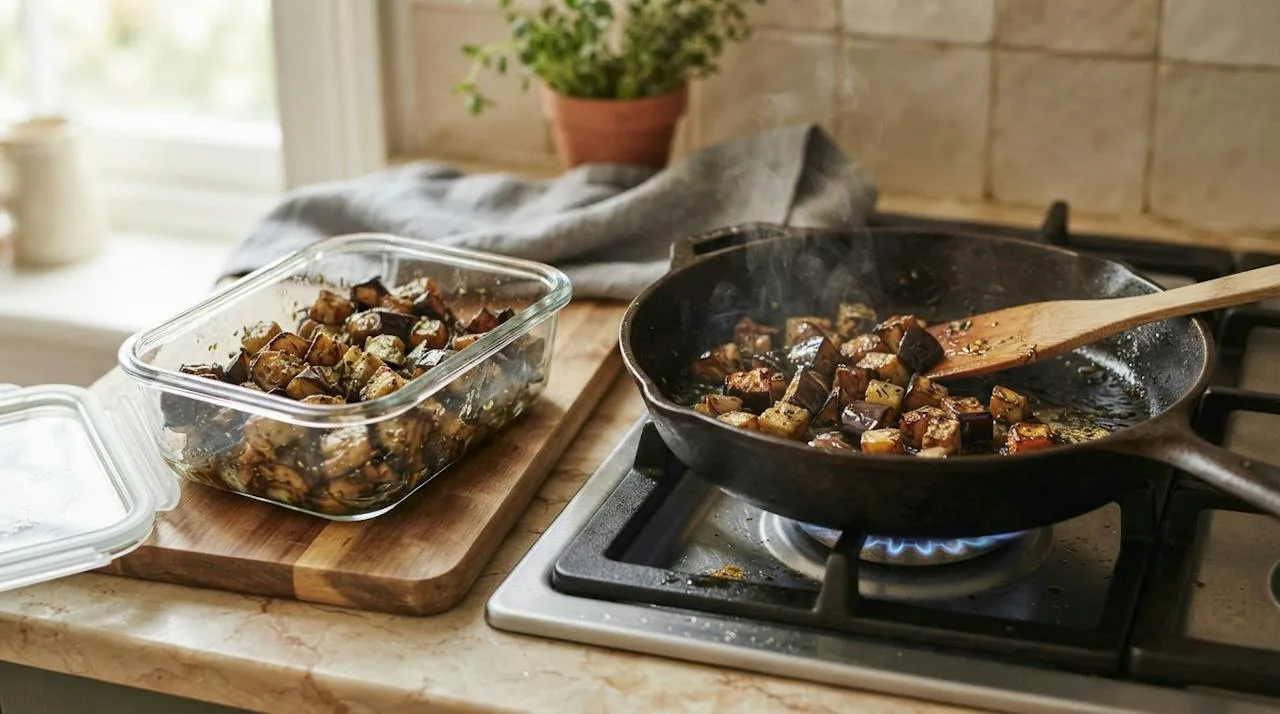
Refrigerator: Store cooked eggplant in an airtight glass container. Here’s how mine changed:
- Day 1: Best texture, with browned edges and a creamy center.
- Day 2: Still good. The browned exterior softened, but the flavor became deeper.
- Day 3: Softer and more moist; still useful for pasta, sauces, sandwiches and reheated vegetable dishes.
- Day 4: Noticeably softer and less appealing as a standalone vegetable.
Use it within 3 to 4 days, in line with the USDA’s leftovers and food safety guidance.
Reheating:
- Skillet (best): Medium heat for about 4 to 6 minutes, turning occasionally.
- Oven: About 200°C fan for 8 to 12 minutes; it helps restore some surface browning.
- Microwave: Fastest, but the eggplant comes out softer and wetter.
Where to Use Your Eggplant
- In Greek briam, baked with potatoes, zucchini and tomato.
- In sweet-and-sour Sicilian caponata.
- Tossed through pasta or piled onto bowls from my Mediterranean grain bowls guide.
- Scooped from a whole roasted eggplant into a smoky dip.
Mediterranean Secret: Heat, space and a measured spoonful of oil do more for eggplant than salt ever will. Get the pan hot, give every piece room and let it brown before you touch it.
Continue Learning
- Roasting vegetables the Mediterranean way: the complete guide
- How to roast and peel peppers (oven, broiler and gas flame)
- How to cook with olive oil like a Mediterranean
With a hot skillet and a single layer of eggplant, Nevaeh Hall


