

Imam Bayildi: Greek-Style Braised Stuffed Eggplant
Imam Bayildi is my go to recipe when I want something comforting but still light, the kind of meal that feels like a little vacation even if it is just a Tuesday night. If you have ever stared at a couple of eggplants and thought, what now, this is the answer. It is braised, stuffed, saucy, and full of olive oil and sweet onions in the best way. Quick note before we start, eggplant dishes really depend on good oil, and storing it right matters more than people think, so I always point friends to how to store olive oil if their oil tastes a little flat or bitter. This recipe is cozy, forgiving, and honestly even better the next day.
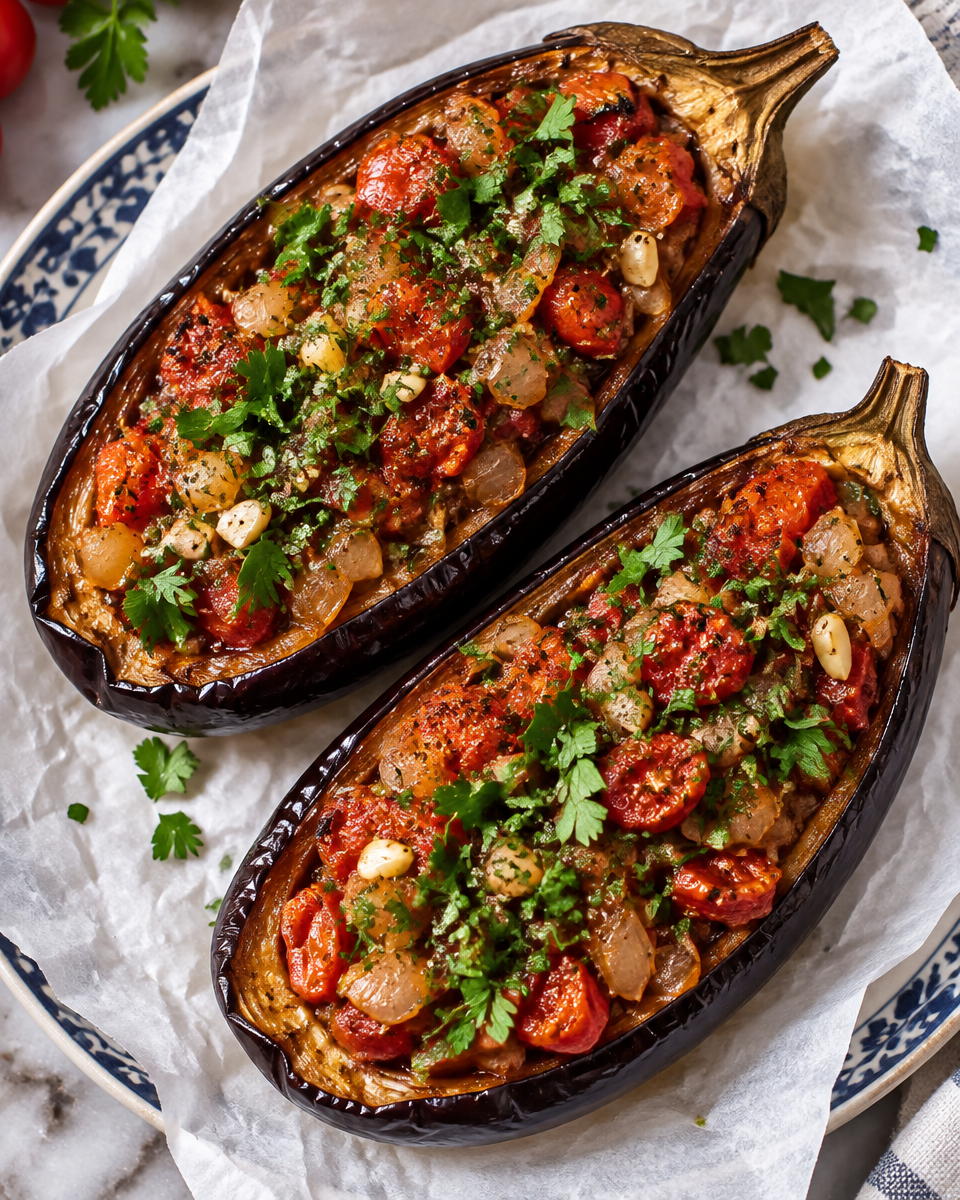
What is Imam Bayildi?
At its heart, Imam Bayildi is a tender eggplant that gets split open, gently cooked, and packed with a soft onion and tomato filling. Then it all simmers together until the flavors melt into each other. Even though people argue about whether it is more Greek or Turkish in daily home cooking, the vibe is very Eastern Mediterranean: lots of olive oil, tomatoes, garlic, and herbs.
I am calling this one Greek style braised stuffed eggplant because the version I make leans into the sweeter onion filling, plenty of parsley, and a generous pour of olive oil that turns almost silky in the pan. It is naturally plant based, it fits a Mediterranean way of eating without trying too hard, and it is one of those dishes that makes your kitchen smell like you have been cooking all day.
If you are newer to cooking this way, it helps to understand the overall pattern of meals and ingredients, and this beginner friendly guide is super practical: Mediterranean diet guide for beginners.
Also, yes, Imam Bayildi is often served at room temp. That is not a mistake. It is part of the charm.
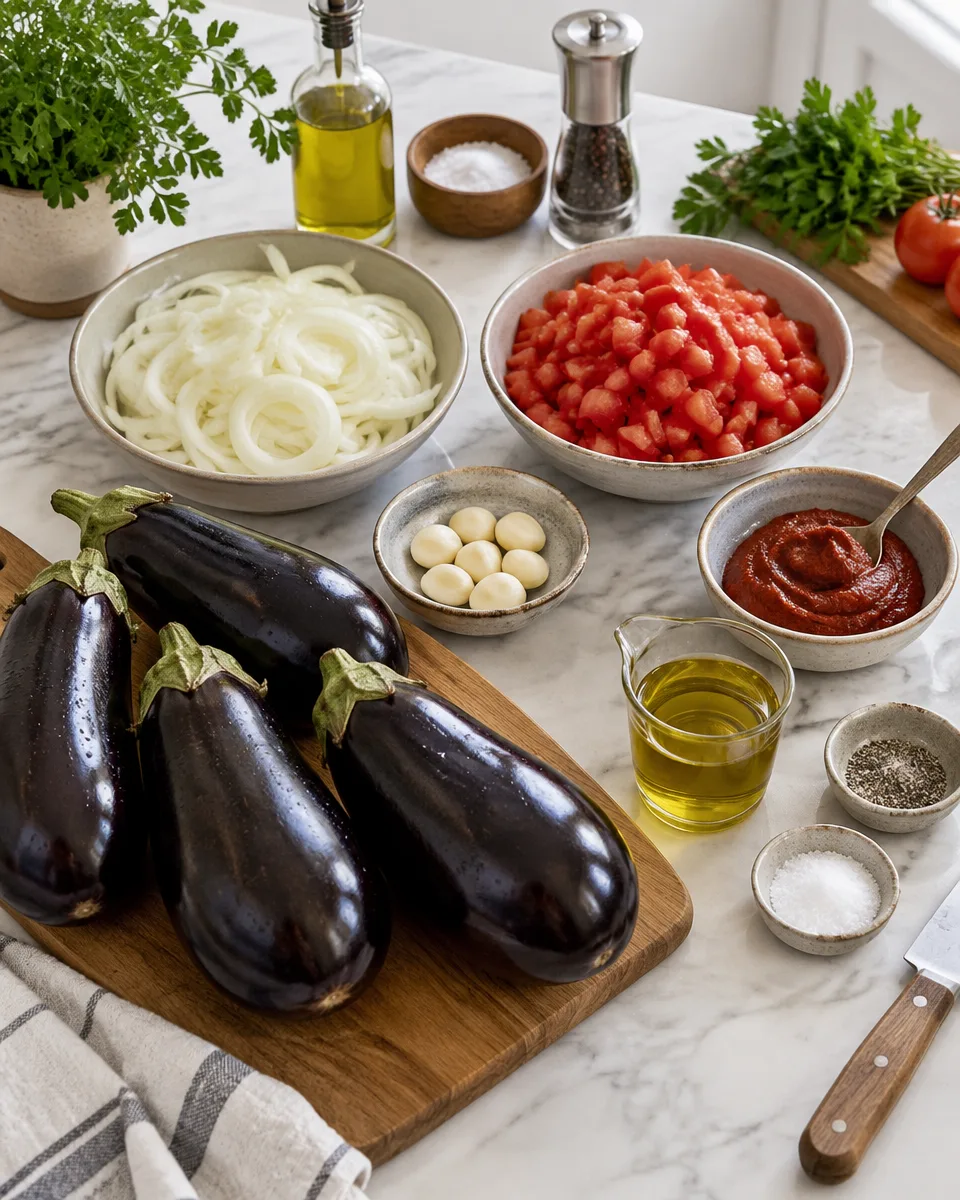
Origin of Imam Bayildi
The name Imam Bayildi is usually translated as something like the imam fainted. There are a few stories floating around, and honestly I love all of them. One says he fainted because the dish was so delicious. Another says he fainted when he realized how much expensive olive oil his spouse used. And if you have ever made this with the proper amount of olive oil, you will understand that second story in your soul.
Most food historians connect the dish to Ottoman era cooking, where eggplant was a big deal and olive oil based vegetable dishes were common, especially for serving at room temperature. Over time, regional home cooks put their own spin on it, which is why you will see versions with pine nuts, raisins, different herbs, or even a little cinnamon.
In Greek kitchens, you will often find similar eggplant preparations tucked into the broader category of ladera, meaning olive oil based dishes. That is why this meal feels so at home on a mezze table next to olives, bread, and a crisp salad.
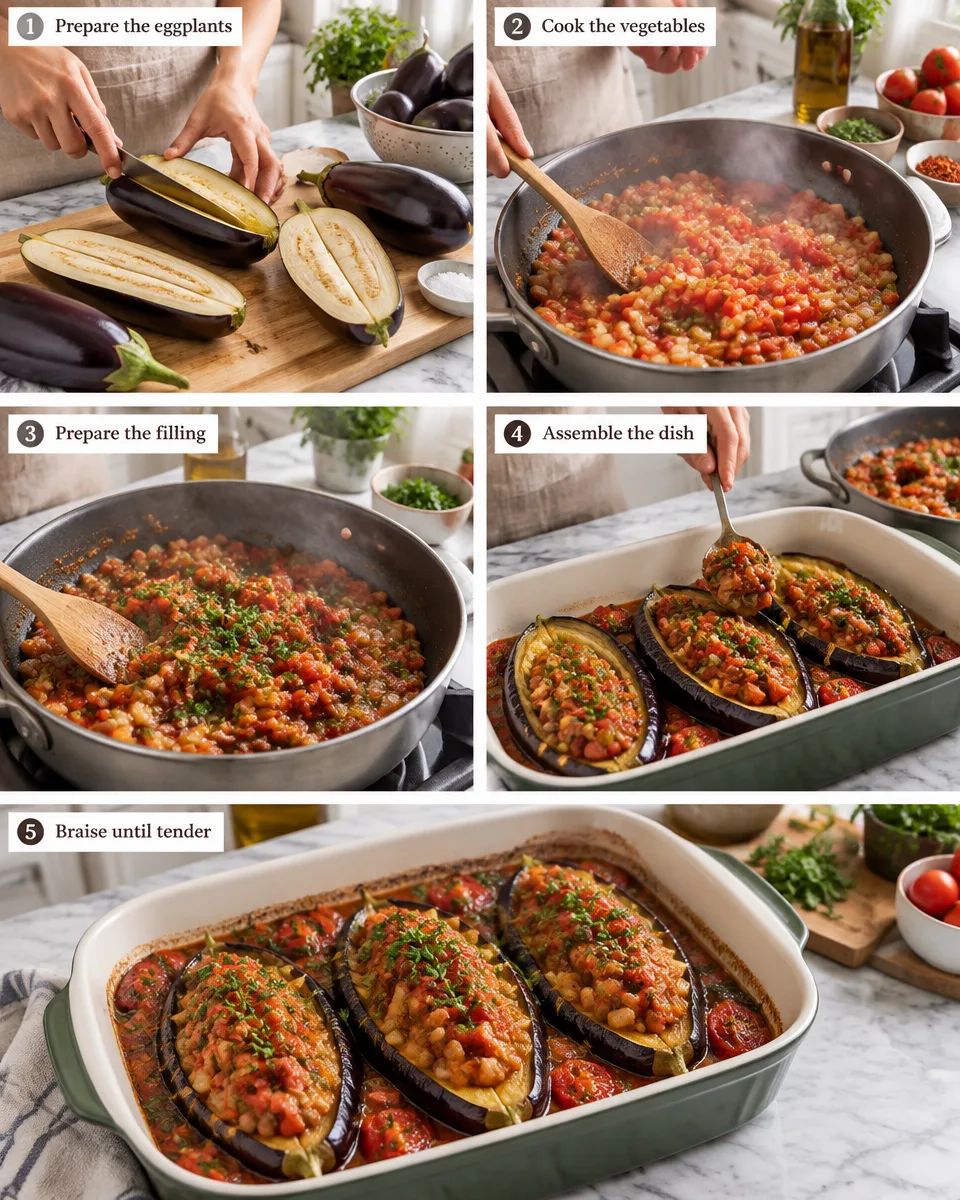
How to prepare Imam Bayildi
This is the part where I talk you through how I actually make it at home, including the little tricks I learned after a few batches. Imam Bayildi is not hard, but it does reward patience. You are basically letting onions get sweet, letting eggplant get tender, and letting everything mingle.
Ingredients and what you will need
- 4 medium eggplants
- 1 large onion, sliced thin
- 4 to 5 cloves garlic, sliced
- 3 ripe tomatoes, grated or finely chopped, plus 1 extra sliced tomato if you want it pretty
- 1 to 2 tablespoons tomato paste (optional but helpful)
- 1 teaspoon sugar (just to round out the acidity)
- Salt and black pepper
- Lots of olive oil, around 1/2 cup total, sometimes a little more
- Chopped parsley
- Optional: pinch of dried oregano or mint
- Optional: splash of water or veggie broth for the braise
Olive oil really carries the flavor here, so I use a fruity one that tastes good on its own. If you want help choosing the right kind and knowing when to cook versus drizzle, this is genuinely useful: how to cook with olive oil guide.
Step by step, the way I do it
1) Prep the eggplants. Trim the stems, then peel stripes down the sides so you get that classic look. Slice each eggplant lengthwise down the middle, but do not cut all the way through like you are making two halves. You want a pocket. Sprinkle the insides with salt and let them sit 20 to 30 minutes. This helps with bitterness and helps them soften more nicely.
2) Soften the eggplants. Pat them dry. In a wide pan, warm a generous amount of olive oil and lightly fry the eggplants until they are starting to soften and take on a little color. You are not trying to fully cook them here. Just give them a head start. Then move them to a baking dish or a deep skillet where they can braise.
3) Make the filling. In the same pan, add a bit more olive oil if needed, then cook the onions slowly with a pinch of salt. Give them time. When they look soft and a little golden, add garlic and cook another minute. Add tomatoes and tomato paste if using, plus sugar, pepper, and a little more salt. Let it simmer until it looks jammy, like a thick sauce that is not watery. Stir in parsley at the end.
4) Stuff and braise. Open the eggplant pockets and spoon the filling in generously. If you like, top each one with a slice of tomato. Pour a few tablespoons of olive oil over everything, then add a small splash of water or broth to the bottom of the pan, just enough so things do not dry out. Cover and simmer on low heat, or bake at about 375 F until the eggplants are totally tender, usually 35 to 50 minutes depending on size.
5) Rest, then eat. This is the hard part. Let it cool down so the flavors settle. I honestly like Imam Bayildi best when it is room temp or slightly cool, with bread to mop up the oil and tomato juices.
Little practical notes from my own kitchen: if your eggplants are huge, they may take longer than you expect. Also, do not rush the onions. The dish gets its sweetness from time, not from extra sugar.
Variants of Imam Bayildi
The fun thing about Imam Bayildi is how flexible it is. Once you learn the basic method, you can nudge it toward whatever you have in your fridge or what you grew in the garden.
Here are a few variations I have tried or eaten at friends houses:
1) With pine nuts and raisins
This is a little more festive. Pine nuts add richness, raisins add pops of sweetness. If you go this route, keep the sugar low or skip it.
2) Spiced version
A tiny pinch of cinnamon or allspice makes it smell incredible. Not enough to scream dessert, just enough to make people ask what that flavor is.
3) Add peppers
A chopped green pepper cooked down with the onions gives it a softer, sweeter base. If you have a roasted red pepper hanging around, you can chop it and mix it in too.
4) Faster weeknight approach
If you do not want to fry the eggplants, you can roast them first until they start to collapse, then stuff and braise briefly. It is not exactly the same, but it is still very good. If you are into that roasted veggie vibe, you might like this too: roasted Mediterranean vegetables guide.
5) Make ahead for gatherings
This dish is basically built for making ahead. It tastes deeper after a night in the fridge. I bring it to potlucks and it holds up great.
How to serve Imam Bayildi
I keep serving simple, because the eggplant is the star. Think of it like a centerpiece on a small table full of little things. Also, since it is lovely at room temperature, you are not stuck timing it perfectly.
- With crusty bread or warm pita to scoop up the sauce
- With a big cucumber and tomato salad and a squeeze of lemon
- Alongside rice or bulgur if you want it more filling
- With a spoonful of yogurt or a yogurt cucumber sauce if you are not keeping it vegan
- As part of a mezze spread with olives and something briny
Speaking of briny things, I love pairing this with quick pickles or brined veggies because the acidity cuts through the richness of the olive oil. If you want to get into that at home, this is a great resource: Mediterranean preserving and brining guide.
One more tip: store leftovers in a container that keeps the eggplant mostly intact, and spoon some of that tomato oil over the top before you close the lid. The next day lunch is unreal.
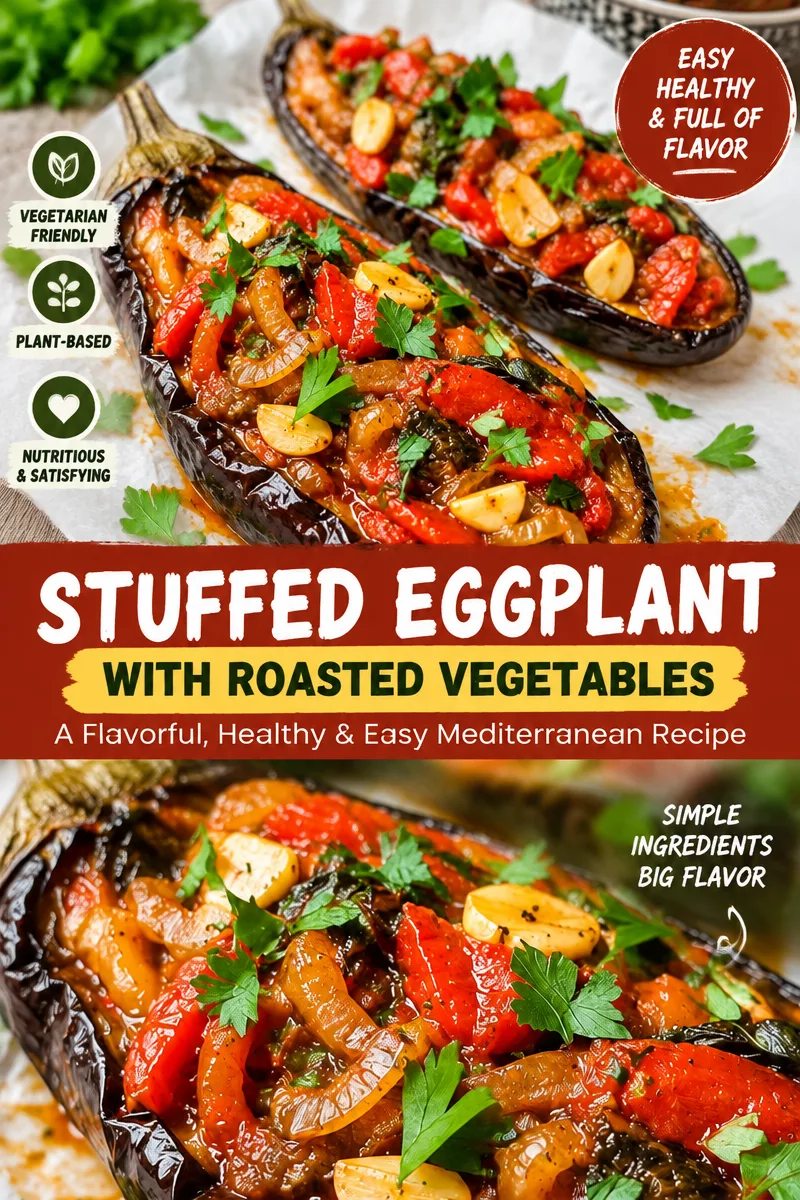
A cozy dish you will want to make again
If you take anything from this, let it be this: Imam Bayildi is all about slow onions, tender eggplant, and being generous with good olive oil. It is the kind of meal that feels special without requiring fancy skills, and it plays well with whatever else you have on the table. If you want to compare approaches, I found this version helpful and tasty too: Imam bayildi – Turkish stuffed aubergines | Recipe – Vidar Bergum. Try it once, let it sit for a bit before serving, and do not be surprised if you start craving it the next day.
Print
Imam Bayildi
- Total Time: 70 minutes
- Yield: 4 servings
- Diet: Vegan
Description
A comforting and light dish featuring braised, stuffed eggplants with a sweet onion and tomato filling, perfect for any night.
Ingredients
- 4 medium eggplants
- 1 large onion, sliced thin
- 4 to 5 cloves garlic, sliced
- 3 ripe tomatoes, grated or finely chopped, plus 1 extra sliced tomato
- 1 to 2 tablespoons tomato paste (optional)
- 1 teaspoon sugar
- Salt and black pepper
- 1/2 cup olive oil
- Chopped parsley
- Optional: pinch of dried oregano or mint
- Optional: splash of water or veggie broth for the braise
Instructions
- Prep the eggplants. Trim the stems, peel stripes down the sides, slice lengthwise but not all the way through, sprinkle with salt, and let sit for 20 to 30 minutes.
- Soften the eggplants. Pat them dry, heat olive oil in a pan, and fry until slightly softened, then transfer to a baking dish.
- Make the filling. In the same pan, cook onions slowly with a pinch of salt until soft, then add garlic and cook for another minute. Mix in tomatoes, tomato paste, sugar, pepper, and more salt, letting it simmer until thick.
- Stuff the eggplant pockets with the filling and top with a slice of tomato. Drizzle with olive oil and add a splash of water or broth, cover, and simmer or bake until tender (35 to 50 minutes).
- Rest the dish to let flavors settle before serving. It’s best enjoyed at room temperature.
Notes
This dish benefits from good quality olive oil and patience while cooking the onions for the best flavor.
- Prep Time: 20 minutes
- Cook Time: 50 minutes
- Category: Main Course
- Method: Baking
- Cuisine: Mediterranean


