

Greek Spinach Rice (Spanakorizo) with Lemon and Dill
Spanakorizo is Greek home cooking at its most generous: a whole bag of spinach, a handful of rice, plenty of olive oil, dill and lemon, simmered into something soft, green and comforting. It’s the kind of dish that turns a pile of greens into dinner.
The biggest lesson from testing was that spanakorizo shouldn’t be treated like plain boiled rice. The spinach releases moisture, the rice keeps absorbing liquid during the covered rest, and the finished dish needs to be slightly looser when it comes off the heat than you want it on the plate. My first round was too firm, too wet around the edges and a little bland. More lemon, more dill, fresh mint and a little more olive oil fixed the flavor; simmering until nearly all the liquid was absorbed fixed the texture.
It’s also an easy way to eat more vegetables. USDA MyPlate recommends most adults eat 2 to 3 cups of vegetables a day, and this dish packs 500 g of fresh spinach into one pot. For more on the herbs that make it sing, see my guide to Mediterranean herbs and spices.
Follow this recipe and you’ll get tender, slightly creamy rice with recognizable grains, deep green spinach and a bright lemon-dill flavor.
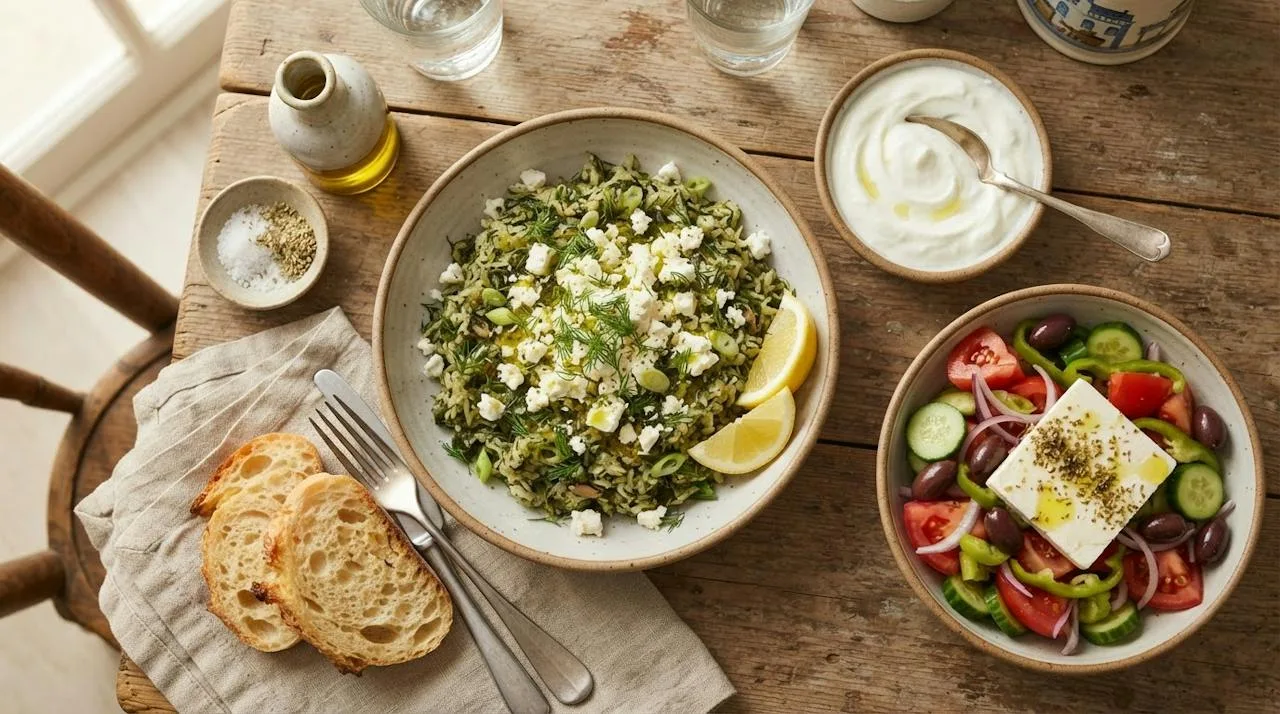
What I Learned From Testing This Recipe
Recipe Testing Note Tested in 2 rounds. Last updated: October 2026. Equipment: induction stovetop, 3-liter heavy-bottom stainless-steel saucepan, about 20 cm wide, with a tight-fitting lid (same equipment for both rounds). Key variables tested: water quantity and simmering until absorbed, when to add the spinach, olive oil, lemon, herbs, garlic and stirring during cooking.
For round 1, I softened the onion, spring onions and 3 garlic cloves in 50 ml olive oil, cooked 1 tablespoon of tomato paste, then wilted 500 g of chopped fresh spinach in two additions. I added 200 g of rinsed medium-grain rice, 600 ml water, 2 tablespoons of dill, parsley, salt and pepper, simmered it covered for about 18 minutes, stirring once after 8 minutes, then rested it for 10 minutes. The rice was slightly too firm in the center and not creamy enough, yet it sat in more liquid than I wanted, because I stopped cooking while quite a bit of liquid remained. The spinach looked darker than expected, and the flavor was slightly bland, not lemony enough and missing fresh herbs.
For round 2, I wilted the spinach before adding the tomato paste, chopped it less finely, used a little more water and olive oil, added more lemon, more dill and some fresh mint, used one less garlic clove, and didn’t stir once the lid was on. I simmered until almost all the liquid was absorbed, then rested it a little longer. The rice cooked evenly without turning mushy, and the flavor was much brighter.
What I changed after testing: Water went from 600 ml to 650 ml, olive oil from 50 ml to 60 ml, lemon juice from 1 tablespoon to 25 ml, lemon zest from ½ to 1 lemon and dill from 2 to 3 tablespoons, and I added 1 tablespoon of fresh mint and cut the garlic from 3 cloves to 2. I also simmered until almost all the liquid was absorbed and rested for 12 minutes instead of 10. Round 1 was firm, watery and bland.
Ingredients
Serves about 4 generously, or 5 to 6 as a side. Prep: about 15 minutes | Cooking: 25–30 minutes | Resting: 12 minutes | Total: about 40–45 minutes
For the rice
- 200 g medium-grain rice
- 500 g fresh spinach, thick stems removed, roughly chopped
- 150 g yellow onion, finely diced
- 80 g spring onions, thinly sliced
- 2 garlic cloves (about 8 g), minced
- 60 ml olive oil
- 1 tablespoon tomato paste
- 650 ml water
- 1½ teaspoons salt
- ½ teaspoon black pepper
Herbs and lemon
- 3 tablespoons chopped fresh dill
- 1 tablespoon chopped fresh parsley
- 1 tablespoon chopped fresh mint
- 25 ml fresh lemon juice
- Zest of 1 lemon
To serve: lemon wedges, a drizzle of olive oil, crumbled feta and, if you like, a spoonful of thick Greek-style yogurt.
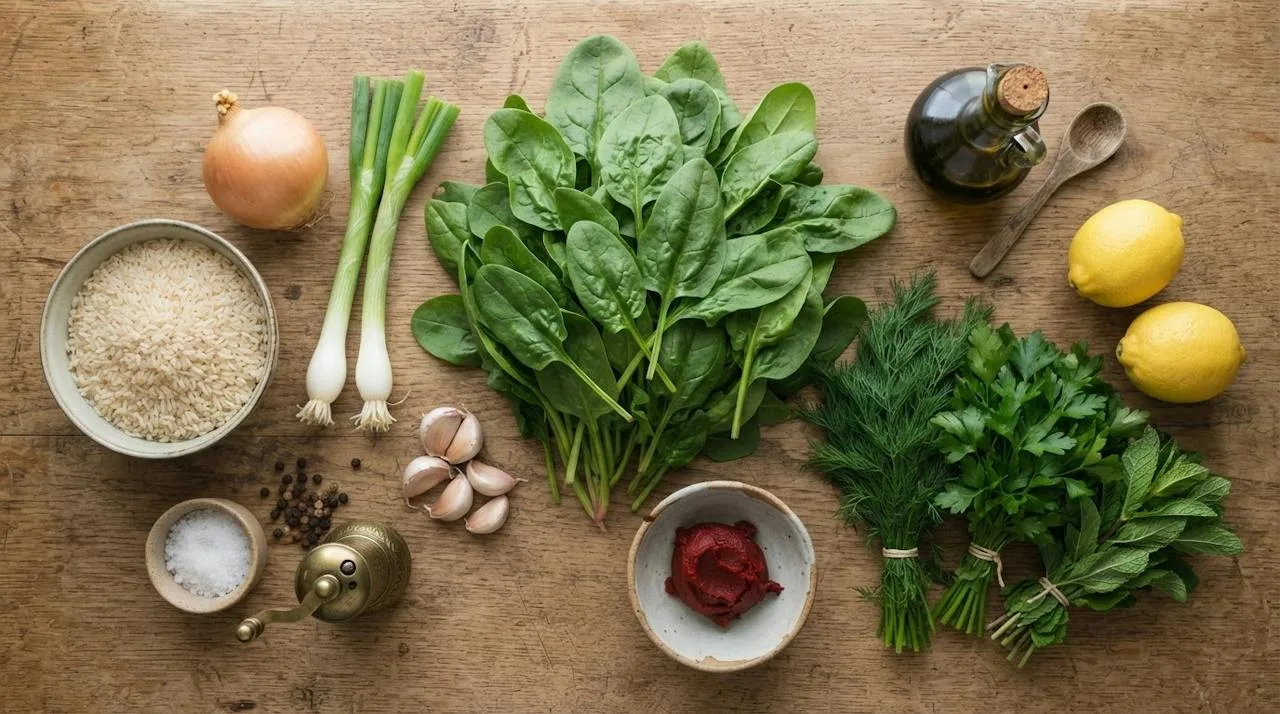
Before You Start: What to Watch For
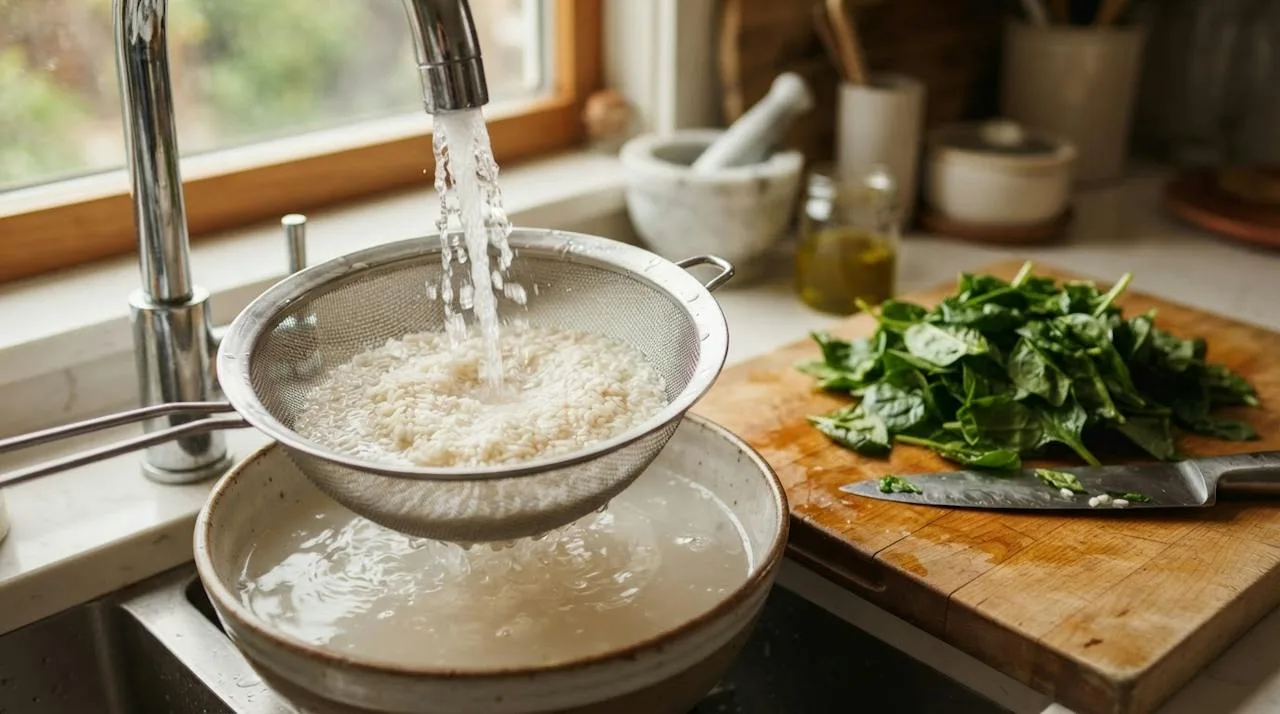
- Rinse the rice. I rinsed it under cold water 2 to 3 times until the water was less cloudy, then let it drain for a few minutes.
- Use a pot big enough for the spinach. A 3-liter saucepan was quite full with 500 g of spinach. Add it in batches and let each one wilt down.
- Chop the spinach roughly. In round 2, I chopped it less finely than in round 1, and it held up better in the pot.
- Don’t stir once the lid is on. Stirring during the simmer in round 1 didn’t help. Leaving it alone let the rice cook evenly without turning mushy.
- Judge by the liquid, not just the clock. Stop simmering when only a little moisture is visible between the rice and spinach, with no pool at the bottom. The rest finishes the job.
- Use fresh dill. It carries much of the flavor here. Dried herbs behave very differently; my fresh vs. dried herbs conversion guide explains why tender herbs like dill are best fresh.
Method
- Prepare the rice and spinach. Rinse the rice under cold water 2 to 3 times, until the water runs less cloudy, and let it drain. Remove the thick spinach stems and chop the leaves roughly. This takes about 10 to 15 minutes.
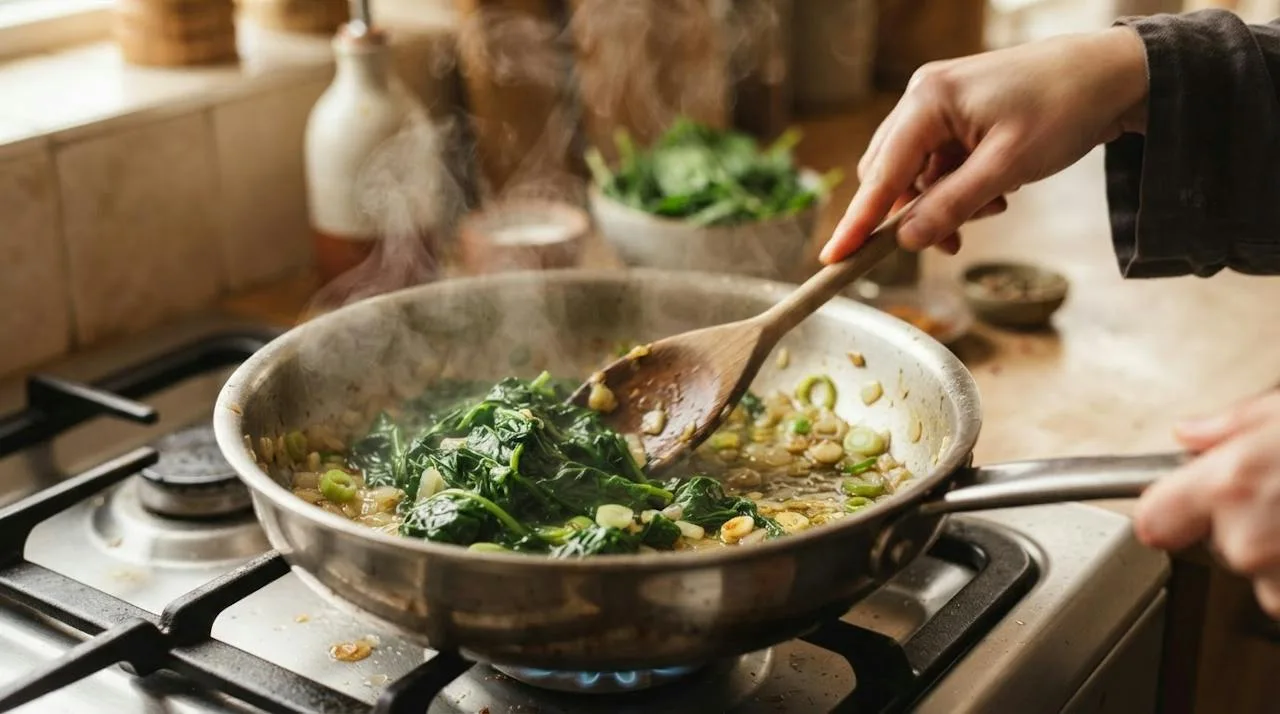
- Soften the aromatics. Heat the olive oil in a 3-liter saucepan over medium heat. Add the onion, spring onions and garlic and cook for about 5 to 6 minutes, stirring, until softened but not browned.
- Wilt the spinach. Add the spinach in batches, stirring as each one collapses, and cook for about 3 to 4 minutes, until wilted. In round 2, I added the spinach before the tomato paste, which helped it wilt properly before the rice went in.
- Cook the tomato paste. Stir in the tomato paste and cook for about 1 minute.
- Add the rice. Add the rinsed rice and stir once to distribute everything.
- Add the liquid and herbs. Pour in the 650 ml water and add the dill, parsley, mint, salt and pepper. Bring to a gentle simmer.
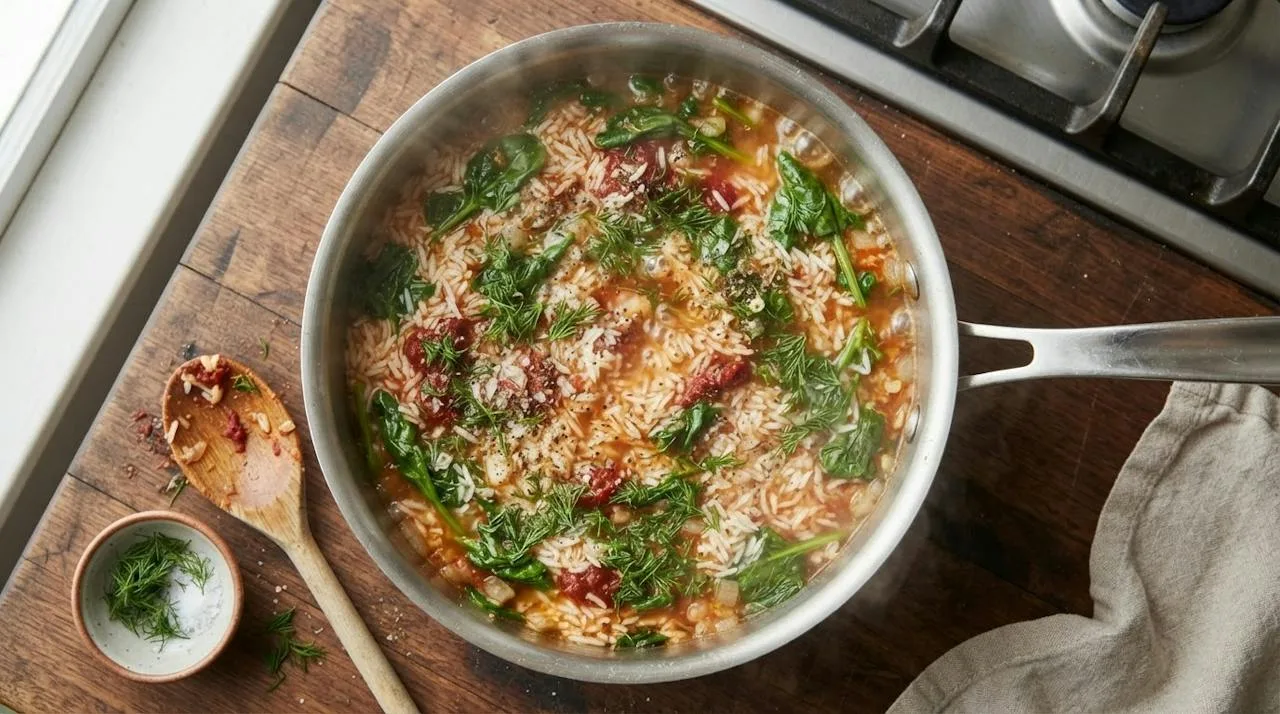
- Cover and simmer without stirring. Once it’s simmering, cover with a tight-fitting lid, reduce the heat to low and simmer for about 17 to 18 minutes. Don’t stir.
- Check the liquid. Lift the lid. The rice is ready to come off the heat when there’s only a small amount of moisture visible between the rice and spinach and no pool of liquid at the bottom. In round 1, I stopped while quite a bit of liquid remained, and the rice ended up both firm and wet. If you see standing liquid, cover and simmer a few minutes more.
- Rest covered. Take the pan off the heat and leave it to rest for 12 minutes with the lid completely closed. The remaining moisture will be absorbed.
- Add the lemon. Stir in the lemon juice and zest. Taste and adjust the salt and lemon.
- Check the texture. The finished rice should be tender and slightly creamy, with individual grains still recognizable, not risotto-like. The spinach should be a fairly deep green, with some darker leaves mixed through, and the whole dish should look moist and glossy from the olive oil rather than wet.
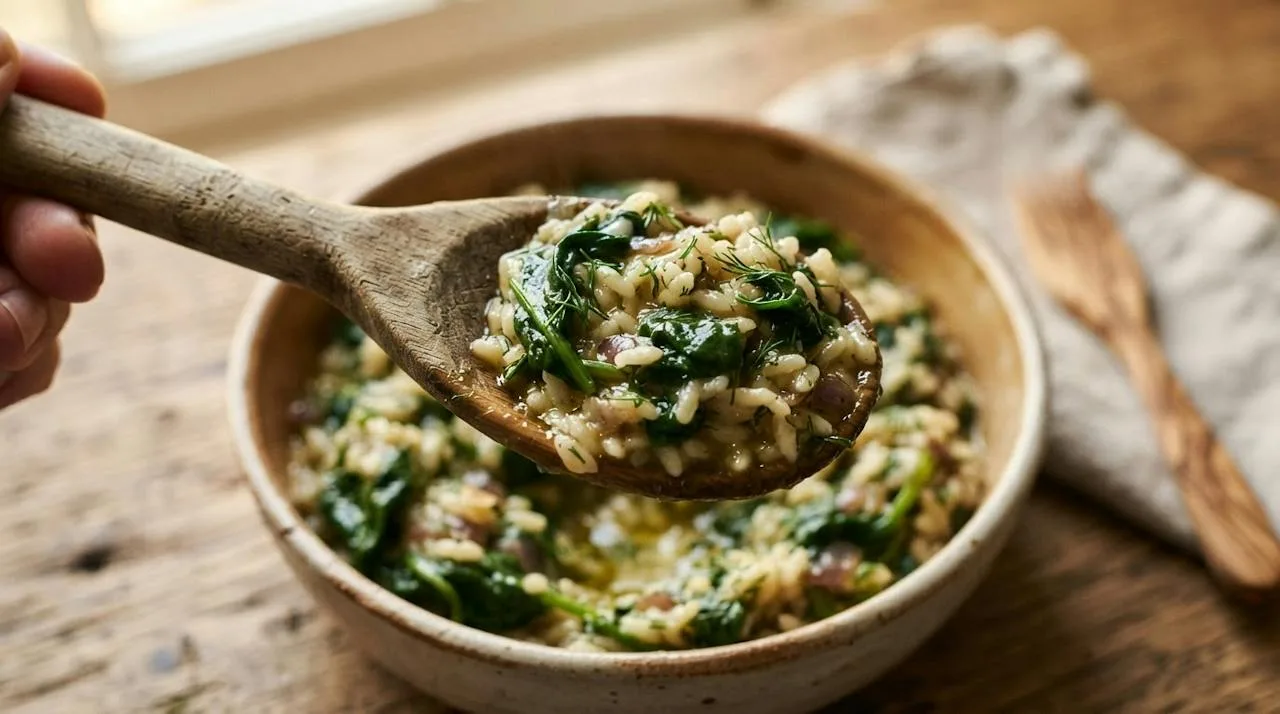
- Serve. Serve warm with lemon wedges, a small drizzle of olive oil and crumbled feta.
Tested Substitutions
| Original ingredient | Tested substitute | Result |
|---|---|---|
| 500 g fresh spinach | 400 g frozen chopped spinach, thawed and squeezed fairly dry | Worked, but the dish was slightly darker and had less fresh spinach flavor. |
| Medium-grain rice | Long-grain rice | More separate grains and less of the soft, cohesive texture I prefer for spanakorizo. |
| Water | Vegetable stock | Slightly deeper savory flavor, but I preferred water when serving with feta, since the dish tasted cleaner. |
| Medium-grain rice | Arborio, Carolina or brown rice (untested) | I haven’t tried these yet. Let me know in the comments. |
| Fresh spinach | Canned spinach, kale or Swiss chard (untested) | I haven’t tried these yet. Let me know in the comments. |
| Water | Chicken stock or coconut milk (untested) | I haven’t tried these yet. Let me know in the comments. |
| Tomato paste | No tomato paste (untested) | I haven’t tried this yet. Let me know in the comments. |
| Fresh dill and parsley | Dried dill or cilantro (untested) | I haven’t tried these yet. Let me know in the comments. |
| Olive oil | Cream or butter (untested) | I haven’t tried these yet. Let me know in the comments. |
Why This Recipe Can Fail (And How to Fix It)
Common Problems
- Rice firm but the pot still watery: The rice came off the heat too early. In round 1, I stopped while quite a bit of liquid remained, so the rice stayed firm in the center. Keep simmering until only a little moisture is visible with no pool at the bottom, then rest it covered for 12 minutes.
- Mushy rice: Too much stirring during the simmer. Stir once when the rice goes in, then leave the lid on and don’t stir again.
- Dark, dull spinach: Long cooking darkens spinach. Wilt it quickly for 3 to 4 minutes before the rice goes in, chop it roughly rather than finely, and don’t overcook the rice stage. Some darker leaves are normal.
- Bland flavor: Not enough lemon, herbs or olive oil. Round 1 used 1 tablespoon of lemon juice, half a lemon’s zest and no mint, and tasted flat. Use 25 ml lemon juice, the zest of a whole lemon, 3 tablespoons of dill, fresh mint and 60 ml olive oil.
- Garlic overpowers the greens: Three cloves were more than I wanted. Two let the lemon, dill and spinach stay more noticeable.
- Too thick on the plate: The rice keeps absorbing liquid as it rests and cools. Take it off the heat slightly looser than you want to serve it.
Serving Suggestions
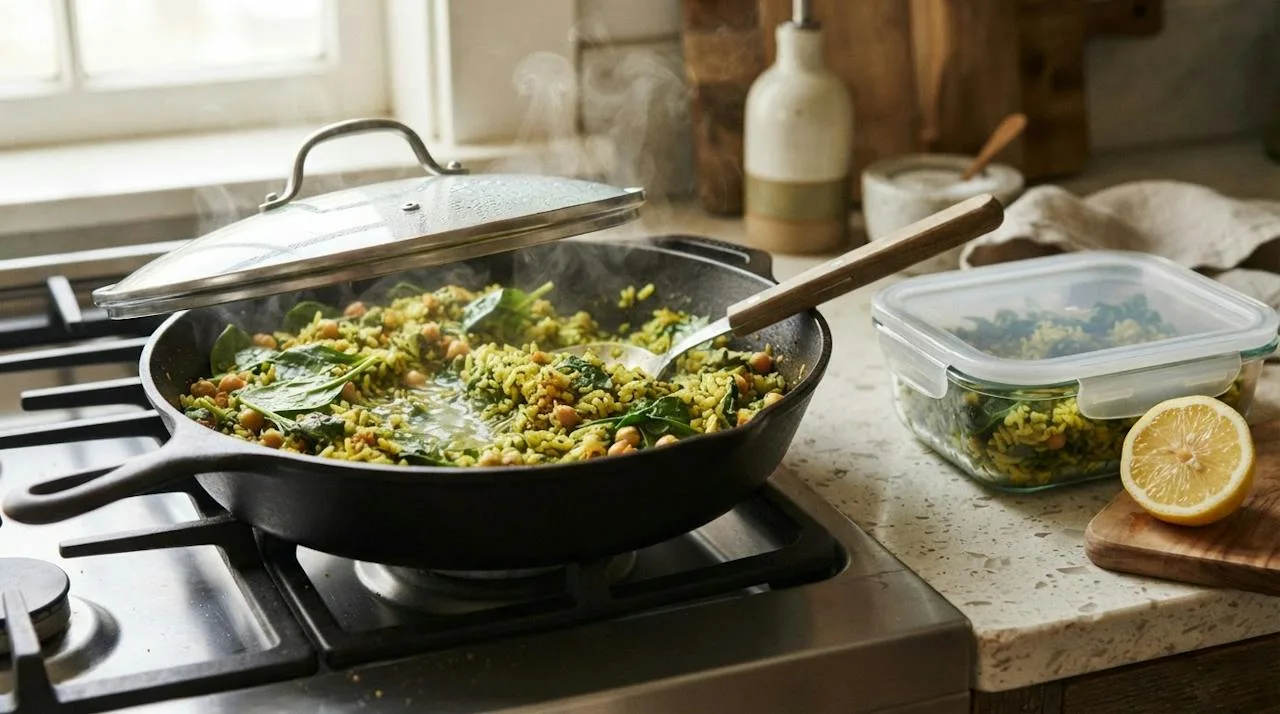
I prefer spanakorizo warm rather than piping hot. Serve it with lemon wedges so everyone can make their portion as tangy as they like, plus a small drizzle of olive oil and crumbled feta. A spoonful of thick Greek-style yogurt also works well.
For a full Greek meal, add a cucumber and tomato salad and crusty bread. It also makes a lovely spread alongside other Greek vegetable dishes: try it with my Greek briam or Greek lemon potatoes, or serve a smaller portion next to gigantes plaki.
Storage, Reheating and Make-Ahead
Refrigerator: Store leftovers covered in the fridge. Here’s how mine changed:
- Day 1: Soft, moist and creamy, with the best fresh lemon and herb flavor.
- Day 2: The rice had absorbed more moisture and became noticeably thicker. Still very good, but less loose.
- Day 3: Softer and more cohesive, approaching a thick rice-and-spinach porridge texture, though the grains were still visible.
- Day 4: Still usable, but the spinach had darkened and the fresh herb flavor was much weaker.
I’d keep it for 3 to 4 days at most, in line with the USDA’s leftovers and food safety guidance, which recommends refrigerating leftovers within 2 hours and eating them within 3 to 4 days.
Reheating: Reheat individual portions in a covered skillet over medium-low heat with about 1 to 2 tablespoons of water per serving, for 5 to 7 minutes. The water loosens the rice. The microwave dried out the edges more easily, so the skillet was better. Finish with a small squeeze of fresh lemon after reheating.
With a pot of green rice and a lemon for the table, Nevaeh Hall


Spanakorizo
- Total Time: 45 minutes
- Yield: 4 servings
- Diet: Vegetarian
Description
Spanakorizo is a comforting Greek dish made with fresh spinach and rice, flavored with lemon and dill, perfect for a hearty meal.
Ingredients
- 200 g medium-grain rice
- 500 g fresh spinach, thick stems removed, roughly chopped
- 150 g yellow onion, finely diced
- 80 g spring onions, thinly sliced
- 2 garlic cloves (about 8 g), minced
- 60 ml olive oil
- 1 tablespoon tomato paste
- 650 ml water
- 1½ teaspoons salt
- ½ teaspoon black pepper
- 3 tablespoons chopped fresh dill
- 1 tablespoon chopped fresh parsley
- 1 tablespoon chopped fresh mint
- 25 ml fresh lemon juice
- Zest of 1 lemon
- To serve: lemon wedges, crumbled feta, drizzle of olive oil, thick Greek-style yogurt
Instructions
- Prepare the rice and spinach: Rinse the rice under cold water 2 to 3 times, until less cloudy, and let drain. Remove thick stems and chop spinach leaves roughly.
- Soften the aromatics: Heat olive oil in a saucepan over medium heat. Add onion, spring onions, and garlic; cook for about 5 to 6 minutes until softened.
- Wilt the spinach: Add spinach in batches, stirring until wilted, about 3 to 4 minutes.
- Cook the tomato paste: Stir in tomato paste and cook for about 1 minute.
- Add the rinsed rice and stir once to distribute.
- Pour in 650 ml water and add dill, parsley, mint, salt, and pepper. Bring to a gentle simmer.
- Cover and simmer without stirring for about 17 to 18 minutes.
- Check the liquid: Lift lid. If there’s only small moisture visible and no pool, it’s ready. If not, cover and simmer a few minutes more.
- Rest covered: Remove from heat and let rest for 12 minutes.
- Add lemon juice and zest. Adjust salt and lemon to taste.
- Serve: Serve warm with lemon wedges, olive oil drizzle, and crumbled feta.
Notes
Serve warm, preferably with lemon wedges and a drizzle of olive oil. Great with crusty bread or a salad.
- Prep Time: 15 minutes
- Cook Time: 30 minutes
- Category: Main Course
- Method: Stovetop
- Cuisine: Greek


