

Spaghetti alle Vongole (Clams, and Garlic)
The first time a pan of clams opens in front of you, the kitchen smells like the seaside: garlic, white wine and that briny, sweet clam liquor rushing into the hot oil. Spaghetti alle vongole is one of the simplest pastas on the Italian coast, and one of the easiest to get slightly wrong.
Four test batches taught me one thing above all: the clams make the sauce. A kilo of live clams releases its own salty, flavorful liquor (about 150 ml from 1.2 kg in my final batch), so the wine and pasta water should stay modest. I cut the wine from 150 ml to 100 ml and the pasta water from 120 ml to 60 ml, and I didn’t add a pinch of salt to the finished dish.
Clams also sit on the FDA’s list of Best Choices for eating fish and shellfish. If you like a Neapolitan pantry pasta like my spaghetti alla puttanesca, this is its seafood sister. Follow this recipe, and you’ll get glossy spaghetti, tender clams and no sand.
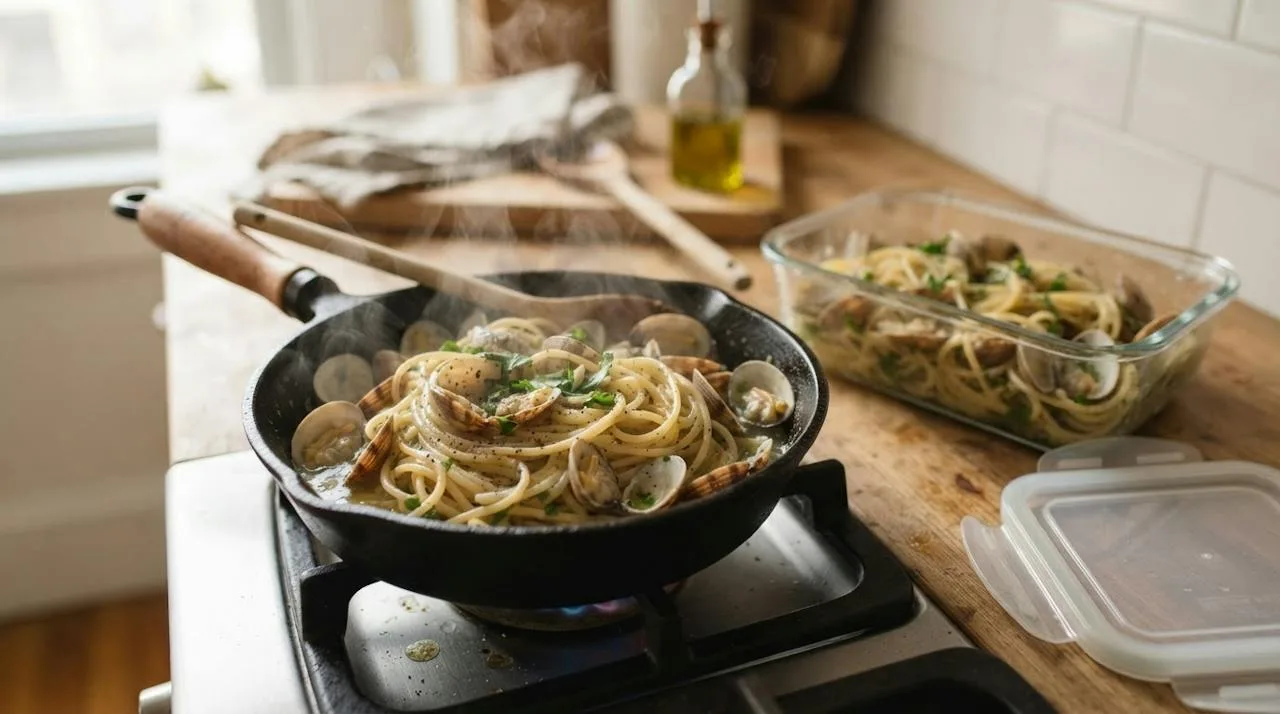
What I Learned From Testing This Recipe
Recipe Testing Note Tested 4 times: September 12, 19 and 27, and October 4, 2026. The final version is batch 4. Equipment: induction stove, 30 cm stainless-steel skillet with a lid (about 3 liters), 5-liter stainless-steel pasta pot, long tongs. Key variables tested: purge time and salt, wine amount, pasta water amount, pasta timing, garlic heat, parsley stems vs. leaves, clams in vs. out of the shell, finishing in the pan vs. pouring the sauce over. Measured: 1.2 kg Manila clams (about 72 clams), about 150 ml clam liquid in the pan, 180 ml pasta water reserved and 60 ml used.
Batch 1 went wrong in five ways at once. After a 1-hour purge in one change of water at 30 g salt per liter, a little grit remained in the sauce. The 150 ml of wine tasted sharp and very noticeable. The garlic, cooked over medium heat for about 2½ minutes, turned medium brown and slightly bitter. The spaghetti spent 8 minutes in the water and 3 in the pan, about 11 minutes in total, and came out softer than I wanted. And with 150 ml wine, about 160 ml clam liquid and 120 ml pasta water, there was plenty of liquid, but it barely clung to the pasta.
Batch 2 fixed the wine, the purge, the garlic heat and the pasta timing, raised the clams from 1.0 to 1.2 kg and cut the pasta water to 80 ml. Batch 3 brought the pasta water down to 60 ml, added the parsley stems and tested how to present the clams. Batch 4 confirmed the final amounts and cooking order.
What I changed after testing: Wine went from 150 ml to 100 ml, pasta water from 120 ml to 60 ml, and the spaghetti’s time in the water from 8 to 7 minutes before finishing for 2 minutes (not 3) in the pan. I also reduced the chili from ¾ to ½ teaspoon, raised the finishing oil from 10 to 15 ml for more gloss, and purged the clams for 2 hours at 35 g salt per liter with two water changes instead of 1 hour at 30 g, and turned the garlic heat down to medium-low. The first batch was sharp, slightly sandy, too soft and watery.
Side-by-Side Results
| What I compared | Version A | Version B | What happened | My pick |
|---|---|---|---|---|
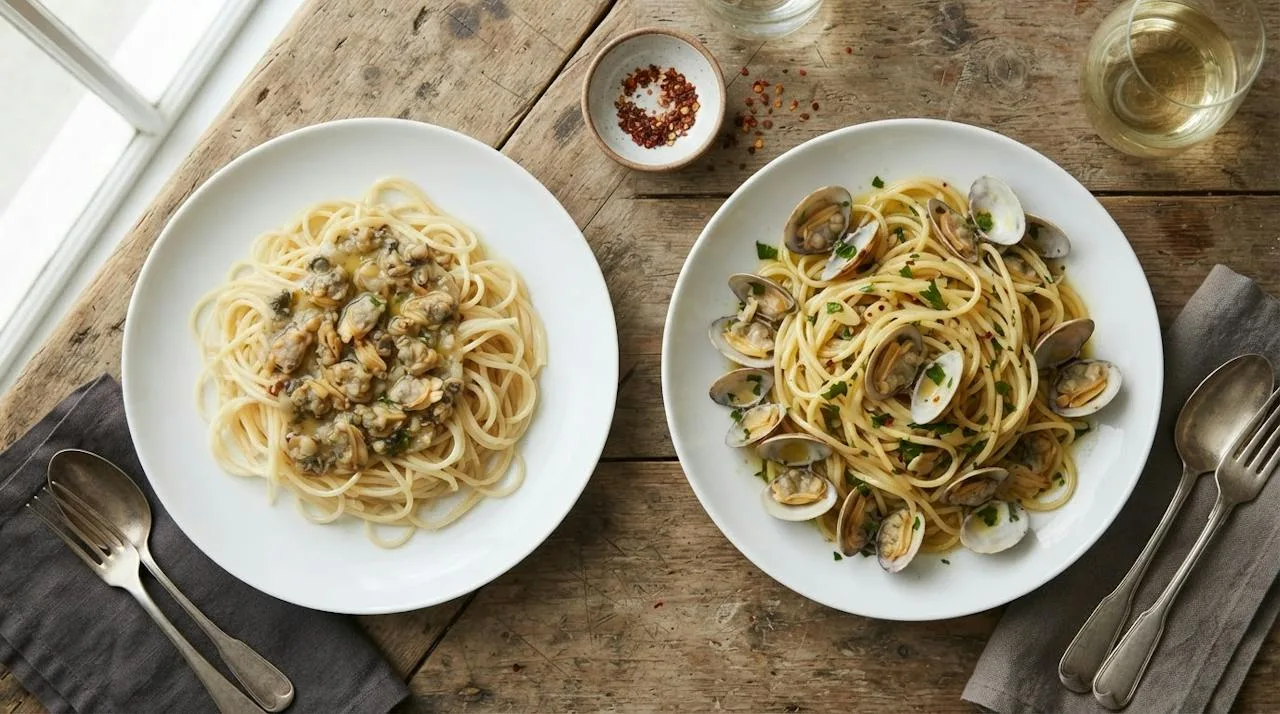
| Finishing the pasta | Sauce poured over cooked spaghetti | Spaghetti finished for 2 minutes in the skillet | Poured over, the sauce sat on top and the pasta underneath looked dry. Pan-finished, it turned glossy and the clam liquor clung to every strand | Finish in the pan |
| Wine | 100 ml dry white wine | No wine | With wine: brighter aroma and a more recognizable vongole character. Without: stronger direct clam flavor, but flatter and less aromatic | Wine |
| Parsley | Leaves only | Chopped stems cooked with the garlic, leaves at the end | Leaves only tasted fresh, but only at the very end. Stems added deeper herbal flavor to the sauce, and the leaves still gave the fresh finish | Stems and leaves |
| Presentation | All clams in their shells | About half the clams shelled | All in shells looked dramatic with more shellfish aroma, but was awkward to eat with long spaghetti. Half shelled was cleaner and easier, with more clam in each bite | Mostly in shells, a few larger clams shelled and folded through |
How this recipe evolved
Tap each batch to see what went wrong and what changed.
Batch 1 (September 12): the first attempt
1-hour purge at 30 g salt per liter: a little grit stayed in the sauce.
150 ml wine tasted sharp; garlic browned over medium heat in about 2 1/2 minutes.
8 minutes in the water plus 3 in the pan: softer than wanted.
120 ml pasta water: plenty of liquid, weak coating.
Batch 2 (September 19): wine, purge and timing
Wine 150 ml to 100 ml; clams 1.0 kg to 1.2 kg.
Purge 2 hours at 35 g salt per liter, two water changes.
Pasta 7 minutes in the water plus 2 in the pan; pasta water 80 ml; garlic over medium-low.
Batch 3 (September 27): parsley and presentation
Pasta water 80 ml to 60 ml.
Parsley stems cooked with the garlic, leaves at the end.
Clams mostly in the shell, a few shelled and folded through.
Batch 4 (October 4): the final recipe
Confirmed amounts and cooking order: about 150 ml clam liquid, 60 ml pasta water, no salt added to the sauce.
Glossy, lightly brothy sauce that clings to the spaghetti.
By the Numbers (Batch 4)
- Clams: 1.2 kg, about 72 live Manila clams
- Discarded before cooking: 5 (3 cracked, 2 open that didn’t close when tapped), so about 67 went into the pan
- Discarded after cooking: 2 that stayed closed
- Clam liquid in the skillet: about 150 ml
- Pasta water: 180 ml reserved, 60 ml used
- Pasta timing: 7 minutes in the water plus 2 in the pan, about 9 minutes in total
- Salt: 12 g in 3 liters of pasta water, none added at the end
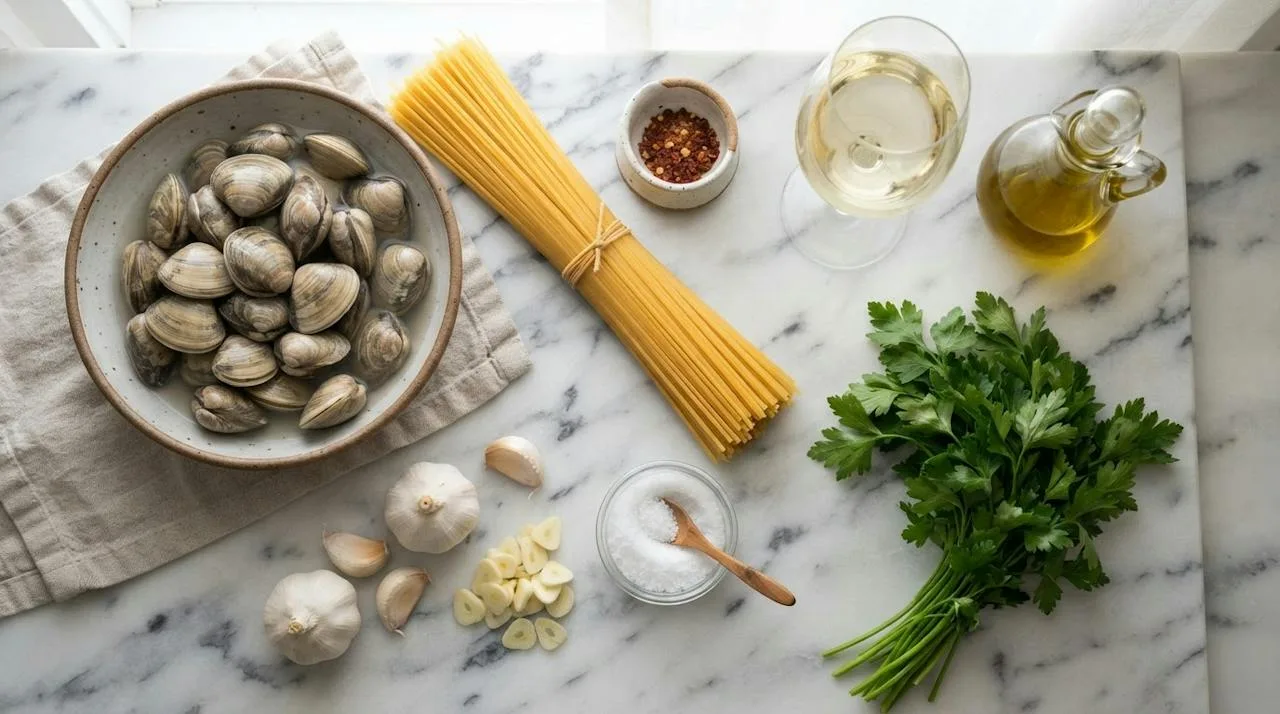
Ingredients
Serves 4 (about 80 g dry spaghetti per person).
- 1.2 kg live Manila clams (about 72; I bought them chilled and loose-packed from a fishmonger)
- 320 g spaghetti
- 4 garlic cloves, thinly sliced, about 2 mm
- ½ teaspoon dried red chili flakes
- 20 g flat-leaf parsley, stems finely chopped, leaves roughly chopped and kept separate
- 100 ml dry, unoaked white wine
- 45 ml extra virgin olive oil in total: 30 ml for cooking, 15 ml for finishing
- 12 g fine salt for 3 liters of pasta water (no salt needed in the sauce)
For purging the clams:
- 4 liters cold water and 140 g fine sea salt in total (2 liters water with 70 g salt per bath, 35 g per liter)
Shopping list
Send the list to yourself via WhatsApp or email.
- 1.2 kg live Manila clams
- 320 g spaghetti
- 4 garlic cloves
- Dried red chili flakes (1/2 teaspoon)
- 20 g flat-leaf parsley
- 100 ml dry, unoaked white wine
- Extra virgin olive oil (45 ml)
- Fine salt (12 g for the pasta water)
- Fine sea salt for purging (140 g)
Before You Start: What to Watch For
- Purge the clams for 2 hours. In my first batch, a 1-hour purge with one water change left grit in the sauce. Two hours at 35 g salt per liter, about 10 to 12°C, with the water changed after the first hour, left no noticeable sand.
- Sort the clams before and after cooking. Discard any with cracked shells, and any open clams that don’t close when tapped. After cooking, discard any that stay shut. That’s what the FDA advises.
- Keep the garlic pale. Over medium-low heat, it’s ready in about 90 seconds, when the edges turn pale golden and it smells sweet. Medium heat and 2½ minutes turned it brown and bitter. My guide on how to cook with olive oil covers gentle heat in more depth.
- Use a wide pan. A 30 cm skillet let the clams sit mostly in one layer, so they opened evenly.
- Don’t salt the sauce. The clams and wine brought enough salt and depth on their own.
- Pull the pasta early. Cook it 2 minutes less than the package says. It should be flexible but still clearly firm in the center.
Doneness Cues at a Glance
| Stage | Look | Feel or sound | Smell or taste |
|---|---|---|---|
| Garlic | Pale golden at the edges, never brown | Sweet and fragrant | |
| Clams | Most shells open by about 4 minutes | ||
| Pasta out of the water | Flexible, still clearly firm in the center | ||
| Finished sauce | Glossy, lightly clinging to the strands, a little broth left in the pan |
What time do you want to eat?
Pick the column with your dinner time to see when to start each step.
| Step | Eat at 19:00 | Eat at 19:30 | Eat at 20:00 |
|---|---|---|---|
| Start purging the clams (change the water after 1 hour) | 16:35 | 17:05 | 17:35 |
| Rinse and sort the clams, prepare the parsley, bring the pasta water to a boil | 18:35 | 19:05 | 19:35 |
| Spaghetti into the water for 7 minutes; start the garlic, chili and parsley stems | 18:50 | 19:20 | 19:50 |
| Add the clams and wine, cover | 18:52 | 19:22 | 19:52 |
| Lift out the opened clams, bubble the liquid uncovered | 18:56 | 19:26 | 19:56 |
| Add 60 ml pasta water and the spaghetti, toss for 2 minutes | 18:57 | 19:27 | 19:57 |
| Return the clams with the finishing oil and parsley leaves | 18:59 | 19:29 | 19:59 |
| Serve | 19:00 | 19:30 | 20:00 |
Method
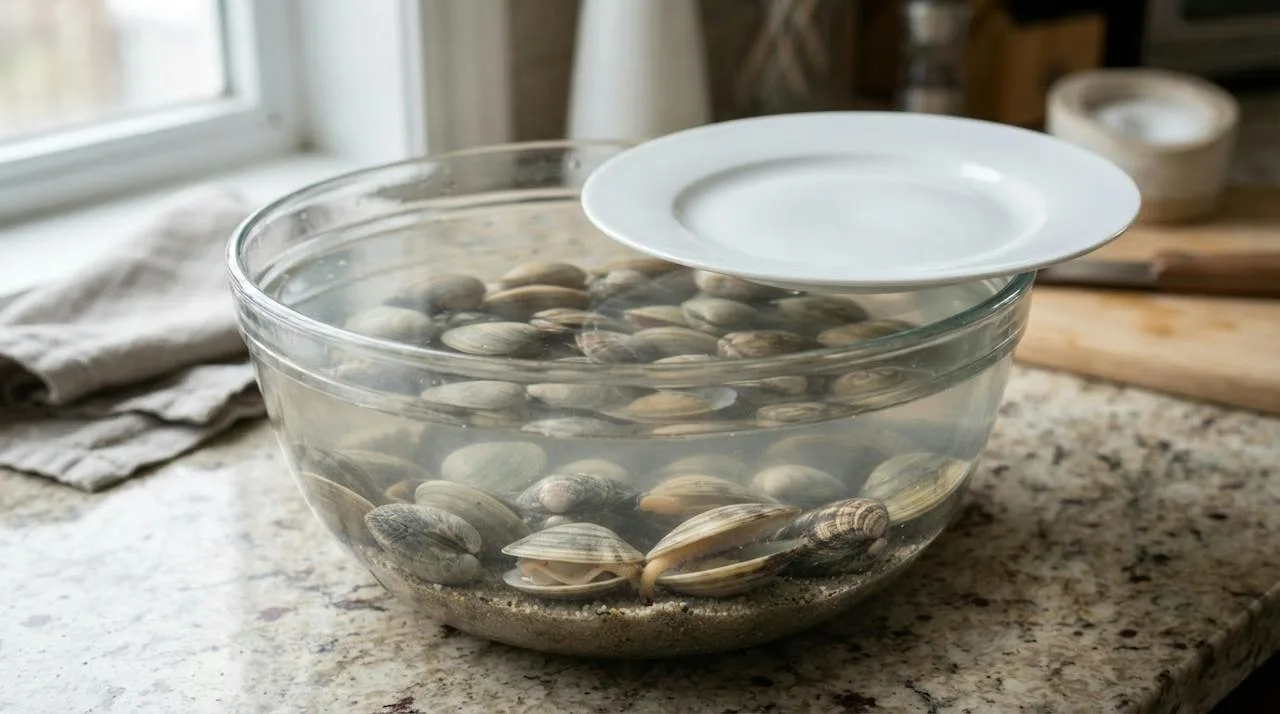
- Purge the clams. Put the clams in a large container with 2 liters of cold water (about 10 to 12°C) and 70 g fine sea salt. Spread them out without pressing them together, and rest a plate loosely on top so they stay submerged. After 1 hour, discard the water and repeat with fresh salted water for another hour. (2 hours)
- Rinse and sort. Rinse the shells well under cold running water. Tap any open clams against the counter: discard those that don’t close, and any with cracked shells. I discarded 5 of about 72.
- Prepare the parsley. Separate the stems from the leaves. Chop the stems finely and the leaves roughly, and keep them apart. (3 minutes)
- Start the pasta. Bring 3 liters of water to a boil in the large pot and add 12 g salt. Cook the spaghetti for 7 minutes, 2 minutes less than the package time, until flexible but clearly firm in the center. Reserve about 180 ml of pasta water before draining.
- Cook the garlic gently. While the pasta cooks, warm 30 ml olive oil in the skillet over medium-low heat. Add the sliced garlic, chili flakes and parsley stems and cook for about 90 seconds, until the garlic is pale golden at the edges and smells sweet. Don’t let it brown.
- Steam the clams. Add all the clams at once, turn the heat up to medium-high, pour in the wine and cover immediately. Check after 3 minutes; by about 4 minutes most shells should be open. Shake the pan gently once or twice instead of stirring.
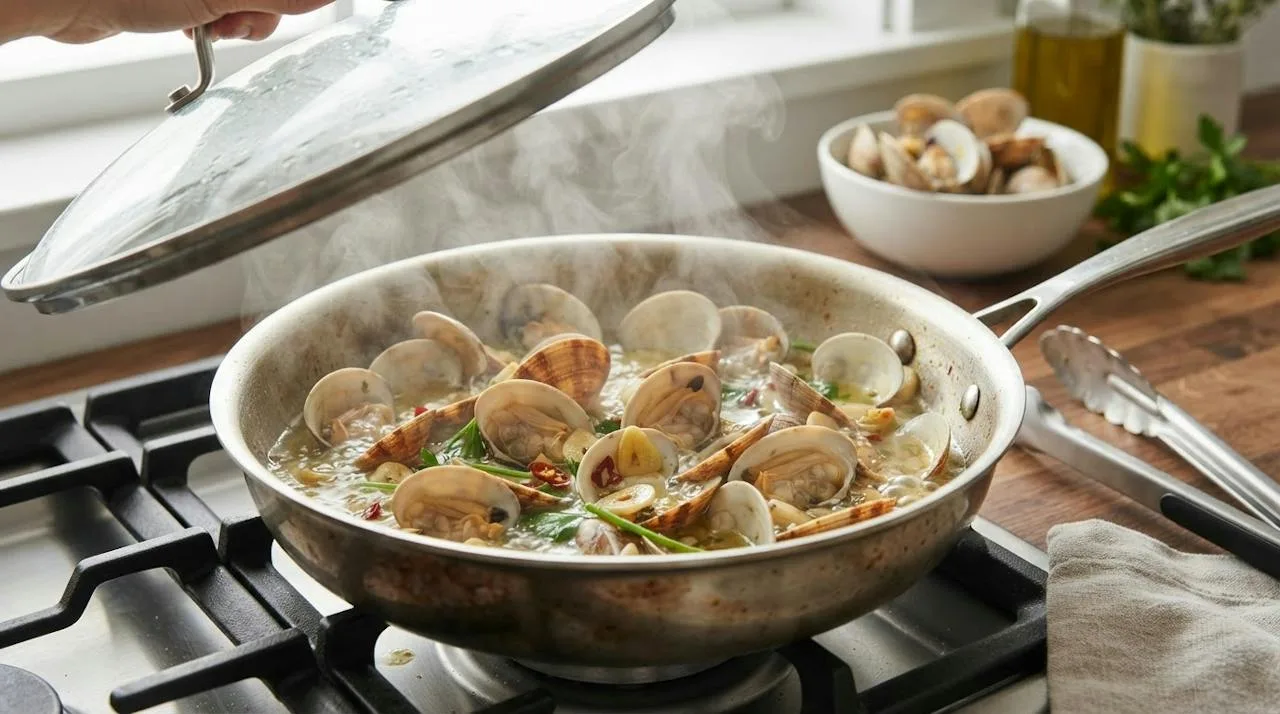
- Lift out the opened clams. At about 4½ minutes, transfer the open clams to a bowl with tongs. Give any closed ones another 30 to 60 seconds; discard any still shut after about 5½ minutes.
- Build the sauce. Let the liquid in the skillet bubble uncovered for 1 minute; I had about 150 ml. Add 60 ml of the reserved pasta water and bubble for another minute.
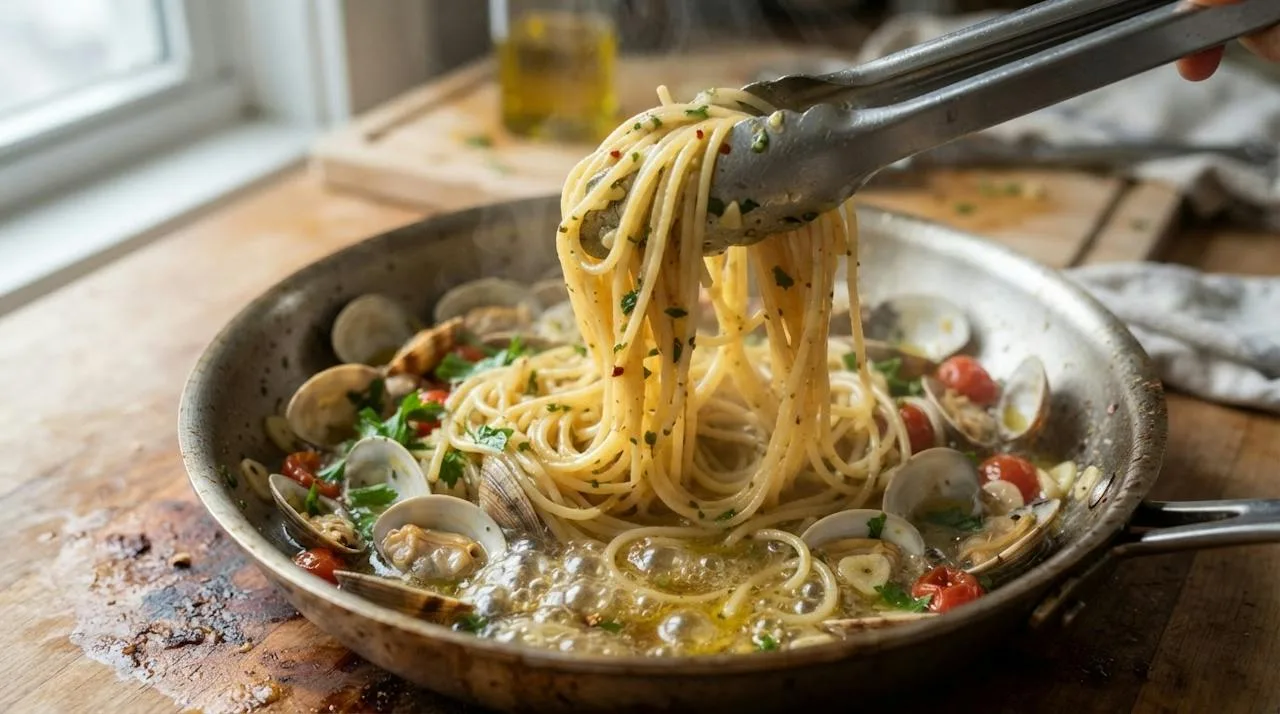
- Finish the spaghetti in the pan. Transfer the spaghetti to the skillet and toss with tongs for 2 minutes, lifting rather than stirring hard. It’s ready when the sauce turns glossy and lightly clings to the strands, with a little broth still in the bottom of the pan.
- Return the clams. Add the clams back with the 15 ml finishing olive oil and the parsley leaves. If you like, shell a few of the larger clams and fold the meat through the pasta. Toss gently for 20 to 30 seconds and take the pan off the heat right away.
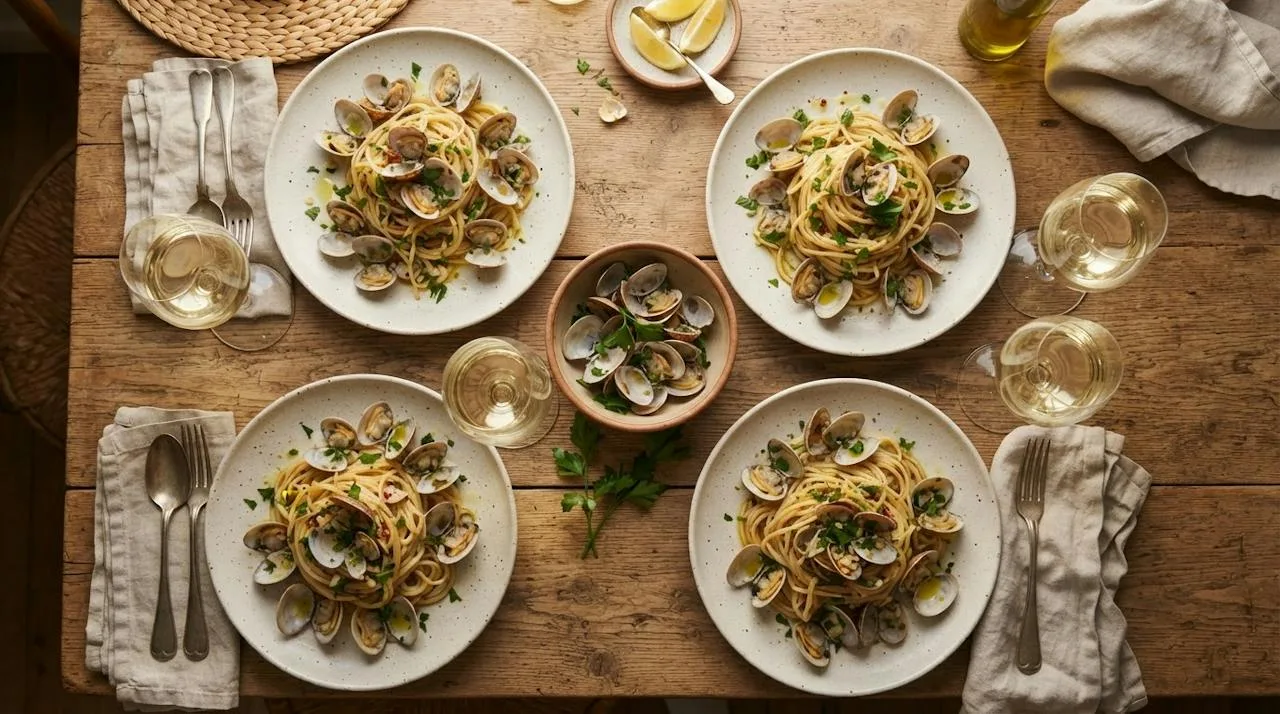
- Serve immediately. The sauce should be loose, glossy and lightly brothy, not thick: it coats the spaghetti but still pools slightly at the bottom of the plate.
Total time: about 2 hours 25 minutes, including the 2-hour purge. The cooking itself takes about 25 minutes.
Tested Substitutions
| Original ingredient | Tested substitute | Result |
|---|---|---|
| 1.2 kg Manila clams | 1 kg littleneck clams | Slightly firmer meat and attractive shells; they cooked similarly, but the Manila clams gave a more generous amount of liquor. (A single comparison, at a different weight.) |
| Spaghetti | 320 g linguine | Carried the sauce well, but the dish felt slightly heavier. Spaghetti balanced pasta and shellfish better. |
| Finishing olive oil | 10 g unsalted butter, off the heat | Richer and more opaque; the olive oil version tasted cleaner and let the clams stand out. |
| No citrus | ½ teaspoon lemon zest at the end | A fresh aroma, but it pushed the dish toward a brighter, citrus-forward style. Pleasant, not in the final version. |
| Live clams | 500 g frozen cooked clam meat | Worked in the sauce, but lacked the shell liquor and the look of live clams. |
| Live clams | 150 g canned clam meat | Convenient and flavorful, but softer, with no shellfish presentation. A useful shortcut. |
| No tomatoes | 180 g cherry tomatoes (vongole rosse) (untested) | I haven’t tried this yet. Let me know in the comments. |
| Live clams | Canned or frozen whole clams in shell (untested) | I haven’t tried these yet. Let me know in the comments. |
| Spaghetti | Spaghettoni (untested) | I haven’t tried this yet. Let me know in the comments. |
| Chili flakes | Fresh red chili (untested) | I haven’t tried this yet. Let me know in the comments. |
Also not tested: bottarga, saffron, anchovy, tomato paste, cream, Pecorino or Parmesan, black pepper as the main finishing spice, and an overnight purge.
Why This Recipe Can Fail (And How to Fix It)
What went wrong?
Tap your problem to see the cause and the fix.
Sandy sauce
Cause: A 1-hour purge with one water change at 30 g salt per liter left grit behind.
Fix: Purge for 2 hours at 35 g salt per liter in cold water, changing it after the first hour, then rinse the shells well.
Sharp, winey sauce
Cause: 150 ml wine was too much for 1.2 kg of clams.
Fix: Use 100 ml of dry, unoaked white wine and let the clam liquor carry the sauce.
Bitter, brown garlic
Cause: Medium heat for about 2 1/2 minutes browned the slices.
Fix: Cook over medium-low heat for about 90 seconds, just until pale golden at the edges.
Soft spaghetti
Cause: 8 minutes in the water plus 3 in the pan, about 11 in total, was too long.
Fix: Cook it for 7 minutes, then 2 in the pan, about 9 in total.
Watery sauce that won't cling
Cause: 120 ml pasta water on top of the wine and clam liquor, or pouring the sauce over the pasta.
Fix: Use 60 ml pasta water and always finish the spaghetti in the skillet.
Rubbery clams
Cause: Clams left in the pan after opening keep cooking.
Fix: Lift them out as soon as most shells are open, at about 4 1/2 minutes, and return them only for the last 20 to 30 seconds.
Clams that won't open
Cause: Some clams stay shut after cooking.
Fix: Give them 30 to 60 more seconds, then discard any still closed.
Common Problems
- Sandy sauce: A 1-hour purge with one water change at 30 g salt per liter left grit behind. Purge for 2 hours at 35 g salt per liter in cold water, changing it after the first hour, then rinse the shells well.
- Sharp, winey sauce: 150 ml wine was too much for 1.2 kg of clams. Use 100 ml of dry, unoaked white wine and let the clam liquor carry the sauce.
- Bitter, brown garlic: Medium heat for about 2½ minutes browned the slices. Cook over medium-low heat for about 90 seconds, just until pale golden at the edges.
- Soft spaghetti: 8 minutes in the water plus 3 in the pan, about 11 in total, was too long. Cook it for 7 minutes, then 2 in the pan, about 9 in total.
- Watery sauce that won’t cling: 120 ml pasta water on top of the wine and clam liquor gave plenty of liquid but little coating. Use 60 ml pasta water, and always finish the spaghetti in the skillet rather than pouring the sauce over.
- Rubbery clams: Clams left in the pan after opening keep cooking. Lift them out with tongs as soon as most shells are open, at about 4½ minutes, and return them only for the last 20 to 30 seconds.
- Clams that won’t open: Give them 30 to 60 more seconds, then discard any still shut. The FDA advises throwing out clams that don’t open during cooking.
Serving Suggestions
Serve spaghetti alle vongole the moment it leaves the pan, with an empty bowl on the table for the shells and the rest of the white wine you cooked with.
For a coastal Italian meal, start with a bright, crunchy Sicilian orange and fennel salad with olives and keep the pasta as the main event.
Storage, Reheating and Make-Ahead
This is a pasta to eat straight away. Here’s how it changed:
- Day 1: The best texture, right after cooking: a glossy sauce and tender clams.
- Day 2: I refrigerated a portion overnight. The spaghetti had absorbed much of the sauce and turned noticeably firmer and less glossy, and the clams were slightly chewier.
Reheating: I reheated the next-day portion in a skillet over medium-low heat with 30 ml water and 1 teaspoon olive oil for about 3 minutes. The pasta loosened again, but the clams didn’t fully return to their day 1 texture.
Refrigerate any leftovers promptly and eat them within 3 to 4 days, in line with the USDA’s leftovers and food safety guidance, though the quality drops after the first day.
Freezing: Not tested.
Make-ahead: The only step worth doing ahead is the purge. Start it 2 hours before you plan to cook.
What I’d Test Next
- Manila vs. littleneck, at the same weight: 1.2 kg of each, cooked the exact same way, recording the number of clams, the liquor each batch released, how much liquid remained after reducing, and the texture and flavor of the finished spaghetti.
- Vongole rosse: the same method with 180 g cherry tomatoes.
- An overnight purge, to see whether it changes anything compared with 2 hours.
- Freezing a portion, to see whether the clams survive it.
Mediterranean Secret: Let the clams do the talking. Their liquor is the sauce; the wine and pasta water are only there to stretch it. Keep both modest, keep the garlic pale, and finish the spaghetti in the pan.
Continue Cooking
- Pasta con le sarde, Sicilian pasta with sardines and fennel
- Pasta alla Norma with fried eggplant and ricotta salata
- The Mediterranean diet for beginners: a complete guide
With salt water on the counter and a pan of clams opening, Nevaeh Hall
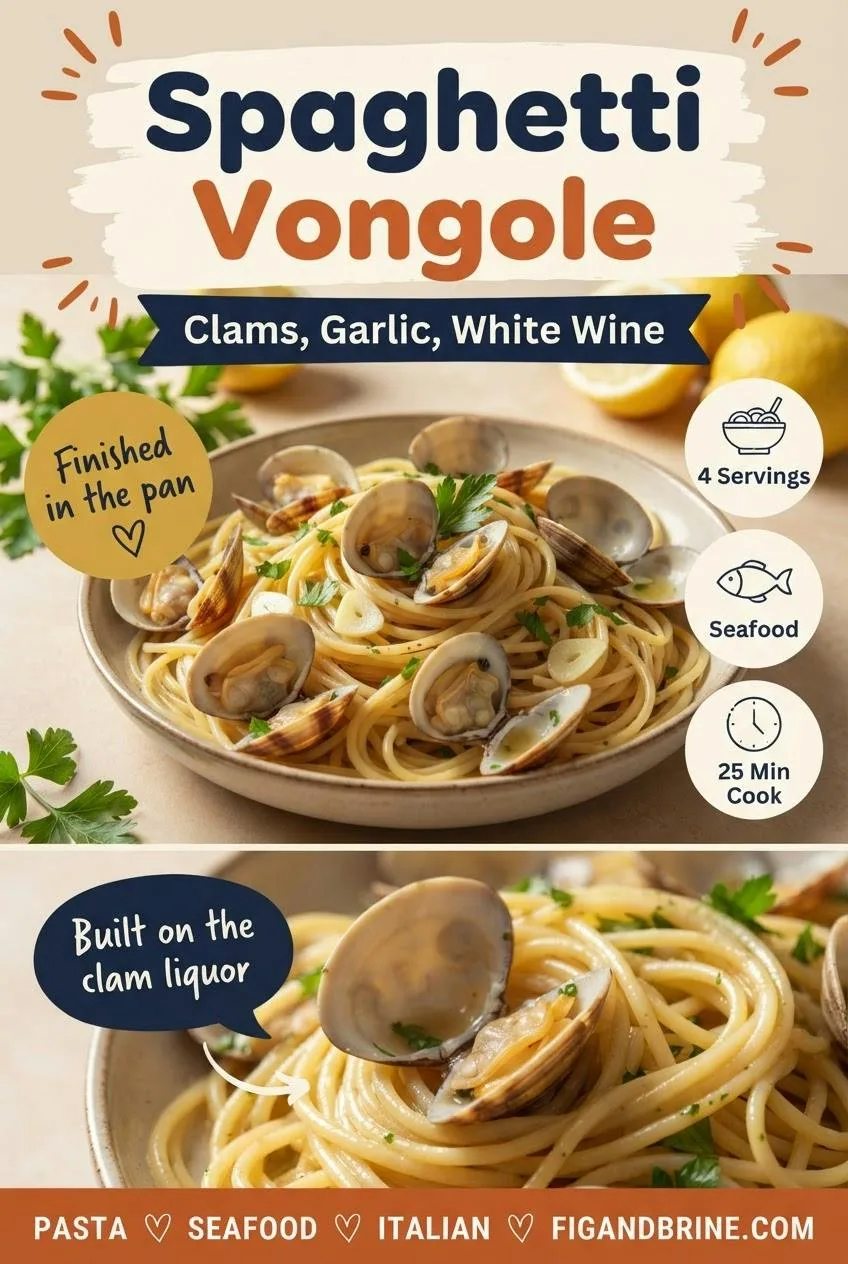

Spaghetti alle Vongole
- Total Time: 40 minutes
- Yield: 4 servings
- Diet: Pescatarian
Description
A delicious and simple Mediterranean Italian pasta dish featuring Manila clams, garlic, and white wine, perfect for seafood lovers.
Ingredients
- 1.2 kg live Manila clams (about 72 clams)
- 320 g spaghetti
- 4 garlic cloves, thinly sliced
- ½ teaspoon dried red chili flakes
- 20 g flat-leaf parsley, stems finely chopped, leaves roughly chopped
- 100 ml dry, unoaked white wine
- 45 ml extra virgin olive oil (30 ml for cooking, 15 ml for finishing)
- 12 g fine salt for 3 liters of pasta water
- 4 liters cold water and 140 g fine sea salt for purging the clams
Instructions
- Purge the clams in cold water with fine sea salt for 2 hours, changing the water after the first hour.
- Rinse the clams under cold running water, discarding any that are cracked or open.
- Prepare the parsley by separating the stems from the leaves and chopping them.
- Boil 3 liters of water with salt and cook the spaghetti for 7 minutes. Reserve about 180 ml of pasta water before draining.
- Warm 30 ml of olive oil in a skillet over medium-low heat, then add garlic, chili flakes, and parsley stems, cooking until garlic is pale golden.
- Add the clams and wine to the skillet, cover, and cook for about 4 minutes, shaking occasionally.
- Lift out the opened clams, discarding any that remain closed.
- Bulk the sauce by letting the liquid bubble uncovered for 1 minute; add 60 ml of reserved pasta water and bubble for another minute.
- Toss in the spaghetti and cook for an additional 2 minutes until the sauce clings to the noodles.
- Finish by adding clams back with the finishing oil and parsley leaves. Toss gently and serve immediately.
Notes
For the best flavor, serve immediately after cooking. The dish benefits from using the clam liquor as the main sauce.
- Prep Time: 15 minutes
- Cook Time: 25 minutes
- Category: Mediterranean
- Method: Cooking
- Cuisine: Italian


