

Delicious Fattoush: A Lebanese Bread Salad with Zesty Sumac Dressing
Fattoush is the salad I make when I want something crunchy, fresh, and honestly kind of fun to eat. You know those days when you open the fridge and it is a random mix of vegetables, a half bunch of herbs, and maybe some leftover pita that is getting a little stale? This is the perfect answer. I also like leaning on what is in season so the flavor is naturally better, and I check this Mediterranean seasonal vegetable calendar when I need a nudge. The best part is that it feels like a full meal without being heavy, thanks to the toasted bread and the zippy sumac dressing. If you have ever had a sad salad that felt like a chore, this one is the total opposite.
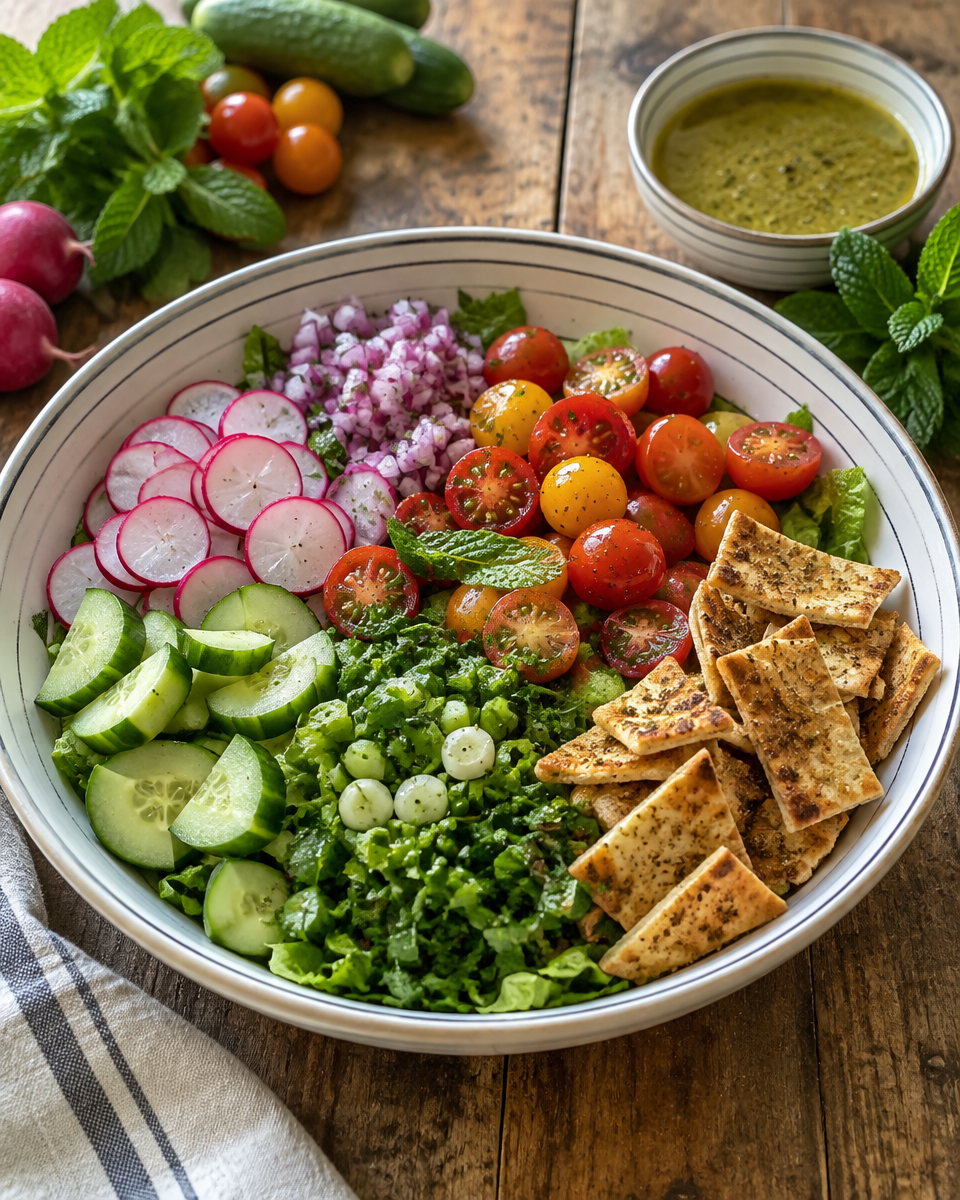
Why We Cant Get Enough of Fattoush
I fell in love with this salad because it hits every texture I crave in one bowl. You get crisp cucumbers, juicy tomatoes, snappy radish, and then those warm crunchy pita shards that make it feel like more than just vegetables. The dressing is the real hook, though. Sumac has this tangy, lemony pop that tastes bright even before you squeeze in any actual lemon.
For me, Delicious Fattoush: A Lebanese Bread Salad with Zesty Sumac Dressing is also a mood lifter. It is the kind of food that looks beautiful on the table, so people actually want to eat it. I have served it at low key family dinners, and I have also brought it to potlucks where it disappears fast.
Another reason I make it often is that it fits into the way I like to eat most days. It is vegetable forward, full of herbs, and easy to customize. If you are curious about this style of eating in general, I found this beginner friendly guide really helpful: Mediterranean diet guide for beginners. It is not about perfection, it is more about building flavorful habits.
One more thing, fattoush is forgiving. If your tomatoes are not perfect, the dressing helps. If your lettuce is a little tired, ice water can crisp it back up. If your pita is stale, that is actually ideal.
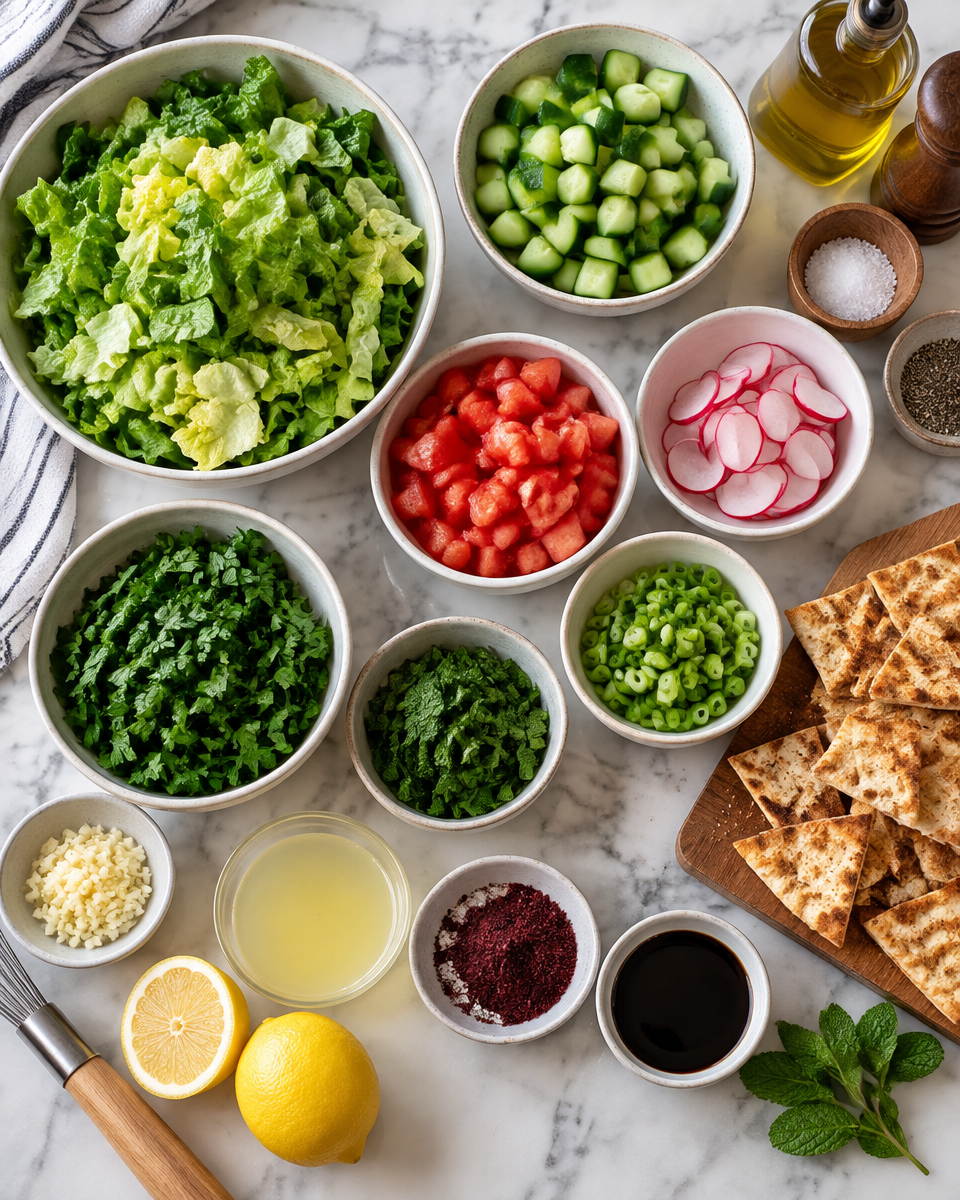
Key Ingredients for Fattoush with Sumac Dressing
This is one of those recipes where the ingredients matter, but you do not need anything fancy. The goal is fresh vegetables, lots of herbs, and a dressing that tastes like you want another bite immediately.
The salad basics
- Romaine or another crunchy lettuce, chopped
- Cucumber, diced
- Tomatoes, diced (use ripe ones, it really shows)
- Radishes, thinly sliced for bite and crunch
- Green onions or a little red onion, sliced
- Parsley, a generous handful, chopped
- Mint, a smaller handful, chopped (optional but amazing)
- Pita bread, toasted or fried until crisp
The zesty sumac dressing
This is the part that makes Delicious Fattoush: A Lebanese Bread Salad with Zesty Sumac Dressing taste like the real deal.
Here is what I use most of the time:
Extra virgin olive oil, fresh lemon juice, sumac, minced garlic, salt, and pepper. Sometimes I add a tiny drizzle of pomegranate molasses if I have it, but it is not required.
Quick olive oil note, because it does make a difference: use one that tastes good on its own, since you will taste it in the dressing. If you want a simple breakdown of how to pick and use it without overthinking it, this guide is genuinely useful: how to cook with olive oil guide.
What about sumac? Sumac is a deep red spice made from dried berries. It tastes tangy and bright, like lemon but warmer. If you have never cooked with it, fattoush is the easiest place to start. I usually find it in Middle Eastern grocery stores, and a lot of regular supermarkets carry it now too.
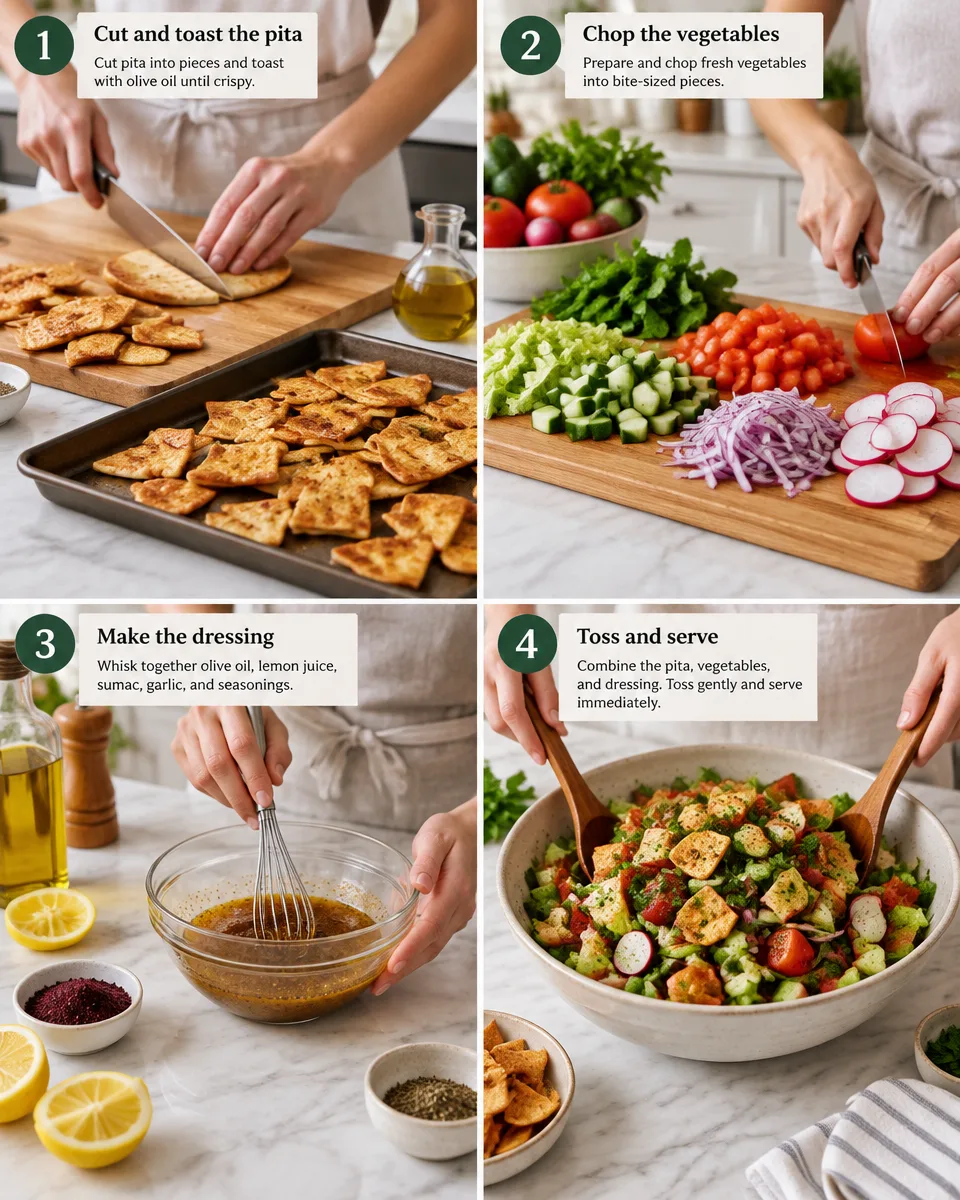
How to Make Fattoush with Sumac Dressing
This is my relaxed, weeknight method. No stress, no perfection, just a big bowl and a cutting board.
My step by step method
1) Crisp the pita. I cut pita into bite size pieces, toss with a little olive oil and a pinch of salt, then toast in the oven at 400 F for about 7 to 10 minutes. I stir once so it browns evenly. You want crunchy, not rock hard.
2) Chop the vegetables. Keep them roughly the same size so each bite feels balanced. I go for diced cucumber and tomato, thin radish slices, and chopped romaine.
3) Make the dressing. In a small bowl, whisk together:
About 1 part lemon juice to 2 parts olive oil, 1 to 2 teaspoons sumac (depending how tangy you want it), 1 small garlic clove minced, and salt and pepper. Taste it. If it feels flat, add a pinch more salt or a bit more lemon.
4) Toss right before serving. I mix the lettuce, vegetables, and herbs first. Then I add dressing and toss well. Finally, I add the pita and toss again quickly so it stays crunchy.
Little tips that save the day: If you are making this for guests, keep the pita separate until the last second. Also, do not skip the herbs. Parsley and mint are not just decoration here, they are part of the flavor.
This is one of those times where you can trust your taste buds. Want it brighter? More lemon. Want it tangier? More sumac. Want it softer? Let it sit a couple minutes after tossing. That is the whole vibe of Delicious Fattoush: A Lebanese Bread Salad with Zesty Sumac Dressing.
Variations and Twists
I make a pretty classic bowl most days, but fattoush is easy to riff on. Sometimes I am using what is in the fridge, and sometimes I just want to change the mood.
If you want more veg variety, roasted vegetables are surprisingly good in a fattoush style salad, especially when it is cooler outside. Think roasted peppers or zucchini cooled to room temp, then tossed in. If you need ideas, this is a great reference: roasted Mediterranean vegetables guide.
Here are a few other twists that work:
Add chickpeas to make it more filling, like lunch that actually holds you over.
Add feta if you want a creamy salty note. Not traditional in every version, but very tasty.
Swap the greens using arugula or a mix of romaine and baby greens.
Use pomegranate seeds when they are in season for little bursts of sweet tart flavor.
Make it spicy with a pinch of Aleppo pepper or red pepper flakes in the dressing.
I also sometimes do a preserving angle with my pantry. A few chopped pickles or pickled turnips can be so good in here. If you are curious about getting into that kind of thing, I have learned a lot from this: Mediterranean preserving and brining guide. A little briny crunch in fattoush is a win.
Storage and Shelf Life
Fattoush is best fresh, no question. The whole point is crisp vegetables and crunchy pita. But I still make it work for leftovers because real life is real life.
Here is how I store it:
Store components separately if you can. Keep chopped vegetables and herbs in one container, dressing in a jar, and pita in a bag or container at room temp. Then toss when ready to eat.
If it is already dressed, it will still taste good the next day, but the bread will soften and the lettuce will lose crunch. I will often revive leftovers by adding fresh romaine and a handful of newly toasted pita.
How long does it last? Undressed chopped veggies usually last about 2 days in the fridge. Dressing is good for about 5 to 7 days. Toasted pita stays crisp 2 to 3 days if it is fully cooled before storing.
One food safety tip I follow: if the salad has been sitting out at a party for a while, I do not push it. I either eat it soon or let it go. Herbs and chopped tomatoes do not love warm countertops for hours.
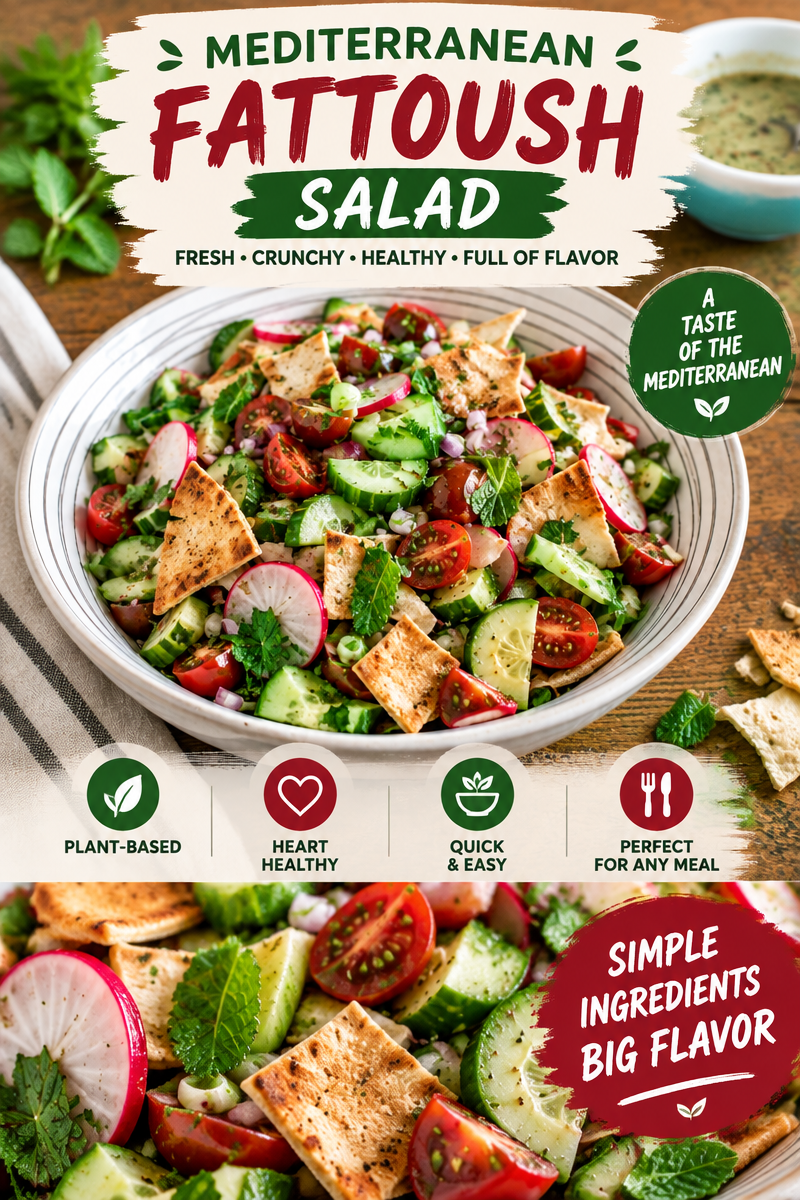
Your next bowl is going to be the good kind of messy
If you take one thing from this post, let it be this: Delicious Fattoush: A Lebanese Bread Salad with Zesty Sumac Dressing is all about contrast, crunchy bread, juicy veg, and a dressing that makes everything taste brighter. Keep the pita crisp until the end, be generous with herbs, and taste the dressing before you pour it on. If you want to read more about the dish history and how it is commonly made across regions, this page is a nice deep dive: Fattoush – Wikipedia. I hope you try it once, then start making it your own with whatever you have on hand. When you do, come back and tell me what twist you added.
Print
Fattoush: A Lebanese Bread Salad with Zesty Sumac Dressing
- Total Time: 20 minutes
- Yield: 4 servings
- Diet: Vegetarian
Description
A crunchy, refreshing salad made with seasonal vegetables, herbs, and a tangy sumac dressing, perfect for any meal.
Ingredients
- 1 head Romaine or another crunchy lettuce, chopped
- 1 Cucumber, diced
- 2 Tomatoes, diced
- 4 Radishes, thinly sliced
- 3 Green onions or a little red onion, sliced
- 1/2 cup Parsley, chopped
- 1/4 cup Mint, chopped (optional)
- 2 Pita bread, toasted or fried until crisp
- 1/4 cup Extra virgin olive oil
- 1/8 cup Fresh lemon juice
- 1–2 teaspoons Sumac
- 1 Minced garlic clove
- Salt and pepper to taste
- Pomegranate molasses (optional)
Instructions
- Crisp the pita by cutting it into bite-sized pieces, tossing with a little olive oil and a pinch of salt, then toasting in the oven at 400°F for about 7 to 10 minutes.
- Chop the vegetables into roughly the same size for balanced bites.
- Make the dressing: whisk together lemon juice, olive oil, sumac, minced garlic, salt, and pepper in a small bowl.
- Toss the lettuce, vegetables, and herbs together, then add the dressing, toss again, and finally add the pita before serving.
Notes
For best results, keep the pita separate until serving to maintain its crunch. Adjust the dressing according to your taste preferences.
- Prep Time: 10 minutes
- Cook Time: 10 minutes
- Category: Salad
- Method: No-Cook
- Cuisine: Middle Eastern


