

How to Make Za’atar at Home (Tested Za’atar Spice Blend Recipe)
Za’atar is the blend I reach for when a dish needs to taste finished. Herbal first, then tangy from sumac, then nutty from toasted sesame, it turns a piece of bread and a dish of olive oil into something worth sitting down for.
UC Cooperative Extension Master Food Preservers describe za’atar as a dried herb and spice blend used in Middle Eastern and North African cuisines that, at its most basic, includes sumac, thyme, oregano and sesame seeds. Simple as that sounds, the balance is everything. My first batch was too sour and too thyme-heavy, with sesame you could barely taste.
The fix came down to proportions and texture: less sumac, more lightly toasted sesame, Greek oregano for a stronger herbal note, and herbs crumbled by hand rather than ground to dust. For the bigger picture on these flavors, see my guide to Mediterranean herbs and spices.
Follow this recipe and you’ll have a jar of balanced, aromatic za’atar in about the time it takes to toast a pan of sesame seeds.
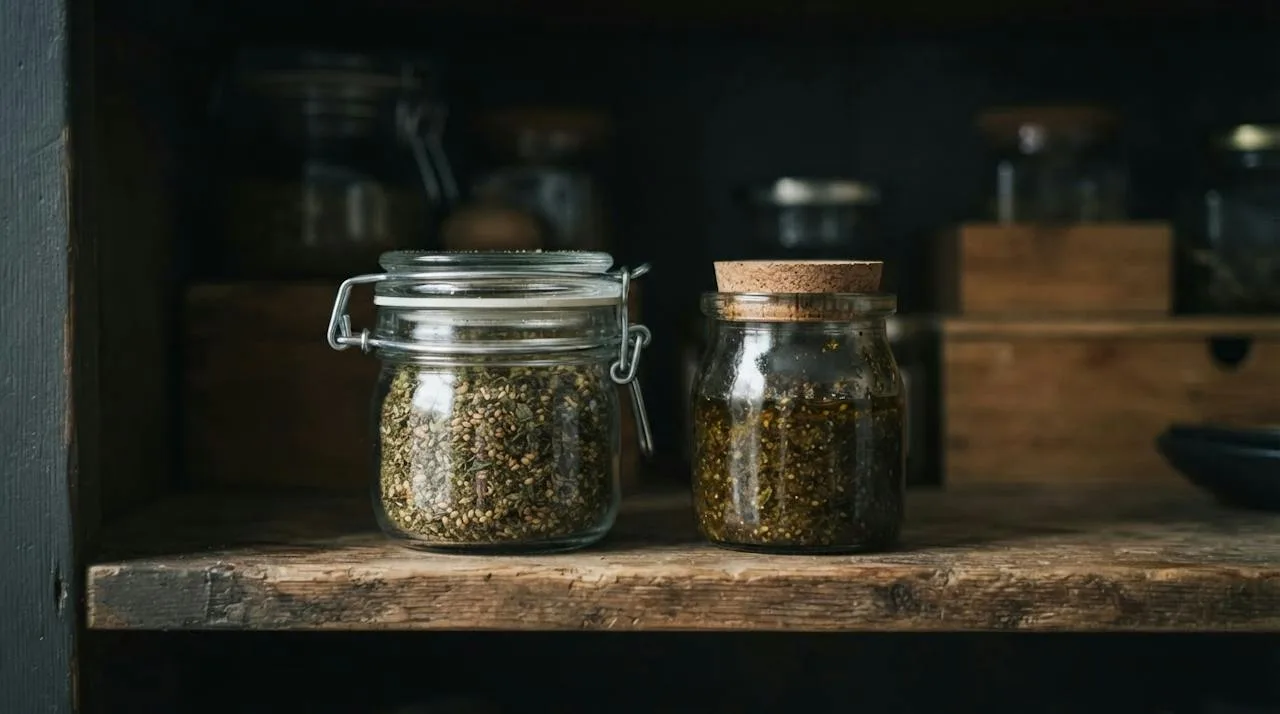
What I Learned From Testing This Recipe
Recipe Testing Note Tested in 2 rounds. Last updated: October 2026. Equipment: dry skillet over medium-low heat for the sesame, digital kitchen scale, small airtight glass spice jar. Key variables tested: sumac-to-sesame ratio, regular vs. Greek oregano, herb texture, cumin vs. Aleppo pepper, toasted vs. untoasted sesame.
For round 1, I mixed 35 g dried thyme, 10 g regular dried oregano, 35 g sumac, 25 g toasted sesame seeds, 5 g fine sea salt and ½ teaspoon ground cumin, using the herbs almost as they came, with only a little crumbling. It made about 110 g. The sumac’s sourness came through strongly, the thyme dominated, the sesame was hard to notice, and the blend was a little salty and missing warmth. Mixed with olive oil and scooped up with bread, the problem was obvious: 35 g of sumac against only 25 g of sesame let the sour note take over.
For round 2, I cut the sumac and thyme, raised the sesame to 35 g, swapped in Greek oregano for its stronger herbal aroma, used slightly less salt and replaced the cumin with Aleppo pepper. I also rubbed the herbs gently between my fingers before mixing. The result tasted balanced: herbal first, then tangy, with the sesame clearly coming through.
What I changed after testing: Thyme went from 35 g to 30 g, oregano from 10 g regular to 15 g Greek, sumac from 35 g to 30 g, sesame from 25 g to 35 g and salt from 5 g to 4 g, and I replaced ½ teaspoon of cumin with ½ teaspoon of Aleppo pepper. Round 1 was too sour, too thyme-heavy, a little salty, and the sesame got lost.
Ingredients
Makes about 115 g (roughly 7 to 8 tablespoons, depending on how coarse the herbs and sumac are).
- 30 g dried thyme
- 15 g dried Greek oregano (it had a stronger, more assertive herbal flavor than regular oregano in my testing)
- 30 g ground sumac
- 35 g sesame seeds, toasted
- 4 g fine sea salt
- ½ teaspoon Aleppo pepper
A kitchen scale makes a real difference here. Dried herbs are light and fluffy, so volume measurements vary a lot depending on how coarse they are.
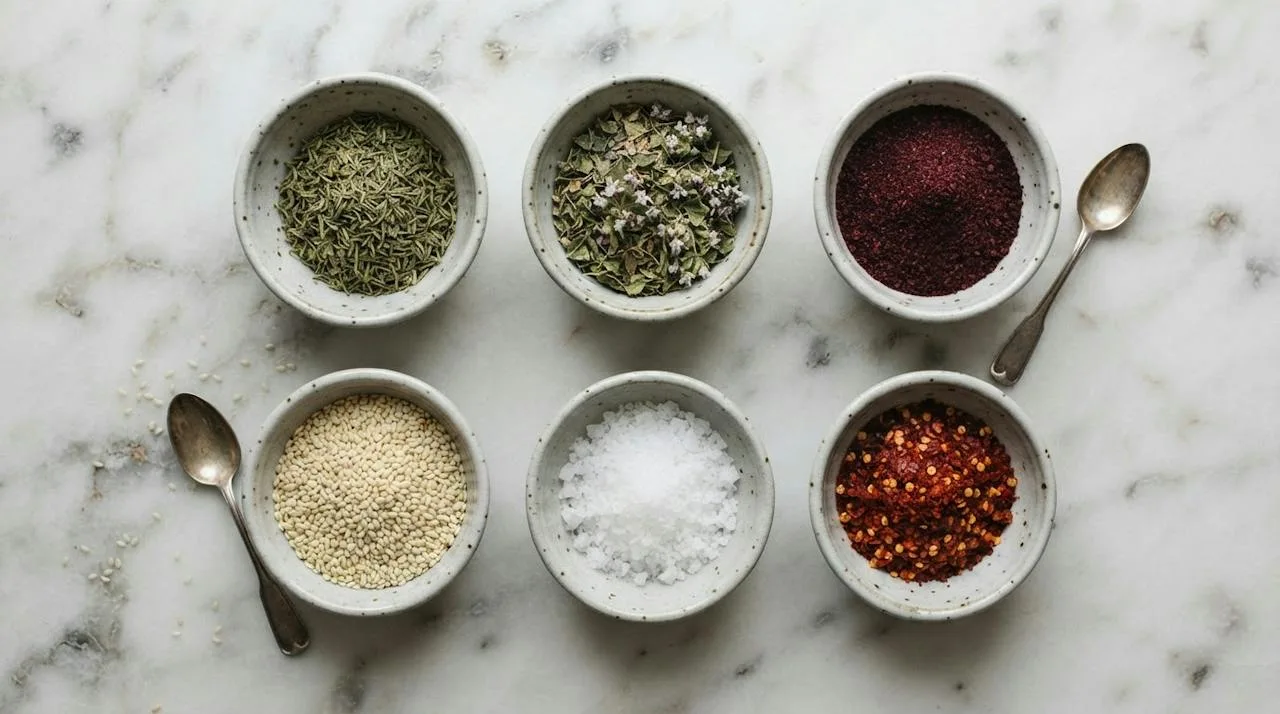
Before You Start: What to Watch For
- Toast the sesame lightly, not dark. Stop as soon as the seeds turn lightly golden and smell nutty. Dark brown sesame tasted slightly bitter and competed with the sumac and herbs.
- Let the sesame cool completely. I always let the toasted seeds cool fully on a plate before mixing them with the herbs.
- Crumble, don’t grind. A fully powdered za’atar tasted dusty on its own. Larger herb pieces gave more aroma and texture.
- Choose a strong oregano. Greek oregano made a noticeably more aromatic blend than regular oregano. My guide to Greek oregano vs. regular oregano explains why.
- Taste with olive oil and bread. That’s the most useful test, because the oil reveals whether the sesame and sumac are in balance.
- Know your sumac. Sumac is the sour backbone of the blend. A 2021 review in Antioxidants notes that powdered sumac adds a lemony taste and is sometimes part of za’atar in countries like Lebanon and Syria. Too much, and it overwhelms everything else.
Method
- Weigh the ingredients. Weigh the thyme, oregano, sumac, sesame seeds, salt and Aleppo pepper into separate small bowls. Keep the sesame separate, since it gets toasted first.
- Toast the sesame seeds. Put the sesame seeds in a dry skillet over medium-low heat. Toast for about 3 to 4 minutes, stirring or shaking the pan often. As the National Kidney Foundation puts it, toasting spices brings out their oils and deeper flavors.
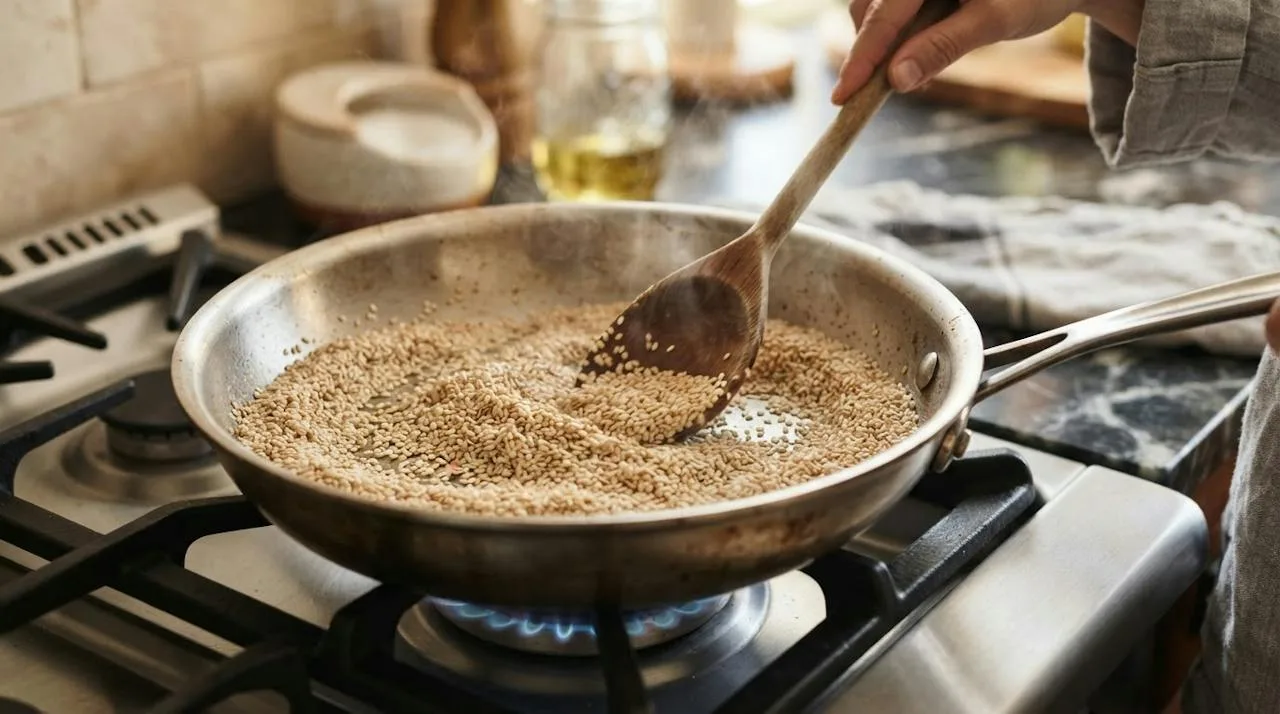
- Stop at lightly golden. Take the pan off the heat as soon as the seeds turn lightly golden and smell nutty, and tip them onto a plate right away so they stop cooking. In my testing, untoasted sesame tasted fairly flat, while lightly toasted sesame made the za’atar taste more rounded. Once the seeds went dark, the roasted flavor started competing with the sumac and herbs.
- Cool the sesame completely. Leave the seeds on the plate until they’re no longer warm to the touch.
- Crumble the herbs. Rub the dried thyme and oregano gently between your fingers over a mixing bowl, breaking the leaves into small pieces. Don’t grind them into powder. In round 1, I used the herbs almost as they were and the blend looked quite coarse; crumbling them gave a better, more even texture.
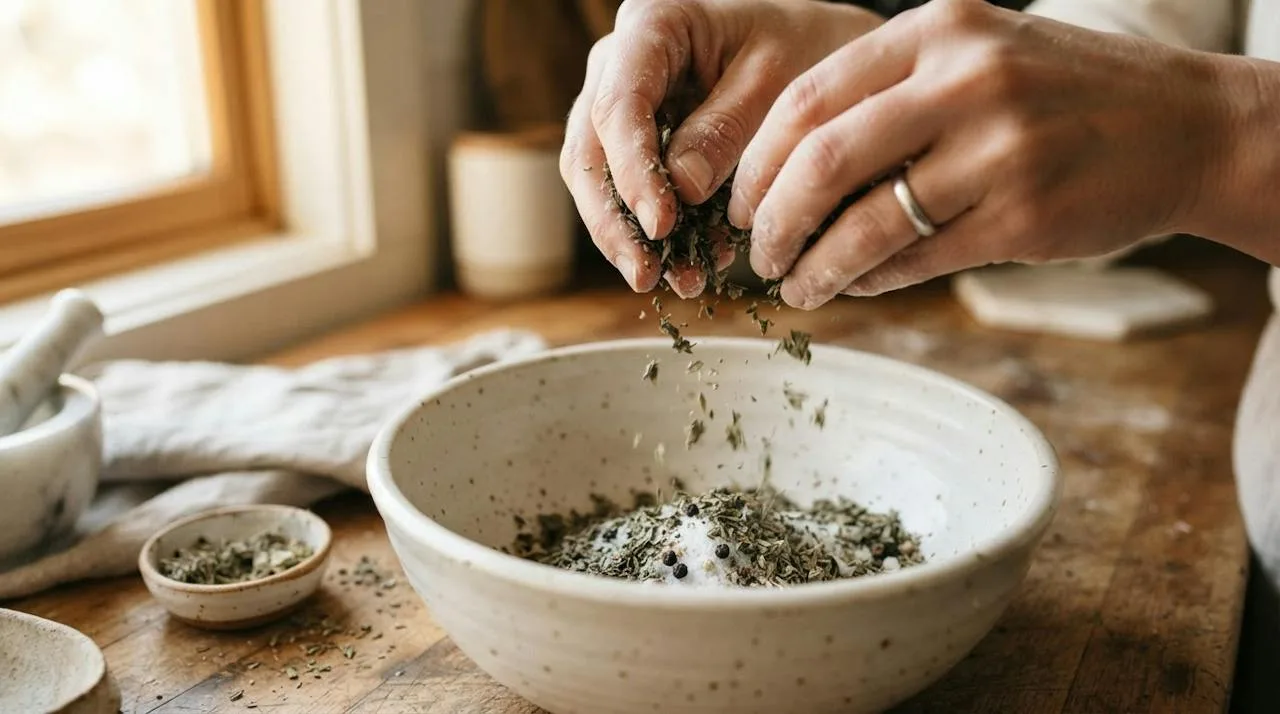
- Add the sumac, salt and Aleppo pepper. Stir them into the crumbled herbs until the color looks even, a mix of green-brown herbs and deep red sumac.
- Add the cooled sesame. Stir in the toasted sesame seeds, keeping them whole.
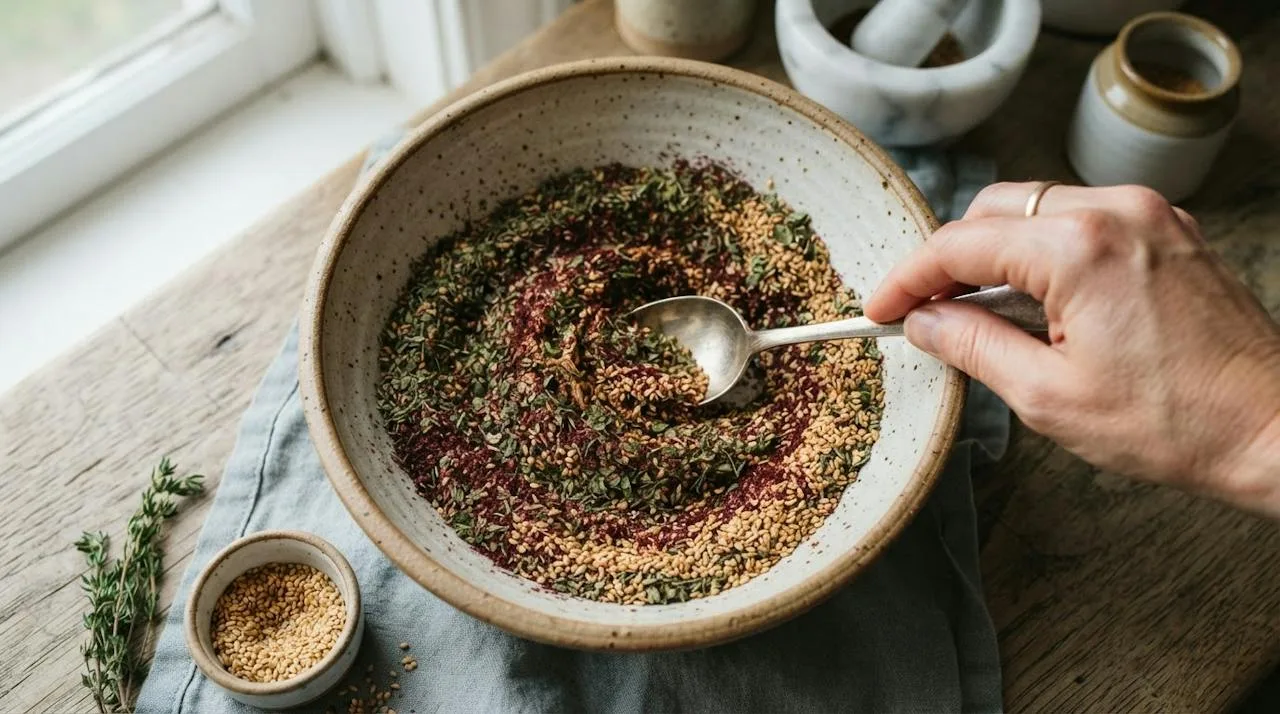
- Check the texture. The finished blend should be crumbled herbs, whole toasted sesame, coarse sumac and fine salt, coarse enough that you can see each component, with no dusty powder at the bottom of the bowl.
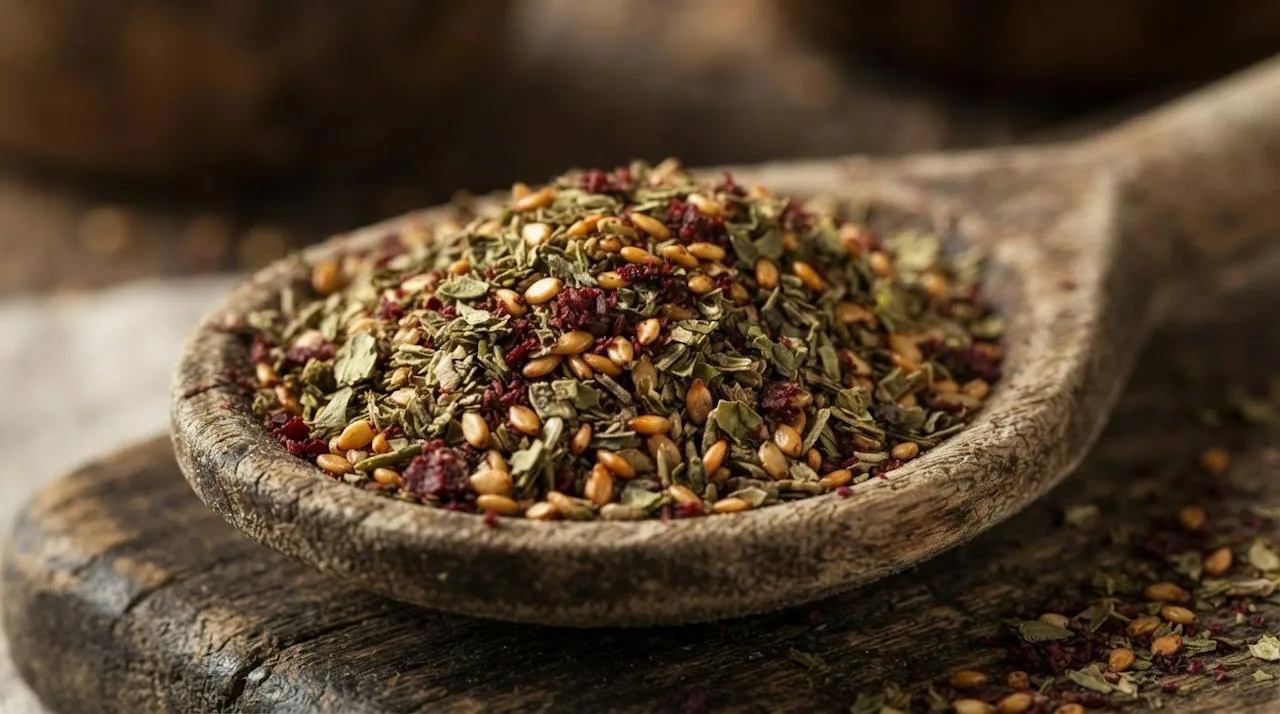
- Taste-test with olive oil. Mix about 1 tablespoon of za’atar with 1½ tablespoons of olive oil and dip in a piece of warm flatbread. You should taste herbs first, then a tangy note, with the sesame clearly present. If it’s too sour, add a little more sesame; if it’s flat, add a pinch more salt.
- Store it. Spoon the za’atar into a small airtight glass jar and keep it in a cool, dark cupboard.
Tested Substitutions
| Original ingredient | Tested substitute | Result |
|---|---|---|
| Greek oregano | Regular dried oregano | Works, but the blend is less aromatic. Greek oregano had a stronger, more assertive herbal flavor. |
| Crumbled dried herbs | Herbs used as they come, barely crumbled | Coarser, less even texture. Lightly crumbling gave a better result. |
| Aleppo pepper | Ground cumin (½ tsp, round 1) | The round 1 blend still tasted like it was missing warmth. Aleppo pepper added mild warmth without making it spicy. |
| Toasted sesame | Untoasted sesame | Tasted fairly flat. Lightly toasted sesame made the blend more rounded. |
| Dried thyme | Fresh thyme (untested) | I haven’t tried this yet. Let me know in the comments. |
| Dried oregano | Fresh oregano or marjoram (untested) | I haven’t tried this yet. Let me know in the comments. |
| Sumac | Lemon zest (untested) | I haven’t tried this yet. Fresh zest would also change how long the blend keeps. |
| Sesame | Black sesame or nigella seeds (untested) | I haven’t tried this yet. Let me know in the comments. |
| Aleppo pepper | Red chili flakes (untested) | I haven’t tried this yet. Let me know in the comments. |
Why This Recipe Can Fail (And How to Fix It)
Common Problems
- Too sour: Too much sumac for the amount of sesame. In round 1, 35 g of sumac against 25 g of sesame let the sourness dominate. Use 30 g sumac and 35 g sesame, and if a batch is still too tart, stir in a little more toasted sesame.
- Bitter: The sesame was toasted too dark. Once the seeds turned dark brown, they tasted slightly bitter. Toast over medium-low heat for 3 to 4 minutes, stop at lightly golden, and move the seeds off the hot pan immediately.
- Dusty texture: The herbs were ground too finely. A completely powdered za’atar felt dusty when tasted directly. Rub the dried herbs between your fingers instead of grinding them.
- Thyme overpowers everything: Too much thyme against too little oregano. Round 1 used 35 g thyme and 10 g oregano; 30 g thyme and 15 g Greek oregano gave a better balance.
- Too salty: Five grams of salt was a little much in round 1. Four grams was right in round 2, and you can always add more at the table.
- Herbs darken and sesame loses its aroma on roasted vegetables: The za’atar went on before roasting. Sprinkle it on after roasting instead.
Serving Suggestions
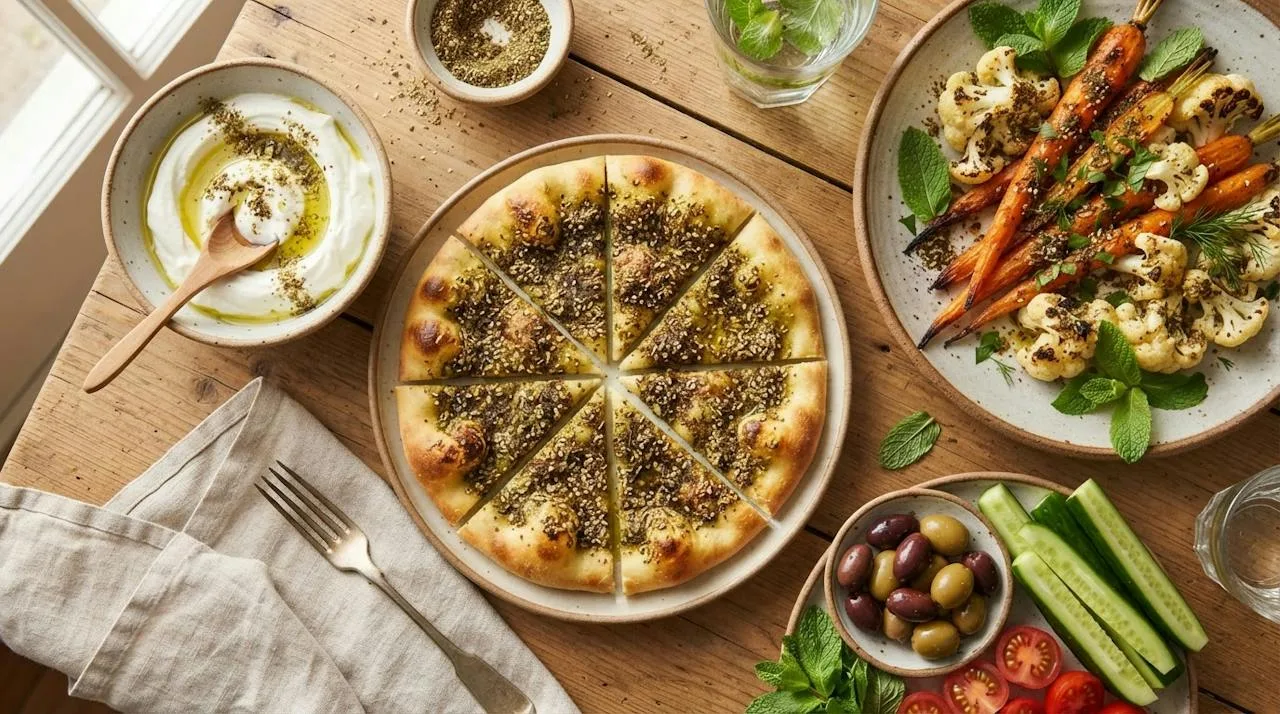
Bread and olive oil. Mix about 1 tablespoon of za’atar with 1½ tablespoons of olive oil and dip in warm flatbread. This is where the extra sesame in round 2 really showed.
Yogurt or labneh. Sprinkle about 1 teaspoon over 100 g of thick yogurt, plant yogurt or labneh-style yogurt, with a drizzle of olive oil. The sumac’s acidity works especially well here. Add it right before serving rather than stirring it in ahead of time.
Roasted vegetables. Sprinkle it over carrots, cauliflower and bell peppers after roasting. My vegetable roasting times and temperatures chart has tested times for all three.
Grain bowls. Scatter it over farro, chickpeas and vegetables, following the formula in my Mediterranean grain bowls guide.
Manakish-style flatbread. Spread flatbread dough with 1½ to 2 tablespoons of olive oil and 1½ tablespoons of za’atar, and bake at 220°C fan (about 425°F) for about 8 to 10 minutes, until fragrant and the sesame is lightly toasted again. Don’t overload it: the sumac gets stronger as it bakes.
Storage and Make-Ahead
Dry za’atar: Store it in a small airtight glass jar in a cool, dark cupboard, away from the stove and direct sunlight. After 1 week, mine still had a strong aroma, the sesame was still slightly crunchy, the color was a bright green-brown, the sumac was clearly noticeable, and there was no clumping. Keep it away from heat and moisture for the longest life. Because za’atar is built on dried herbs, it’s best used while the aroma is still strong; I’d make a fresh batch when it starts to smell faint.
Za’atar and olive oil paste: Make it in small amounts rather than converting a whole batch. Mix 2 tablespoons of za’atar with enough olive oil to make a thick paste, and keep it in a clean, covered jar in the fridge. Mine was fresh and strongly aromatic for the first 3 days. Because it’s a homemade herb-and-oil mixture, I follow the CDC’s advice to refrigerate homemade oils made with herbs or garlic and throw them away after 4 days.
Mediterranean Secret: Za’atar’s name belongs to an herb as well as the blend. Traditionally, it’s made from Origanum syriacum, a wild oregano native to the eastern Mediterranean, as a study in Foods describes. Since it’s hard to find in the US, thyme and Greek oregano are the closest everyday stand-ins.

Homemade Za’atar Spice Blend
- Total Time: 9 minutes
- Yield: 115 g (roughly 7 to 8 tablespoons)
- Diet: Vegetarian
Description
A balanced and aromatic za’atar spice blend perfect for enhancing Middle Eastern and North African dishes.
Ingredients
- 30 g dried thyme
- 15 g dried Greek oregano
- 30 g ground sumac
- 35 g sesame seeds, toasted
- 4 g fine sea salt
- ½ teaspoon Aleppo pepper
Instructions
- Weigh the ingredients into separate small bowls, keeping the sesame separate.
- Toast the sesame seeds in a dry skillet over medium-low heat for about 3 to 4 minutes, stirring often.
- Stop toasting once the seeds are lightly golden and smell nutty, then transfer to a plate to cool.
- Crumble the thyme and oregano gently between your fingers into a mixing bowl.
- Add the sumac, salt, and Aleppo pepper to the crumbled herbs and stir until evenly mixed.
- Stir in the cooled toasted sesame seeds, keeping them whole.
- Check the texture; it should not be dusty but coarse with visible components.
- Taste the za’atar mixed with olive oil and adjust seasoning if necessary.
- Store the za’atar in a small airtight glass jar in a cool, dark cupboard.
Notes
Ensure sesame seeds are toasted lightly to avoid bitterness. Adjust the amounts of sumac and salt according to taste.
- Prep Time: 5 minutes
- Cook Time: 4 minutes
- Category: Condiment
- Method: Mixing
- Cuisine: Middle Eastern


